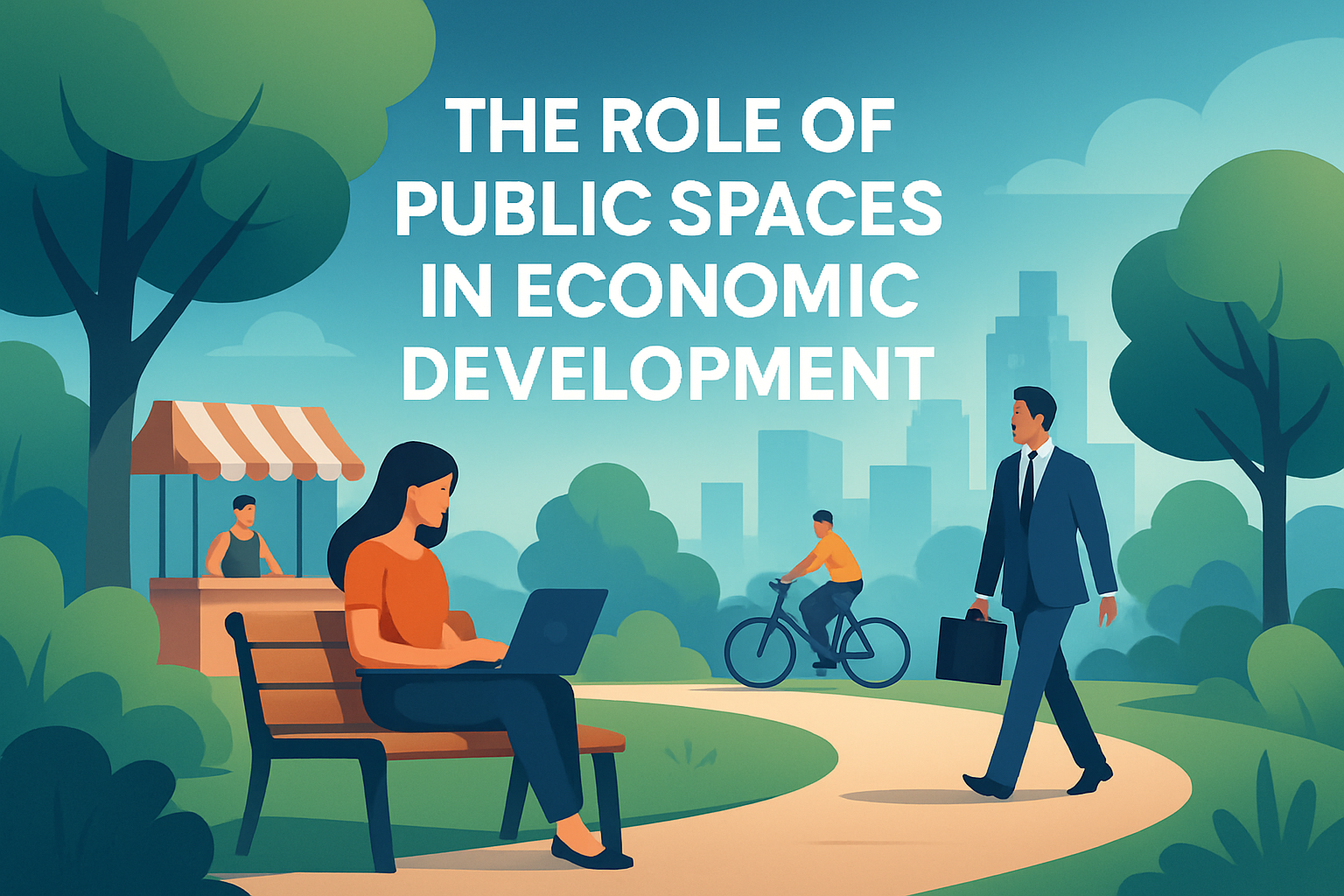
Public spaces play a vital role in the social, cultural, and economic fabric of a community. With urbanization on the rise, there’s a growing need to leverage public spaces not only for leisure and social interaction but also as catalysts for economic development. Public spaces are defined as areas such as parks, plazas, streets, and waterfronts, accessible to all individuals and predominantly owned and managed by public authorities. These spaces matter because they contribute significantly to the quality of life, community engagement, and economic vitality of cities and towns. When managed well, public spaces can yield considerable economic returns by attracting businesses, increasing property values, boosting tourism, and generating employment opportunities. Understanding their role in economic development is essential for city planners, policymakers, and community leaders looking to foster thriving and sustainable urban areas.
The Economic Impact of Attracting Businesses to Public Spaces
One of the most significant roles of public spaces in economic development is their ability to attract and retain businesses. Businesses often seek vibrant, dynamic locations where potential customers frequent, and strategically designed public spaces can provide this allure. When businesses cluster around well-maintained public areas, they benefit from increased foot traffic, higher visibility, and often, a more loyal customer base. For example, the transformation of Bryant Park in New York City from a neglected area into a thriving urban oasis has attracted numerous businesses, including cafes and shops, leading to substantial economic returns. Improved public spaces can lead to economic revitalization by acting as magnets for businesses and entrepreneurs looking for lively environments where both clients and employees want to spend their time.
Enhancing Property Values through Public Spaces
Public spaces can also significantly impact property values. Proximity to appealing public areas often increases the desirability and subsequently the value of residential and commercial properties. Homebuyers and renters seek neighborhoods with access to green spaces, playgrounds, and cultural venues, making these areas more attractive for real estate investment. For instance, the High Line in Manhattan, once an elevated railway track, has been transformed into a linear park that has dramatically increased property values and real estate activity in the surrounding Chelsea neighborhood. By offering easy access to attractive public spaces, communities can enhance their appeal and stimulate real estate development, thus generating higher property tax revenues that can be invested back into the locality.
Boosting Tourism through Attractive Public Spaces
One of the key components of economic development is the ability to attract visitors to a region, and well-designed public spaces can immensely contribute to this endeavor. Iconic parks, squares, and cultural sites often serve as significant tourist attractions, drawing visitors from across the globe. Tourism generates income not only for local businesses, such as hotels, restaurants, and shops but also garners tax revenue for municipalities. Consider Chicago’s Millennium Park, which combines art, architecture, and recreation spaces to create a major tourist destination. It has become one of the most visited sites in Illinois, supporting local tourism and hospitality sectors by encouraging longer stays and more extensive spending. Thus, investing in the creation and maintenance of public spaces can pay dividends by capturing a share of the global tourism market.
Generating Employment through Public Space Projects
The development and maintenance of public spaces can directly generate employment opportunities. From construction jobs during the creation phase to permanent positions such as park managers, event coordinators, and maintenance staff, public spaces contribute to the local economy by providing diverse employment options. Additionally, businesses that spring up as a result of improved public spaces also offer new job opportunities in the retail, food service, and entertainment sectors. A prime example is the revitalization of the RiverWalk in San Antonio, Texas. The ongoing development and expansion of this public space have created jobs both directly and indirectly, boosting the local economy by providing career opportunities for a wide range of skill levels. The influence of public spaces on job creation presents an excellent opportunity for economic growth and stabilization.
Fostering Community Engagement and Economic Participation
Public spaces also serve as platforms for community engagement and participation, which can indirectly stimulate economic growth. When communities have access to inclusive and accessible public areas, they are more likely to engage in social, cultural, and educational activities. This increased social cohesion can lead to a more active citizenry, with individuals and groups collaborating on local economic initiatives and entrepreneurial ventures. Public markets, for example, offer vendors a space to sell their products and services, fostering small business development and innovation. In Bogotá, Colombia, the creation of public libraries and plazas has invigorated community spirit and participation, driving economic development through collective endeavors and partnerships. Engaged communities are often dynamic and resilient, creating new avenues for economic prosperity.
Table: Key Benefits of Public Spaces in Economic Development
| Benefit | Description |
|---|---|
| Business Attraction | Draws companies due to increased foot traffic and visibility. |
| Property Value Increase | Proximity to public spaces enhances real estate value. |
| Boosting Tourism | Attracts visitors, generating income for local businesses and tax revenue. |
| Employment Generation | Creates jobs in construction, maintenance, and retail sectors. |
| Community Engagement | Encourages participation, leading to innovative economic initiatives. |
Overcoming Challenges in Public Space Development
Despite the many benefits, developing public spaces poses challenges that need to be addressed to maximize economic potential. Issues like funding limitations, space management, and community resistance can hinder the successful transformation of these areas. Securing sustainable financing is crucial, as public spaces require continuous investment in infrastructure, programming, and maintenance. Partnerships between public authorities, private investors, and non-profit organizations are often needed to navigate these financial barriers. Meanwhile, effective space management ensures that public areas remain safe, clean, and vibrant. Addressing community concerns and involving residents in planning processes can mitigate resistance and foster a sense of ownership. Overcoming these challenges is paramount for realizing the full scope of economic benefits that public spaces can offer.
Conclusion: Embracing Public Spaces as Economic Assets
Public spaces are integral to the economic development of urban areas, providing a multitude of benefits that extend well beyond their immediate physical presence. They attract businesses, enhance property values, boost tourism, generate employment, and foster community cohesion, all contributing to a thriving local economy. Acknowledging and harnessing the economic potential of public spaces requires strategic investment, thoughtful planning, and collaborative management to ensure their sustainability and success. Communities that embrace public spaces as essential economic assets can experience revitalization and resilience, unlocking new opportunities for growth and prosperity. As a next step, city officials, urban planners, and community leaders should focus on developing inclusive, accessible, and engaging public areas that serve as the foundation for economic development and social well-being. Leveraging the power of public spaces is a proactive approach to ensuring vibrant, sustainable urban environments that benefit residents and visitors alike.
Frequently Asked Questions
1. How do public spaces contribute to economic development?
Public spaces are more than just areas for relaxation and recreation; they are essential to the economic vitality of a community. By providing platforms for social interactions, cultural exchanges, and potential business ventures, they stimulate local economies. Vibrant public spaces attract tourists and new residents, spending on local goods and services. Moreover, they offer opportunities for local businesses, such as markets, cafes, and events that draw crowds and increase financial transactions within a community. With proper maintenance and creative design, public spaces become neighborhoods’ economic engines, fostering community pride and investment.
2. What are some examples of public spaces that have successfully boosted local economies?
Several iconic public spaces globally showcase the positive impact on economic development. New York City’s Times Square transforms into a pedestrian-friendly zone, pulling in significant revenue from increased foot traffic and higher retail sales. Barcelona’s La Rambla is another prime example where strategic design and commerce coexist, making it a major draw for tourists and locals alike, lifting the city’s profile and contributing substantially to its economy. Locally, riverfronts that have been revitalized into bustling promenades with markets, dining, and entertainment options improve the area economically by rejuvenating previously underutilized spaces.
3. How do public spaces influence real estate values?
Public spaces directly affect real estate values in surrounding areas. Well-maintained and attractive public spaces increase the desirability of neighborhoods, often leading to higher property values and drawing in real estate investments. When people perceive an area as more livable and enjoyable due to quality public spaces, demand for residential and commercial properties rises, driving up prices. This positive enhancement of a city’s landscape encourages developers to invest in these areas, allowing for urban renewal and regeneration projects that further boost economic development.
4. What roles do public spaces play in attracting talent and businesses?
Efficiently designed public spaces play a strategic role in attracting businesses and talent to urban areas. Entrepreneurs and skilled workers often gravitate towards dynamic environments that public spaces provide, as these areas represent a city’s liveliness and cultural vitality. Companies too recognize these attributes, which can translate into an engaged and satisfied workforce that thrives in such environments. Businesses see value in establishing operations near bustling public spaces. Furthermore, creatives and innovators seek communities where public life flourishes, creating an ecosystem of opportunity, exchange, and growth beneficial to both individuals and larger economic networks.
5. What challenges do cities face in developing public spaces for economic gain?
Cities encounter various challenges when creating and maintaining public spaces aimed at economic growth. Funding remains a critical hurdle, as significant investments are needed not only for initial development but also for continued upkeep and programming. Balancing commercial activities with accessibility and inclusivity is essential to ensure spaces benefit the community at large rather than becoming exclusive zones. Additionally, cities must navigate regulatory and planning frameworks to adapt spaces to evolving public and economic needs. Safety concerns, environmental impact, and resistance from local stakeholders present additional layers of complexity, requiring comprehensive strategy and collaboration among public, private, and community entities to achieve successful outcomes.