

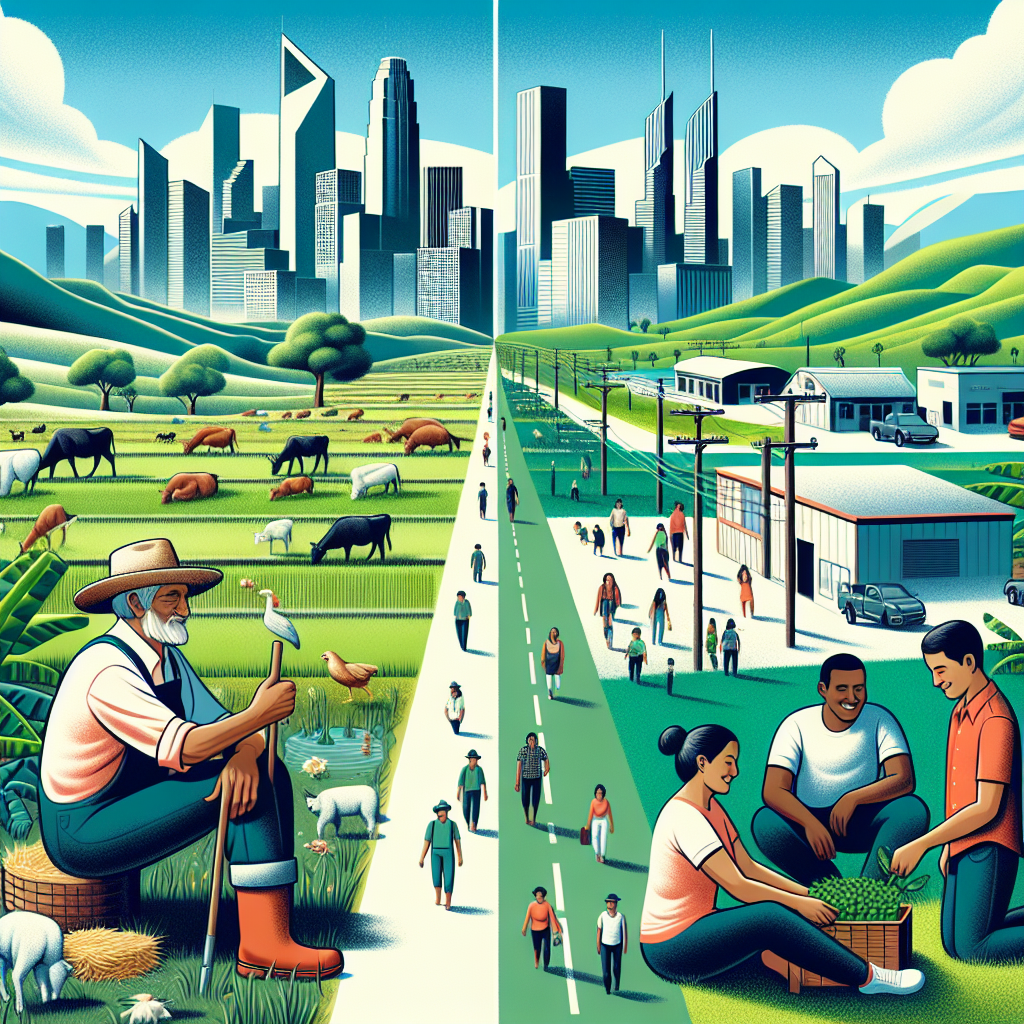
Urban planning has emerged as a pivotal factor in shaping the migration patterns from rural areas to urban centers. This phenomenon, commonly referred to as rural-urban migration, is influenced by various urban policies and developmental activities undertaken in cities. As rural areas often face challenges such as limited employment opportunities, inadequate healthcare, and poor educational facilities, many people migrate to urban centers seeking better quality of life.
The role of urban planning becomes crucial in this context as it not only aims at developing cities but also at managing the inflow of migrants efficiently. The planning involves comprehensive frameworks that address housing, infrastructure, transportation, and social services, thus making cities more accessible and livable for a growing population. Understanding the interplay between urban planning and rural-urban migration is essential for policymakers, urban developers, and the general public to foster sustainable development practices.
In this article, we will delve into the multifaceted impacts of urban planning on rural-urban migration. We will explore how urban policies can act as both pull and push factors influencing migration, the role of infrastructure development in easing the transition for migrants, and the socio-economic implications associated with these patterns. Ultimately, the aim is to provide a holistic view of how strategic urban planning can not only cater to the needs of urban populations but also mitigate the challenges posed by mass migration from rural areas.
Urban Policies as Pull Factors
Urban planning policies often serve as significant pull factors for rural populations. The promise of better employment opportunities, enhanced healthcare services, superior educational facilities, and overall better living conditions can draw people from rural areas to cities. For instance, planned economic zones within cities can attract industries and businesses, creating jobs that serve as a magnet for rural job seekers.
Moreover, policies focusing on affordable housing schemes, slum rehabilitation, and urban employment guarantees can make cities more attractive. The presence of well-planned public transportation systems, parks, and recreational facilities also enhances the livability of urban areas, further contributing to the migration trend. Specific policies that promote inclusivity and cater to the needs of diverse communities can ensure that new migrants feel welcomed and integrated into the urban fabric.
Education and healthcare facilities often feature prominently in urban planning policies designed to attract rural migrants. Cities typically offer better schooling options and higher education institutions, which can be a major deciding factor for families considering migration. Similarly, the availability of specialized healthcare services and hospitals can be a compelling reason for rural residents to move to urban areas.
Infrastructure Development and Migrant Integration
The development of infrastructure plays a critical role in supporting rural-urban migration. Efficient urban planning ensures the availability of essential services such as water supply, electricity, and waste management systems, which are crucial for the sustainment of large populations, including migrants. The creation of robust public transportation networks simplifies commuting, making it easier for rural-urban migrants to access employment opportunities and other city amenities.
Furthermore, the construction of affordable housing is vital to accommodate the influx of migrants. Urban planners need to focus on developing residential areas that can cater to the different income groups of rural migrants without leading to overcrowded slums or informal settlements. This includes well-thought-out zoning regulations that promote balanced urban growth and prevent the creation of urban disparities.
Integration of migrants into the urban environment requires more than just physical infrastructure. Social infrastructure, including community centers, schools, and healthcare clinics, that cater to the needs of migrants is equally important. Urban planners should collaborate with policymakers to ensure that these facilities are available and accessible, enabling migrants to acclimatize and thrive in their new environment.
Socio-Economic Implications
Rural-urban migration driven by urban planning has significant socio-economic implications for both the sending and receiving areas. On the one hand, cities benefit from an influx of labor, which can lead to economic growth. Migrants bring diverse skills and expertise, which can stimulate various economic sectors. This influx can also foster cultural diversity, leading to more dynamic and vibrant urban centers.
On the other hand, the sending rural areas may experience a decline in the young and skilled workforce, leading to what is often termed as “brain drain.” This exodus can negatively impact the local economies of rural regions, making it more challenging to implement development projects and improve living conditions. Additionally, the ageing population left behind may struggle to support themselves without the remittances sent by family members who have migrated to urban areas.
For urban areas, a significant increase in population can put pressure on existing resources and infrastructure, leading to congestion, pollution, and strains on public services. Effective urban planning is needed to manage these challenges by ensuring that the expansion of infrastructure keeps pace with population growth and that new migrants are integrated into the city’s socio-economic fabric to prevent issues of social exclusion or inequality.
The Role of Technology in Urban Planning
Advancements in technology have significantly influenced urban planning and the management of rural-urban migration. Geographic Information Systems (GIS), for example, allow urban planners to gather, analyze, and interpret data regarding land use, resources, and population distribution. This data-driven approach helps in making more informed decisions that enhance the efficacy of urban plans and policies.
Smart city initiatives, which utilize IoT (Internet of Things) technologies, enable better management of urban infrastructure and services. From intelligent traffic control systems to smart waste management, these technological interventions can improve the quality of life for urban residents, making cities more attractive to potential migrants from rural areas.
Additionally, digital platforms can facilitate the integration of migrants by providing easy access to information about housing, jobs, and social services. Mobile applications and online portals can help migrants navigate their new environment, find support networks, and access resources that can ease their transition into urban life. Embracing technology in urban planning not only enhances the efficiency of cities but also contributes to creating more inclusive and accessible urban spaces.
Policy Recommendations for Sustainable Migration Management
To ensure that rural-urban migration contributes positively to both urban and rural areas, it is essential to implement sustainable and inclusive urban planning policies. One of the key strategies is to promote balanced regional development. Investing in the development of rural areas can reduce the push factors driving migration. Enhancing rural infrastructure, improving access to education and healthcare, and creating local employment opportunities can make rural life more attractive and viable.
In urban areas, comprehensive planning that prioritizes affordable housing, sustainable transportation, and inclusive social services is crucial. Policymakers should focus on creating integrated urban-rural linkages that facilitate resource sharing and cooperation between rural and urban regions. This approach can help mitigate the negative impacts of migration on rural areas while ensuring that urban centers can manage population growth effectively.
Furthermore, participatory planning approaches that involve communities in the decision-making process can lead to more effective and accepted urban policies. Engaging migrants in urban planning initiatives ensures that their needs and perspectives are considered, leading to more inclusive and resilient urban environments. Collaboration between government agencies, private sector, and civil society organizations is essential to drive these policy changes and achieve sustainable development goals.
Conclusion
In conclusion, urban planning plays a critical role in influencing rural-urban migration patterns. Through well-crafted policies and robust infrastructure development, cities can attract rural migrants seeking better opportunities and living conditions. The socio-economic impacts of this migration are significant, benefiting both the urban centers and the migrants themselves, while also posing challenges that require careful management.
Technology and innovative approaches in urban planning can further enhance the ability to accommodate and integrate migrants, making cities more livable and inclusive. However, it is equally important to address the development needs of rural areas to ensure balanced regional growth and reduce the push factors leading to migration.
Sustainable urban planning policies that promote inclusivity, collaboration, and adaptability are essential for managing rural-urban migration effectively. By fostering environments that cater to the diverse needs of migrants and ensuring equitable development, policymakers can create thriving urban centers that contribute to the overall well-being of society. The journey towards sustainable urbanization requires a comprehensive approach that harmonizes the aspirations and needs of both rural and urban populations.
Frequently Asked Questions
1. How does urban planning influence rural-urban migration?
Urban planning significantly impacts rural-urban migration by shaping the infrastructure and amenities available in cities. Through thoughtful urban planning, cities can offer improved job opportunities, efficient public transportation networks, healthcare facilities, and quality education, which attract individuals from rural areas seeking better living standards. For instance, the development of industrial zones or business districts in urban settings creates employment prospects that appeal to rural migrants. Additionally, by designing residential areas that are both appealing and affordable, urban planners can accommodate the housing needs of incoming populations. Conversely, if urban planning fails to address critical issues like traffic congestion or housing shortages, it may deter potential migrants or result in the growth of informal settlements.
2. What challenges do rural migrants face when moving to urban areas, and how can urban planning mitigate these issues?
Rural migrants often encounter several challenges upon moving to urban areas, including finding affordable housing, getting suitable jobs, coping with the high cost of living, and experiencing cultural adaptation difficulties. Urban planning can help mitigate these issues by implementing inclusive policies that address the specific needs of migrants. This includes developing affordable housing projects, establishing skill development centers to prepare migrants for urban jobs, and fostering community spaces that encourage social integration. Moreover, improving access to public services such as healthcare and education can make the transition smoother for rural migrants, helping them adapt more easily to urban life.
3. What role do employment opportunities play in influencing rural-urban migration, and how can urban planning boost job creation in cities?
Employment opportunities are a major driving force behind rural-urban migration. Many individuals from rural areas relocate to urban centers in search of better job prospects and higher wages. To boost job creation, urban planning can focus on developing economic zones, encouraging startups, and attracting businesses and industries to the city. Furthermore, by investing in transportation infrastructure, urban planners can connect different parts of the city, making it easier for companies to set up operations and for employees to commute. Additionally, creating networks of business incubators and innovation hubs can attract talent, stimulate economic growth, and generate a myriad of job opportunities, making the urban area more appealing to rural migrants.
4. How does urban planning affect the educational opportunities available to rural migrants, and why is this important?
Access to quality education is a crucial factor that can significantly impact the lives of rural migrants and their families. Urban planning can enhance educational opportunities by ensuring that schools and educational facilities are readily accessible and adequately resourced. By strategically placing educational institutions throughout the city and offering diverse curricula that cater to various skill sets and interests, urban planners can ensure that migrant children receive quality education and are well-prepared for the future job market. This investment in education is important as it empowers the younger generation, sets the foundation for upward social mobility, and equips rural migrants with the skills needed to integrate and contribute meaningfully to urban society.
5. Can urban planning address the healthcare needs of rural migrants, and if so, how?
Urban planning plays a critical role in addressing the healthcare needs of rural migrants by ensuring that health services are comprehensive and accessible. This can be achieved by incorporating healthcare facilities into urban development plans and ensuring they are evenly distributed across the city, reducing the travel time and cost for migrants seeking medical care. Planners can also incorporate telemedicine options and mobile clinics to reach underserved populations, ensuring healthcare delivery is timely and effective. Additionally, by creating health awareness programs and partnerships with NGOs and health organizations, urban planners can promote public health initiatives that benefit the entire urban population, including rural migrants.


