Introduction to Urban Waste Management
The management of urban waste is an essential yet often overlooked aspect of modern city life. As urban populations grow, so does the mountain of waste produced daily. Urban waste management encompasses the collection, transport, processing, recycling, and disposal of waste materials produced by human activity in cities. Key terms in this area include municipal solid waste (MSW), recycling, composting, and landfill operations. Waste management is crucial to maintaining public health, environmental integrity, and the aesthetic quality of urban environments while optimizing resource use and reducing pollution.
The concept of waste management matters immensely because ineffective practices lead to significant environmental degradation, adverse health effects, and economic loss. Historically, cities have struggled with waste buildup, causing a range of problems from disease outbreaks to polluted rivers. As we continue to urbanize, efficient waste management systems become more pressing to ensure cities are sustainable, healthy, and pleasant places to live. Urban waste management’s evolution landscapes offer solutions and present profound challenges, requiring collaboration between governments, businesses, and citizens.
Traditional Waste Disposal Methods
Centuries ago, waste was managed by simple methods, such as dumping or burning. In ancient civilizations, these practices were common due to the lack of understanding and technology to handle waste effectively. For instance, ancient Rome had an organized collection system called “aqua” but still relied heavily on dumping waste in vacant areas or rivers.
Traditional methods were unsustainable as populations grew, leading to rapid waste accumulation and increasing public health concerns. This practice resulted in a breeding ground for pests and the spread of diseases, as evidenced by the infamous cholera outbreaks in 19th-century London, partly traced to improper waste disposal and sanitation issues. These traditional methods highlight the need for structured waste management systems, a lesson that almost every modern city strives to prioritize.
The Rise of Landfills
As urban waste began to overwhelm communities, landfills emerged as a practical solution to manage the mounting waste. Dating back to the 20th century, landfills have become the most common waste disposal sites worldwide, offering a centralized area for designating trash.
Modern landfills are engineered to minimize environmental impact by using protective liners and leachate collection systems to prevent soil and groundwater contamination. An exemplary model is the Fresh Kills Landfill in New York, once the world’s largest landfill before its closure in 2001. Though landfills provide a necessary outlet for waste, they directly contribute to greenhouse gas emissions if not properly managed, as decomposing materials release methane, a potent greenhouse gas.
The shift towards landfills represents a critical evolution in waste management, marking efforts to contain waste and curtail its environmental impacts.
Advent and Growth of Recycling Programs
With rising awareness of environmental concerns, recycling programs gained momentum during the late 20th century. Recycling involves processing used materials to create new products, reducing the need for raw material extraction, energy consumption, and emissions.
One pioneering example is San Francisco, which initiated an aggressive zero-waste policy aiming to divert all waste from landfills by 2020 through comprehensive recycling, composting, and reuse programs. The city’s policies led to one of the highest recycling rates in the world, exceeding 80% diversion. Recycling’s evolution showcases the urban community’s shift from simply managing waste to viewing waste as a resource.
Implementation of Waste-to-Energy Technologies
Waste-to-energy (WTE) technology further exemplifies the shift in waste management paradigms. This method involves burning waste to generate electricity and heat, thus minimizing landfill use while producing energy. Incineration reduces waste volume significantly and converts non-recyclable materials into ash, flue gas, and heat.
An example is the Spittelau Waste-to-Energy Plant in Vienna, Austria. It processes about 250,000 tons of waste annually and generates heat for more than 60,000 households. Despite its advantages, WTE faces criticism due to emissions concerns and high costs, but modern innovations strive to mitigate these issues with cleaner technologies.
Composting as a Sustainable Solution
Composting is an eco-friendly method targeting the decomposition of organic waste into valuable soil amendments. This can significantly reduce the solid waste volume while enriching soil health, offering a circular solution for food waste and yard debris.
Seattle has been a forefront city in composting efforts, implementing mandatory composting ordinances, and incentivizing food waste diversion. Their initiative led to a notable reduction in waste processed through traditional methods while boosting sustainable agricultural practices.
Emergence of Smart Waste Management Systems
The integration of technology into waste management has led to smart systems that enhance efficiency and effectiveness. These systems include smart bins that notify collection services when full, allow tracking and monitoring of waste types, and predict collection routes for optimization.
An example is the city of Barcelona’s adoption of smart waste technology, incorporating sensors in waste bins to optimize collections, decreasing operational costs, and reducing emissions. The use of data analytics and Internet of Things (IoT) devices marks a new era of waste management, geared towards sustainable urban living and resource optimization.
Plastic Waste and Circular Economy
The explosion of plastic waste stands as a contemporary challenge, emphasizing the shift towards a circular economy where products are designed to be reused, recycled, or composted, rather than discarded. This perspective moves beyond traditional linear models of production, consumption, and disposal.
Countries like Sweden excel in adopting circular economy principles by employing systematic recycling efforts, including rewards and incentives for returning plastic bottles. The framework of circularity promises sustainable management by minimizing waste and extending resource life cycles.
| Method | Pros | Cons |
|---|---|---|
| Traditional Disposal | Low cost, simple implementation | Environmental hazards, disease spread |
| Landfills | Centralized, manages large waste volumes | Methane emissions, land use |
| Recycling | Reduces raw material use, saves energy | Contamination issues, infrastructure needs |
| Waste-to-Energy | Energy generation, waste reduction | Emission concerns, high cost |
| Composting | Soil enrichment, organic waste management | Requires space, needs management |
| Smart Systems | Efficiency, data-driven insights | Initial costs, tech integration |
Summary and Future Considerations
The landscape of urban waste management has evolved significantly from primitive disposal methods to advanced technologies and sustainable practices. From the rise of landfills, recycling programs, and waste-to-energy plants, cities strive to balance economic feasibility with ecological integrity. Modern approaches like smart waste technologies and the circular economy further redefine waste management’s scope, integrating technological advancement and holistic sustainability.
The essential takeaway from exploring urban waste management evolution is the intrinsic need for ongoing innovation and public participation. The crux of addressing urban waste concerns lies in creating systems adaptable to future sustainability challenges and leveraging community involvement and government policy effectiveness. By adopting improved strategies, we can mitigate health risks, conserve resources, and protect urban environments.
The call to action for urban areas lies in advocating for comprehensive waste solutions, investing in systemic innovations, and fostering education and awareness among citizens, aiming to create a clean and sustainable future. Cities are at the forefront of battling waste challenges, driving change in how we live, consume, and interact with our environment on local and global scales. Ensuring livable urban futures demands a collective effort from technology, policy, and citizen understanding.
By delving into the past and harnessing future technologies, cities can become leaders of sustainability and innovation in waste management. Empowered with insights and tools, each individual can contribute to developing robust systems that not only meet current needs but also pave pathways for resilient, inclusive, and sustainable cities.
Frequently Asked Questions
1. What is the evolution of urban waste management and why is it important?
The evolution of urban waste management is a fascinating journey that chronicles the ever-changing approaches to dealing with the increasing amounts of waste produced by growing city populations. Initially, waste management was rudimentary, with most waste being dumped in open pits, streets, or water bodies, posing significant health hazards. However, as urban areas expanded, so did the realization that efficient waste management was critical to maintaining public health, environmental integrity, and overall quality of life in cities.
The evolution has seen developments from open dumping to more structured landfill operations, the rise of recycling and composting, and the adoption of integrated waste management systems. Modern waste management solutions emphasize sustainability and environmental consciousness, aiming to reduce the overall carbon footprint of waste activities. This evolution is important because it directly affects urban living conditions, ecological balance, and resource conservation.
2. How did urban waste management practices change over the decades?
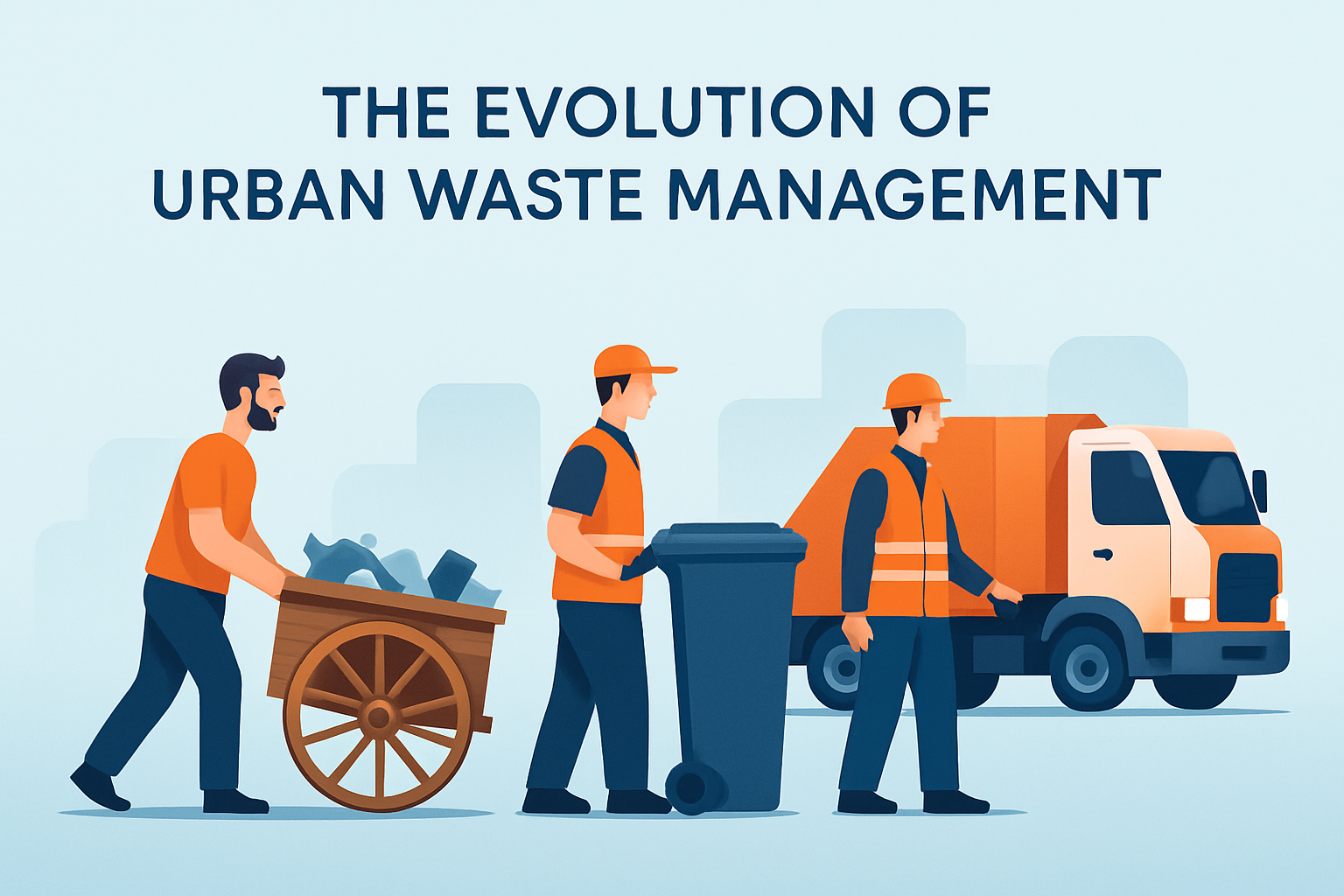
Over the decades, urban waste management practices have undergone significant transformation driven by technological advancements, regulatory changes, and public awareness. In the early 20th century, waste management was largely manual and unregulated, relying primarily on horse-drawn carts and simple pick-and-dump methods. As cities grew denser, the drawbacks of these methods—such as contamination, disease spreading, and odor—became evident.
The mid-20th century saw the development of engineered landfills, equipped with liners and leachate collection systems to minimize environmental contamination. The 1970s introduced a shift toward more sophisticated waste handling with the rise of recycling programs prompted by increased environmental awareness. Legislations like the Resource Conservation and Recovery Act led to stricter disposal standards and inspired innovations in waste processing technologies.
In recent decades, waste management has embraced a more holistic view, promoting zero waste initiatives and adopting technologies that enhance sorting, recycling, and energy recovery from waste. The integration of digital technology—such as smart bins and data analytics—has optimized collection routes and improved recycling rates.
3. What challenges do modern cities face in managing their waste, and how are they addressing them?
Modern cities face a plethora of challenges in managing their waste, primarily due to the sheer volume and complexity of waste streams. One of the main challenges is dealing with diverse types of waste, including e-waste, plastics, organics, and medical waste, each requiring different handling and disposal methods. Rising urban populations exacerbate these challenges, leading to increased per capita waste generation.
To address these issues, cities are adopting integrated waste management strategies that include reducing waste generation at the source, promoting the 3Rs—reduce, reuse, recycle—and investing in education and awareness campaigns. Technology plays a significant role, with smart waste management systems employing IoT devices to monitor waste levels and optimize collection schedules.
Innovations like anaerobic digestion and waste-to-energy plants are transforming waste into resources, producing energy and reducing landfill reliance. Collaborative efforts across municipal, regional, and national levels also promote more sustainable practices, supported by policies incentivizing recycling and waste minimization. However, sustained efforts and adaptive strategies are crucial to addressing ongoing and future waste management challenges.
4. What role do recycling and composting play in urban waste management?
Recycling and composting are central components of urban waste management strategies, contributing significantly to waste reduction and environmental sustainability. Recycling involves processing materials such as glass, metals, paper, and plastics to create new products, conserving raw materials, reducing energy usage, and lowering greenhouse gas emissions. Effective recycling programs also help prevent pollution by minimizing the need to collect new raw materials.
Composting, on the other hand, focuses on organic waste like food scraps and yard waste. By converting them into valuable soil amendments through biological decomposition, composting reduces the volume of waste sent to landfills and curtails methane emissions—a potent greenhouse gas generated when organic matter decomposes anaerobically in landfills. It also enriches soil, supporting sustainable agriculture and community gardening projects.
Cities encourage recycling and composting through infrastructure investments, public education campaigns, and incentives for participating households and businesses. Innovative recycling technologies are making sorting and processing more efficient, while community composting initiatives are gaining popularity, making these practices more accessible and appealing to urban dwellers.
5. How do landfill operations fit into modern urban waste management, and what improvements have been made?
Landfills, while often considered the last resort in waste disposal solutions, continue to play an integral role in modern urban waste management. Properly managed landfills provide a structured and sanitary method of containing waste that cannot be reused or recycled. They have evolved significantly over the years, focusing on minimizing environmental impact and improving safety.
Modern landfills are engineered facilities with features like impermeable liners to prevent groundwater contamination, leachate collection systems to manage liquid waste, and gas capture technologies to harness methane emissions for energy generation. Such advancements reduce the environmental footprint of landfills compared to their earlier counterparts.
Efforts to further improve landfill operations include optimizing waste compaction techniques to extend the lifespan of landfill sites, adopting enhanced landfill mining to recover valuable materials, and researching alternative uses for closed landfill sites, such as green spaces or renewable energy projects. The ultimate goal remains to reduce dependency on landfills by maximizing recycling, composting, and waste-to-energy processes.