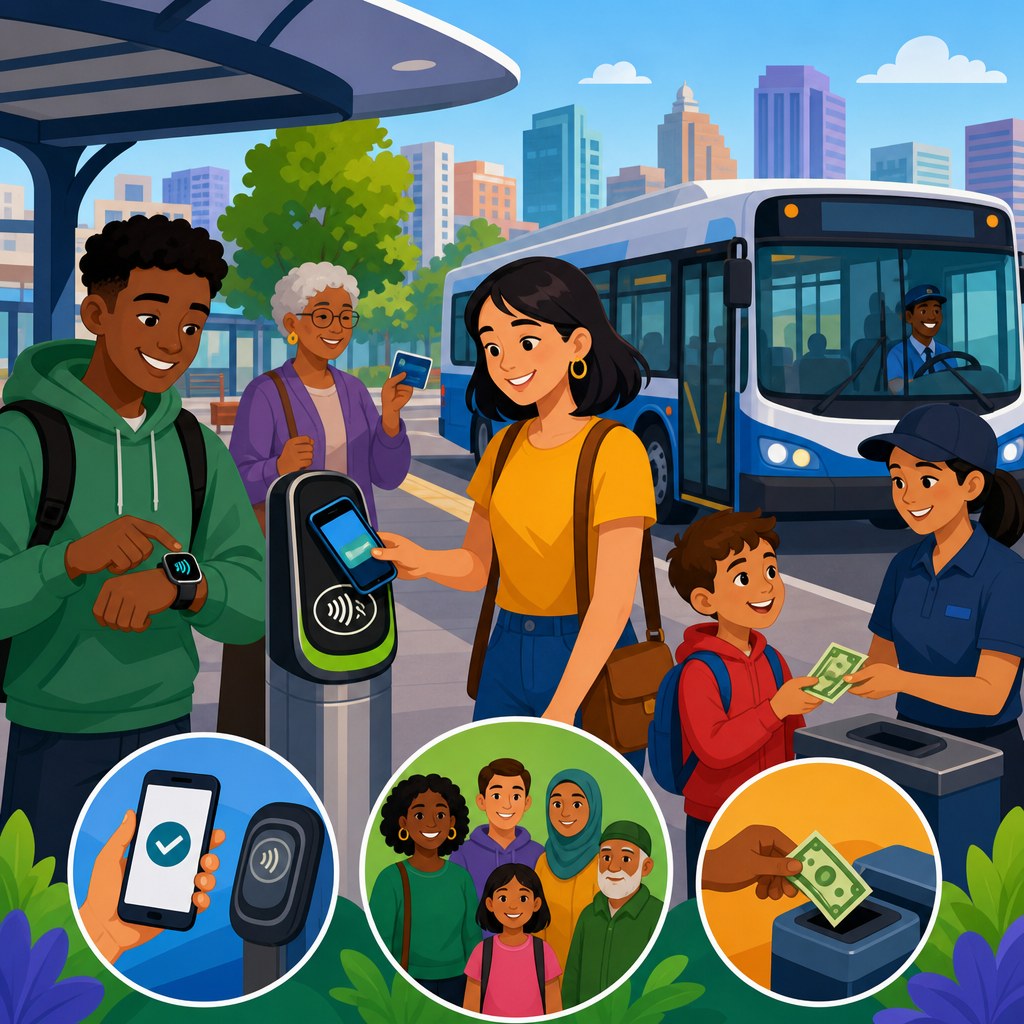
Smart transit fare systems are reshaping how people move through cities, and they matter to housing market trends because transportation costs, station access, and payment options directly influence where households can afford to live. A smart transit fare system is the mix of technologies, rules, and payment channels a transit agency uses to collect fares through contactless bank cards, mobile wallets, reloadable transit cards, ticketing apps, account-based platforms, and retail cash networks. In practice, I have seen fare policy and payment design change rider behavior as much as service changes do. When paying is simple, predictable, and flexible, more people ride. When fare systems exclude cash users or penalize irregular work schedules, mobility shrinks and housing choices shrink with it.
Convenience is the most visible promise of smart fares. Riders want to tap and board quickly, transfer without confusion, and avoid long vending machine lines. Agencies want faster boarding, lower cash handling costs, better data, and fewer maintenance problems than older magnetic stripe systems created. Yet convenience alone is not enough. Equity is just as important. A system that works perfectly for banked commuters with smartphones can still fail seniors, low-income riders, unbanked households, immigrants, people with disabilities, and residents in neighborhoods where retail reload locations are scarce. Cash access remains central because physical currency is still a budgeting tool and, for many riders, the only universally available payment method.
This article explains how smart transit fare systems work, where they deliver value, and where they can deepen inequality if agencies design them poorly. It also serves as a hub for the wider subtopic by covering the core issues every related article branches from: fare technology, rider experience, open payments, cash acceptance, retail reload networks, fare capping, discounts, privacy, accessibility, procurement, and links to land use and housing affordability. The core question is simple: how can transit agencies modernize fare collection without creating a mobility penalty for people who already face the tightest housing and transportation budgets?
How Smart Transit Fare Systems Work
Modern fare collection has shifted from card-centric systems to account-based systems. In a card-centric model, value or passes are stored on the physical card itself. In an account-based model, the rider’s balance, pass rights, transfer rules, and discount eligibility live in a back-office account, while the card or phone acts mainly as an identifier. This distinction matters because account-based systems make fare capping, instant replacement of lost cards, online account management, and multi-channel payments much easier. Agencies such as Transport for London demonstrated the operational power of this model years ago, and many North American agencies are moving the same direction.
Open-loop payment is another major shift. Instead of requiring only a proprietary transit card, agencies let riders tap a contactless EMV bank card or a mobile wallet such as Apple Pay or Google Wallet. Closed-loop media, by contrast, are agency-issued cards or tickets used only within the transit system. The best systems support both. Open-loop speeds occasional travel and tourism because users can ride immediately. Closed-loop remains necessary for people without bank cards, for discount programs tied to eligibility, and for riders who want to pay cash through retail channels. In implementation work, the strongest systems always combine these options rather than treating them as mutually exclusive.
Fare engines sit behind the scenes and apply business rules. They calculate base fares, transfer windows, zones, peak pricing, daily and monthly caps, concession discounts, and payment exceptions. Validators, fare gates, handheld inspection devices, mobile apps, and retail terminals are the front-end devices riders see. The architecture sounds technical, but the practical goal is straightforward: let riders prove payment quickly while giving agencies enough flexibility to change fare policy without replacing every machine in the field.
Convenience Gains for Riders and Agencies
The convenience case for smart fares is strong because boarding speed affects service reliability. Every second a bus spends at a stop handling cash or troubleshooting a farebox slows the route and compounds delay downstream. All-door boarding works best when payment is contactless and proof-of-payment enforcement is credible. Off-board payment, used on bus rapid transit and many light rail lines, reduces dwell time further by shifting transactions away from the vehicle. Agencies that move from cash-heavy boarding to tap-based validation usually see operational gains even when fare levels stay unchanged.
Rider convenience also improves when payment channels match real travel patterns. Daily capping is a good example. Instead of forcing riders to predict whether a day pass will pay off, the system automatically stops charging after the rider reaches the pass equivalent. Weekly or monthly capping extends the same logic to irregular workers whose trips vary. This is more than a user experience upgrade; it is a fairness upgrade because riders with limited cash no longer have to prepay a monthly pass to access the lowest effective fare. In cities where gig work, shift work, and multiple job commuting are common, capping aligns transit costs with unstable income patterns.
Agencies benefit from cleaner data. Tap records reveal transfer flows, station entries, time-of-day demand, and product usage in far greater detail than older paper passes or token systems allowed. Those data support service planning, crowd management, and targeted outreach. Still, the value of data depends on disciplined governance. Good agencies aggregate and anonymize travel information for planning while limiting retention and protecting personally identifiable data. A smart fare system should not become a surveillance tool simply because it can log every trip.
Equity Risks and Why Cash Access Still Matters
Smart fare systems can widen gaps when agencies assume digital access is universal. The Federal Deposit Insurance Corporation has repeatedly reported that millions of US households remain unbanked or underbanked, and smartphone ownership does not solve every payment barrier. Prepaid debit cards may carry fees. Mobile wallets require device compatibility and internet access at setup. Credit checks can exclude lower-income users from mainstream banking. In the systems I have evaluated, the riders most at risk of exclusion are often those already burdened by high rent, long commutes, and unstable work hours.
Cash access matters for three reasons. First, cash is a fallback when cards are lost, accounts are frozen, or phones die. Second, cash is a budgeting method. Many households allocate weekly transportation spending in physical currency because it is easier to control. Third, cash is geographically uneven. If the nearest reload location is two bus rides away or closes early, nominal acceptance does not equal practical access. That is why agencies should measure not just whether cash is accepted, but where, when, and with what fees.
Equity concerns also appear in fare media replacement policies. A bank card can be replaced through the banking system; a lost anonymous transit card with stored value may be gone forever unless the rider registered it. Requiring registration improves recoverability but can create privacy concerns or deter participation from riders uncomfortable sharing personal information. The right answer is not one-size-fits-all. Agencies should offer both anonymous low-friction products and optional account registration with clear benefits, including balance protection and remote reloads.
Design Choices That Make Systems Fairer
Fair smart fare design starts with fare policy, not hardware. A technically advanced system can still produce regressive outcomes if transfer rules are confusing or if discount enrollment is difficult. The most effective policies are simple: time-based free transfers, daily and monthly capping, broad discount eligibility, and enrollment paths that do not require extensive paperwork. Means-tested fare programs work best when agencies coordinate with existing public benefit systems so riders do not have to repeatedly prove hardship. Integration with schools, universities, and employers can also reduce friction, but public discounts must remain available to people outside formal institutions.
Retail reload networks are essential. Pharmacies, grocery stores, convenience stores, check-cashing outlets, and transit customer service centers can all extend access if they are distributed equitably. Agencies should map reload points against income, race, disability, and transit dependency data, then close gaps intentionally. A simple coverage standard helps: most residents in high-ridership, low-car neighborhoods should have a reload location within walking distance and during evening and weekend hours. Reload fees should be prohibited or absorbed by the agency because even a small fee acts like a fare increase on riders who can least absorb it.
| Design feature | Primary convenience benefit | Primary equity benefit | Main risk if poorly implemented |
|---|---|---|---|
| Open-loop bank card acceptance | Instant use for visitors and occasional riders | Reduces need to buy separate media | Excludes unbanked riders if closed-loop options shrink |
| Closed-loop reloadable transit card | Reliable tap-and-go travel | Supports cash loading and discount programs | Card replacement can be difficult without registration |
| Daily or monthly fare capping | No need to preselect passes | Gives low-income riders pass-level savings automatically | Confusion if cap rules are not clearly communicated |
| Retail cash reload network | Multiple purchase locations beyond stations | Preserves access for cash users and households without bank accounts | Uneven store coverage or added retailer fees |
| Account-based back office | Fast product updates and lost card recovery | Can centralize discounts and linked family accounts | Privacy concerns if trip data retention is excessive |
Accessibility must be embedded from the start. Vending machines need tactile controls, screen-reader compatibility, multiple languages, and physical placement that works for wheelchair users. Mobile apps need high-contrast design, readable fare history, and low-bandwidth functionality. Customer support matters as much as interface design. When reduced-fare programs are only available through online portals or distant offices, the burden falls on riders who already face the greatest barriers.
Connections to Housing Costs, Location Choice, and Opportunity
Transit fare systems influence housing market behavior because households do not experience rent in isolation; they experience combined housing and transportation costs. A lower apartment rent at the urban edge may be offset by higher commuting costs, more transfers, and greater payment friction if regional fare integration is poor. Conversely, a home near frequent transit becomes more valuable when payment is seamless across bus, rail, and shared mobility connections. Researchers and planners often examine location affordability through the combined-cost lens because transportation can be a household’s second-largest expense after housing.
Fare integration across agencies is especially important in multi-jurisdiction regions. If a rider must pay separate fares to transfer from local bus to commuter rail, the effective cost of living farther from employment centers rises. That can trap lower-income residents in a tradeoff between lower rent and higher commuting cost. Smart fare systems can soften that penalty through regional capping, transfer discounts, and interoperable cards or accounts. When agencies fail to integrate, riders pay for institutional fragmentation.
Transit-oriented development also depends on fare design. Developers, lenders, and households value station-area access differently when transit is simple to use daily. Employer transit benefits, resident bulk pass programs, and integrated first-mile connections can strengthen demand around stations. But affordability concerns remain. If better fare convenience increases the premium on transit-rich neighborhoods without preserving affordable housing, the gains can bypass the riders who depend on transit most. That is why housing policy and fare policy should be discussed together, not in separate silos.
Implementation Challenges, Privacy, and What Good Agencies Do Next
Modernizing fare collection is expensive and operationally complex. Procurement can take years. Legacy fareboxes, gates, and software often need phased replacement. Payment security must follow PCI standards for bank card data, while public agencies also have to meet accessibility rules and local procurement requirements. Staff training is a major hidden cost. Drivers, station agents, inspectors, call center teams, and retail partners all need consistent scripts and procedures. During migration, agencies should expect a temporary rise in customer confusion, disputed charges, and edge cases involving transfers or offline taps.
Privacy deserves direct attention. Account-based ticketing can generate precise trip histories tied to identifiable users. Agencies should publish retention schedules, limit access, support anonymous options where feasible, and disclose when law enforcement can request records. Clear governance builds trust, and trust affects adoption. Riders will not embrace convenient digital payment if they believe every trip is being monitored indefinitely. Cybersecurity is equally important because fare systems connect payment networks, mobile apps, and operational infrastructure.
The best next steps are practical. Agencies should audit cash access, add fare capping, preserve closed-loop options, expand retail reloads, simplify discounts, and publish plain-language fare rules. They should also measure success with rider-centered metrics: time to first use, share of trips covered by capping, reload access by neighborhood, complaint rates, and discount enrollment completion. Smart transit fare systems work best when convenience and equity are designed together. If your community is discussing transit investment, ask one question first: can every rider pay easily, fairly, and with cash when needed?
Frequently Asked Questions
What is a smart transit fare system, and how is it different from older fare collection methods?
A smart transit fare system is the full set of technologies, policies, and payment channels a transit agency uses to charge riders for trips across buses, trains, light rail, ferries, and other services. Instead of relying primarily on paper tickets, cash boxes, tokens, or magnetic stripe passes, smart systems are built around digital tools such as contactless bank cards, mobile wallets, agency-issued reloadable cards, ticketing apps, account-based fare platforms, and retail locations where riders can add value with cash. The key difference is flexibility. In a modern system, the fare product often lives in a secure backend account rather than only on a physical card, which allows agencies to support balance protection, automatic fare capping, online reloading, trip history, and easier transfers between services.
Older fare methods were often slower, more limited, and more expensive to maintain over time. Riders had to carry exact change, buy passes in person, or manage multiple tickets for different lines or operators. Smart systems reduce friction by letting riders tap and go with the payment method they already use, while also giving transit agencies better data to improve service planning, manage congestion, and design more equitable fare policies. For households making housing decisions, that matters because fare convenience, transfer rules, and total commuting costs affect which neighborhoods feel practical and affordable. A reliable smart fare system can expand access to jobs and housing by making regional travel easier, but only if it also includes accessible options for people who are unbanked, underbanked, or dependent on cash.
Why do smart transit fare systems matter for housing affordability and neighborhood choice?
Transportation and housing are closely linked, and smart fare systems sit right at that intersection. For most households, affordability is not just about rent or mortgage payments. It is about combined housing and transportation costs. A neighborhood with lower housing prices may still be financially stressful if commuting requires multiple fares, long transfers, limited payment access, or expensive peak travel. By contrast, a smart fare system that supports seamless transfers, fare caps, discounted passes, and broad station access can make a wider range of neighborhoods workable for renters, homeowners, students, seniors, and essential workers.
This connection becomes especially important in metro areas where people live farther from employment centers in search of lower housing costs. If the transit fare system is easy to use and keeps daily commuting costs predictable, households may be more willing to consider communities that are outside the urban core but still connected by reliable transit. The opposite is also true. If riders need to pay separately across agencies, cannot easily buy or reload fare media, or face penalties because they do not have bank cards or smartphones, then transportation barriers can narrow their housing options. In practical terms, the design of fare payment can shape access to opportunity. It influences whether a person can reach work, school, childcare, healthcare, and shopping efficiently enough to live in a given area without taking on the cost of owning a car.
Smart fare systems also affect real estate patterns around stations and corridors. Areas served by transit that is easy to pay for and easy to transfer onto often become more attractive to both residents and employers. That can support revitalization and increase demand, but it can also contribute to displacement pressure if affordability protections are weak. For that reason, equitable fare design is not just a transit operations issue. It is part of a broader urban policy conversation about who benefits from improved mobility and whether transit investments genuinely expand affordable living choices.
How do contactless cards, mobile wallets, and account-based ticketing improve convenience for riders?
These tools improve convenience by reducing the number of steps required to start a trip, manage fare value, and move between services. Contactless bank cards and mobile wallets allow riders to pay with devices and cards they already carry, which removes the need to stand in line at vending machines or pre-purchase tickets. That tap-and-ride experience can significantly shorten boarding times on buses and speed entry through rail gates, helping both riders and agencies. For occasional riders, tourists, and suburban commuters who do not want to maintain a separate transit card, open-loop payment can make transit feel more intuitive and accessible.
Account-based ticketing adds another layer of convenience because the rider’s fare rights, balance, and history are stored centrally rather than tied only to one card. If a phone is replaced or a transit card is lost, the account can often be restored without losing funds. Riders may be able to reload online, set up autoload, review travel records for expense reporting, and manage family accounts. Agencies can also use these platforms to introduce fare capping, meaning riders are automatically charged the lowest available fare over a day, week, or month without needing to buy a pass in advance. That is a major benefit for people with variable schedules, part-time work, or uncertain incomes, because they can earn pass-like savings gradually rather than paying a large upfront amount.
For regional mobility, smart platforms can also make transfers more seamless across multiple transit operators. When systems are interoperable, a rider can use one credential or account to move across local buses, commuter rail, subways, and even bike-share or parking services. That reduces confusion and can make cross-jurisdiction commuting more realistic. Still, convenience is only meaningful when it is broadly shared. If the most efficient features are available only to riders with smartphones, credit cards, or stable internet access, then convenience can become unevenly distributed. The strongest smart fare systems therefore combine digital ease with robust non-digital options.
What equity concerns come up with smart transit fares, especially for unbanked riders and people who rely on cash?
Equity concerns are central to the success of any smart fare system. Not every rider has a bank account, debit card, credit card, smartphone, or reliable data plan. Many people budget in cash, share phones within a household, have limited digital literacy, or face language and accessibility barriers when using apps and online accounts. If a transit agency shifts heavily toward digital payments without maintaining strong cash access, it can unintentionally exclude the very riders who depend most on public transportation. That includes low-income workers, recent immigrants, seniors, young riders, people experiencing housing instability, and residents in neighborhoods with fewer financial services.
One common issue is the “poverty premium” embedded in fare design. Riders who can afford to buy a monthly pass upfront often get the lowest effective per-trip cost, while riders who must pay one trip at a time end up spending more over the course of a month. Fare capping helps address this by ensuring that frequent riders receive pass-equivalent savings automatically, regardless of when or how they pay. Another issue is geographic access to fare loading. If cash reload locations are sparse, far from transit stops, or concentrated in limited business hours, the burden falls hardest on people with the least flexible schedules. Agencies need broad retail networks, station vending options, and community-based sales points so riders can add value conveniently and safely.
There are also concerns around fees, privacy, and enforcement. Riders may face extra costs for purchasing reusable cards, reloading at retail locations, or replacing lost media. Some may be uncomfortable linking personal bank cards or identity information to transit accounts. Others may be penalized for technical failures such as dead phone batteries, app outages, or delayed account synchronization. Equity-focused fare policy therefore goes beyond technology procurement. It includes discounted fare programs, multilingual customer support, ADA-accessible interfaces, transparent fee structures, low-cost or free card distribution, account protections, and reliable cash acceptance pathways. The bottom line is that a fare system is only truly smart if it works well for riders with the fewest resources, not just those with the latest devices.
What should transit agencies do to balance innovation, cash access, and fairness in a smart fare system?
Transit agencies should treat innovation and inclusion as complementary goals rather than competing ones. The best approach is a layered payment ecosystem that gives riders multiple ways to pay while ensuring that no essential benefit is restricted to one payment type. Agencies can support contactless bank cards and mobile wallets for speed and convenience, while also offering reloadable transit cards, station machines that accept cash, and extensive retail cash networks in neighborhood stores, pharmacies, and service centers. This kind of multimodal payment design recognizes the diversity of riders’ financial lives and daily routines.
Fairness also depends on the rules behind the technology. Agencies should prioritize fare capping, free or discounted transfers, and integrated regional pricing so riders are not punished for taking the most practical route across multiple operators. Reduced-fare eligibility should be easy to understand and simple to access, with enrollment channels that do not require advanced digital skills. Card acquisition fees should be minimal or waived, replacement policies should be humane, and customer service should be available in multiple languages and formats. Agencies should also use accessibility standards from the start, ensuring that apps, kiosks, websites, and physical validators work for riders with visual, hearing, cognitive, and mobility disabilities.
Another priority is physical and geographic access. Cash reload points should be distributed based on rider need, not just commercial convenience. That means placing them in lower-income neighborhoods, near major bus corridors, around transfer hubs, and in communities where bank branch access is limited. Agencies should monitor usage patterns and community feedback to find service gaps. Public communication matters as well. Riders need clear explanations of how to pay, where to add value, what happens if equipment fails, how privacy