
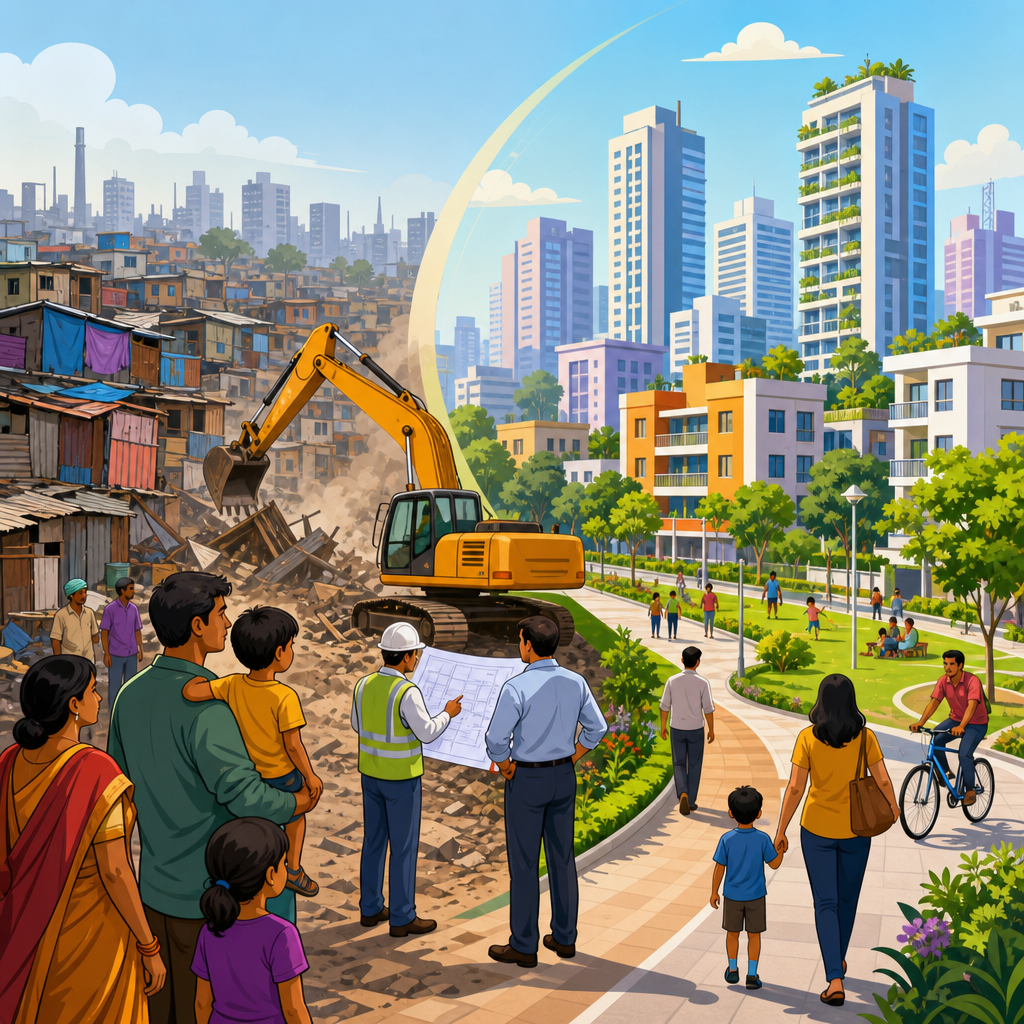
Slum clearance policies reshaped modern cities by removing dense, low-income neighborhoods and replacing them with roads, public housing, commercial districts, or private redevelopment. In planning terms, slum clearance refers to state-led demolition or compulsory acquisition of areas judged unfit for habitation, usually on grounds of overcrowding, sanitation failure, fire risk, or structural decay. The policy matters because it sits at the intersection of public health, housing law, land economics, race and class politics, and the long afterlife of urban design decisions. I have worked through archival plans, renewal maps, housing authority reports, and resident testimony, and one pattern appears everywhere: clearance was rarely only about buildings. It was also about who had the power to define urban disorder, whose homes counted as replaceable, and what kind of city officials believed should take their place.
The phrase itself carries a history. Nineteenth-century reformers in London, Paris, New York, and Glasgow linked poor housing to disease outbreaks and moral decline. By the mid-twentieth century, the language of “blight” gave governments a broader legal and political tool. Once an area could be designated blighted, authorities could assemble land at scale, reroute infrastructure, and steer investment. In some cases, that produced real gains: new sewers, safer structures, lower fire risk, and formal utilities. In many others, the damage was profound. Residents were displaced faster than replacement housing was built, social networks were broken, local businesses disappeared, and demolition targeted communities that had endured long histories of discrimination and underinvestment.
Understanding slum clearance policies is essential for anyone studying urban planning and policy because the debates are still active. Current arguments over informal settlements, transit-oriented redevelopment, climate relocation, code enforcement, and affordable housing all echo earlier clearance logics. Cities still wrestle with the same core questions. When is demolition justified? What standards define habitability? Who pays for rehabilitation? How should governments compensate residents and business owners? Can neighborhood conditions be improved without erasing the people who live there? The legacy of slum clearance offers a practical record of both administrative ambition and policy failure, making it a foundational subject for interpreting how cities grow, regulate land, and distribute risk.
How slum clearance emerged as a planning tool
Slum clearance grew out of public health reform, property regulation, and the rise of professional planning. Industrial cities expanded faster than infrastructure, creating overcrowded districts with poor ventilation, contaminated water, and inadequate waste removal. Reformers documented these conditions in surveys, maps, and photography. Edwin Chadwick’s sanitation work in Britain, Jacob Riis’s reporting in New York, and Charles Booth’s social mapping in London helped establish a policy logic: unhealthy neighborhoods were not merely private failures but urban systems problems requiring state intervention. Early interventions focused on inspections, tenement laws, drainage, street widening, and selective demolition. Over time, those tools expanded into area-wide clearance backed by new housing acts and compulsory purchase powers.
Two administrative shifts made large-scale clearance possible. First, governments developed legal definitions of substandard housing based on density, light, ventilation, structural condition, and access to toilets or water. Second, planning agencies gained the ability to assemble fragmented parcels into redevelopment sites. In Britain, the Housing of the Working Classes Acts and later interwar housing policy enabled municipal action. In the United States, the Housing Act of 1937 and especially Title I of the Housing Act of 1949 provided federal subsidies for urban renewal land assembly. Similar mechanisms appeared elsewhere, though under different legal systems. The planning profession often framed clearance as scientific management of urban land, using surveys and standards to justify intervention while downplaying the lived complexity of mixed-income, socially dense neighborhoods.
What officials called slums were not uniform places. Some were severely deteriorated and dangerous. Others were poor but functional districts with active mutual aid, strong labor-market access, and building stock that could have been rehabilitated. In my review of mid-century renewal files, this distinction is crucial. Clearance reports regularly overstated physical decline while ignoring repair potential. Neighborhoods with aging buildings, immigrant residents, and low rents were often judged obsolete because they did not fit modernist assumptions about traffic flow, open space, and standardized housing. That matters because it shows clearance was never purely a neutral technical response. It reflected planning ideology as much as housing need.
How governments justified clearance and what they built instead
Governments justified slum clearance through three main claims: public health protection, economic modernization, and social uplift. Public health arguments were strongest in periods before universal sanitation and building regulation. Economic arguments gained force after World War II, when city leaders sought higher tax yields, downtown office growth, highway access, and large institutional campuses. Social uplift language accompanied public housing, new schools, parks, and community facilities. The typical policy sequence was straightforward: survey an area, designate it blighted, acquire property through purchase or eminent domain, clear structures, relocate residents, and transfer land to public agencies or developers under a redevelopment plan.
The replacement landscapes varied. Some sites became tower-in-the-park public housing influenced by modernist planning and the Athens Charter. Others became civic centers, university expansions, convention halls, freeways, medical districts, or mixed-use private projects. In U.S. cities, Robert Moses-era road projects and urban renewal schemes in New York, Detroit, St. Louis, and San Francisco show how transportation and redevelopment often operated together. In Britain, postwar comprehensive redevelopment rebuilt bomb-damaged and poor districts with estates, ring roads, and shopping precincts. In colonial and postcolonial contexts, clearance often supported administrative order, tourist development, or formalization agendas aimed at controlling land considered unruly or informal.
The intended benefits were not imaginary. Overcrowded tenements did contribute to tuberculosis transmission, fire spread, and childhood illness. Basic infrastructure improvements saved lives. Yet the replacement strategy mattered. Demolishing low-rent housing without one-for-one replacement predictably tightened urban housing markets. Rehousing on peripheral estates could increase commute times and weaken access to casual work, childcare support, and neighborhood commerce. Large superblocks sometimes removed the fine-grained street networks that sustained small business activity and daily surveillance. Clearance solved some measurable environmental risks while creating new social and economic harms that planners had not adequately valued.
| Policy goal | Common clearance method | Typical short-term result | Frequent long-term legacy |
|---|---|---|---|
| Reduce disease and overcrowding | Demolish tenements and rebuild to modern codes | Improved sanitation and lower occupancy density | Loss of low-cost housing if replacement supply lagged |
| Modernize downtown land use | Assemble land for offices, highways, or civic projects | Large capital investment and infrastructure expansion | Displacement of residents and small firms, weaker neighborhood continuity |
| Expand public housing | Clear “blighted” blocks and build estates | Formal units with utilities and standardized layouts | Concentrated poverty where management and maintenance failed |
| Increase property values | Public-private redevelopment subsidies | Higher assessed land value in targeted districts | Gentrification pressures and exclusion of former residents |
Social costs, displacement, and unequal targeting
The central criticism of slum clearance is displacement. Residents did not simply move from bad housing to better housing on equal terms. They faced eligibility rules, rent increases, distant relocation, overcrowding elsewhere, or exclusion from new units altogether. Business owners lost customer bases and premises. Tenants, who often had the weakest legal protections, carried the greatest burden. Compensation systems generally favored titled property owners over renters, lodgers, and informal subtenants. This imbalance helps explain why the lived memory of clearance is often one of removal rather than improvement.
Clearance also mapped onto race, ethnicity, and class. In the United States, Black neighborhoods were disproportionately designated for renewal because segregation, redlining, disinvestment, and discriminatory code enforcement had already depressed housing conditions and market values. James Baldwin’s phrase “Negro removal” captured how many communities understood the process. In cities such as Atlanta, New Orleans, and Philadelphia, renewal aligned with highway building, university expansion, and downtown growth agendas that treated minority neighborhoods as sacrificial space. Similar dynamics appeared elsewhere where migrant, Indigenous, caste-marginalized, or colonial subjects lived in politically weak districts targeted for “improvement.”
Another underappreciated cost was social infrastructure. Clearance broke dense webs of kinship, childcare exchange, faith institutions, labor recruitment, and local credit relationships. These were not sentimental extras; they were survival systems. When planners assessed neighborhoods by structural defects alone, they missed the value of proximity and trust. Research on West End Boston, often cited because of Herbert Gans’s work, showed that a neighborhood dismissed as a slum could contain strong social organization and resident attachment. Once dispersed, those networks were difficult to reconstitute. Policy appraisal rarely counted this loss, but residents experienced it immediately.
Urban design lessons from success, failure, and partial reform
The urban legacy of slum clearance is mixed because outcomes depended on replacement design, governance, financing, and resident rights. The most criticized projects combined demolition with isolated superblocks, weak maintenance budgets, and social concentration. Pruitt-Igoe in St. Louis became the emblem of this failure, though its collapse cannot be reduced to architecture alone; segregation, poverty, shrinking municipal capacity, and policy neglect all mattered. By contrast, some rehabilitation-first approaches preserved street grids and building fabric while upgrading services. Historic districts in parts of Europe and Latin America demonstrated that old housing stock was not inherently obsolete if investment, code flexibility, and infrastructure renewal were aligned.
Three lessons stand out from practice. First, habitability standards must be enforced, but demolition should be the last resort after rehabilitation, infill, and service upgrading are tested. Second, resident participation changes outcomes when it occurs early enough to shape options, not merely react to finalized plans. Sherry Arnstein’s ladder remains useful here: consultation without power does little. Third, replacement housing must be timely, affordable, and located near jobs, schools, and transport. Programs such as site-and-services schemes, community land trusts, and phased in-place redevelopment have often protected more households than abrupt clearance.
Contemporary planning has absorbed some of these lessons. International agencies increasingly support slum upgrading rather than wholesale removal in informal-settlement contexts, emphasizing tenure security, drainage, sanitation, transit access, and incremental housing improvement. Still, the old logic returns under new labels when cities pursue megaprojects, climate adaptation corridors, or anti-encroachment drives without robust safeguards. The test is practical: can the policy improve safety and infrastructure while keeping current residents in the benefits zone? If not, it risks repeating the core injustice of clearance even when the language sounds modern and technical.
What slum clearance policies mean for cities today
Today, the legacy of slum clearance shapes zoning debates, historic preservation, fair housing enforcement, and redevelopment law. It explains why many communities distrust official promises attached to large projects. It also explains why planners now pay closer attention to anti-displacement tools such as right-to-return guarantees, relocation assistance, inclusionary requirements, rent stabilization, and small-business support. These tools are imperfect, but they reflect a hard-earned recognition that physical upgrading without social protection can deepen inequality. The most credible urban policy now starts from the premise that neighborhood improvement and resident retention should be pursued together.
For students, policymakers, and practitioners in urban planning and policy, slum clearance is not a closed chapter. It is a working framework for evaluating how states use land power. Ask direct questions. What evidence supports demolition over repair? Who benefits from assembled land? Are renters protected? Is there replacement housing at equivalent cost? Are schools, transit, and informal livelihoods accounted for? Cities that answer these questions rigorously make better decisions. Cities that ignore them often produce the same pattern seen across a century of clearance: cleaner plans on paper, and deeper exclusion on the ground.
The lasting lesson is simple. Cities need safe housing, modern infrastructure, and room to grow, but they also need continuity, affordability, and procedural fairness. Slum clearance policies left a visible urban legacy in highways, estates, campuses, and redeveloped downtowns. Their less visible legacy lives in displaced households, fractured communities, and enduring mistrust. If you are building knowledge within Urban Planning and Policy, use this topic as a lens for every related issue, from code enforcement to regeneration strategy. Study the records, compare cases, and insist on policies that upgrade places without erasing the people who made them neighborhoods.
Frequently Asked Questions
What are slum clearance policies, and why were they introduced?
Slum clearance policies are government-led programs that authorize the demolition, acquisition, or redevelopment of neighborhoods officially classified as unsafe, overcrowded, or unfit for habitation. In practice, these policies often targeted dense, low-income urban districts where housing conditions were poor and municipal services were limited. Authorities typically justified intervention on public health and safety grounds, citing sanitation failures, fire hazards, structural deterioration, disease risk, and extreme congestion. In many cities, slum clearance also became tied to broader planning goals such as road expansion, industrial modernization, commercial redevelopment, and the construction of public housing.
The reason these policies were introduced was not purely humanitarian, even when that was the public language used to defend them. Slum clearance emerged at the crossroads of housing reform, land economics, municipal governance, and political power. Reformers argued that unhealthy living conditions demanded state action, especially in rapidly industrializing cities where private landlords had often neglected maintenance. At the same time, local governments and developers recognized that centrally located land occupied by poor communities could be repurposed for more profitable uses. As a result, slum clearance frequently served multiple aims at once: improving health conditions, reordering urban space, increasing land values, and asserting official control over neighborhoods viewed as disorderly or obsolete.
How did slum clearance reshape the physical layout of modern cities?
Slum clearance had a profound and lasting effect on urban form. Once older neighborhoods were demolished, cities often replaced them with wide arterial roads, high-rise housing estates, civic centers, industrial facilities, shopping districts, parking infrastructure, or private redevelopment projects. This changed not only what stood on the land, but also how people moved through the city. Traditional street grids, mixed-use blocks, and tightly knit local markets were often erased in favor of superblocks, zoning separation, and automobile-oriented planning. In many cases, areas that had once supported dense social and economic life were converted into spaces designed for traffic circulation, institutional control, or higher-value investment.
The legacy of these changes is still visible today. Many downtown business districts, urban expressways, and postwar housing projects stand on land cleared under these policies. Entire communities were displaced from central neighborhoods and pushed outward, contributing to patterns of segregation, commuting inequality, and uneven access to jobs and services. Clearance did not simply replace old buildings with new ones; it altered the social geography of cities by redistributing who could live where, under what conditions, and at what cost. That is why historians and planners treat slum clearance as a foundational force in the making of the modern city, not just as a narrow housing policy.
Were slum clearance policies effective at improving living conditions?
They were effective in a limited and uneven sense, but the broader record is deeply mixed. On one hand, clearance could remove housing that was genuinely hazardous. In neighborhoods lacking safe water, sewer connections, ventilation, or structurally sound buildings, demolition sometimes ended dangerous living conditions that should not have been tolerated in the first place. Where governments followed clearance with substantial investment in decent, affordable replacement housing and infrastructure, some residents did gain access to improved sanitation, safer construction, and more formal tenancy arrangements.
On the other hand, many slum clearance programs failed to solve the housing problem because they focused more on eliminating places than on supporting people. Demolition often happened faster than rehousing. Residents were displaced into equally poor or even worse accommodation elsewhere, sometimes at higher rents and farther from work, schools, and social networks. Public housing built in place of cleared districts could be insufficient in quantity, socially isolating in design, or inaccessible to many of the former residents because of eligibility rules and cost. In that sense, clearance frequently addressed the visible symptoms of urban poverty without confronting its underlying causes, such as low wages, discrimination, insecure tenure, speculative land markets, and underinvestment in existing neighborhoods. So while some physical conditions improved, the policy often reproduced hardship in a new form rather than eliminating it.
What were the social and economic consequences for communities affected by slum clearance?
The consequences were often severe and long-lasting. The immediate impact was displacement: families lost homes, tenants lost local support systems, small businesses lost customer networks, and communities lost institutions such as places of worship, informal childcare arrangements, corner shops, and neighborhood associations. These local systems mattered because they helped residents survive in difficult economic circumstances. When clearance removed them, people did not just lose buildings; they lost social infrastructure. Relocation frequently fractured kinship ties, interrupted children’s schooling, and increased travel time to jobs, which could weaken household stability over time.
Economically, slum clearance often transferred value away from low-income residents and toward the state, developers, or higher-income newcomers. Compensation, when provided, was frequently inadequate, especially for tenants and informal occupants with limited legal protection. Land that had housed working-class populations was often reclassified and redeveloped into more profitable uses, accelerating property appreciation while excluding former residents from the benefits. In many cities, clearance reinforced racial, ethnic, or class-based inequality because marginalized communities were disproportionately targeted for removal. This is why the legacy of slum clearance is so contested: it is not only a story about urban improvement, but also about dispossession, unequal citizenship, and the use of planning law to reorganize access to valuable urban land.
How does the legacy of slum clearance influence urban planning debates today?
The legacy of slum clearance remains central to contemporary debates about redevelopment, gentrification, infrastructure expansion, and housing justice. Today’s planners, policymakers, and community advocates often look back at clearance-era decisions as cautionary examples of what happens when physical redevelopment is prioritized over resident stability and democratic participation. The historical record has made many cities more skeptical of top-down interventions that treat low-income neighborhoods as blank spaces for improvement. As a result, current planning discourse places greater emphasis on rehabilitation, in-place upgrading, tenant protections, community consultation, heritage preservation, and anti-displacement strategies.
That legacy also shapes legal and ethical questions about who benefits from urban change. When cities pursue transit corridors, waterfront redevelopment, climate adaptation, or downtown revitalization, critics often ask whether these projects repeat older patterns of removal under a new name. The memory of slum clearance has therefore broadened planning practice beyond technical design concerns to include questions of equity, reparative policy, and procedural fairness. In practical terms, this means more attention to relocation rights, affordable housing replacement, compensation standards, and the preservation of community networks. The enduring lesson is that urban renewal cannot be judged only by what gets built; it must also be judged by who is displaced, who remains, and who gains access to the city that emerges afterward.


