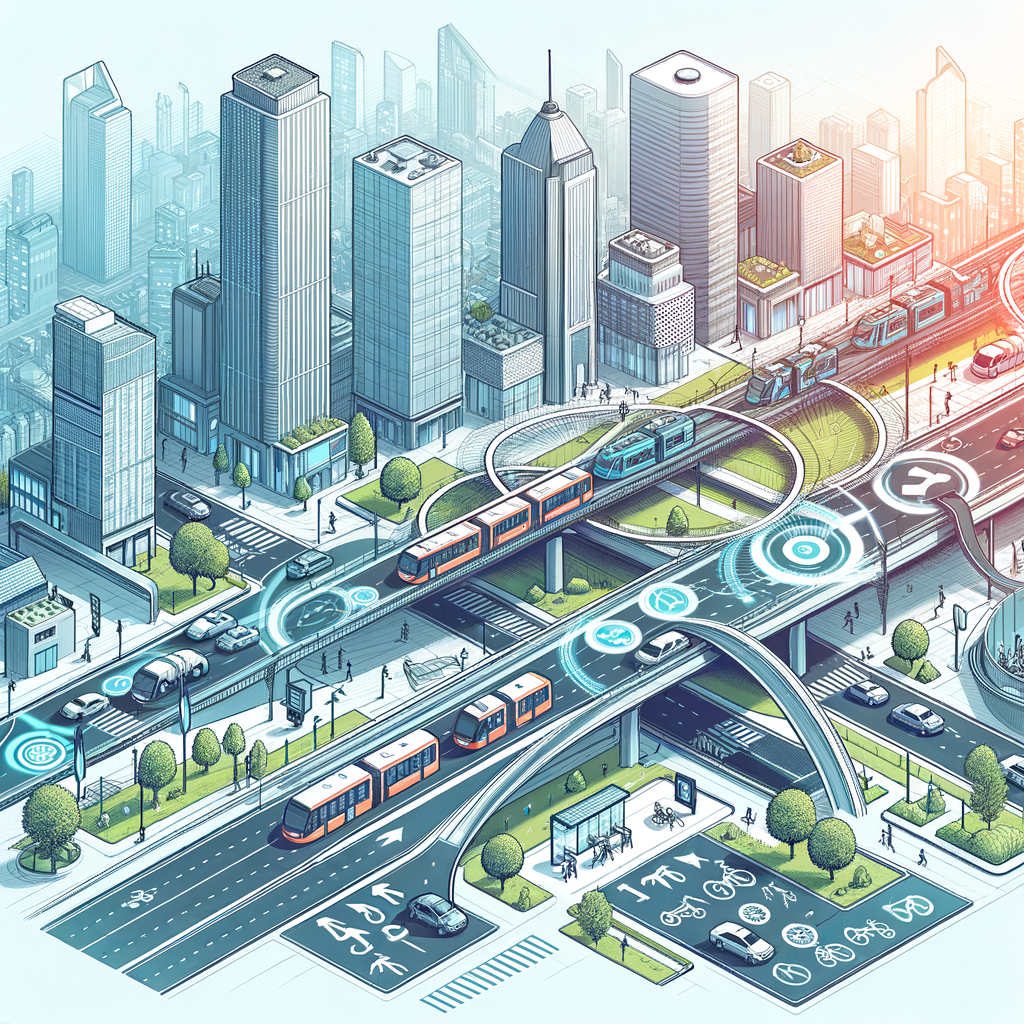
In today’s rapidly urbanizing world, aging urban infrastructure has emerged as a pervasive challenge that confronts cities globally. The term “urban infrastructure” encompasses the complex systems and structures that form the backbone of our cities, including transportation networks, water supply, drainage systems, energy grids, and communication networks. Many of these systems, built decades ago, are now faltering under the weight of escalating urban populations, environmental changes, and technological advancements. This matters significantly because poorly maintained infrastructure can lead to dire consequences such as traffic congestion, water shortages, blackouts, and increased vulnerability to climate risks. The time to address these issues is now, as revitalizing our aging urban infrastructure is not just a necessity but a pivotal move towards sustainable urban growth and resilience.
Assessing the State of Urban Infrastructure
Understanding the current condition of urban infrastructure is the first step toward revitalization. Many cities, such as New York, Delhi, and Sao Paulo, have infrastructures dating back to the early 20th century. A common characteristic among these aging systems is vulnerability to frequent breakdowns and costly repairs, which significantly strain municipal budgets. For instance, the American Society of Civil Engineers (ASCE) has long reported on the dilapidated state of America’s infrastructure, giving it a D+ rating as of their latest report card. This grading underscores a significant gap in maintenance and modernization efforts.
To effectively tackle these challenges, cities need to accurately assess their infrastructures through rigorous inspections and evaluations. Technological innovations like drones and AI-powered analytics play a crucial role in offering precise assessments. For example, drones are now widely used to inspect bridges and roads, providing detailed visuals that help identify weak spots before they manifest into larger problems. With precise assessments, urban planners can prioritize interventions and allocate resources more effectively.
Implementing Smart Technology
The integration of smart technology into urban infrastructure is a game-changer, promising efficiency and sustainability. Smart technology involves the use of intelligent and connected systems that enhance the capability of infrastructure to self-monitor and optimize operations. In cities like Singapore, smart sensors embedded in roads and bridges offer real-time data on structural conditions, traffic patterns, and wear-and-tear. This data enables predictive maintenance, significantly reducing downtime and repair costs.
- Real-time traffic management systems help reduce congestion by dynamically adjusting traffic signals.
- Smart meters in energy grids allow for more accurate tracking of consumption, aiding in efficient power distribution and reduced waste.
- AI-driven water management systems predict and mitigate both shortages and surpluses.
The implementation of such technologies across aging infrastructure results in safer, more efficient, and responsive urban environments. These advancements also contribute to improved quality of life for residents by enhancing reliability and reducing costs.
Financing Revitalization Projects
The financial aspect of revitalizing urban infrastructure often poses the most significant hurdle. The costs associated with modernization and repair can be astronomical, giving rise to the need for innovative financing solutions. One promising approach that multiple cities have adopted is public-private partnerships (PPPs), which leverage the resources and expertise of the private sector while retaining public control and accountability.
The partnership model has seen success in places such as Houston, Texas, where private companies partnered with the local government to modernize the city’s water treatment facilities. This collaboration not only improved efficiency but also reduced operational costs and ensured better service delivery to residents. Moreover, incentive-based models, which reward companies for timely project completion and quality work, contribute to enhanced accountability and better outcomes.
Emphasizing Sustainable Development
Sustainability is no longer a luxury but a fundamental requirement in modern infrastructure projects. As cities undertake revitalization efforts, there is a growing emphasis on integrating sustainable practices. This means designing systems that minimize environmental impact, utilize renewable resources, and promote long-term ecological health.
Consider the example of Copenhagen, a city leading the way in sustainable urban infrastructure. With an ambitious goal of becoming carbon-neutral by 2025, Copenhagen has implemented extensive cycling networks, energy-efficient transport systems, and green buildings. These initiatives not only reduce carbon emissions but also enhance the resilience of the city against climate change impacts, such as flooding and heatwaves.
Citizen Engagement and Community Impact
Revitalizing urban infrastructure is not an endeavor confined to engineering and design; community engagement plays a pivotal role. The effectiveness of infrastructure projects significantly increases when they are collaboratively planned and executed with public participation. Engaging citizens leads to better alignment with community needs and creates a sense of ownership that often results in more diligent maintenance and usage.
For example, Medellín’s transformation from a city plagued by violence to one celebrated for its innovation and community-focused urban development illustrates the profound impact of citizen engagement. Incorporating public feedback in the design and implementation of their metro cable systems not only improved mobility but also enhanced social cohesion among the populace.
Overcoming Political and Bureaucratic Challenges
Political will and bureaucratic efficiency are critical to the success of urban infrastructure revitalization. However, these projects frequently encounter delays due to political disagreements and bureaucratic red tape. Overcoming these obstacles requires strong leadership and streamlined processes that prioritize infrastructure development as a non-partisan issue critical to national progress.
| Challenge | Solution |
|---|---|
| Political Disagreements | Form bipartisan councils dedicated to infrastructure renewal. |
| Bureaucratic Red Tape | Implement fast-track approval processes for critical infrastructure projects. |
Taking cues from countries with successful frameworks, like Germany’s model of strong institutional frameworks and legal provisions, could greatly benefit other nations dealing with similar challenges.
Conclusion: Building a Resilient Future
To sum up, revitalizing aging urban infrastructure is an urgent task that demands immediate action and strategic planning. By assessing current conditions, integrating smart technology, exploring innovative financing, and emphasizing sustainability, cities can transform their infrastructure into modern, efficient systems that meet 21st-century demands. The benefits include enhanced urban living, improved economic prospects, and increased resilience to future challenges.
For policymakers, urban planners, and citizens alike, the focus should be on concerted efforts to drive infrastructure upgrades with long-term vision and community involvement. The call to action is unequivocal—invest in a resilient future by supporting policies and projects aimed at revitalizing urban infrastructure. Together, we can pave the way for sustainable urban development that enhances quality of life for all residents.
Frequently Asked Questions
1. What are some common challenges associated with aging urban infrastructure?
As cities grow and evolve, their foundational systems often struggle to keep pace. Aging infrastructure, typically designed and constructed decades ago, grapples with several challenges today. First, there’s the sheer increase in population density. Our roads, bridges, and public transportation systems often weren’t built for the current volume of traffic, leading to congestion, delays, and higher maintenance costs. Furthermore, many water supply and drainage systems are similarly inadequate, contributing to water shortages, leaks, and, at times, severe urban flooding.
Additionally, there’s the issue of environmental sustainability. Original construction methods and materials may no longer fit current ecological standards, causing inefficiencies and higher carbon footprints. Developing issues such as climate change intensify these challenges, as they bring about extreme weather events that place even more stress on these aging systems. Lastly, without the integration of modern technology, outdated energy and communication networks might be less reliable, slower, and more expensive to operate. The challenge, then, is to address these multifaceted problems holistically, finding ways to rehabilitate or replace aging infrastructure while simultaneously preparing for the future.
2. How can cities begin the process of revitalizing their outdated infrastructure?
Revitalizing aging infrastructure is indeed no small feat, but there are strategic steps cities can take to tackle this daunting task. Initially, cities must conduct thorough assessments to understand precisely the condition of their infrastructures. This involves evaluating the structural integrity, capacity, and efficiency of existing facilities and networks. Technology can play a crucial role here, with the use of drones, sensors, and data analytics providing valuable insights that guide decision-making.
Following the assessment, cities should prioritize projects based on urgency, potential impact, and available funding. Communication with stakeholders—ranging from residents to businesses—is vital to ensure everyone is informed and their needs are considered. Once projects are prioritized, cities can leverage a mix of public funding, state and federal grants, and private investment to kickstart revitalization efforts. Investing in ‘smart’ infrastructure, utilizing sustainable materials and designs, and integrating technology, such as the Internet of Things (IoT), are all forward-thinking moves. The overarching goal should be to not just repair or replace but to future-proof infrastructure, equipping it to better handle current and future demands.
3. What role does technology play in modernizing urban infrastructure?
Technology is revolutionizing our approach to infrastructure, bringing about efficiencies and innovations that are vital for modern urban life. Smart technology, for example, is being implemented widely across urban systems. Smart grids equipped with sensors can adjust electricity distribution based on demand, improving energy efficiency and reducing costs. Intelligent transportation systems using AI and machine learning facilitate seamless traffic management, minimizing congestion and enhancing safety on the roads.
In water management, smart meters allow for real-time monitoring of water usage, aiding in both conservation and leak detection. Data analytics plays a pivotal role across all these areas, giving city planners and engineers the ability to predict failures, optimize maintenance schedules, and allocate resources more effectively. Furthermore, the digitization of data and the establishment of robust communication networks provide the backbone for these advancements. Embracing technology not only enhances the functionality of existing infrastructure but also streamlines the integration of future systems.
4. How can sustainable practices be incorporated into infrastructure revitalization?
Sustainability is becoming an indispensable element in the discourse around urban infrastructure revitalization. To incorporate sustainable practices, cities must first set clear environmental goals that align with broader sustainability standards, such as reducing carbon emissions and minimizing environmental disruption. One approach is to use eco-friendly materials that are durable and require less resource-intensive maintenance. For instance, permeable pavement can help manage stormwater runoff, reducing the risk of flooding and minimizing the strain on drainage systems.
In terms of energy, the transition to renewable sources is key. Solar arrays, wind turbines, and geothermal technology are becoming components of urban infrastructure, supporting energy decentralization and resilience. Additionally, retrofitting existing buildings with energy-efficient systems, like LED lighting and smart heating, can significantly reduce energy consumption. Green roofs and urban green spaces similarly play a critical role, offering benefits from heat island effect mitigation to enhanced air quality. Altogether, sustainability isn’t just an add-on; rather, it should be interwoven into every stage of infrastructure planning, design, and implementation.
5. What funding strategies can cities employ to support infrastructure revitalization?
Revitalizing aging infrastructure is a capital-intensive endeavor, often stretching city budgets. However, numerous funding strategies are available to support these initiatives. Public-private partnerships (PPPs) are increasingly popular, as they combine public sector planning with private sector investment, expertise, and efficiency. These partnerships can facilitate the development of projects that might otherwise be unfeasible due to limited public resources.
Moreover, cities can explore government grants, subsidies, and low-interest loans available at both national and international levels. Infrastructure banks and green bonds are other vital avenues, usually earmarking funds for environmentally friendly projects. Cities may also consider experimenting with crowdsourcing models, allowing community members to participate directly in funding small-scale projects. Lastly, implementing user fees, such as tolls or utility charges, can generate revenue to reinvest in infrastructure maintenance and upgrades. While no single solution fits all, a diversified funding strategy comprising multiple sources is often the most viable approach to supporting comprehensive infrastructure modernization.