
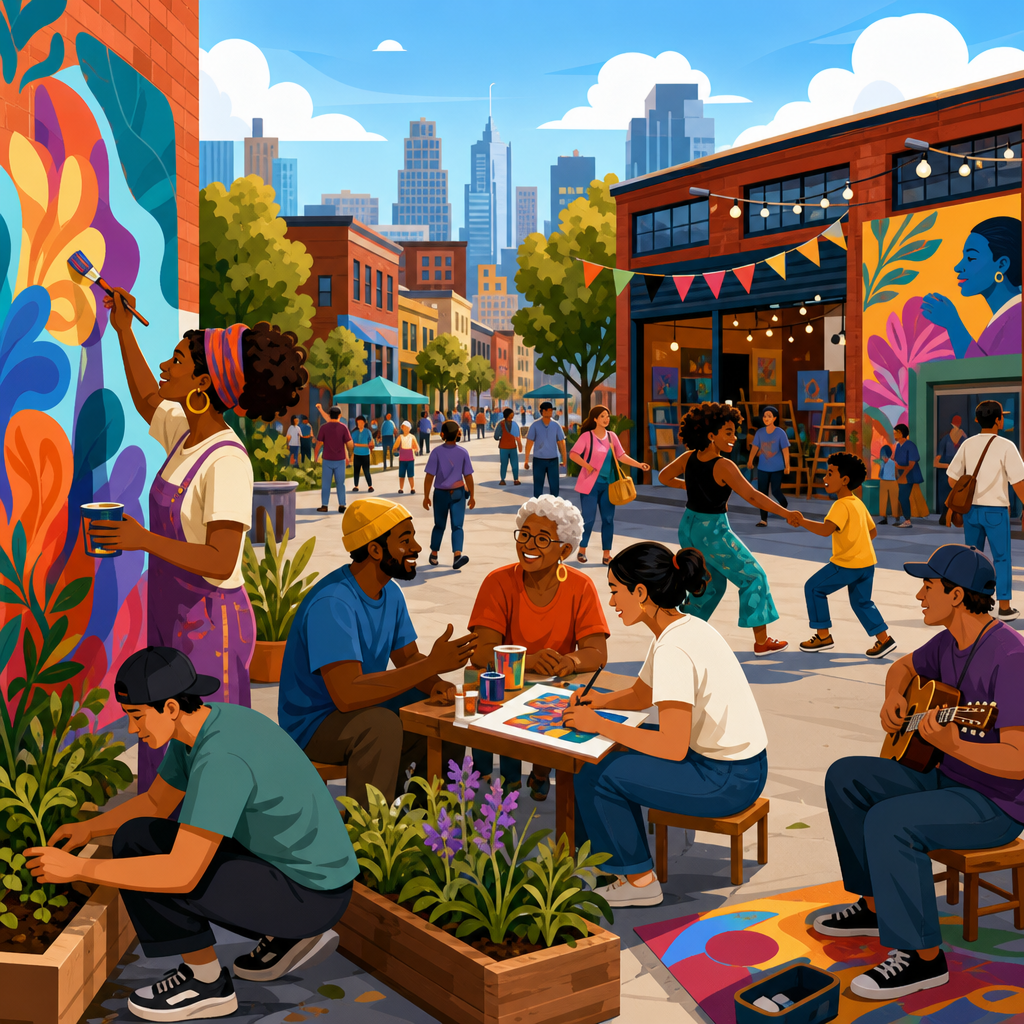
Arts districts can animate vacant blocks, attract local spending, and give residents shared places to gather, but they can also become early signals for real estate speculation if city leaders, artists, and community groups do not design them carefully from the start. In affordable housing work, I have seen the pattern repeat: murals arrive, warehouse studios fill, a neighborhood gains media attention, and rents begin climbing long before longtime tenants see durable benefits. An arts district, in simple terms, is a defined area where cultural activity, creative businesses, performance venues, public art, and artist workspaces are intentionally clustered. Speculation is the practice of buying land or buildings mainly because investors expect prices to rise, not because they plan to provide stable housing or useful local services. The central challenge is not whether arts-led revitalization is good or bad. It is whether the value created by culture stays rooted in the community that produced it. That question matters because once land values rise without protections, displacement moves faster than most cultural plans can react.
Community-building without triggering speculation requires policy sequencing, ownership strategy, and resident governance. The order matters. If a city markets an arts district before protecting tenants, acquiring sites, and setting affordability rules, it effectively advertises future land appreciation to outside investors. If, instead, it pairs cultural investment with community land trusts, limited-equity housing, commercial rent stabilization tools where allowed, anti-harassment enforcement, and local ownership pathways, the district can strengthen neighborhood life without becoming a pipeline to displacement. This article explains how arts districts can do that in practice, using tools that planners, nonprofit developers, anchor institutions, and resident leaders can apply immediately.
Start with housing protections before branding the district
The safest way to prevent speculation is to treat cultural planning as downstream from housing stability, not the other way around. In practice, that means a city should first map who is currently vulnerable: rent-burdened households, unsubsidized affordable buildings, small legacy businesses, informal artist spaces, and properties owned by absentee landlords with code issues or tax delinquency. I have worked on neighborhood strategies where this baseline inventory changed the entire approach. Instead of launching banners, festivals, and rezoning first, the team prioritized tenant outreach, right-to-counsel funding, preservation acquisition, and emergency repair programs. That sequence reduced the chance that new attention would convert immediately into rent hikes.
Several protections are especially important at the outset. Preservation of naturally occurring affordable housing should be funded before the district is promoted. Public agencies and mission-driven partners can identify at-risk buildings and acquire them for long-term affordability. Where local law permits, tenant opportunity to purchase policies can give residents or nonprofits a first path to buy when a building goes up for sale. Strong code enforcement matters too, because speculative owners often use deferred maintenance or harassment to push tenants out ahead of a sale. Cities should also review property tax relief options for low-income homeowners and longtime small businesses so rising assessments do not force involuntary exits. The point is straightforward: if the neighborhood is not protected before the spotlight arrives, the spotlight itself becomes a market signal.
Use community ownership to hold value in place
The most reliable anti-speculation strategy is community control over land. Community land trusts are especially effective because they remove land from the conventional market and place it under nonprofit stewardship for permanent public benefit. Homes or commercial spaces on trust land can still be occupied, sold, or leased, but resale formulas and ground lease terms keep them affordable over time. For arts districts, this model can support mixed-use buildings with deeply affordable apartments, artist studios, rehearsal space, neighborhood retail, and civic space under one governance structure. In my experience, once a district secures even a modest portfolio early, it gains negotiating power and a visible alternative to purely market-driven redevelopment.
Other ownership models matter as well. Limited-equity cooperatives can keep resident costs predictable while building collective decision-making. Nonprofit-owned cultural facilities can protect rehearsal and exhibition space from commercial rent spikes. Social housing models, public development authorities, and land banking can assemble parcels before private speculation intensifies. Anchor institutions such as hospitals and universities can contribute land, low-cost financing, or master leases, but agreements must include enforceable affordability terms rather than informal promises. Shared ownership also applies to commerce. Cooperative marketplaces, incubator kitchens, and maker spaces with capped rents can give local entrepreneurs a foothold that survives neighborhood popularity. Without this ownership layer, arts districts often create value that is quickly extracted by whoever already controls the deed.
Pair cultural investment with enforceable affordability rules
Cultural programming alone does not preserve affordability. Districts need legal and financial mechanisms that shape what can be built, who can stay, and how gains are shared. Inclusionary housing requirements can reserve a portion of new residential development for below-market units, especially when paired with density bonuses or public land contributions. Commercial affordability is harder because many jurisdictions lack direct rent regulation for small business, but cities still have tools: below-market master leasing, legacy business grants, formula retail limits, nonprofit ownership, and public covenants that require affordable workspace. Development agreements for major projects should specify affordable housing percentages, local hiring targets, community space, and long-term monitoring.
Tax policy can help or harm. Property tax abatements that reward new luxury construction may accelerate speculation, while abatements tied to long-term affordability or arts-serving community uses can reduce pressure. Value capture tools, including tax increment financing in some contexts, can support infrastructure and affordable housing, but they must be structured carefully so rising values do not simply subsidize more market-rate demand. The lesson from many cities is clear: if an arts district raises neighborhood desirability, some of that uplift must be captured in binding ways for residents, tenants, and local businesses. Voluntary benefits are too easy to dilute when leadership changes or the market overheats.
Design the district around existing residents and local culture
An arts district should express the neighborhood that already exists, not import a brand that appeals mainly to visitors and investors. That begins with cultural asset mapping led by residents, teaching artists, youth groups, faith organizations, and longtime business owners. The goal is to identify living cultural infrastructure: dance schools in storefronts, church choirs, barber shops that host poets, seamstresses, block parties, community gardens, and informal vendor networks. These are often omitted from official arts plans even though they carry more social meaning than new galleries. When planners document and fund them, the district becomes an extension of community life rather than a replacement for it.
Programming choices also send signals. Large signature events can draw attention, but a calendar dominated by destination festivals may attract speculative interest faster than it builds local belonging. Smaller recurring programs often work better: neighborhood commissions for public art, paid apprenticeships for local youth, multilingual performances, artist residencies tied to schools or tenant associations, and microgrants for block-level cultural projects. Public art agreements should compensate local artists fairly and, where possible, give residents a formal role in selection and stewardship. The district narrative matters too. Marketing language that emphasizes “undiscovered” neighborhoods or “next hot area” is effectively speculative advertising. Language that centers history, stewardship, and resident leadership creates a very different market message.
Build governance that gives residents real power
Good intentions do not survive long without governance. Every arts district needs a decision-making structure in which residents, tenants, local artists, affordable housing organizations, and small businesses hold durable authority, not just advisory seats. I recommend a governing board with reserved voting positions for these groups, conflict-of-interest rules, term limits, transparent budgets, and public reporting on displacement indicators. If developers or major institutions dominate the board, community goals eventually become secondary to land value growth.
The operating model should answer practical questions. Who approves programming? Who controls sponsorships and branding? Who can dispose of publicly assembled land? Who tracks whether affordable units and studios remain affordable after five, ten, or twenty years? Community benefits agreements can formalize expectations, but only if they are specific, legally reviewed, and monitored. Participatory budgeting is useful for a portion of district funds because it lets residents choose visible improvements while building civic trust. Governance should also include clear protections for artists who live and work informally, since many are vulnerable to lease insecurity, code enforcement pressures, or exclusion from conventional grant systems.
| Strategy | How it builds community | How it reduces speculation |
|---|---|---|
| Community land trust | Keeps housing, studios, and retail under local stewardship | Removes land from the private market and limits resale gains |
| Tenant protections before launch | Helps current residents remain in place and participate | Makes displacement harder during early investor interest |
| Resident-led cultural programming | Reflects neighborhood identity and strengthens trust | Avoids outsider branding that markets the area as the next hotspot |
| Affordable commercial master leases | Stabilizes local businesses and arts spaces | Buffers small tenants from rapid rent escalation |
| Transparent community governance | Gives residents authority over budget and land decisions | Limits capture by developers and speculative owners |
Measure early warning signs and respond quickly
Speculation is easier to prevent when cities track it in real time. The most useful indicators are not abstract. Watch sale prices per square foot, cash purchases by limited liability companies, eviction filings, code complaints, business turnover, studio rent increases, property tax delinquency, and sudden spikes in permit applications for conversions or high-end renovations. Pair these with resident surveys on harassment, overcrowding, and fear of displacement. A district dashboard should be public and updated regularly so responses are triggered by evidence rather than political convenience.
Responses must also be preplanned. If sales accelerate beyond a threshold, activate acquisition funds and outreach to at-risk tenants. If eviction filings rise, expand legal assistance and inspection capacity. If artist workspaces begin disappearing, convert public or nonprofit sites to permanent affordable studios rather than relying on temporary pop-ups. This is where many districts fail: they celebrate activation metrics such as foot traffic and social media attention but ignore housing stress until displacement is already underway. Strong districts treat cultural vibrancy and housing stability as inseparable performance measures.
Finance arts districts with long-term public purpose
Funding structure shapes outcomes. Short-term grants can launch programming, but they rarely secure affordability. Durable districts braid capital and operating funds from multiple sources: municipal housing trust funds, federal programs such as HOME or Community Development Block Grants where eligible, New Markets Tax Credits for certain facilities, state housing finance tools, philanthropic program-related investments, and low-cost debt from community development financial institutions. The financing stack should prioritize permanent affordability covenants, acquisition, rehabilitation, and reserve funds for nonprofit ownership. Capital for façade upgrades or event production is useful, but it should not outrun investment in stable homes and workspaces.
Private philanthropy can help absorb early risk, especially for site control, predevelopment, and technical assistance. However, I have learned to be cautious when funders prefer visible arts outcomes over harder housing work. Districts need both. The right structure funds organizers, tenant outreach, legal support, building acquisition, and cultural programming together. Procurement policy matters too. When cities commission design, construction, or event services, contracts can include local vendor participation, living wages, and apprenticeship pathways. That converts cultural spending into neighborhood income rather than leakage. Financing should answer a basic test: five years after launch, are more community-controlled assets in place, or has the district mainly increased the value of privately held property?
Arts districts can build real community without triggering speculation, but only when housing stability, local ownership, and resident power are treated as the foundation rather than side benefits. The practical sequence is clear. Protect tenants and preserve affordable buildings first. Secure land through community-serving ownership models. Attach enforceable affordability rules to new development and public investment. Build programming from existing culture, not outside branding. Give residents formal authority over land, budget, and narrative. Track speculative pressure early and intervene before displacement accelerates. Fund the district for permanent public purpose, not temporary visibility.
The main benefit of this approach is not simply avoiding harm. It creates stronger districts. Places with stable residents, protected artists, affordable storefronts, and trusted governance produce richer cultural life than places driven by churn. They also build lasting economic value that is shared more fairly. If you are planning an arts district within an affordable housing strategy, start by asking who owns the land, who is at risk of being pushed out, and who will hold decision-making power when the area becomes more desirable. Then build from there, deliberately and in that order.
Frequently Asked Questions
1. How can an arts district strengthen a neighborhood without accelerating displacement?
An arts district can strengthen a neighborhood without accelerating displacement when cultural investment is paired with anti-displacement policy from the very beginning, not added later as damage control. In practice, that means city leaders, artists, nonprofit partners, and resident groups should treat affordability, commercial stability, and community governance as core infrastructure for the district. Public art, events, galleries, and maker spaces may increase visibility and foot traffic, but if there are no protections for renters, small businesses, and legacy cultural organizations, that visibility can quickly turn into a market signal for outside investors. The goal is not simply to create energy; it is to make sure the people who already give the neighborhood its identity can remain in place and benefit from the district’s success.
Effective approaches often include preserving affordable housing before the district is widely marketed, securing long-term affordable commercial space for local entrepreneurs and artists, supporting community land trusts or limited-equity ownership models, and tying public investment to enforceable community benefits. Cities can also prioritize local hiring, low-cost event access, small business stabilization funds, and grants for resident-led arts programming rather than relying only on destination branding. Just as important, district leaders should avoid language that frames the area as “undiscovered” or “up-and-coming,” because that kind of messaging can invite speculation. A well-designed arts district builds civic pride, local income, and neighborhood visibility while reducing the chances that cultural activity becomes the first step in a cycle of rent increases and displacement.
2. What policies should be in place before launching an arts district?
Before launching an arts district, local governments and community partners should put several protective policies in place so that cultural development does not outpace resident safeguards. First, affordable housing preservation should be a priority. That can include acquiring at-risk properties, expanding tenant protections, funding rehabilitation for existing affordable buildings, and creating clear pathways for nonprofit or community-controlled ownership. If the district begins attracting attention before these tools are active, landlords and investors may move faster than residents can respond. Second, local officials should address commercial affordability by preserving low-cost storefronts, offering longer-term leases for small businesses and arts groups, and creating commercial stabilization programs for legacy businesses that help define the neighborhood’s identity.
Governance is equally important. An arts district should have a formal structure that gives residents, local artists, tenant organizations, and community-based institutions real decision-making power over programming, branding, budgets, and development priorities. Community benefits agreements, anti-harassment enforcement, property tax relief for long-term homeowners, right-to-counsel programs for tenants, and inclusionary housing requirements can also help reduce displacement pressure. In some cases, cities should go further by limiting speculative assemblage, monitoring absentee ownership, or using public land for permanently affordable uses rather than market-rate projects. The strongest arts districts are not launched as isolated cultural initiatives; they are launched as place-based equity strategies where art, land use, housing, and economic policy are intentionally linked.
3. Why do arts districts sometimes become early signals for real estate speculation?
Arts districts sometimes become early signals for real estate speculation because they can change how a neighborhood is perceived long before they change who controls the land. When vacant storefronts become studios, walls become murals, and local events start drawing visitors, outside observers often read those changes as signs of future demand. Developers, investors, and higher-income renters may begin to see the area as a place where values can rise, especially if it is located near downtown, transit, waterfronts, or industrial land poised for redevelopment. Media coverage can intensify this effect by presenting the neighborhood as newly “discovered,” even when residents and local culture have sustained it for decades. Once that narrative takes hold, land prices and asking rents may rise ahead of any broad-based gains for the people already living there.
The underlying issue is that cultural value is often captured by property markets unless deliberate systems are in place to keep that value rooted in the community. Artists and cultural organizations may create social energy, improve public space, and attract spending, but absent protective policy, owners of land and buildings are often positioned to capture the financial upside. That is why an arts district cannot rely on good intentions alone. It needs mechanisms that lock in affordability, preserve cultural space, and define success in terms of resident stability rather than outside attention. Understanding this pattern helps communities act earlier. Instead of asking how to attract interest, they can ask who benefits from interest, who controls the real estate, and what protections are needed before increased visibility changes the economics of the neighborhood.
4. How can residents and local artists have real control over an arts district’s future?
Residents and local artists can have real control over an arts district’s future when they are included not just as participants or advisors, but as decision-makers with authority over land use priorities, programming, funding, and branding. Too often, communities are invited to contribute ideas after key decisions have already been made by city agencies, developers, or outside cultural institutions. A stronger model creates governance structures from the outset that include neighborhood residents, tenant leaders, youth, small business owners, and working artists in formal leadership roles. That may take the form of a community board with binding review power, participatory budgeting for district funds, or a nonprofit stewardship entity whose bylaws reserve seats for local stakeholders. The important point is that community voice must shape outcomes, not simply provide feedback.
Control also depends on resources. Local artists and resident groups need access to grants, affordable space, technical assistance, and long-term institutional support if they are expected to lead. Otherwise, well-connected outside organizations may dominate the district simply because they have more staff capacity and fundraising power. Cities can help correct that imbalance by directing contracts and cultural funding to neighborhood-based groups, creating low-barrier application processes, and supporting cooperative ownership or shared-use space models. Transparency matters as well. Public reporting on rents, vacancies, ownership changes, and district spending can help communities spot pressure early and advocate for course corrections. When residents and artists have both authority and resources, an arts district is far more likely to reflect local culture, protect existing community assets, and resist becoming a branding exercise that benefits others more than the neighborhood itself.
5. What does a community-first arts district look like in practice?
A community-first arts district looks less like a lifestyle brand and more like a neighborhood asset system. In practice, that means the district offers visible cultural energy while also producing tangible, measurable benefits for existing residents. You might see affordable rehearsal and studio space protected through long-term leases, ground-floor spaces reserved for local businesses, regular events designed for neighbors rather than tourists, and public art commissioned from artists with deep ties to the area. You would also expect to see housing preservation work happening alongside cultural programming, such as nonprofit acquisition of nearby buildings, tenant organizing support, and public investment targeted toward permanent affordability. The district’s visual identity would grow from local history and community voices, not from marketing language designed to repackage the neighborhood for outside consumption.
Just as important, a community-first district defines success differently. It does not measure progress only by visitor counts, rising property values, or media buzz. Instead, it asks whether longtime residents can still afford to stay, whether neighborhood businesses are becoming more stable, whether local artists are gaining income without losing space, and whether public investment is strengthening community ownership. It also plans for what happens after the ribbon-cutting. That includes ongoing monitoring of rents and displacement indicators, regular community review of district goals, and the flexibility to change strategy if warning signs appear. In short, a community-first arts district is one where culture is used to deepen belonging, expand opportunity, and preserve neighborhood identity rather than unintentionally paving the way for speculation and exclusion.


