
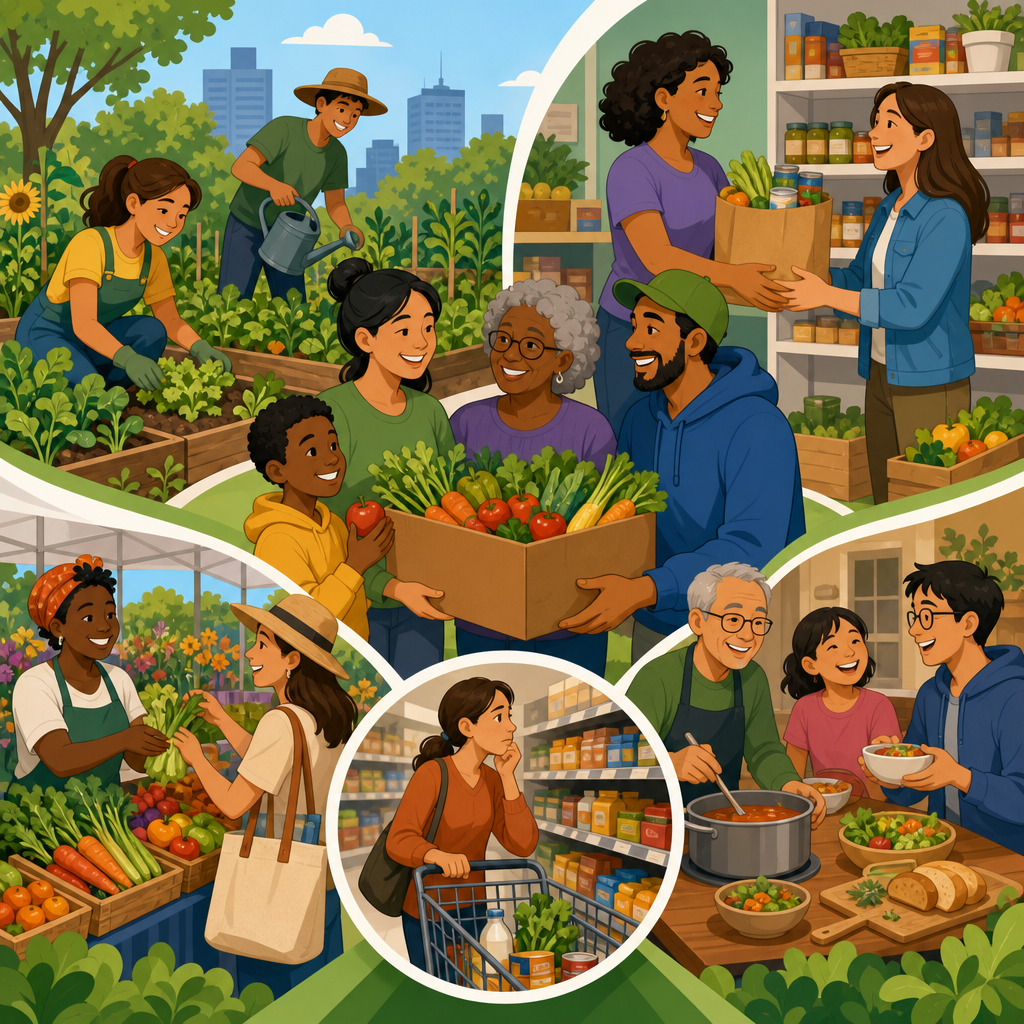
Food access strategies that outperform the one-off grocery store approach start with a simple truth: a single supermarket does not solve hunger, diet-related illness, or neighborhood inequity. Food access means more than physical proximity to a store. It includes affordability, transportation, culturally appropriate options, consistent supply, hours that match workers’ schedules, payment flexibility, and the ability to buy healthy food with dignity. In affordable housing communities, these factors determine whether residents can reliably feed a household without sacrificing rent, medicine, or childcare. After working on housing-adjacent community planning efforts, I have seen new grocery projects celebrated as complete solutions, only to underperform because they ignored how people actually shop, travel, budget, and cook.
The one-off grocery store approach usually refers to a standalone retail intervention: attract one full-service supermarket, cut a ribbon, and assume the neighborhood’s food challenges are fixed. That model can help, especially in places with severe retail gaps, but it often leaves major barriers untouched. A store may be too expensive, poorly connected to transit, stocked with unfamiliar products, or financially fragile in a low-margin market. Residents may still depend on corner stores, school meals, food pantries, mobile vendors, and social networks. Better results come from layered systems that combine retail, public benefits, local distribution, healthcare partnerships, and resident-led design.
This matters because food insecurity and housing insecurity are tightly linked. When rent consumes a large share of income, food becomes the flexible line item that gets cut first. The U.S. Department of Agriculture defines food insecurity as limited or uncertain access to enough food for an active, healthy life. That definition captures instability, not just scarcity. A household may have food this week and run short next week after utilities clear. Affordable housing providers, local governments, and community developers therefore need food access strategies that reduce cost, save time, and increase reliability. The strongest approach is not one building or one retailer. It is a coordinated neighborhood food system.
Why a single grocery store rarely fixes neighborhood food access
A new supermarket can improve choice and shorten travel distance, but it does not automatically improve purchasing power or eating patterns. Price remains the strongest constraint for many households. If staples, produce, and protein cost more than at discount chains outside the neighborhood, residents with cars or bus access will continue shopping elsewhere. If they do not have transportation, they may buy fewer healthy items, stretch meals, or rely on emergency food. In project reviews, I have seen stores with attractive produce departments post weak sales because the local customer base needed smaller package sizes, lower unit prices, and stronger acceptance of benefits like SNAP and WIC.
Operational risk is another limitation. Full-service grocery stores run on thin margins, complex logistics, refrigeration costs, spoilage management, and high labor demands. In underinvested areas, developers often underestimate the volume needed to sustain those costs. That creates a cycle of optimism followed by reduced inventory, deferred maintenance, and eventual closure. Even when stores stay open, mismatch can persist. A retailer may carry premium prepared foods while residents need affordable basics, halal meat, Latin American staples, or products that fit multigenerational households. A grocery anchor can be useful, but treating it as the only solution ignores how food ecosystems function in real neighborhoods.
Build a food access system, not a single destination
The most effective food access strategy combines multiple channels so residents can obtain food in several reliable ways. In affordable housing settings, that usually means linking on-site services, nearby retail, emergency resources, benefits enrollment, and transportation planning. A resident should be able to buy groceries, receive deliveries, use nutrition benefits, access culturally appropriate food, and bridge temporary shortages without falling into crisis. This system view mirrors how households actually manage food over a month: a big trip when cash arrives, fill-in purchases close to home, school or senior meals during the week, and occasional support from a pantry or community fridge.
Strong systems are designed around friction points. Ask practical questions: Can parents pick up food after work? Can older adults carry purchases home? Can residents order online with SNAP where state rules allow? Is there cold storage in apartments? Are there language barriers at checkout? Does the site host health screenings that connect patients to medically tailored meals or produce prescriptions? The answers guide investment better than a market study alone. In one mixed-income development I advised, a modest package room retrofit for refrigerated delivery, paired with recurring benefits enrollment events and a weekly produce market, had more resident impact than the long-discussed plan to recruit a single grocer.
High-performing strategies for affordable housing communities
Several strategies consistently outperform the one-off grocery store approach because they address affordability, convenience, and resilience together. Mobile markets bring produce and staples directly to housing sites, senior buildings, and transit hubs. Community-supported agriculture programs with subsidized shares reduce prices for residents while giving regional farmers predictable demand. Food pantries integrated into housing properties provide immediate relief, especially when they shift from prepacked boxes to client-choice models that respect dietary needs. Community fridges and mutual aid networks fill short-term gaps, though they work best with clear food safety protocols and strong local stewardship.
Another high-performing strategy is benefits integration. Many eligible households do not fully use SNAP, WIC, school meals, summer feeding programs, or senior nutrition services because enrollment is confusing or recertification lapses. Embedding navigators in housing communities often lifts uptake quickly. Healthcare partnerships also matter. Federally Qualified Health Centers, hospitals, and Medicaid-managed care organizations increasingly support produce prescriptions, diabetes-focused food packages, and medically tailored meals for high-risk patients. Finally, small-format retail deserves attention. A well-run neighborhood market with fair prices, fresh produce, and strong staple inventory can outperform a large undercapitalized supermarket because it matches local demand and operating reality.
| Strategy | Primary benefit | Best use case | Key limitation |
|---|---|---|---|
| Mobile market | Brings affordable fresh food directly to residents | Sites with transit barriers or many seniors | Limited frequency and selection |
| On-site pantry | Immediate relief during income gaps | Properties with high rent burden | Requires storage, staffing, and sourcing |
| Small-format market | Convenient routine shopping close to home | Dense neighborhoods with daily foot traffic | Margins remain tight without strong turnover |
| Benefits navigation | Increases household purchasing power | Communities with underenrolled eligible residents | Needs ongoing outreach and recertification support |
| Healthcare food program | Targets diet-related disease and food insecurity together | Residents with chronic conditions | Often restricted to specific patient groups |
How transportation, technology, and housing design shape food access
Food access depends as much on movement and storage as on retail presence. Transportation is often the hidden variable. A store located one mile away can still be inaccessible if the route lacks sidewalks, the bus does not align with work shifts, or a parent must travel with children and heavy bags. Affordable housing planners should map actual resident trips, not just distance rings. Safe walking routes, bus stop improvements, shuttle partnerships, and shared ride credits can materially improve food access. I have seen a low-cost van loop to a discount grocer deliver stronger resident value than expensive incentives offered to recruit a new store.
Technology now plays a major role as well. Online grocery ordering, delivery platforms, and click-and-collect services can reduce time costs for working families, people with disabilities, and older adults. But digital access is uneven. Residents may lack smartphones, bank cards, broadband, or confidence with apps. Some platforms still have limited integration with nutrition benefits. Housing operators can close these gaps by offering digital literacy support, secure package storage, and partnerships with retailers that accept public benefits. Housing design matters too. Small kitchens, limited refrigeration, and inadequate pantry space make bulk buying difficult. If residents cannot store food safely, even the best retail strategy underdelivers.
What implementation looks like in practice
Effective implementation starts with resident data and direct participation. Survey households about where they shop, how often they run out of food, what they cannot find locally, and which barriers matter most. Pair that with hard metrics: SNAP participation rates, transit access, pantry usage, diet-related emergency visits, and retail leakage to outside stores. Then build a portfolio of interventions rather than a single flagship project. In practice, that might mean a weekly mobile market, quarterly WIC enrollment clinics, a school meal awareness campaign, healthy corner store support, and a referral pathway from property management to pantry or healthcare partners.
Governance and funding need equal attention. Food access programs fail when nobody owns coordination. The strongest models designate a lead convener, often a housing nonprofit, community development corporation, public agency, or hospital partner, and give that entity a shared dashboard. Funding typically blends philanthropy, Community Development Block Grant support, healthcare community benefit dollars, local operating funds, and earned revenue. Retail components need realistic underwriting, including spoilage assumptions, staffing, and basket-size projections. For ongoing evaluation, use measures that reflect lived experience: reduced skipped meals, lower travel time, increased produce purchasing, better benefit enrollment retention, and stronger resident satisfaction.
The role of affordable housing providers as food access anchors
Affordable housing providers are uniquely positioned to anchor local food systems because they already manage trusted sites, communicate with residents, and understand household instability. They can dedicate common areas for pop-up markets, pantry distribution, cooking classes, or benefits counseling. They can negotiate with delivery providers, support resident ambassadors, and align food programs with property events. In senior housing, coordination with meal services and healthcare providers can reduce isolation and improve nutrition adherence. In family housing, after-school meal programming and summer food outreach can stabilize household budgets when school is out.
The key is to treat food access as core resident stability infrastructure, not an optional amenity. A property that helps residents access affordable food can improve rent payment consistency, reduce crisis turnover, and support health outcomes that matter to families and operating partners alike. This hub article should guide every deeper subtopic in the food access conversation: neighborhood retail, pantries, mobile markets, transit, benefits enrollment, healthcare partnerships, housing design, and resident engagement. The most durable results come from combining these tools into one practical system. If you are planning within affordable housing, audit the full resident food journey and build the layered strategy residents actually need.
Frequently Asked Questions
Why is a single grocery store often not enough to solve food access challenges?
A one-off grocery store can improve nearby retail options, but it rarely addresses the full set of barriers that shape whether people can consistently buy and prepare healthy food. Food access is not just about distance. It also depends on price, reliable transportation, store hours, product quality, culturally relevant choices, payment options, and whether households have the time, storage, and kitchen resources to use what they buy. In many affordable housing communities, a supermarket may still be too expensive, too far to reach without a car, or poorly aligned with residents’ work schedules and family responsibilities.
There is also a difference between placing a store in a neighborhood and creating a food system that works for residents over time. A store may open with strong selection and community interest, then struggle with inconsistent inventory, high operating costs, or limited produce turnover. If healthy items are not affordable or fresh, residents may continue shopping elsewhere or rely on convenience foods. In that sense, a grocery store can be part of the solution, but by itself it rarely changes the deeper conditions behind hunger, diet-related disease, and neighborhood inequity.
More effective food access strategies recognize that families need multiple, dependable ways to obtain food. That can include mobile markets, subsidized produce programs, community health partnerships, on-site food distribution, flexible payment systems, and transportation support. The goal is not simply to add a retail location. The goal is to make healthy food practical, affordable, consistent, and dignified for the people who live there.
What food access strategies tend to outperform the one-off grocery store model?
The strongest approaches usually combine several solutions instead of relying on a single brick-and-mortar store. In affordable housing and other underserved communities, high-performing strategies often include mobile markets, community-supported agriculture pick-up points, produce prescription programs, food pantries designed around resident choice, pop-up markets, farmer partnerships, and regular on-site food distributions. These models can reach residents where they are, lower transportation barriers, and adapt more quickly to community demand than a traditional grocery format.
Another strategy that consistently performs well is integrating food access into housing, healthcare, and community services. For example, a housing provider may partner with local nonprofits, clinics, school systems, and food organizations to create a coordinated network. Residents might receive nutrition support through healthcare providers, fresh produce on-site through mobile vendors, enrollment help for SNAP or WIC through resident services staff, and culturally appropriate pantry staples through local community partners. This kind of ecosystem approach works better because it treats food access as part of overall well-being rather than as an isolated retail issue.
Affordability tools also matter. Discounts for healthy staples, acceptance of SNAP and WIC, produce matching incentives, sliding-scale options, and flexible payment systems often outperform simple proximity. A nearby store that residents cannot afford is not true access. By contrast, a program that lowers cost, brings food directly into the community, and offers familiar, desirable products often produces stronger participation and better health outcomes. The most effective strategies are responsive, layered, and built around residents’ actual routines and preferences.
How do affordable housing communities fit into more effective food access planning?
Affordable housing communities are often ideal settings for food access interventions because they bring together residents, service staff, physical space, and trusted relationships in one place. That creates opportunities to design food programs around real daily needs rather than assumptions. Instead of expecting residents to travel farther, spend more, or reorganize their schedules around a store, housing-based models can bring healthy food directly to where people live. This can include weekly produce tables, refrigerated lockers, community refrigerators, mobile market stops, pantry rooms, shared kitchen programming, or partnerships with local growers and distributors.
Housing communities also offer something many standalone retail efforts lack: ongoing engagement. Property managers, resident services coordinators, and community partners can collect feedback, track participation, identify barriers, and adjust programming over time. If residents need evening distribution times, culturally specific ingredients, smaller package sizes, or language-accessible signage, those changes can be made more easily when food access is embedded in community operations. This feedback loop helps programs stay relevant and increases trust.
Just as important, affordable housing settings allow food access to be connected with broader supports such as health screenings, benefits enrollment, nutrition education, transportation coordination, and social services. That integrated model is often what makes the difference between a short-term food giveaway and a durable access strategy. When food is treated as part of housing stability and resident health, communities can build systems that are more equitable, more efficient, and more likely to last.
What makes a food access program truly effective for residents over the long term?
Long-term effectiveness starts with consistency. Residents need to know that healthy food will be available regularly, not just during occasional events or pilot programs. A strong food access program has dependable schedules, reliable supply, and clear communication. It also reflects what residents actually want to eat and can realistically use. That means considering cultural preferences, household size, cooking facilities, storage space, and dietary needs. A program may look successful on paper, but if the food is unfamiliar, difficult to prepare, or available only at inconvenient times, participation will drop.
Affordability is another core factor. Even well-stocked programs underperform when prices are too high or payment options are too limited. Effective initiatives reduce out-of-pocket costs, accept public benefits, and create pathways for households to purchase healthy food without stigma. Dignity matters here. Residents respond better to models that allow choice, preserve autonomy, and avoid making people feel monitored or judged. Choice-based pantries, mobile markets with flexible purchasing, and resident-informed product selection often perform better than one-size-fits-all distributions.
Finally, long-term success depends on partnerships, funding stability, and measurement. The best programs are backed by collaboration among housing organizations, local government, healthcare providers, food suppliers, and community-based groups. They track not only how much food is distributed, but also resident satisfaction, repeat use, affordability, health-related outcomes, and operational reliability. When programs are designed to learn and improve, they are much more likely to remain effective beyond the initial launch.
How can organizations measure whether a food access strategy is actually working better than a grocery store-only approach?
Measurement should go beyond asking whether a food outlet exists nearby. A more useful question is whether residents can consistently obtain healthy, affordable, culturally appropriate food in a way that fits their lives. Organizations should look at participation rates, repeat usage, food quality, pricing, benefit redemption, and resident feedback. They should also examine practical barriers such as transportation time, missed work hours, delivery reliability, and whether available food matches household preferences and cooking capacity.
Resident-centered indicators are especially important. Surveys, listening sessions, and usage patterns can reveal whether people feel respected, whether they have meaningful choice, and whether the program reduces stress around food. In affordable housing communities, organizations can also monitor operational indicators such as how often distributions occur, how quickly food runs out, what items are most selected, and whether residents request specific products or times. These details help determine whether a strategy is functioning as a dependable access solution or merely as a temporary supplement.
For a fuller picture, organizations should also track broader outcomes over time. These may include improved enrollment in SNAP or WIC, reduced emergency food reliance, stronger resident satisfaction, better chronic disease management when healthcare partners are involved, and increased community participation in related wellness programs. A grocery store-only approach may be easy to count because it is visible and fixed, but a better-performing food access system is measured by results in daily life. If residents can afford healthy food more often, access it more easily, and do so with dignity and consistency, the strategy is working.


