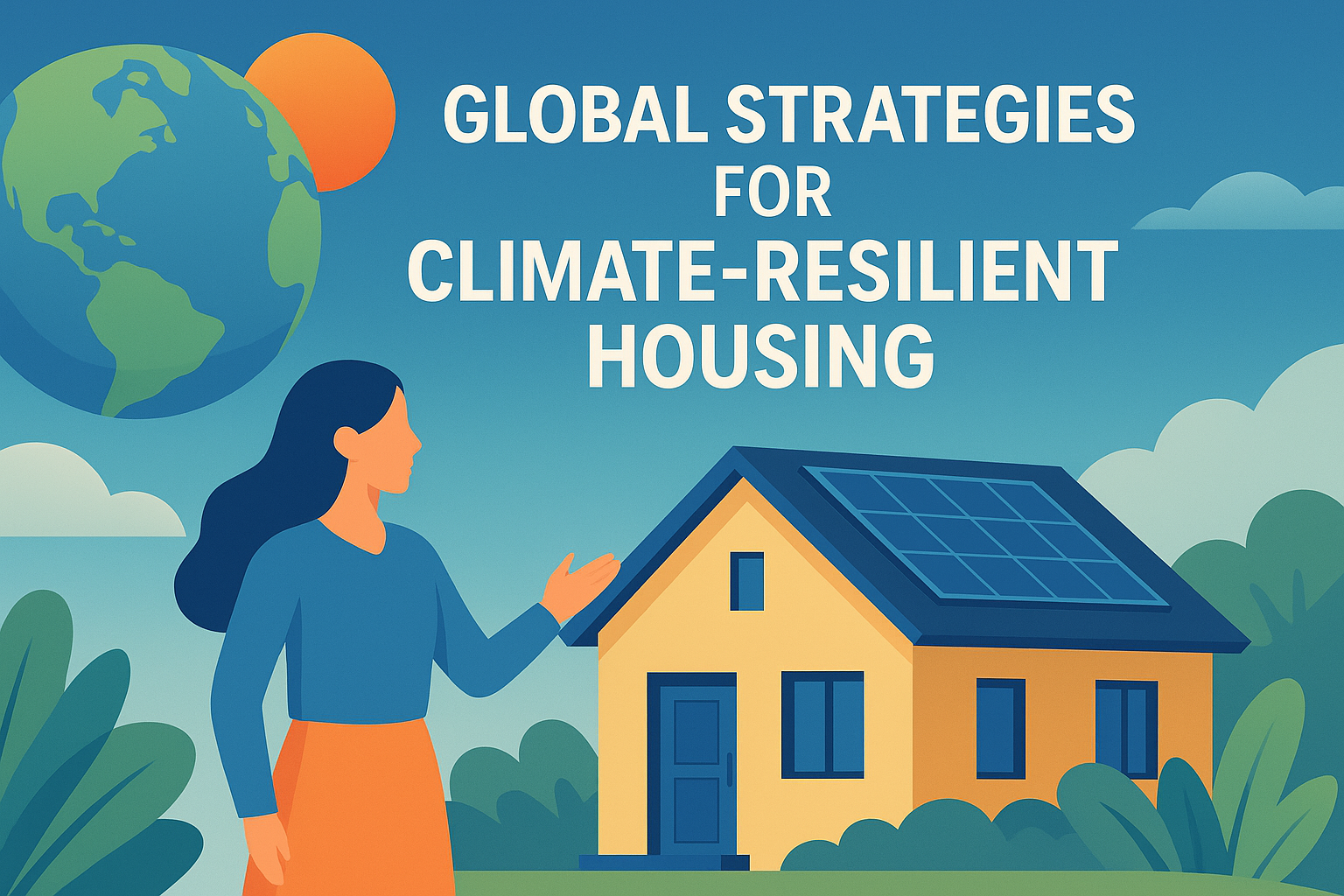
The escalating impacts of climate change are becoming increasingly apparent across the globe, causing rising sea levels, increased frequency of extreme weather events, and temperature fluctuations. As our environment continues to change, housing—a fundamental human need—faces unprecedented challenges. Climate-resilient housing is crucial because it mitigates risks, ensuring that communities remain safe, homes are sustainable, and lives are preserved. But what exactly do we mean by climate-resilient housing? In simple terms, it refers to the design and construction of homes that can withstand or adapt to climate changes, emphasizing sustainability and reduced environmental impact. This concept is critical as we face growing climate threats, and it calls for the adoption of innovative global strategies to ensure homes remain protective and efficient amid environmental changes. Realizing such housing systems is essential for protecting both people and the planet, making it one of the most pressing issues of our time.
Implementing Sustainable Materials in Construction
One vital strategy in building climate-resilient housing is the use of sustainable materials in construction. Traditional construction materials, such as concrete and non-renewable resources, contribute significantly to carbon emissions. Instead, sustainable materials, like bamboo, reclaimed wood, and recycled metals, present a lower carbon footprint and often offer enhanced durability. For example, bamboo, which grows rapidly, can be harvested in a sustainable manner and used as a robust construction material. An excellent real-world example of this approach can be seen in Vietnam, where architects have designed homes using bamboo to create affordable, resilient structures that can endure flooding and high winds. This shift towards sustainable materials not only aids in reducing the environmental impact but also ensures that homes can withstand extreme weather conditions more effectively.
Utilizing Advanced Architectural Designs
Innovation in architectural design has become essential in creating climate-resilient housing. This involves integrating features that enable buildings to adapt to varying climate conditions. Techniques such as passive solar design, natural ventilation systems, and green roofs help in maximizing energy efficiency and maintaining stable indoor environments. Take, for instance, the city of Rotterdam in the Netherlands, where floating houses have been developed to adapt to rising sea levels. These homes utilize advanced designs that allow them to rise and fall with the water, ensuring that residents remain safe even during severe floods. By incorporating such forward-thinking architectural designs, housing can not only survive but thrive in uncertain climatic futures.
Emphasizing Energy Efficiency and Renewable Resources
Climate-resilient housing must prioritize energy efficiency and the use of renewable energy sources. This strategy reduces dependency on fossil fuels, thereby limiting greenhouse gas emissions and utility costs. Solar panels and wind turbines are examples of renewable resources that can be integrated into housing designs. For instance, the BedZED eco-village in the United Kingdom incorporates renewable energy solutions like photovoltaic panels and biomass heating. The community drastically reduced its carbon footprint while maintaining energy independence. By adopting similar energy efficiency strategies globally, homes can not only reduce their environmental impact but also offer long-term economic benefits to residents.
Adopting Flood and Weather-Proofing Techniques
One of the significant challenges posed by climate change is the increased likelihood of flooding and extreme weather events. Therefore, adopting effective flood and weather-proofing techniques is a crucial strategy. This can include the construction of raised foundations, the use of water-resistant materials, and designing effective drainage systems. Japan offers a compelling example of this, where homes are built with elevated floors and are equipped with advanced drainage systems to manage heavy rainfall and typhoons. By employing these techniques, we can greatly enhance the resilience of homes, helping them to withstand climate-induced adversities.
| Strategy | Example |
|---|---|
| Sustainable Materials | Vietnam’s bamboo houses |
| Advanced Architectural Designs | Rotterdam’s floating houses |
| Energy Efficiency | BedZED eco-village UK |
| Flood/Weather-Proofing | Japan’s typhoon-resistant homes |
Community Engagement and Policy Support
Beyond the technical and material aspects, community engagement and supportive policies are pivotal in advancing climate-resilient housing. Communities play a significant role in determining housing needs and the practicality of implemented strategies. Engaging local populations in the planning and decision-making processes ensures that solutions are tailored to specific needs and cultural contexts. For instance, in Bangladesh, community-led projects have successfully developed cyclone shelters and resilient housing while involving locals in construction and design phases. Additionally, governmental and non-governmental organizations must champion supportive policies and frameworks that incentivize resilience in housing. This includes financial subsidies, grants for renewable energy installations, and enforcement of resilient building codes. By driving community involvement alongside policy support, the global shift towards climate-resilient housing can become more effective and widespread.
Global Collaboration and Knowledge Sharing
Another critical element in the pursuit of climate-resilient housing is global collaboration and the sharing of knowledge and resources. Collaborative efforts between nations, organizations, and communities can lead to innovative solutions that defy geographic and economic barriers. Initiatives like the Global Resilience Partnership bring multiple stakeholders together to foster exchange and collaboration, facilitating the development of resilient infrastructure projects in vulnerable regions. By capitalizing on shared experiences and leveraging collective knowledge, societies can accelerate the implementation of climate-resilient housing strategies worldwide.
Integrating Technology and Data Analysis
Technology and data analysis are indispensable tools in the development of climate-resilient housing. Utilizing predictive models, climate data, and geographic information systems (GIS) allows for informed decisions regarding the location, design, and materials used in housing projects. Furthermore, smart home technology enhances the efficiency and adaptability of homes by allowing real-time monitoring of energy usage and weather patterns. A prominent example is the use of such technology in Sweden’s smart homes, which automatically adjust heating and cooling systems based on climatic data and occupancy. By integrating cutting-edge technological solutions, climate-resilient housing can become highly efficient, adaptive, and durable.
Cultural Sensitivity in Housing Design
Finally, climate-resilient housing designs must be culturally sensitive and socially inclusive to ensure acceptance and effectiveness. Housing designs that respect and align with local traditions and lifestyles are more likely to be embraced by communities. In several parts of Africa, architects are engaging with local tribes to understand their needs and preferences, resulting in robust housing solutions that incorporate traditional designs with modern resilience features. Achieving harmony between innovation and cultural integrity ensures that climate-resilient housing is not only functional but also cherished by those it intends to serve.
Conclusion: Advancing Towards Climate Resilience
The journey towards achieving climate-resilient housing is both a necessity and an ambition that invites a multitude of strategies. Prioritizing sustainable materials, advanced architectural designs, energy efficiencies, and disaster-proofing provides a strong foundation for resilient homes. Equally, fostering community engagement, supportive policies, and global collaboration can enable more comprehensive solutions. As we integrate technology and respect cultural contexts, we pave the way for adaptable and sustainable housing that can withstand the growing threats posed by climate change. By focusing on these strategies, we can safeguard the well-being of individuals and communities, ensuring that homes are not just shelters, but substantive bastions of security. It is imperative that we take action now, whether as individuals adopting sustainable practices or as collective entities advocating for policy reforms and global cooperation, driving forward the agenda of creating climate-resilient housing for all.
Let us take the next step toward a resilient future by supporting innovation, spreading awareness, and actively participating in community-driven initiatives. Our efforts today will create a sustainable legacy for generations to come.
Frequently Asked Questions
1. What is climate-resilient housing, and why is it important?
Climate-resilient housing refers to homes that are designed or retrofitted to withstand the impacts of climate change. They are built to be adaptable to changes in our environment, such as increased temperatures, severe storms, and flooding. The importance of climate-resilient housing cannot be overstated. As climate change continues to exert pressure through more frequent and intense weather patterns, the risk to life, property, and entire communities rises significantly. Creating housing that can endure these climatic changes helps ensure that people have a safe refuge during adverse conditions. Importantly, resilient housing supports not just the safety and well-being of residents but also contributes to the longevity and sustainability of communities. These homes often incorporate sustainable practices, like energy efficiency, durable materials, and innovative designs that can handle environmental stresses, greatly reducing recovery time and costs post-disaster.
2. What are some global strategies being implemented to promote climate-resilient housing?
Globally, there are a variety of strategies being pursued to advance climate-resilient housing. One common approach is enacting stricter building codes that require new constructions to meet resilience standards, incorporating features such as elevated structures to prevent flood damage, reinforced walls to withstand winds, and energy-efficient designs to cope with temperature extremes. Some regions invest in retrofitting existing buildings to bring them up to these standards, often through government-backed initiatives or incentivized private sector participation. Additionally, urban planning efforts are increasingly focusing on creating green cities that integrate housing with sustainable infrastructure, such as green roofs, permeable pavements, and rainwater harvesting systems. International cooperation and knowledge exchange also play roles, as they help to share best practices and innovations across borders, ensuring that even in differing geographic contexts, housing can be fortified against climate threats.
3. How do climate-resilient materials impact the design of homes?
The use of climate-resilient materials significantly influences the design and functionality of homes. These materials are selected based on their ability to perform under specific environmental conditions. For instance, in areas prone to hurricanes, materials such as reinforced concrete, stormproof windows, and impact-resistant roofing can offer substantial protection against the destructive forces of wind and debris. In contrast, homes in flood-prone regions may use materials like water-resistant drywall, elevated foundations, and waterproof sealants that minimize damage during inundation events. Moreover, climate-resilient materials are often part of the broader push toward sustainability, with choices such as using recycled or locally sourced products to minimize environmental impact. Incorporating these materials typically results in innovative architectural designs that balance aesthetics with the imperative of durability and safety.
4. What role does technology play in developing climate-resilient housing?
Technology is pivotal in the development and ongoing management of climate-resilient housing. Advances in computer-aided design (CAD) and building information modeling (BIM) allow architects and engineers to simulate and stress-test structures against various climate scenarios, improving designs before construction begins. Furthermore, smart home technology can increase a home’s resilience by providing systems that automatically respond to environmental changes, such as shutters that close autonomously in high winds or sensors that detect and alert residents to water leaks. On a larger scale, data aggregation and analysis technologies afford urban planners deeper insights into climate patterns and risks, guiding more informed decisions about where and how to build. Cutting-edge practices include the integration of Internet of Things (IoT) devices in homes for real-time monitoring and adaptive energy management, thus enhancing both resilience and sustainability of the infrastructure.
5. How can communities contribute to the development of climate-resilient housing?
Community involvement is crucial to the success of climate-resilient housing initiatives. By engaging in planning processes and decision-making, residents can ensure that the housing developments correctly address local needs and conditions. Grassroots movements can advocate for policies that support resilience; for instance, pushing for affordable insurance premiums that encourage strong construction standards or lobbying for government grants to fund retrofits in older homes. Communities also play a vital educational role by spreading awareness about the benefits and methods of enhancing housing resilience. Simple collective actions, like neighborhood cleanups and tree planting, can strengthen communal bonds and improve overall resilience by reducing local hazards such as urban heat islands. Moreover, community-driven efforts often harness traditional knowledge and local expertise, blending these with modern techniques to craft housing solutions that are both effective and culturally appropriate.