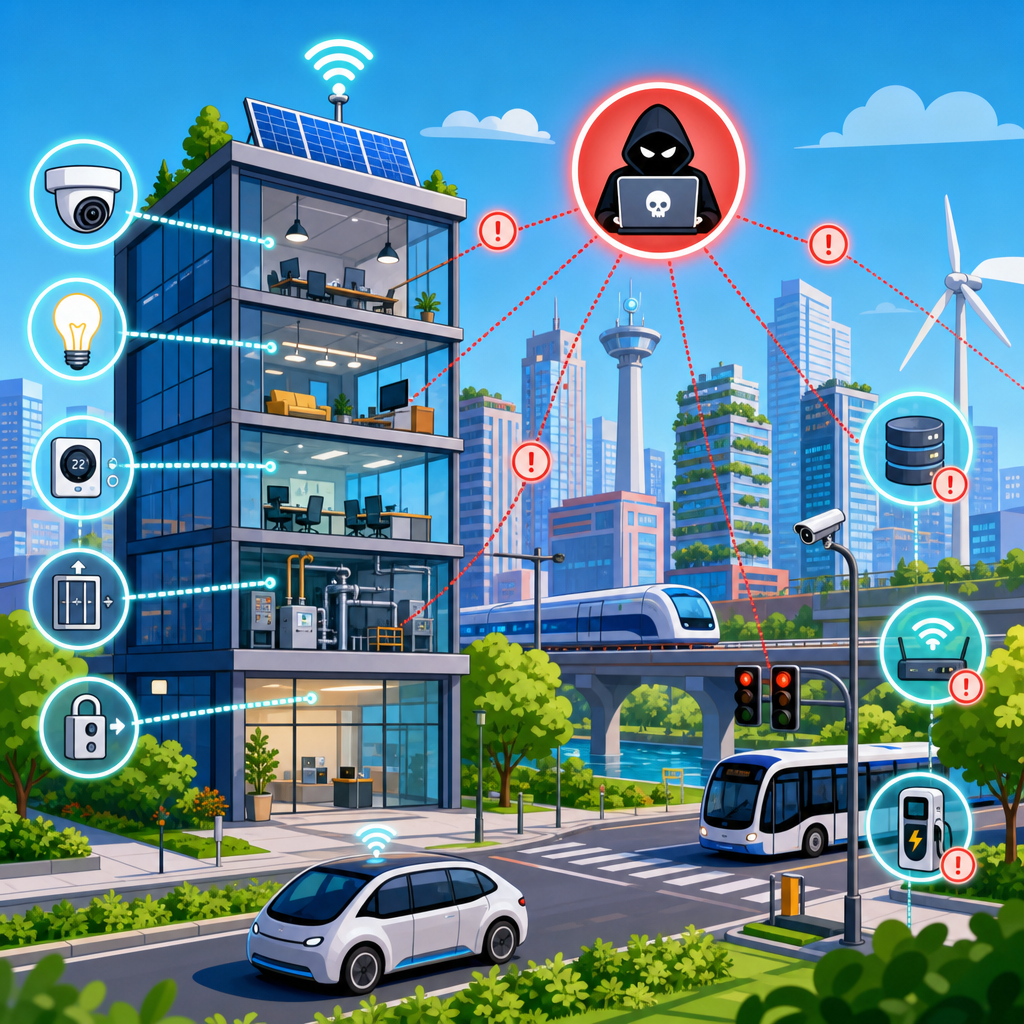
Cybersecurity risks in smart buildings and connected city infrastructure now influence property values, insurance costs, tenant confidence, and municipal resilience as directly as location, transit access, or energy efficiency. A smart building uses networked sensors, controllers, and software to automate systems such as HVAC, elevators, lighting, access control, fire safety, and energy management. Connected city infrastructure extends that same logic to public assets, including traffic signals, water systems, parking networks, utility meters, street lighting, emergency communications, and transit operations. When these systems exchange data across operational technology and information technology environments, they create efficiency and convenience, but they also expand the attack surface. I have worked with property operators and technology vendors on building system reviews, and the same pattern appears repeatedly: devices are installed for functionality first, while segmentation, credential hygiene, logging, and patch governance arrive late, if at all.
This matters because the modern built environment is no longer just physical real estate. It is a digital ecosystem with cyber exposure that can disrupt leases, building operations, public services, and even safety-critical functions. A compromised building management system can disable cooling in a multifamily tower during a heat wave. A ransomware incident affecting a city’s permitting portal can stall development timelines and inspections. A breach in networked cameras or badge readers can expose resident movements, contractor schedules, or law enforcement activity. For investors, developers, housing operators, and city planners, cybersecurity is now part of due diligence, asset management, and long-term risk pricing. Understanding the threats, the weak points, and the practical controls is essential for anyone evaluating smart property or connected infrastructure.
Why Smart Buildings and City Systems Are Attractive Targets
Attackers target smart buildings and connected infrastructure because these environments combine valuable data, limited visibility, and high pressure to restore service quickly. In a typical commercial or residential property, access control logs, tenant directories, maintenance records, utility consumption patterns, payment systems, and camera feeds may all touch the same technology stack directly or indirectly. In a city environment, that stack often widens to include geographic information systems, traffic management platforms, digital signage, public Wi-Fi, environmental sensors, and supervisory control systems. Each integration point is a potential entry path, especially when third-party vendors maintain remote access for support.
Operational urgency makes these systems particularly vulnerable to extortion. If an office tower loses HVAC controls, an apartment building loses smart locks, or a transit authority loses signaling visibility, the owner cannot simply wait a week for an orderly recovery. Attackers know this. They exploit the fact that building operations teams often prioritize uptime over security hardening, and they count on underfunded municipal departments to lack deep incident response capacity. Legacy equipment intensifies the problem. I regularly see control systems deployed for fifteen to twenty years, long after the original manufacturer stopped issuing updates. In that period, the surrounding network changes completely, but the controller remains in place, often with default credentials or outdated encryption.
Another reason these environments are attractive is that many organizations still treat building technology as separate from enterprise cyber risk. Facilities teams manage automation, physical security manages cameras and badge readers, IT manages core networks, and external integrators bridge the gaps. This fragmented ownership creates blind spots. No single team has a full asset inventory, a tested segmentation model, or a complete map of data flows. That absence of unified governance is exactly what opportunistic attackers exploit.
Core Threats Facing Smart Buildings and Connected Infrastructure
The most common cybersecurity risks in smart buildings and connected city infrastructure fall into several categories: unauthorized access, ransomware, data exfiltration, denial of service, supply chain compromise, and unsafe manipulation of physical processes. Unauthorized access often begins with weak passwords, exposed remote desktop services, unmanaged vendor connections, or cloud dashboards without multifactor authentication. Once inside, attackers move laterally from a less protected device to a more critical controller, server, or database. In buildings, that can mean pivoting from a network camera into an access control server or from a poorly secured smart thermostat gateway into the building management system.
Ransomware remains one of the most disruptive threats because it affects both administrative systems and operational continuity. A property management firm may lose lease processing, maintenance dispatch, and resident communication tools at the same time a building automation front end becomes inaccessible. In municipal settings, ransomware has interrupted court systems, utility billing, emergency dispatch support functions, and public service portals. Even when operational control systems are not directly encrypted, the surrounding business systems needed to manage them often are.
Data theft is equally serious. Occupancy patterns, camera footage, badge records, parking histories, and smart meter data can reveal when residents are home, which units are vacant, or how a facility is used over time. For critical infrastructure, stolen network diagrams and configuration files can support future attacks. Denial-of-service attacks can overwhelm cloud-managed platforms or public-facing applications, cutting off dashboards and alerts. Supply chain compromise adds another layer of risk. If a trusted vendor pushes a malicious update or if an integrator’s credentials are stolen, many properties can be exposed at once.
| Risk type | Typical target | Real-world effect | Priority control |
|---|---|---|---|
| Unauthorized access | Remote gateways, cloud dashboards, vendor accounts | Intruders alter settings, create persistence, move laterally | Multifactor authentication and network segmentation |
| Ransomware | Management servers, file shares, operator workstations | Building operations and city services slow or stop | Offline backups and tested recovery procedures |
| Data exfiltration | Cameras, access logs, tenant or resident records | Privacy harm, regulatory exposure, targeted follow-on attacks | Least-privilege access and encryption |
| Physical process manipulation | HVAC, elevators, lighting, pumps, traffic controls | Safety incidents, service disruption, equipment damage | Controller isolation and change monitoring |
Where Weaknesses Commonly Appear in Real Properties and Public Networks
Most vulnerabilities are not exotic zero-day exploits. They are ordinary failures in architecture, configuration, and maintenance. The first is poor asset visibility. Many owners cannot produce a reliable list of connected controllers, gateways, workstations, firmware versions, open ports, and support contracts. Without that inventory, it is impossible to prioritize patching, retire unsupported devices, or validate whether a vendor still has access. The second weakness is flat networking. I often find cameras, printers, user laptops, badge readers, and building automation servers sharing broad trust relationships. In that design, a compromise in one low-value device can become a compromise across the environment.
Third, remote access is routinely overexposed. Vendors need support channels, but those channels should be narrow, logged, and time bound. Instead, many properties rely on always-on VPN accounts, shared credentials, desktop sharing tools, or direct internet exposure of management interfaces. Fourth, password practices remain weak. Default manufacturer credentials, reused local administrator passwords, and generic contractor logins are still common in field devices. Fifth, patching is inconsistent because operational teams fear downtime or lack maintenance windows. That concern is understandable, but deferring updates indefinitely leaves known vulnerabilities exploitable for years.
Smart city systems introduce additional weaknesses tied to scale and procurement. Different departments buy different platforms, often under separate contracts and timelines. Traffic systems may be modernized while water controls remain legacy, and both may feed data into central dashboards built by other vendors. If procurement focuses on feature lists rather than secure development, logging capability, encryption support, and software bill of materials requirements, insecure systems get embedded for long lifecycles. Wireless sensors and edge devices add further complexity because they depend on battery constraints, proprietary protocols, and field maintenance discipline. Security must therefore be engineered at procurement, commissioning, and operations stages, not bolted on after deployment.
Operational Technology, IT Convergence, and Safety Consequences
The most important concept in this space is the convergence of operational technology and information technology. Operational technology controls physical processes: air handling, boilers, lifts, pumps, lighting schedules, door controllers, and traffic timing. Information technology manages business applications, identity systems, email, cloud services, and user endpoints. Historically these worlds were separate. Today they are linked through analytics platforms, remote monitoring, mobile apps, tenant experience software, and centralized command centers. That connectivity creates value, but it also means a cyber incident can move from data compromise to physical disruption.
In buildings, safety consequences vary by system and by occupancy type. An office building may face comfort and productivity impacts if HVAC is manipulated, but a hospital, senior housing facility, or laboratory faces far higher stakes. Temperature excursions can threaten patient safety, medicine storage, or research operations. Elevator outages can trap occupants or block accessibility. Compromised fire and life safety integrations are especially serious, even when core life safety systems remain independently regulated and segmented. In multifamily properties, smart locks and intercoms create an immediate resident trust issue if they fail open, fail closed, or expose activity logs.
Connected city infrastructure raises the stakes further because outages cascade across communities. A traffic management failure can worsen emergency response times. A water utility control issue can interrupt pumping or treatment visibility. A compromise in public transit communications can reduce service reliability and increase crowding. This is why standards-based separation, monitoring, and fail-safe design are indispensable. Frameworks from the National Institute of Standards and Technology and guidance from the Cybersecurity and Infrastructure Security Agency consistently emphasize identification of critical assets, protection through layered controls, timely detection, coordinated response, and resilient recovery. In practice, that means planning for degraded operation, not assuming systems will always be online.
How Owners, Developers, and Cities Can Reduce Cyber Risk
Effective risk reduction starts with governance. Someone must own cyber risk across facilities, technology, procurement, legal, and operations. In mature programs, that ownership translates into a current asset inventory, data flow mapping, system criticality ratings, and minimum security standards for every new deployment. Network segmentation is the single most practical technical control. Building automation, cameras, access control, tenant Wi-Fi, corporate devices, and vendor maintenance paths should not share unrestricted access. Segmentation limits lateral movement and makes monitoring more useful. Identity controls come next: multifactor authentication for remote access, unique accounts for vendors, role-based permissions, and rapid removal of dormant credentials.
Patching and vulnerability management need a realistic operating model. Not every controller can be updated immediately, but every organization can classify systems by criticality, test updates in a staging process where possible, and apply compensating controls when patching must be delayed. Secure remote access is equally critical. Replace shared logins with named accounts, require approval for vendor sessions, restrict source networks, and log all connections. Backup strategy should include both business systems and key operational configurations. I advise clients to test restoration regularly because a backup that has never been restored is only a theory.
Procurement is another decisive lever. Contracts should require supported encryption, audit logging, vulnerability disclosure processes, patch commitments, and documented integration architecture. For large portfolios and municipal programs, independent security assessments during design and commissioning are worth the cost. Training matters too. Facilities staff should know how to recognize unusual system behavior, who to escalate to, and when not to reboot a critical device blindly. Finally, incident response plans must include operational technology scenarios. The right question is not whether a smart building or connected infrastructure program can be perfectly secure. The right question is whether the organization can prevent common attacks, detect anomalies early, contain damage, and recover services without chaos.
Cybersecurity risks in smart buildings and connected city infrastructure are now fundamental to how modern property and public systems are valued, operated, and trusted. The same technologies that improve efficiency, sustainability, and user experience also create pathways for unauthorized access, ransomware, data theft, and manipulation of physical processes. The most important lesson is that these risks are manageable when organizations treat building technology and civic infrastructure as part of a unified cyber program rather than as isolated facility tools. Asset inventories, network segmentation, secure remote access, disciplined patching, resilient backups, and stronger procurement standards produce measurable reductions in exposure.
For housing stakeholders, this issue belongs inside market analysis because cyber resilience increasingly affects operating costs, insurance terms, resident expectations, and long-term asset performance. For cities, it belongs inside infrastructure planning because service continuity and public trust depend on it. The practical path forward is clear: identify critical systems, map who can access them, close unnecessary connections, require stronger vendor controls, and rehearse response before an incident forces the lesson. If you manage, invest in, or plan smart property and connected infrastructure, make cybersecurity a standing part of every capital, operational, and due diligence decision starting now.
Frequently Asked Questions
What are the biggest cybersecurity risks in smart buildings and connected city infrastructure?
The biggest risks usually come from the fact that smart buildings and connected public systems combine operational technology with traditional IT networks. In a modern property, HVAC controls, elevators, access control, lighting, fire and life safety systems, occupancy sensors, and energy management platforms may all be connected to centralized software, cloud dashboards, mobile apps, or third-party vendors. In connected city infrastructure, that same model extends to traffic signals, public transit systems, utility monitoring, surveillance networks, parking platforms, and other municipal assets. Every connected endpoint, software integration, wireless link, and remote login creates a possible attack path if it is not secured properly.
Common threats include ransomware, unauthorized remote access, weak passwords, unpatched firmware, insecure Internet of Things devices, poor network segmentation, supply chain vulnerabilities, and misconfigured cloud services. A single compromised device can sometimes provide a foothold into more sensitive systems if building operations and business networks are not separated. For example, a threat actor might begin with a vulnerable smart sensor, move laterally into a building automation system, and then interfere with climate control, badge access, or monitoring dashboards. In city infrastructure, a similar weakness could disrupt traffic management, public communications, or utility visibility.
The risk is not limited to disruption. These environments often generate valuable data about tenant behavior, energy use, occupancy patterns, maintenance schedules, and physical movement through a space. If that data is exposed, the result can be privacy issues, reputational damage, legal exposure, and reduced trust among occupants, investors, and the public. Because smart environments directly influence comfort, safety, and day-to-day operations, cybersecurity failures can quickly turn into financial, operational, and even public safety incidents.
Why do cybersecurity issues in smart buildings affect property values, insurance costs, and tenant confidence?
Cybersecurity has become a business and asset-performance issue, not just a technical one. Buyers, lenders, insurers, tenants, and municipal stakeholders increasingly understand that a smart building is only as reliable as the systems that run it. If a property has poor cyber hygiene, outdated controls, no incident response plan, or a history of outages, that can signal higher operational risk. In practical terms, a building that cannot reliably secure its access control systems, environmental controls, or life safety integrations may be viewed as less resilient and more expensive to operate over time.
Insurance costs can rise because cyber incidents in smart environments often produce complex and expensive claims. An attack may interrupt operations, delay occupancy, damage equipment, trigger emergency response costs, expose sensitive information, or create bodily injury concerns if critical systems are affected. Insurers increasingly ask detailed questions about controls such as multifactor authentication, vendor access management, backup practices, network segmentation, patching, and monitoring. Properties or municipalities with weak answers may face higher premiums, tighter exclusions, or more restrictive coverage terms.
Tenant confidence is equally important. Commercial tenants want assurance that access systems will work, elevators will remain available, indoor conditions will stay stable, and sensitive business operations will not be exposed because of poor building technology practices. Residential occupants also care about privacy, reliability, and personal safety. In a connected city context, public trust matters in much the same way. Residents expect transportation, traffic systems, utilities, and public services to function securely and consistently. When organizations can demonstrate cybersecurity maturity, they strengthen reputation, support leasing and retention, and protect long-term value. When they cannot, cyber risk can become a material factor in investment decisions and public confidence.
How can a cyberattack on building systems or city infrastructure affect safety and daily operations?
The operational impact can be immediate and highly visible because smart systems control physical environments. In a building, a cyberattack can lock out authorized users, disable badge readers, manipulate HVAC settings, interrupt lighting schedules, shut down elevators, interfere with energy management, or blind operators to alarms and fault conditions. Even if the attack does not directly endanger life, the disruption can halt business activity, create uncomfortable or unsafe conditions, and force expensive manual workarounds. In hospitals, data centers, laboratories, multifamily towers, schools, and large office properties, those disruptions can become especially serious because occupants rely on constant uptime and controlled environments.
In city infrastructure, the stakes can be broader because a single failure may affect traffic flow, emergency response coordination, transit reliability, public communications, or utility operations. A compromise involving traffic signals, for example, can create congestion, confusion, and delayed response times. A disruption to connected water, wastewater, or power monitoring systems can interfere with service continuity or delay the identification of physical problems. Even when safeguards prevent catastrophic outcomes, an attacker may still degrade service enough to create economic loss, frustration, and loss of trust.
Another important issue is visibility. During an incident, operators may not immediately know whether they are dealing with equipment failure, software malfunction, or a deliberate intrusion. That uncertainty slows decision-making. Buildings and municipalities that lack logging, centralized monitoring, and tested response procedures often struggle to isolate affected systems quickly. The result is longer downtime, higher recovery costs, and a greater chance that a manageable cyber event turns into a full operational crisis.
What cybersecurity best practices should owners, operators, and municipalities prioritize?
The most effective approach starts with treating smart systems as critical infrastructure rather than convenience technology. Organizations should begin with a complete asset inventory that identifies every connected device, controller, gateway, platform, vendor connection, and data flow. Many environments have inherited systems from multiple renovation phases, contractors, and departments, so leaders are often surprised by how many unmanaged or poorly documented components are connected. Without a clear inventory, it is difficult to patch systems, assess exposure, or respond effectively during an incident.
From there, several controls deserve priority. Network segmentation is one of the most important because it limits the ability of an attacker to move between building systems, corporate IT, tenant networks, and public-facing services. Strong identity and access management is equally essential, including unique credentials, multifactor authentication, least-privilege permissions, and strict control over vendor remote access. Timely patching of software and firmware, secure configuration baselines, encrypted communications where feasible, continuous monitoring, and centralized logging all help reduce preventable weaknesses and improve detection.
Organizations should also strengthen governance. That means assigning clear responsibility across facilities, IT, security, procurement, legal, and executive leadership. Cybersecurity requirements should be built into procurement language, maintenance contracts, and service-level agreements so that vendors are accountable for secure development, patch support, vulnerability disclosure, and incident cooperation. Regular risk assessments, penetration testing where appropriate, tabletop exercises, backup validation, and incident response planning are also critical. For municipalities, resilience planning should include cross-agency coordination and continuity strategies for essential public services. The goal is not just to prevent attacks, but to ensure systems can be restored quickly and safely when something goes wrong.
How should organizations evaluate cybersecurity risk before investing in smart building upgrades or connected city technology?
Cybersecurity review should happen at the earliest planning stage, not after technology has already been selected or installed. Before approving a smart upgrade, organizations should examine what the system does, what data it collects, who can access it, how it connects to other platforms, whether it depends on cloud services, and what happens if it fails or is compromised. A useful starting point is to classify systems by operational criticality. Controls that affect physical access, life safety, environmental stability, utilities, traffic management, or emergency communications should be held to especially high security and resilience standards because the consequences of failure are more severe.
Vendor due diligence is a major part of that evaluation. Decision-makers should ask whether the provider supports secure remote access, multifactor authentication, role-based permissions, logging, patch management, vulnerability remediation, and long-term product support. They should also review whether the vendor has a clear software update policy, documented security architecture, independent testing results, and contractual obligations related to incident notification and support. Low-cost devices or platforms can become expensive liabilities if they have short support lifecycles, weak defaults, or opaque security practices.
It is also important to evaluate the broader ecosystem, not just the product itself. A well-designed building platform can still introduce risk if it is installed by a contractor using insecure configurations, integrated into a flat network, or handed over without documentation and staff training. The same is true in municipal environments where multiple departments, legacy systems, and outside partners share responsibility. The strongest investment decisions balance efficiency, sustainability, tenant experience, and innovation with a realistic understanding of cyber exposure, operational dependency, and recovery capability. In today’s market, that kind of disciplined assessment is becoming a core part of responsible asset management and public infrastructure planning.