
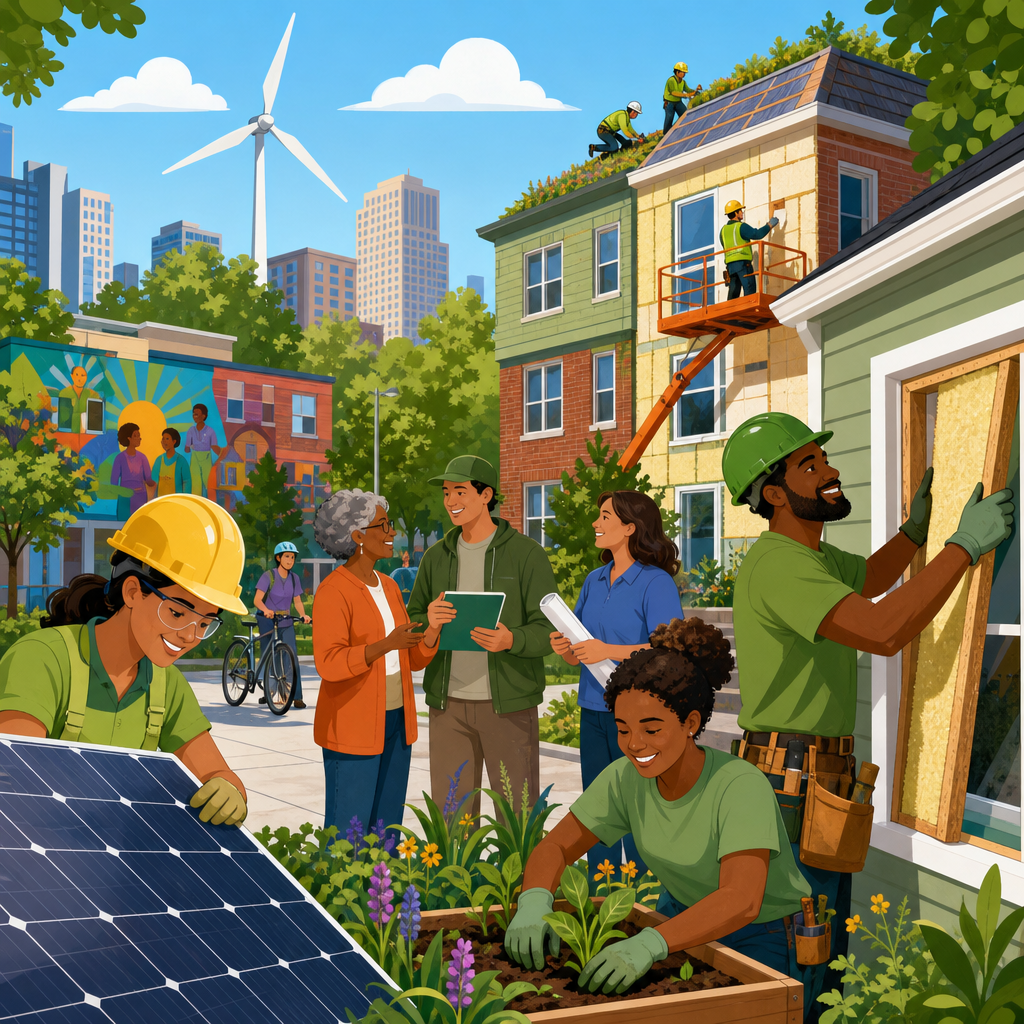
Community development through green jobs and building retrofits is one of the most practical ways to improve affordable housing, lower household energy costs, and create durable local employment at the same time. In plain terms, green jobs are roles that reduce environmental harm or improve resource efficiency, including weatherization crews, HVAC technicians, electricians installing heat pumps, energy auditors, insulation specialists, and project managers coordinating upgrades across housing portfolios. Building retrofits are improvements made to existing structures so they perform better, use less energy, waste less water, and provide healthier indoor conditions. In affordable housing, that can mean air sealing drafty apartments, replacing aging boilers, upgrading lighting, removing combustion appliances, adding ventilation, or installing solar where feasible.
This matters because existing buildings carry two burdens at once: they are expensive to operate and often uncomfortable to live in. In many cities, affordable housing residents face the highest energy burden, meaning a larger share of income goes to utility bills. Older multifamily properties also tend to have deferred maintenance, poor insulation, outdated mechanical systems, and indoor air quality problems that contribute to asthma and heat stress. I have worked on retrofit planning for aging housing stock, and the pattern is consistent: when owners only patch emergencies, costs keep rising; when they take a whole-building approach, residents see lower bills, fewer service calls, and more stable homes. Community development gains traction because the spending stays local through contractors, suppliers, apprenticeships, and maintenance staff.
The hub topic is broader than energy efficiency alone. A strong local strategy connects workforce training, housing preservation, public funding, tenant protections, capital planning, and neighborhood wealth building. It also requires measuring results. Utility savings, reduced emissions, comfort improvements, resident retention, and job quality all matter. Standards and tools already exist to guide this work, including ENERGY STAR Portfolio Manager, ASHRAE audit levels, DOE weatherization guidance, Enterprise Green Communities criteria, and prevailing wage and registered apprenticeship frameworks used in public projects. When these pieces are aligned, green retrofits become more than construction projects. They become a repeatable engine for affordable housing preservation and community development.
Why green jobs and retrofits fit affordable housing policy
Affordable housing providers are under constant pressure to control operating costs without shifting expenses to residents. Retrofits directly address that problem because every avoided kilowatt-hour and therm lowers recurring costs. For subsidized properties, those savings can stabilize budgets and help owners preserve affordability rather than defer repairs. For naturally occurring affordable housing, efficiency improvements can reduce the financial pressure that often leads to rent increases or property decline. Green jobs fit this policy space because retrofits require a local labor market that can assess buildings, install improvements, commission equipment, and maintain high performance over time. Unlike one-time grants, workforce capacity compounds.
In practice, the strongest programs do not treat housing and labor as separate silos. Cities that pair retrofit incentives with contractor training, community college programs, and local hire goals create a stronger multiplier effect. A weatherization trainee who starts with blower door testing can move into air sealing, then into HVAC installation or building controls. A public housing authority upgrading central plants can require apprenticeship utilization. A nonprofit developer renovating small multifamily properties can source graduates from neighborhood pre-apprenticeship programs. These linkages turn climate spending into long-term community infrastructure. They also help solve a real bottleneck: many markets have money for upgrades but too few qualified workers to deliver them at scale.
What building retrofits include in real properties
A retrofit is not a single product. It is a package of measures chosen after looking at how the building actually performs. In affordable housing, the most effective scope usually starts with enclosure improvements such as air sealing and insulation, because uncontrolled leakage undermines every heating and cooling system. Mechanical upgrades often follow: high-efficiency heat pumps, condensing boilers where electrification is not yet viable, balanced ventilation, smart controls, and domestic hot water improvements. Lighting, water fixtures, roofing, windows, and common-area equipment may also be included. The right mix depends on climate, building type, utility rates, resident needs, and capital reserves.
Real-world examples show why sequencing matters. In a drafty garden-style apartment complex, replacing furnaces before addressing leakage can leave residents with oversized equipment that short-cycles and fails early. In a midrise building with chronic moisture issues, adding insulation without correcting bulk water intrusion can trap moisture and worsen deterioration. In occupied rehab projects, teams must account for resident schedules, temporary access needs, and language access. The best retrofit plans include energy modeling, site verification, reserve planning, and post-installation commissioning so savings are real rather than theoretical. Good projects also plan for maintenance training. A variable refrigerant flow system or heat pump water heater will not deliver expected performance if site staff are unfamiliar with controls, filters, or fault diagnostics.
How green jobs create local economic mobility
Green jobs support community development because they are anchored in place. Buildings cannot be retrofitted offshore, and maintenance cannot be outsourced to another region. That creates opportunity for residents who need accessible career paths. Entry points include weatherization crews, material handling, duct sealing, insulation installation, and quality control assistance. From there, workers can move into licensed trades, energy auditing, commissioning, estimating, and project management. In markets where I have seen this work well, employers partner with workforce boards and trusted community organizations to recruit candidates who might otherwise be screened out by traditional hiring channels.
Job quality is critical. A retrofit boom built on temporary, low-wage work will not strengthen neighborhoods. Effective programs include safety training, credentials, transportation support, childcare coordination, and transparent wage ladders. They also connect training to actual contracts. Too many workforce efforts produce certificates without employer demand. Better models start with a pipeline of public, utility, or mission-driven housing projects, then align curriculum to the tasks those projects require. For example, trainees can learn combustion safety, blower door basics, Manual J and duct design concepts, refrigerant handling, and heat pump commissioning tied directly to employer needs. When residents gain stable careers working on the homes and facilities in their own communities, retrofit spending starts circulating as local income rather than leaving the neighborhood.
Financing models that make projects possible
Most affordable housing owners cannot fund deep retrofits from cash flow alone, so capital stacking is the norm. Common sources include Low-Income Housing Tax Credits recapitalizations, Community Development Block Grant funds, HOME funds, utility rebates, state energy grants, green banks, on-bill financing, and weatherization assistance for eligible properties. Inflation Reduction Act incentives have expanded the toolkit, particularly through transferability and direct-pay structures that can improve the economics of clean energy investments for tax-exempt and public entities. Even so, owners must evaluate timing, compliance, and transaction costs. A grant that requires immediate completion may not fit a property waiting for refinancing or resident relocation planning.
The most bankable retrofit plans combine technical analysis with a realistic pro forma. Owners need to know simple payback, savings-to-investment ratio, reserve impacts, replacement cycles, and non-energy benefits such as reduced vacancy or avoided health and safety incidents. Lenders increasingly understand that a building with lower utility volatility and modern systems is less risky than one dependent on obsolete equipment. Still, not every useful upgrade pays for itself quickly. Ventilation improvements, lead and asbestos abatement, and resilience measures may be essential even if the utility savings alone are modest. That is why successful financing strategies blend cash-flow-positive measures with mission-critical repairs and resident health upgrades.
| Retrofit measure | Primary community benefit | Typical workforce roles | Key implementation note |
|---|---|---|---|
| Air sealing and insulation | Lower bills, improved comfort, reduced drafts | Weatherization technicians, crew leads, QC inspectors | Verify with blower door testing before and after work |
| Heat pump installation | Lower emissions, efficient heating and cooling | HVAC installers, electricians, commissioning staff | Size equipment after enclosure improvements when possible |
| Ventilation upgrades | Better indoor air quality, moisture control | HVAC technicians, sheet metal workers | Balance airflow and train maintenance teams on filters |
| LED and controls | Fast savings in units and common areas | Electricians, maintenance staff | Check resident usability and avoid confusing control settings |
| Solar plus storage | Resilience, lower common-area energy costs | Electricians, solar installers, energy managers | Best suited to buildings with stable ownership and roof life |
Resident health, comfort, and anti-displacement safeguards
The clearest test of a community development strategy is whether current residents benefit without being pushed out. Retrofits can improve comfort immediately by reducing drafts, controlling humidity, and keeping indoor temperatures safer during extreme weather. They can also cut triggers for respiratory illness when projects eliminate combustion appliances, improve filtration, and address moisture. In senior housing and family housing alike, these gains are tangible. Residents often describe the difference in simple terms: fewer cold spots, less noise from old equipment, windows that open and close properly, and lower fear of summer utility bills.
But upgrades can also create disruption or become a pretext for rent escalation if safeguards are weak. Strong programs use temporary relocation plans only when necessary, schedule work around households, communicate in multiple languages, and prohibit unjustified rent increases tied to publicly supported improvements. Owners should document baseline conditions and expected resident benefits, then report outcomes. Tenant engagement is not a box to check. Residents know which stairwells are unsafe, which units overheat, where leaks recur, and when maintenance practices fail. Their knowledge improves project design. Community development succeeds when residents are treated as partners and beneficiaries, not obstacles to construction schedules.
Planning, measurement, and long-term asset management
The difference between a good retrofit and a disappointing one is often invisible during construction and obvious two years later. Planning must begin with data: utility histories, maintenance logs, resident complaints, equipment age, envelope conditions, and capital needs assessments. From there, teams can use benchmarking tools, interval data where available, and engineering studies to prioritize measures. I recommend owners establish a baseline before design starts and define success in measurable terms. Examples include percent reduction in site energy use intensity, number of emergency work orders avoided, summer indoor temperature improvements, and resident satisfaction after occupancy.
Measurement continues after installation. Commissioning verifies that systems operate as designed. Monitoring catches problems such as disabled controls, unbalanced ventilation, or heat pumps running with incorrect setpoints. Preventive maintenance protects the investment. Staff need manuals, training, and vendor support, not just turnover binders. Portfolio owners should fold retrofit lessons into asset management by standardizing specifications, tracking contractor performance, and planning replacements before failure. Over time, this turns scattered upgrades into an institutional strategy. That is the larger value of a hub approach within affordable housing: it links preservation, workforce development, public health, and climate resilience into one operating model that communities can repeat building by building.
Community development through green jobs and building retrofits works because it solves several housing problems at once instead of treating each one in isolation. Existing affordable homes can become healthier, cheaper to operate, and more resilient to heat, cold, and utility price swings. Local residents can access career pathways tied to work that cannot be outsourced and that builds skill over time. Housing owners can preserve properties by reducing operating strain and planning capital improvements more intelligently. Public agencies can stretch scarce dollars further when energy savings, health benefits, and employment gains reinforce one another. The approach is practical precisely because it starts with the buildings and people already in the community.
The strongest results come from whole-building planning, careful financing, quality installation, and resident-centered protections. Retrofits should be designed around real property conditions, verified through testing and commissioning, and supported by maintenance training after construction ends. Workforce efforts should be tied to real projects and good jobs, not just classroom hours. Resident engagement should shape scopes of work and guard against displacement. If you are building an affordable housing strategy, use this hub as the starting point: map your housing stock, identify workforce partners, benchmark energy use, and develop a retrofit pipeline that keeps benefits local. That is how housing investment becomes lasting community development.
Frequently Asked Questions
What are green jobs, and how do they support community development?
Green jobs are roles that help reduce environmental harm, improve energy efficiency, and support healthier, more resilient neighborhoods. In the context of community development, these jobs often include weatherization installers, insulation specialists, HVAC technicians, electricians, energy auditors, project coordinators, solar installers, and maintenance teams who keep upgraded systems operating efficiently over time. What makes these jobs especially valuable is that they connect environmental goals with everyday economic needs. Instead of treating sustainability as something separate from housing or employment, green jobs bring those priorities together in a very practical way.
When local workers are trained and hired to improve buildings in their own communities, the benefits multiply. Residents can gain access to stable employment with transferable skills, while neighborhoods see investments in safer, healthier, and more efficient housing. Local contractors and small businesses may also grow as demand increases for retrofit-related services such as air sealing, ventilation upgrades, electrical work, and building assessments. This creates a stronger local economic ecosystem rather than sending investment elsewhere.
Green jobs also support long-term community development because they are tied to needs that are not temporary. Many communities have aging housing stock, high utility burdens, and buildings that need modernization. Retrofitting homes, apartment buildings, schools, and community facilities is ongoing work. That means green employment can become part of a durable workforce strategy, especially when paired with apprenticeships, union pathways, community college programs, and public investment. In short, green jobs help communities build wealth, improve living conditions, and prepare for a more energy-efficient future at the same time.
How do building retrofits improve affordable housing for residents?
Building retrofits improve affordable housing by reducing the total cost of living, not just the monthly rent or mortgage payment. A home may be considered affordable on paper, but if it has poor insulation, outdated heating and cooling equipment, leaky windows, or inefficient appliances, residents can face very high utility bills. Retrofits address those problems directly. Common upgrades include insulation, air sealing, energy-efficient windows, heat pumps, better ventilation, LED lighting, water-saving fixtures, and modern controls that help buildings use less energy without sacrificing comfort.
These improvements can make homes healthier as well as less expensive to operate. Poorly performing buildings often have drafts, uneven temperatures, excess moisture, and indoor air quality problems. Retrofits can help reduce mold risk, improve ventilation, and create more consistent indoor temperatures throughout the year. For families, older adults, and people with respiratory conditions, those changes can have a meaningful effect on daily quality of life. Better housing performance can also reduce emergency maintenance issues and extend the useful life of buildings, which is especially important for nonprofit housing providers, public housing agencies, and affordable housing developers working with limited budgets.
From a community development perspective, retrofits help preserve existing affordable housing stock. In many places, it is faster and more cost-effective to upgrade current buildings than to replace them entirely. By improving efficiency and durability, owners can lower operating costs and potentially reduce pressure that leads to deferred maintenance or displacement. When retrofit programs are designed thoughtfully, they can protect residents, maintain affordability, and ensure that energy savings benefit the people living in the homes rather than being absorbed entirely elsewhere. That is why retrofits are increasingly seen as a key strategy for making affordable housing truly affordable over the long term.
Why are lower household energy costs so important for local economic stability?
Lower household energy costs matter because energy bills directly affect how much money families have available for essentials such as food, medicine, transportation, childcare, and education. In many lower-income communities, residents face a high energy burden, meaning they spend a larger share of their income on utilities than higher-income households do. Even modest reductions in monthly energy costs can make a real difference when budgets are tight. Over the course of a year, savings from better insulation, efficient heating and cooling systems, and reduced air leakage can add up in a way that strengthens household financial stability.
Those savings also have broader local effects. When residents spend less on wasted energy, more money tends to stay in the local economy. Families may be better able to support nearby businesses, keep up with rent, avoid utility shutoffs, or build small financial cushions that reduce vulnerability during emergencies. In that sense, energy efficiency is not just a building issue; it is a neighborhood economic issue. Communities with lower energy burdens are often better positioned to withstand spikes in fuel prices, heat waves, cold snaps, and other cost pressures that can destabilize household finances.
There is also a public systems benefit. When homes and buildings perform more efficiently, demand on the energy grid can be reduced, especially during peak periods. That can support broader resilience and potentially lower system-wide costs over time. For local governments and housing organizations, reduced utility expenses in multifamily buildings or public facilities can free up funds for maintenance, resident services, and additional community improvements. In practical terms, lowering energy costs helps households stay housed, helps buildings remain financially viable, and helps neighborhoods become more economically secure.
What kinds of training and career pathways exist for green jobs related to retrofits?
The green jobs sector connected to building retrofits offers a wide range of entry points, which is one reason it is such a promising strategy for inclusive community development. Some roles can be accessed through short-term training, certifications, or paid apprenticeships, while others require more advanced technical education or licensing. Entry-level opportunities may include weatherization technicians, energy efficiency installers, insulation crew members, or building performance support staff. From there, workers can move into higher-skilled positions such as HVAC technician, electrician, heat pump installer, energy auditor, building analyst, project supervisor, or retrofit program manager.
Training pathways often involve community colleges, workforce development boards, labor unions, nonprofit organizations, adult education providers, and employer-led programs. Many communities are building “earn while you learn” models so residents do not have to choose between training and income. That is especially important for expanding access to people who have been historically excluded from quality job pipelines, including low-income residents, young adults, veterans, returning citizens, and workers transitioning from declining industries. Supportive services such as transportation help, childcare assistance, career coaching, and tool stipends can make a major difference in whether people can successfully complete training and remain in the field.
These careers are attractive not only because they meet current demand, but because they can lead to long-term advancement. Skills gained in retrofitting buildings are relevant across residential, commercial, and public-sector projects. Workers can specialize in electrification, energy modeling, ventilation, controls, or whole-building project management. In many cases, these jobs also align with broader climate and infrastructure investments, which increases the likelihood of sustained demand. The strongest workforce strategies connect residents to recognized credentials, real job placements, and advancement opportunities so that green jobs become not just short-term work, but genuine career ladders that build household and community wealth.
How can communities ensure green job and retrofit investments are equitable and benefit local residents?
Equity does not happen automatically. For green job and retrofit investments to truly benefit local residents, communities need intentional policies, partnerships, and accountability. One of the most effective approaches is to prioritize local hiring and workforce development from the start. That means designing programs that recruit residents from the neighborhoods being served, especially communities facing high unemployment, high energy burdens, older housing conditions, or long histories of disinvestment. It also means setting clear goals around participation by women, people of color, small local contractors, and other groups that have often been left out of infrastructure and construction opportunities.
Equitable program design also requires protecting residents. Retrofit projects should improve housing without triggering displacement, excessive rent increases, or loss of affordability. In affordable housing settings, this may involve long-term affordability requirements, tenant protections, transparent communication, and clear rules about how energy savings are shared. Residents should understand what work is being done, how it will affect their homes, and what benefits they can expect in terms of comfort, health, and utility savings. Community engagement is essential here. Programs tend to work better when they are shaped with input from tenants, neighborhood groups, housing providers, workforce organizations, and trusted local institutions.
Finally, communities should measure success in a broad way. It is not enough to count the number of buildings upgraded or dollars spent. Strong programs track outcomes such as local jobs created, wages earned, certifications completed, household energy savings, reductions in utility burden, resident health and comfort improvements, and the long-term preservation of affordable housing. When public agencies, utilities, nonprofit partners, and employers share data and coordinate goals, they can build initiatives that are both efficient and fair. The ultimate objective is straightforward: invest in buildings in a way that creates opportunity, lowers costs, improves living conditions, and ensures that the people who need the benefits most are the ones who actually receive them.


