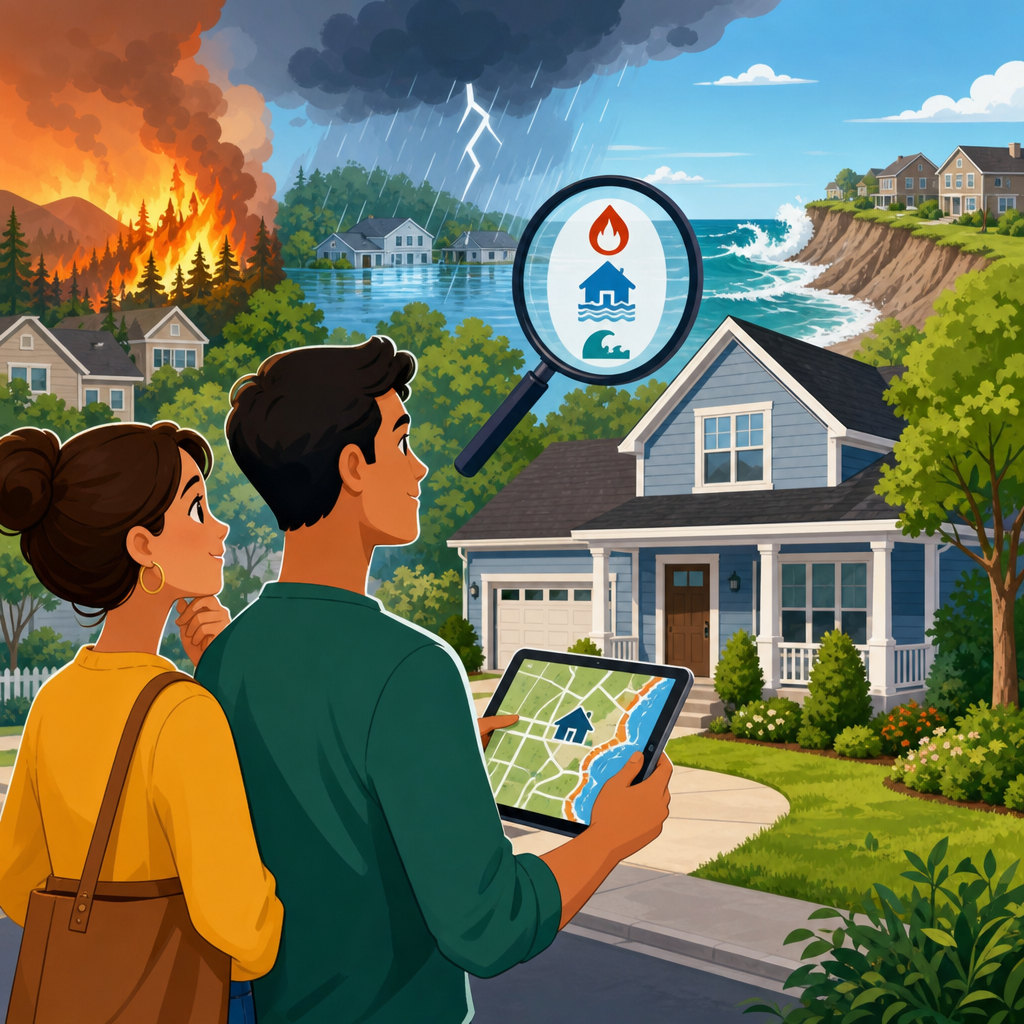
Climate risk disclosure is changing how people buy homes, how agents market properties, and how lenders and insurers price exposure. In practical terms, climate risk disclosure means giving buyers clear information about a property’s exposure to hazards such as flood, wildfire, extreme heat, storm surge, drought, sea-level rise, and wind damage before a sale closes. Homebuyer behavior refers to the way shoppers search, compare, bid, negotiate, and ultimately decide where to live. The connection between the two has moved from academic debate to daily market reality. I have seen buyers who once focused only on school districts and commute times start asking for FEMA flood maps, insurance loss histories, roof age, defensible-space conditions, and even utility outage patterns. That shift matters because housing is the largest asset most households own, and climate exposure can affect monthly costs, financing access, resale value, and long-term livability.
What do we know so far? First, disclosure changes attention. When risk is visible, buyers ask better questions and narrow searches differently. Second, disclosure changes pricing, though not evenly across markets. Some hazards are already capitalized into home values, especially repetitive flood loss and high wildfire exposure, while other risks remain underpriced because the information is inconsistent or hard to interpret. Third, the effect depends on trust, timing, and local context. A brief line in a closing packet does far less than a searchable listing flag, map-based score, or insurer quote delivered early in the process. Fourth, climate risk is not just a coastal issue. Inland flooding, smoke, heat, water stress, and convective storms increasingly shape housing demand in places that historically marketed themselves as safe alternatives. For buyers, better disclosure can prevent expensive surprises. For sellers and professionals, it can reduce failed deals, support realistic pricing, and improve market transparency.
What climate risk disclosure includes and why timing matters
Climate risk disclosure covers both legally required statements and supplemental information provided by sellers, brokers, insurers, lenders, or third-party data firms. Required disclosures vary by state, but often include known flood damage, prior insurance claims, hazard insurance requirements, drainage issues, and material defects worsened by weather. Supplemental disclosure can be broader: FEMA flood zone status, elevation certificates, National Flood Insurance Program history, private risk scores from First Street or ClimateCheck, wildfire hazard severity zones, municipal adaptation plans, or records of mitigation work such as fire-resistant vents and flood openings. In transactions I have worked around, buyers respond most strongly when disclosure appears early, during search and underwriting, not after inspections. A map icon on a listing, a realistic insurance estimate, and a concise explanation of recurring hazards influence behavior far more than dense legal language signed two days before closing.
Timing matters because housing decisions are path dependent. Buyers build emotional attachment quickly. If meaningful climate information arrives only after an offer is accepted, many will rationalize the risk rather than restart the search. Early disclosure changes the entire funnel: which neighborhoods make the shortlist, how much cash buyers reserve for insurance and mitigation, and how they compare one apparently cheaper home against a more resilient but higher-priced alternative. Early disclosure also improves fairness. Sophisticated investors already buy parcel-level hazard data; first-time buyers often do not. When standardized information is integrated into search platforms and transaction documents, the gap narrows. That is one reason regulators, consumer advocates, and many market participants increasingly support clearer, earlier disclosure standards.
How homebuyers actually respond to visible climate risk
Homebuyers do not react to all hazards the same way. Flood risk tends to produce the clearest behavior change because buyers can link it to concrete costs: insurance premiums, lender requirements, repair history, and evacuation experience. Research after updates to flood maps and local disclosure rules has repeatedly found price discounts for higher-risk properties, especially after major disasters make losses salient. Wildfire risk also changes behavior, but often through insurability. In parts of California, Colorado, and the Mountain West, buyers increasingly ask whether the property can obtain coverage at a reasonable premium before they decide how much to offer. Extreme heat and smoke affect behavior differently. Buyers may still bid on a home in a hot market, but they increasingly ask about tree canopy, cooling loads, backup power, air filtration, and summer utility bills. In other words, visible risk does not always stop a purchase; it often redirects attention toward operating costs and resilience features.
Behavioral economics helps explain the pattern. Buyers overweight recent disasters, underweight distant chronic risks, and rely heavily on defaults and simple signals. A plain-language statement such as “this home has a one-in-four chance of flooding over 30 years” is easier to act on than a technical annual probability. Likewise, an insurer quote has more impact than an abstract hazard score because it translates risk into a monthly payment. I have seen this repeatedly: a buyer tolerates a moderate flood score until the insurance estimate adds hundreds of dollars a month, then immediately broadens the search radius. Search tools, lender preapprovals, and listing platforms therefore shape behavior as much as the hazard itself. The market response is strongest when disclosure converts climate exposure into understandable consequences.
What the evidence says about prices, demand, and migration
The evidence to date suggests climate risk disclosure affects prices, but the magnitude varies by hazard, geography, and market cycle. Flood exposure is the most studied case. Academic work and government analyses have found that homes in flood-prone areas can sell at discounts relative to otherwise similar properties, particularly where buyers receive strong disclosure and where insurance costs are visible. Studies by researchers using transaction data, flood maps, and repeat-sales methods have shown that underpricing can persist when risk is poorly disclosed, then narrow after disasters or policy changes increase awareness. Wildfire markets show a similar pattern, but with more volatility because insurance availability can change suddenly. When carriers restrict new business or raise rates sharply, buyer demand can shift within a single season, creating a larger pricing gap between homes with strong mitigation and homes in the same zip code that are harder to insure.
Migration patterns are more complex. People are moving toward some risky regions for jobs, amenities, and tax reasons even as climate exposure rises. The Sun Belt remains attractive, but household calculations are changing. A metro can gain residents overall while losing demand in specific flood basins, smoke-prone foothill communities, or overheated neighborhoods with weak infrastructure. Climate disclosure helps explain this sorting. It does not create migration on its own; it changes which submarkets win. For example, buyers may still move to Florida or Texas but favor newer homes built to stricter codes, higher-elevation neighborhoods, or communities with modern drainage. Likewise, buyers relocating to the Mountain West may still choose exurban areas but increasingly discount homes lacking defensible space, Class A roofing, ember-resistant vents, and reliable evacuation routes. The takeaway is that disclosure sharpens relative demand inside markets before it causes broad retreat across regions.
Where disclosure works, where it falls short, and what buyers should compare
Disclosure works best when it is standardized, specific, and linked to decisions buyers already make. It falls short when rules differ by state, definitions are vague, or the data arrives too late to influence financing and insurance. One common failure is relying only on whether a property sits inside a mapped FEMA Special Flood Hazard Area. That binary label misses many damaging events caused by extreme rainfall, drainage failures, and outdated maps. Another failure is treating climate scores as self-explanatory. A risk score can be useful, but buyers need the underlying drivers: expected flood depth, wildfire ember exposure, days above 95 degrees, likely insurance changes, and relevant adaptation measures. In practice, the best disclosures combine legal forms, parcel-level hazard analysis, insurability checks, prior loss information, and property-specific mitigation details.
| Buyer question | Best disclosure source | Why it matters |
|---|---|---|
| Is this home likely to flood? | FEMA maps, local stormwater records, elevation certificate, prior claims | Determines repair risk, insurance need, and lender conditions |
| Can I insure it affordably? | Carrier quotes, broker estimates, claims history, state FAIR plan rules | Monthly cost can alter debt-to-income and offer price |
| Is wildfire risk manageable? | State hazard maps, defensible-space inspection, roof and vent details | Mitigation quality affects both safety and coverage availability |
| Will heat raise ownership costs? | Utility bills, HVAC age, insulation data, tree canopy, outage history | Shows cooling burden, comfort, and resilience during heat waves |
For buyers, comparison is the key discipline. A home with a lower purchase price may be more expensive once insurance, maintenance, retrofits, and outage-related costs are included. A safer home may also hold value better if disclosure becomes stricter later. That is why good buyer agents increasingly present climate due diligence the same way they present taxes, HOA rules, and school data: as a recurring cost and resale issue, not merely a philosophical concern. Buyers should ask for loss runs where available, a five-year insurance cost history if the seller has it, documentation of mitigation upgrades, and any local capital plans affecting drainage or fire protection. The more specific the disclosure, the more rational the decision.
The role of insurers, lenders, platforms, and policy makers
Insurers and lenders now shape homebuyer behavior as much as disclosure forms do. Insurance is the market’s fastest risk translator. If premiums spike, deductibles rise, or coverage becomes scarce, buyers feel climate risk immediately. In California, Florida, Louisiana, and other high-exposure states, changes in carrier appetite have already altered transaction timelines and affordability calculations. Mortgage lenders also matter because they must assess collateral risk over the loan term. While federal mortgage rules still center heavily on mapped flood zones, large financial institutions are increasingly incorporating broader physical climate risk into portfolio analysis, stress testing, and servicing strategy. Buyers may not see that internal modeling directly, but they experience it through appraisal scrutiny, reserve requirements, and insurance documentation requests.
Search platforms and portals are the next major force. When risk appears at the browsing stage, not buried in PDFs, consumer behavior changes faster. Third-party data providers have pushed that shift by making parcel-level climate analytics easier to embed in listings and market reports. The challenge is accuracy and interpretation. Models differ. Some estimate forward-looking annualized loss, others communicate hazard frequency, and others score relative exposure. Policy makers therefore face a balancing act: improve transparency without creating false precision. The strongest approach is not to ban disclosure tools or rely on one vendor, but to set minimum standards for clarity, update frequency, definitions, and consumer context. Better disclosure does not eliminate climate risk, but it produces more efficient pricing and fewer unpleasant surprises after closing.
What we know so far and what buyers should do next
The clearest conclusion is that climate risk disclosure influences homebuyer behavior when it is early, credible, and tied to money. Buyers respond most strongly to information that affects insurance, financing, repair probability, and everyday livability. Flood and wildfire risks currently show the most visible market effects because they are easier to connect to claims, premiums, and building standards. Heat, smoke, water stress, and chronic infrastructure strain are gaining importance, especially in regions attracting population growth. We also know the market is still uneven. Some risky homes remain underpriced because disclosure is fragmented, maps are incomplete, and buyers rely on past conditions rather than future exposure. That gap will likely shrink as data quality improves and insurers, lenders, and platforms continue integrating climate signals into normal housing workflows.
For homebuyers, the practical lesson is simple: treat climate due diligence as part of affordability, not as an optional extra. Before you bid, compare hazard exposure, insurance availability, utility burden, mitigation quality, and local resilience investment. Ask direct questions and get written answers. If a seller or listing cannot explain prior losses, flood history, wildfire hardening, or cooling resilience, assume you need deeper investigation. For housing professionals, this topic is now central to market literacy. Clear disclosure builds trust, supports realistic pricing, and helps buyers choose homes they can keep, insure, and sell later. As the housing market adapts, the winners will be the buyers and businesses that price climate risk honestly from the start. Use that standard in your next search, and every housing decision after it.
Frequently Asked Questions
1. What is climate risk disclosure in real estate, and why does it matter to homebuyers?
Climate risk disclosure in real estate is the process of informing buyers about a property’s potential exposure to hazards such as flooding, wildfire, extreme heat, storm surge, sea-level rise, drought, and damaging wind events before a sale is completed. In some places, these disclosures are required by law and follow a standard form. In others, they may be partial, inconsistent, or provided through third-party reports rather than a formal seller disclosure. Either way, the goal is the same: to give buyers a clearer picture of risks that could affect safety, insurance costs, maintenance expenses, financing, and long-term resale value.
For homebuyers, this matters because climate exposure is no longer a distant or abstract issue. It can directly affect monthly housing costs and day-to-day livability. A home in a flood-prone area may require expensive flood insurance, elevation work, drainage improvements, or future repairs after severe weather. A property in a wildfire zone may face vegetation management requirements, hardening upgrades, limited insurance availability, or higher premiums. In hot regions, extreme heat can increase cooling costs, strain infrastructure, and make certain neighborhoods less comfortable over time. Buyers are increasingly learning that the purchase price is only part of the financial equation.
Disclosure also helps reduce information gaps. Traditionally, local owners, insurers, or experienced agents might understand a neighborhood’s risks better than an out-of-area buyer. Clear disclosure levels that playing field. It allows shoppers to compare homes more accurately, ask better questions during due diligence, and decide whether a property’s location, price, and resilience features make sense for their goals. In that way, climate risk disclosure is becoming an important tool for more informed homebuying rather than simply a legal checkbox.
2. How is climate risk disclosure changing homebuyer behavior?
What we know so far is that climate risk disclosure is influencing behavior in several practical stages of the home search. Buyers are using climate information earlier in the process, not just after they are under contract. Instead of asking only about school districts, commute times, and renovation potential, many shoppers now screen listings by flood exposure, wildfire maps, heat vulnerability, and insurance history. This means risk data is increasingly shaping where buyers are willing to look in the first place.
Disclosure is also affecting how buyers compare similar homes. If two properties are close in size, location, and amenities, but one has lower modeled flood risk or more resilient construction, buyers may prefer the less exposed home even if it costs more upfront. In some markets, this can change bid behavior. Buyers may offer more aggressively on homes perceived as safer and more cautiously on homes with known hazard exposure. They may request credits, demand repairs or mitigation work, shorten their target list, or walk away if the long-term costs appear too uncertain.
Another important shift is how buyers think about ownership duration and resale risk. A purchaser planning to stay for 10 to 20 years may now ask whether worsening heat, rising insurance premiums, repeated storms, or future disclosure rules could make the home harder to sell later. This is especially relevant for first-time buyers and move-up buyers stretching their budgets, because climate-related expenses can erode affordability after closing. Overall, the evidence suggests that better disclosure tends to make buyer decision-making more cautious, more data-driven, and more sensitive to total cost of ownership rather than just the sticker price.
3. Does climate risk disclosure affect home prices, negotiations, and resale value?
Yes, it can, although the impact varies widely by region, hazard type, housing supply, and how visible or credible the risk information is. In broad terms, when buyers become more aware of climate exposure, that awareness can influence demand. Lower demand for higher-risk properties may lead to longer time on market, more negotiation over price, or requests for seller concessions. Conversely, homes in lower-risk areas or homes with strong resilience features may command a premium, particularly when buyers are actively comparing insurance costs and future repair exposure.
Negotiations are often where disclosure becomes most tangible. Once a buyer learns that a home has past flood damage, sits in a wildfire interface zone, or faces recurring stormwater issues, the conversation often shifts from aesthetics to risk management. Buyers may seek a price reduction to offset expected insurance costs or mitigation work. They may ask for documentation on prior claims, drainage improvements, roof condition, defensible space, elevation certificates, or upgraded windows and vents. Sellers who can show proactive risk reduction may be in a stronger negotiating position than those who cannot explain or document the property’s vulnerability.
As for resale value, climate risk disclosure may matter even more over time than at the initial purchase. A property can become less attractive to future buyers if hazards intensify, insurance becomes more expensive, or disclosure requirements become more standardized and easier to compare across listings. That does not mean every at-risk home will lose value in the same way. Some desirable markets remain resilient because of job access, limited inventory, or lifestyle appeal. But the broader trend is clear: climate exposure is becoming part of the market’s pricing logic. Buyers who ignore it may face surprises later, while buyers who evaluate it carefully are better positioned to protect long-term value.
4. What role do lenders, insurers, and real estate agents play in climate risk disclosure?
Lenders, insurers, and agents all shape how climate risk information reaches buyers, even though they do so in different ways. Lenders care because climate hazards can threaten collateral value and loan performance. If a home is repeatedly damaged, difficult to insure, or more costly to maintain than expected, that can affect the borrower’s finances and the property’s long-term marketability. While most homebuyers experience this indirectly through underwriting requirements, appraisal considerations, or documentation requests, the lending side of the market is paying closer attention to geographic exposure and physical risk than it did in the past.
Insurers are often where climate risk becomes financially concrete. A buyer may love a property until the insurance quote arrives. Premium increases, higher deductibles, coverage exclusions, or limited carrier availability can materially change affordability. In some cases, buyers discover that a home is technically financeable but much more expensive to own because hazard coverage is scarce or costly. That reality is one reason climate disclosure matters so much: a buyer who learns about risk only at the insurance stage may lose time, money, and negotiating leverage. Early disclosure helps avoid late surprises.
Real estate agents play a practical translation role. Buyers increasingly expect agents to help them identify red flags, point them toward reliable reports, explain what disclosure forms mean, and encourage proper due diligence. Agents are not climate scientists or insurance underwriters, but they are often the first professionals buyers turn to when evaluating location-based risk. Strong agents help clients ask smarter questions, such as whether the property has a history of claims, whether mitigation upgrades have been completed, and whether local infrastructure can handle heavy rain, heat, or fire risk. As climate disclosure becomes more common, agents who can communicate risk clearly and responsibly are becoming more valuable in the transaction process.
5. What should homebuyers do if a property has known climate risks?
A known climate risk does not automatically mean a buyer should reject a property, but it does mean the buyer should slow down and evaluate the risk in a structured way. The first step is to gather more specific information. Buyers should review seller disclosures carefully, request any available claim history or repair records, and obtain third-party hazard reports when appropriate. They should also ask about past flooding, smoke damage, defensible space compliance, drainage problems, heat-related utility burdens, and whether the home has been upgraded for resilience. General neighborhood risk is important, but property-level details often determine the real financial impact.
The second step is to translate risk into costs and options. Buyers should get insurance quotes early, not after they are emotionally committed. They should ask what coverage is available, what is excluded, how deductibles work, and whether premiums are likely to be stable or volatile. It is also wise to price out mitigation measures such as roof upgrades, fire-resistant vents, drainage improvements, elevation work, backup power, shading, insulation, or better windows. Some homes with known risks remain reasonable purchases if the price reflects those risks and the mitigation path is clear. Others may prove too uncertain once insurance and future maintenance are factored in.
Finally, buyers should think beyond the immediate transaction. They should consider how climate exposure fits with their budget, risk tolerance, lifestyle needs, and expected time horizon in the home. A buyer planning to stay only a few years may weigh resale risk differently from a buyer intending to own for decades. A household with financial flexibility may be able to invest in resilience improvements that another buyer cannot absorb. The smartest approach is not fear-based; it is informed and comparative. Climate risk disclosure is most useful when it helps buyers decide whether a property’s benefits, costs, and future outlook are aligned with their goals before they sign the final paperwork.