
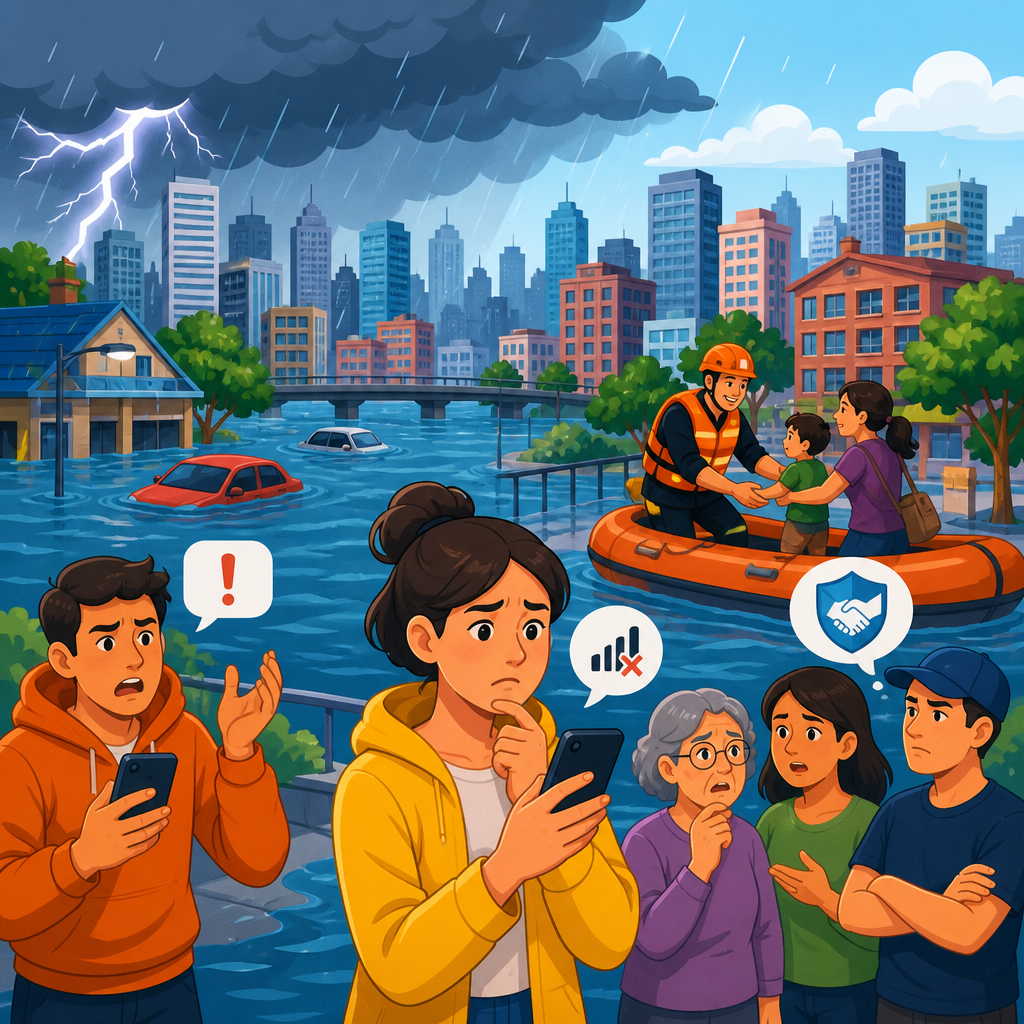
Urban flood alerts, communication failures, and emergency trust sit at the center of modern city resilience because the value of any warning system depends on whether people receive the message, understand it, and believe it quickly enough to act. In urban planning and policy, flood alerts are the official notifications issued before or during intense rainfall, river overflow, coastal surge, sewer backup, or flash flooding. Communication failures include delayed warnings, confusing wording, inaccessible formats, contradictory agency statements, broken sirens, overloaded mobile networks, and maps that do not match conditions on the ground. Emergency trust is the public confidence that authorities are competent, truthful, and acting in residents’ best interests. I have worked with municipal risk communication plans and after-action reviews, and the same lesson repeats in every city: infrastructure matters, but communication determines outcomes. Dense neighborhoods, underground transit, impervious surfaces, informal housing, and fragmented governance make urban flooding fast, unequal, and difficult to manage. A well-built drainage project reduces hazard exposure, yet one missed message can still trap drivers in underpasses, isolate older residents in basement apartments, or send families toward roads that are already impassable. This hub article explains the core concepts, policy choices, and practical failures that shape urban flood warning performance, giving planners, emergency managers, journalists, and community leaders a clear framework for understanding what works and what breaks.
Why urban flood alerts fail in cities
Urban flood alerts fail for predictable reasons, and most of them are institutional rather than technical. Cities often have multiple warning authorities: meteorological agencies issue rainfall forecasts, water utilities monitor drainage and pumping stations, police manage road closures, transit agencies control stations and tunnels, and mayoral offices handle public messaging. When these actors publish at different times or use different risk thresholds, residents receive mixed signals. A weather service may warn of fifty millimeters of rain in two hours while the city transportation account posts normal service. People usually trust the signal that matches routine experience, not the one that reflects emerging danger.
Speed also matters. Flash flooding in dense urban basins can develop within minutes because asphalt and concrete shed water rapidly. If alerts rely on manual approval chains, they arrive after streets, viaducts, and rail cuttings have already filled. During after-action debriefs, I have repeatedly seen a gap between forecast issuance and public notification caused by internal escalation rules, legal review, or uncertainty about whether conditions met protocol. That gap destroys lead time, and lead time is the currency of protective action.
Message design creates another common failure. Many alerts describe the hazard without telling people what to do. Residents need direct, behavior-based instructions: avoid basement dwellings, do not drive through water, move vehicles from low points, check on neighbors who use medical devices, and expect transit suspension after a stated threshold. A warning that says heavy rain possible is informational. A warning that specifies where, when, and what action to take is operational.
Access barriers intensify these problems. Cities are multilingual, digitally unequal, and filled with people who work nights, commute underground, or have disabilities affecting hearing, sight, or cognition. An alert that reaches only smartphone users in one language is not a citywide warning system. Trust declines when the same communities are repeatedly under-informed, especially low-income districts already facing flood exposure from legacy planning decisions.
How emergency trust is built before a storm
Emergency trust is not created during a disaster briefing; it is accumulated through routine competence, transparency, and consistency. Residents ask simple questions even if they never phrase them formally: Who is responsible? Do they tell the truth early? Do they admit uncertainty? Do they return after the water recedes? Cities that answer those questions well sustain compliance when they issue urgent instructions.
Trust grows when agencies explain thresholds in plain language. If a city says roads in specific zones close once gauges reach a set depth, and then actually closes them when that depth is reached, the public learns the system is credible. Trust grows when alerts are tested publicly, siren schedules are published, multilingual templates are maintained, and maps are updated after land-use change. It also grows when officials acknowledge past failures. In practice, communities often respond better to, “This underpass flooded twice last year, and we have posted crews there tonight,” than to generic assurances that the city is prepared.
Public memory matters. A false alarm does less damage than officials sometimes fear if it was clearly reasoned and honestly explained. Repeated under-warning is worse. People forgive caution; they do not forgive silence. Research from risk communication and disaster sociology consistently shows that credibility depends less on perfect prediction than on visible honesty, procedural fairness, and actionable guidance. Cities that invest in community-based organizations, tenant associations, school networks, and faith leaders have a wider trust infrastructure than cities that communicate only through official press releases.
Warning channels, strengths, and weak points
No single communication channel is sufficient for urban flood alerts. Redundancy is the standard because each tool fails differently. Cell broadcast can reach many devices rapidly without subscription, but handset settings, language limitations, and message length reduce effectiveness. SMS lists are useful for enrolled users, yet opt-in systems miss visitors, recent migrants, and many renters. Sirens provide broad area notification but convey almost no detail. Social media spreads updates quickly, though algorithms, outages, impersonation, and platform fragmentation make it unreliable as a sole source. Radio remains valuable during power loss and network congestion. Door-to-door notification is labor intensive but indispensable in high-risk blocks and informal settlements.
| Channel | Main strength | Primary weakness | Best urban use |
|---|---|---|---|
| Cell broadcast | Fast mass reach | Limited detail | Immediate life safety alerts |
| SMS opt-in | Targeted updates | Incomplete enrollment | Neighborhood follow-up notices |
| Sirens | Works without literacy | No action specifics | Sudden flash flood onset |
| Transit displays | Captive commuter audience | Only reaches riders | Station closures and rerouting |
| Local radio | Useful in outages | Audience varies | Extended emergency coverage |
| Door-to-door teams | High trust and clarity | Slow and resource heavy | Extreme risk pockets |
The strongest city systems layer these channels and keep messages consistent across all of them. The content should be synchronized by a common operating picture, usually maintained in an emergency operations center through GIS dashboards, rainfall radar, stream gauges, CCTV feeds, 311 reports, and field crews. When the dashboard says one thing and the public account says another, confusion spreads immediately.
Forecasting, thresholds, and the challenge of uncertainty
Urban flood warnings depend on more than weather forecasts. Rainfall intensity-duration-frequency curves, soil saturation, tide levels, river stage, pump status, debris blockage, and local topography all influence outcomes. In built-up neighborhoods, a cloudburst over a small catchment can create severe street flooding even when regional forecasts appear moderate. That is why modern city systems increasingly combine national meteorological forecasts with local sensors and hydrologic models.
Threshold design is a policy choice as much as a technical one. If thresholds are set too high, officials issue fewer alerts but miss dangerous onset. If they are set too low, alert fatigue becomes real. The practical solution is tiered messaging. An outlook can notify residents of elevated risk twelve to twenty-four hours ahead. A watch can indicate that flooding is likely in named districts. A warning can trigger specific protective actions and service changes. The best systems define these levels publicly before the event.
Uncertainty should be communicated directly. People can handle probabilistic information if it is tied to decisions. Saying, “There is a sixty percent chance of flash flooding in underpasses between 6 p.m. and 10 p.m.; avoid those corridors after 5:30,” is far more useful than hedging with vague language. In my experience, officials often soften messages to avoid criticism, but ambiguity is what produces criticism later, especially when residents compare archived posts with actual impacts.
Infrastructure inequality and who bears the risk
Urban flooding is never evenly distributed. Legacy zoning, redlining, informal development, poor maintenance, and underinvestment in drainage place disproportionate risk on lower-income communities, renters, migrants, older adults, and people living in basement or ground-floor units. Communication failures mirror those inequalities. Households with stable internet, insurance literacy, flexible work, and private vehicles can interpret warnings and act. Households without those advantages face harder choices, such as leaving work unpaid, relocating without money for transport, or remaining in a home that officials never clearly identified as high risk.
Policy discussions about emergency trust must therefore include fairness. If residents repeatedly report clogged drains, illegal dumping, or recurrent ponding and see no response, they reasonably distrust later directives. Trust is operationalized through service delivery. A city that maps social vulnerability, prioritizes drainage maintenance in exposed blocks, and prepositions pumps near public housing is communicating before it sends a single alert. So is a city that works with landlords, schools, disability advocates, and community health workers to build neighborhood-specific plans.
Real-world examples illustrate the point. Basement flood deaths in several global cities have highlighted the danger of housing forms excluded from standard outreach. Likewise, road flooding incidents often affect delivery drivers, taxi operators, and shift workers who are exposed during the worst weather. A fair alerting strategy identifies these groups explicitly rather than assuming a generic resident.
What effective crisis communication looks like during flooding
During a flood emergency, effective communication is simple, frequent, and concrete. The public needs five answers immediately: what is happening, where it is happening, what actions to take now, what services are disrupted, and when the next update will come. Each message should use time stamps, neighborhood names people actually recognize, and a direct action verb. Avoid jargon such as pluvial event if street flooding says the same thing more clearly.
Good crisis communication also corrects rumors fast. Videos of dramatic flooding from past storms, neighboring cities, or unrelated countries can circulate within minutes and distort behavior. A trusted official account must rebut false claims with evidence, ideally linking maps, camera views, or transit notices. Press briefings should align with field operations. If buses are being rerouted, that fact belongs in every channel, not just on the transit website.
Spokespeople matter. Residents judge calm competence through tone, pacing, and consistency. The best briefers acknowledge uncertainty without sounding hesitant, explain what crews are doing, and repeat the most important protective instruction in every appearance. When fatalities or severe damage occur, empathy is essential, but so is precision. People should never have to infer whether an evacuation order, shelter location, boil-water notice, or school closure is in effect.
Recovery communication and restoring trust after failure
Trust after a flood is rebuilt through candor and follow-through. If alerts were late, say so. If sensors failed, publish the repair timeline. If a neighborhood map was outdated, correct it and explain why. After-action reports should be public, readable, and connected to budget decisions. Residents are right to be skeptical of lessons identified without lessons implemented.
Recovery communication should cover insurance documentation, debris pickup, mold prevention, renter rights, permit rules, public health precautions, and mental health support. These topics are not secondary. For many households, the post-flood period determines whether they return safely, incur debt, or leave the neighborhood entirely. Clear recovery guidance can strengthen trust even after a flawed warning operation because it demonstrates continued responsibility.
Planners and policymakers should treat every flood as a data point for system improvement. Analyze alert timing against rainfall and inundation records. Compare message reach across languages and neighborhoods. Review 911 and 311 calls for unmet information needs. Test whether evacuation or shelter advice was realistic for households without cars. Then publish the changes before the next rainy season. Emergency trust survives when the public can see institutional learning.
Urban flood alerts, communication failures, and emergency trust are inseparable parts of city safety. Accurate forecasts and engineered drainage reduce risk, but they do not protect people unless warnings arrive early, make sense, and come from institutions the public believes. The strongest urban systems use layered communication channels, clear thresholds, local data, and neighborhood partnerships. They account for uncertainty honestly, address inequality directly, and keep recovery communication as rigorous as crisis messaging. The weakest systems do the opposite: they fragment responsibility, delay decisions, obscure action steps, and neglect the communities most exposed to flooding. For urban planning and policy, this subtopic matters because it links infrastructure, governance, social equity, and public behavior in one high-stakes test. If you are building a city resilience agenda, start by auditing your flood alert chain from forecast to doorstep, then strengthen the trust relationships that determine whether a warning becomes a lifesaving action.
Frequently Asked Questions
Why do urban flood alerts sometimes fail even when cities have warning systems in place?
Urban flood alerts can fail for several reasons, and the problem is usually not a lack of technology alone. In many cities, warnings depend on a chain of systems working together at the right moment: rainfall monitoring, river or drainage sensors, forecasting models, decision protocols, message drafting, translation, distribution platforms, and public response. A breakdown at any point can reduce the effectiveness of the alert. Some failures happen because the warning is issued too late, especially during flash flooding, when streets, underpasses, basements, and transit corridors can become dangerous within minutes. Other failures come from confusing language, overly technical terms, or inconsistent instructions across agencies, which can leave residents unsure whether they should evacuate, shelter in place, move their vehicles, or avoid travel.
Communication channels also matter. A city may send alerts through text messages, weather apps, social media, sirens, local news, or transit systems, but not every resident uses the same channels. Power outages, overloaded cell networks, poor mobile coverage, language barriers, disability access gaps, and digital inequities can all prevent messages from reaching people in time. In dense urban areas, the audience is especially diverse, including commuters, visitors, renters, older adults, undocumented residents, and people experiencing homelessness, each with different levels of access and trust. Even when a message is delivered, people may ignore it if previous warnings felt exaggerated, unclear, or irrelevant. That is why the real measure of a flood alert system is not whether a notice was technically sent, but whether people received it, understood the risk, believed it, and acted quickly enough to stay safe.
How do communication failures during flood emergencies affect public trust?
Communication failures can damage public trust very quickly because emergencies are the moments when residents expect government and public safety institutions to be most clear, competent, and reliable. If an alert arrives late, uses vague wording, contradicts other sources, or does not match what people are seeing around them, confidence can erode. Trust is also weakened when residents learn about a dangerous flood from neighbors or social media before hearing from official sources. In those situations, people may begin to see the formal warning system as slow, detached, or out of touch with street-level reality. Once that perception takes hold, future alerts may be discounted, even when they are accurate and urgent.
The trust issue is even more serious in communities with a history of underinvestment, repeated flooding, language exclusion, or strained relationships with public institutions. In these neighborhoods, residents may already be skeptical about whether official messages are designed with their needs in mind. If emergency communication does not account for multiple languages, disability access, local geography, and neighborhood-specific risks, it can reinforce the belief that some populations are not fully considered in city resilience planning. Over time, trust is built not just by issuing alerts, but by being consistently accurate, transparent, accessible, and responsive. Authorities that acknowledge uncertainty, explain what is known and unknown, and follow up after the event tend to strengthen credibility more effectively than those that rely on one-way announcements with little context.
What makes an urban flood alert clear, actionable, and more likely to be trusted?
A strong urban flood alert does three things well: it tells people what is happening, explains why it matters to them, and gives specific actions they should take immediately. Clear alerts avoid jargon and translate risk into practical terms. Instead of generic statements about severe weather, effective messages identify the actual threat, such as flash flooding on low-lying roads, rising water in basements, sewer backup risk, coastal surge near waterfront areas, or dangerous conditions around underpasses and transit stations. The best alerts also include location-specific information so residents can quickly determine whether they are in the affected zone.
Actionable alerts provide direct instructions, such as avoiding nonessential travel, moving to higher ground, not driving through flooded streets, relocating vehicles from flood-prone areas, checking on vulnerable neighbors, or preparing for possible evacuation. Trust increases when the wording is consistent across agencies and repeated through multiple channels at the same time. Messages should also be accessible in common local languages and formatted for people with visual, hearing, or cognitive disabilities. Just as important, the alert should sound human and credible rather than generic or robotic. Residents are more likely to trust a warning that is concise, specific, and obviously tied to real conditions than one that feels like a routine template. Repetition, local relevance, and clarity are what turn a notification into a message that people are willing to act on immediately.
Why are some communities more vulnerable to missed or ineffective flood warnings than others?
Not all residents face the same level of protection from flood warning systems, and that inequality is a major issue in urban resilience. Some communities are more likely to miss alerts because of limited internet access, prepaid mobile plans, language differences, housing instability, disability access barriers, or work conditions that reduce availability to monitor news and weather updates. Renters, shift workers, immigrants, older adults, and low-income households may not receive information in the same way that more digitally connected or better-resourced residents do. In fast-moving urban flood events, even a short delay in receiving or interpreting a warning can mean the difference between safety and serious harm.
Geography and infrastructure also shape vulnerability. Neighborhoods with aging stormwater systems, frequent basement flooding, combined sewer overflow issues, poor drainage, or proximity to rivers and coastal edges often face repeated exposure. Yet repeated exposure does not always lead to better protection; sometimes it leads to fatigue and resignation. If people hear many alerts but do not see meaningful infrastructure upgrades or tailored communication, they may conclude that warnings are simply routine background noise. Social trust plays a role as well. Residents are more likely to respond to official alerts when those messages are supported by trusted local institutions such as schools, faith groups, community organizations, neighborhood leaders, and local media. Effective flood communication therefore depends not only on technology, but on equity, neighborhood partnerships, and a realistic understanding of how different populations receive and interpret risk.
How can cities improve emergency trust before the next flood happens?
Cities can strengthen emergency trust long before a storm arrives by treating communication as a year-round public safety function rather than a last-minute crisis task. One of the most effective steps is to build consistent messaging systems that are tested regularly and coordinated across departments, including emergency management, public works, transportation, public health, utilities, and local schools. Residents should not receive one message from weather officials, another from transit authorities, and a third from city leadership that uses different terminology or instructions. Standardized language, preplanned templates, and cross-agency drills help reduce confusion when time is limited.
Trust also improves when cities invest in community-centered outreach. That includes multilingual alerts, accessible design, neighborhood-based preparedness campaigns, and partnerships with trusted messengers who can help explain risk in familiar terms. Cities should review after-action reports from past flood events, identify where people did not receive or believe warnings, and publish improvements openly. Transparency matters. When officials explain what worked, what failed, and how the system will be improved, they show accountability, which is essential for credibility. In addition, cities should combine alerting with visible resilience measures such as improved drainage, floodproofing programs, updated maps, and evacuation planning. Residents are more likely to trust warnings when they see that communication is part of a broader, serious commitment to reducing flood risk. In the end, emergency trust is earned through reliability, fairness, clarity, and repeated evidence that public institutions understand local realities and act on them.


