
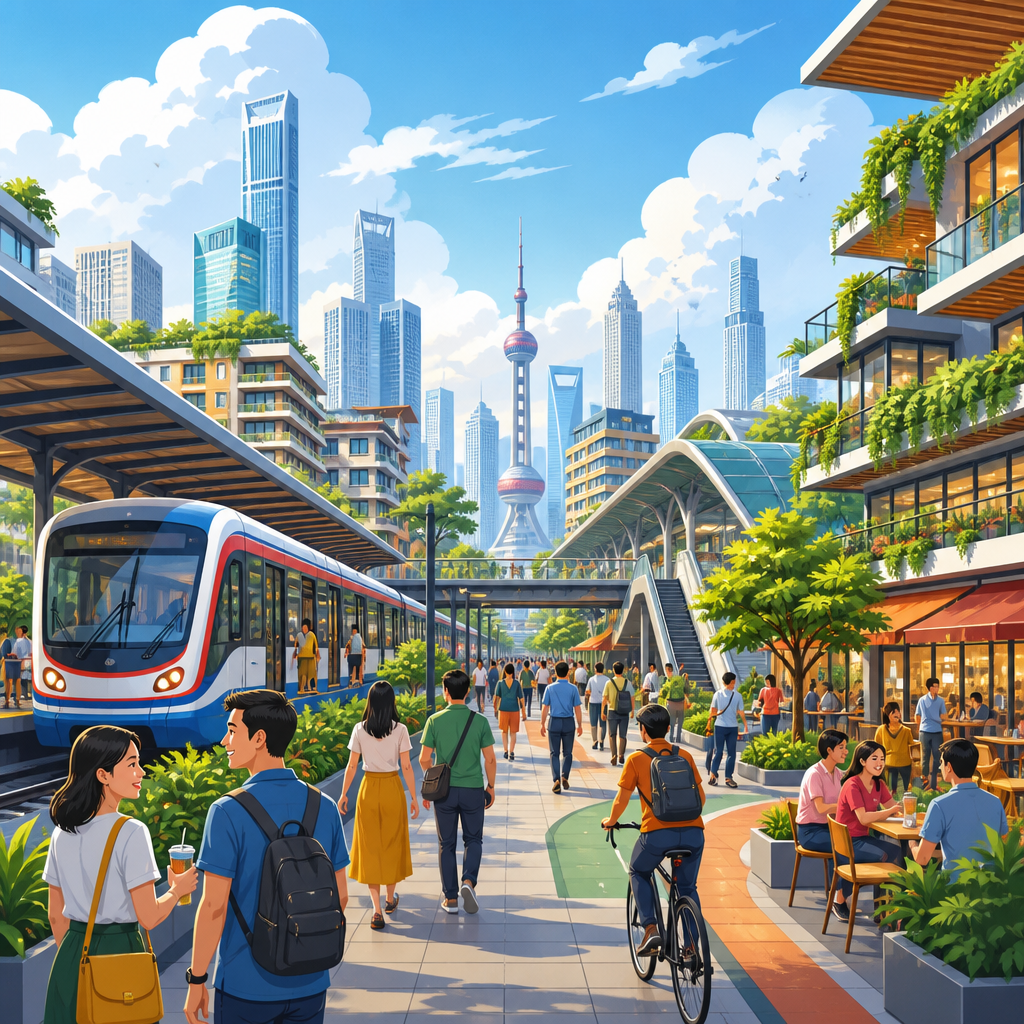
Transit-oriented development in Asian megacities offers a practical blueprint for building dense, livable, and economically resilient urban areas, yet many Western cities still misunderstand what makes it work. In planning terms, transit-oriented development, or TOD, means concentrating housing, jobs, retail, civic services, and public space within easy walking distance of high-capacity public transport, usually rail or bus rapid transit. The concept sounds universal, but the outcomes are not. After working with station area plans and reviewing projects across Tokyo, Hong Kong, Singapore, Seoul, and Taipei, I have seen that the most successful systems do not treat transit as a transport project alone. They integrate land use, finance, governance, street design, housing policy, and daily convenience into one coordinated urban model.
This matters because cities everywhere face the same hard pressures: rising housing costs, climate targets, road congestion, aging infrastructure, and public frustration with long commutes. Western cities often borrow the vocabulary of density, mixed use, and walkability, then wonder why new districts near stations still feel disconnected, expensive, or underused. The missing lesson is that transit-oriented development succeeds when the station is not simply surrounded by taller buildings, but embedded in a complete urban ecosystem. Asian megacities show how that ecosystem is designed, funded, and managed over decades. Understanding those patterns helps planners, public agencies, developers, and voters make better decisions about growth.
This hub article explains the core principles behind transit-oriented development in Asian megacities, the institutional and physical features that make it effective, the common mistakes Western cities make when adapting it, and the policy choices that can improve results. It also serves as a foundation for deeper articles on rail financing, station area zoning, public housing near transit, first-and-last-mile design, value capture, and metropolitan governance. The central argument is straightforward: the strongest transit-oriented districts are not accidents of density. They are deliberate products of aligned policy, disciplined implementation, and a clear understanding of how people actually move through cities every day.
Transit-Oriented Development Works Best When Transit and Land Use Are Planned Together
The first lesson from Asian megacities is simple: transit-oriented development begins long before a station opens. In Tokyo, railway operators and public authorities have historically coordinated new lines with land development, retail programs, feeder services, and neighborhood-scale access. In Hong Kong, the rail-plus-property model allowed MTR to capture land value created by new stations and reinvest part of that value into the system. In Singapore, the Urban Redevelopment Authority and Land Transport Authority align long-range land use plans with future transit corridors. These are not isolated good ideas. They are operating systems.
Western cities often plan in sequence instead of in parallel. First comes the transit investment, then years later rezoning, then separate negotiations over housing, then uncertain upgrades to sidewalks or buses. That sequencing weakens outcomes. When land use and transit are not synchronized, stations open into low-intensity areas, redevelopment arrives unevenly, or speculative land inflation pushes out the very residents who would benefit most from transit access. Effective transit-oriented development avoids that gap by deciding early what kind of urban district each station should support: employment center, residential hub, university node, interchange district, or mixed civic core.
Integrated planning also means matching built form to network role. A major transfer station should not be planned like a local stop. In Seoul, different stations support different intensities and uses based on connectivity, footfall, and surrounding street structure. Taipei similarly distinguishes between neighborhood stations and metropolitan nodes. This sounds obvious, but many Western zoning codes still apply blunt rules, such as a uniform radius or fixed floor-area assumptions, instead of designing around actual network function. Good station planning starts from trip patterns, platform capacity, pedestrian flows, bus integration, and parcel assembly realities, then shapes the district accordingly.
Density Alone Is Not Enough Without Daily Convenience and Fine-Grained Access
A common Western assumption is that transit-oriented development is mainly about putting more residents near stations. Density matters, but density by itself does not create ridership, affordability, or urban vitality. The strongest Asian examples combine compact development with a dense web of everyday destinations: supermarkets, schools, clinics, childcare, parks, public toilets, small retail, food outlets, and safe walking routes. In Tokyo and Osaka, even modest stations are typically embedded in neighborhoods where daily needs can be met on foot. That convenience lowers car dependence more effectively than residential towers standing beside wide roads and sparse amenities.
Fine-grained access is equally important. In Hong Kong, elevated walkways, internal mall links, weather-protected passages, and tightly connected entrances often extend the practical reach of stations beyond a simple map radius. In Singapore, covered walkways and carefully designed transfers make humid, rainy conditions more manageable. In Taipei, alley networks and mixed-use blocks distribute pedestrian activity through many small connections rather than a few monumental routes. These details are frequently dismissed as secondary design issues, but in practice they determine whether people actually choose transit for routine trips.
Western cities often miss this because they measure transit-oriented development in unit counts and floor area instead of friction. Friction includes every inconvenience between front door and platform: long waits at crossings, blank walls, unsafe intersections, steep level changes, poor signage, missing shade, weak bike parking, or disconnected bus stops. I have reviewed station areas that met formal density targets yet still felt hostile because the path to transit required crossing large parking entrances or navigating superblocks. Asian megacities generally reduce this friction more systematically, which is one reason apparently similar densities can produce much higher transit use.
Governance and Financing Explain Why Some Station Districts Mature Faster
The second major lesson is institutional. Transit-oriented development requires a governance model that can hold transport, land, and delivery decisions together over time. In many Asian megacities, the agencies and state-linked entities involved have stronger powers over land assembly, infrastructure timing, and station precinct management than their Western counterparts. That does not mean every project is easy or socially uncontroversial, but it does mean implementation is less fragmented. A station district can be treated as one strategic project rather than a patchwork of disconnected approvals.
Financing is part of this governance advantage. Rail infrastructure creates large land value gains, and the best Asian systems capture some of that uplift. Hong Kong’s rail-plus-property approach is the clearest example: development rights around stations generate revenue that helps fund capital costs while also producing a concentrated mix of housing, offices, and retail. Japan has long used railway-affiliated real estate and commercial development to support ridership and create destination stations. These models are not perfectly transferable, because legal systems and land ownership patterns differ, but the principle is universal: when transit creates value, public policy should not leave all of that value on the table.
| City | Key TOD Mechanism | What Western Cities Often Miss |
|---|---|---|
| Hong Kong | Rail plus property financing tied to station development | Transit can be funded and activated through coordinated land value capture |
| Tokyo | Private railway integration with retail, housing, and feeder services | Stations function as complete urban centers, not isolated transport assets |
| Singapore | Strong state coordination between long-range planning and transport investment | Phasing and governance are as important as zoning allowances |
| Seoul | Network-based intensity around interchange and local stations | Every station should not be planned with the same density template |
| Taipei | Walkable mixed-use districts with fine-grained street connections | Access quality determines whether theoretical proximity becomes real usage |
By contrast, many Western regions divide responsibility among transit agencies, municipal planning departments, highway authorities, utility providers, school districts, and private developers with different timelines and incentives. That fragmentation slows delivery and weakens accountability. It also makes it harder to fund the public realm improvements that turn a station area into a functioning district. Without a mechanism for land value capture, joint development, tax increment financing, special assessments, or strategic public land assembly, local governments often approve density but fail to provide the infrastructure and services needed to support it.
Housing Strategy Determines Whether Transit Access Becomes Broadly Shared
Another frequent blind spot is housing. Western debates often frame transit-oriented development as an environmental or mobility strategy, then treat housing affordability as a separate issue. Asian megacities demonstrate that this separation is a mistake. If homes near high-capacity transit are priced far above the regional median, transit access becomes a premium good rather than a broad public benefit. The result is predictable: lower-income households are pushed outward, long commutes persist, and transit ridership growth underperforms expectations.
Singapore shows the clearest counterexample. Its public housing system is not perfect, but large numbers of households live in high-density new towns with strong transit access, schools, shops, and public services. Hong Kong’s public rental and subsidized housing sectors also place many residents near rail, even though the city faces severe affordability pressures. In Tokyo, a large rental market and substantial housing production help moderate price escalation better than in many constrained Western metros. The common thread is not one tenure model. It is the principle that housing supply, tenure mix, and transit access must be coordinated.
In practical terms, that means reserving land for affordable housing early, using public parcels strategically, allowing enough total housing near stations to reduce scarcity, and preventing station areas from becoming luxury enclaves with excellent transit but limited social diversity. It also means protecting existing residents where redevelopment pressures are intense. Anti-displacement tools, tenant protections, inclusionary housing, and phased redevelopment matter because a successful transit-oriented district is not measured only by land values and skyline change. It is measured by who can continue to live there and benefit from the accessibility created.
Street Design, Interchanges, and Operations Matter as Much as Towers and Zoning
One reason Asian megacities often outperform Western peers is that they focus relentlessly on operational details. A transit-oriented district is only as good as the journey through it. That includes station entrances placed where people actually walk, short transfer distances, intuitive wayfinding, frequent service, fare integration, barrier-free design, sheltered waiting areas, and safe interfaces between buses, bikes, taxis, and pedestrians. In Japanese and Korean cities, the station area is usually managed as a movement system, not just a development parcel map.
Western projects too often celebrate architectural renderings while underinvesting in interchange performance. A new station may open with weak bus bays, inconvenient fare gates, poor vertical circulation, or oversized drop-off zones that disrupt walking routes. Those flaws reduce ridership and degrade the user experience more than headline density figures reveal. Operations also include maintenance. Clean, legible, well-lit station environments signal reliability and support all-day use. In my experience, users notice these basics immediately, and they strongly influence whether families, older adults, and occasional riders feel comfortable using transit regularly.
There is also an important scale issue. Asian megacities usually support transit-oriented development with extensive networks rather than isolated flagship lines. A single good station in a weak network cannot deliver the same benefits as many connected stations with high frequencies and seamless transfers. This is why copying surface features, such as podium retail or tall buildings, rarely reproduces the same outcomes. The network, service plan, and street environment do the heavy lifting. Built form succeeds when it is attached to reliable mobility and short, comfortable access trips.
What Western Cities Should Adapt, and What They Should Not Copy Blindly
Western cities should learn from Asian megacities, but they should not imitate them mechanically. The transferable lessons are integrated planning, strong institutional coordination, value capture, network thinking, high-quality pedestrian access, and a serious housing strategy near stations. Those principles can be adapted across legal systems and political cultures. Cities such as Vancouver, London, and parts of metropolitan Sydney have already shown that better alignment between transit investment and land use can raise ridership and support compact growth, although outcomes remain uneven and often too slow.
What should not be copied blindly is the assumption that density solves everything, or that large commercial podiums automatically create urban life. Some Asian station districts are extremely efficient yet can feel privatized, overscaled, or socially exclusive. Elevated systems can separate pedestrian flows from streets below. Large redevelopment projects can erase small businesses and local character if they are not carefully phased. Strong state capacity can accelerate delivery, but it can also reduce room for community negotiation when public engagement is weak. These tradeoffs are real and should be acknowledged clearly.
The practical agenda for Western cities is more grounded. Start with station typologies linked to network role. Upzone enough land to matter, but pair that with affordable housing requirements and public land strategy. Fund sidewalks, crossings, bike access, bus priority, and station capacity before growth arrives, not after complaints begin. Create mechanisms to capture land value for transit and public realm improvements. Coordinate agencies through dedicated delivery teams with clear authority and timelines. Most importantly, judge success by mode share, access to jobs, travel time, housing inclusion, and street-level usability, not by the number of towers approved.
Transit-oriented development in Asian megacities shows that successful urban growth is less about spectacle than coordination. The best districts work because rail investment, land use, housing, retail, public space, and street access are planned as one system and managed over time. Western cities often miss this by focusing on density without convenience, stations without networks, and rezoning without delivery tools. The result is familiar: expensive projects, modest ridership gains, and neighborhoods that look transit-rich on paper but still function awkwardly in daily life.
The key takeaway is clear. If cities want compact growth to reduce congestion, emissions, and housing pressure, they must treat transit-oriented development as a complete governance and design model, not a branding exercise. Asian megacities provide tested examples of integrated planning, value capture, fine-grained walkability, and housing coordination that Western policymakers can adapt intelligently. Use this hub as the starting point for deeper work on station area policy, transit finance, zoning reform, and equitable redevelopment. The next step is simple: evaluate one station district in your city and ask whether it truly works as a whole system.
Frequently Asked Questions
1. What does transit-oriented development actually mean in the context of Asian megacities?
In Asian megacities, transit-oriented development, or TOD, is much more than placing apartment buildings near a train station. It is a coordinated urban model in which transport, land use, housing, commerce, and public space are planned together so that daily life can happen within a short walk, bike ride, or transit trip. The core idea is simple: put dense housing, offices, schools, shops, parks, and civic services close to high-capacity transit, then make the surrounding streets safe, comfortable, and active enough that people naturally choose not to rely on private cars for every trip.
What makes the Asian megacity version distinctive is the level of integration. In many successful examples, stations are not isolated pieces of infrastructure. They are embedded in neighborhoods and mixed-use districts, often linked directly to retail, employment centers, public plazas, and residential towers. The result is not just better mobility, but a complete urban ecosystem where transit supports real estate value, real estate supports transit ridership, and both are reinforced by public amenities and strong everyday foot traffic.
This is one reason Western discussions of TOD sometimes miss the mark. The term can be used loosely to describe almost any project near a transit stop, even if it lacks density, mixed uses, affordable access, or a pedestrian-first design. In Asian megacities, TOD often succeeds because it functions at a systems level. It is backed by long-term investment, high ridership expectations, and land use policies that allow enough people and activity near stations to make transit frequent, financially viable, and central to urban life.
2. Why do many Western cities misunderstand what makes transit-oriented development work?
A common misunderstanding is the belief that transit-oriented development is mainly an architectural style or a branding exercise. In practice, successful TOD depends less on how a station-area project looks and more on whether the surrounding urban environment truly supports transit use at scale. Many Western cities approve mid-rise housing near a rail stop and call it TOD, yet keep restrictive zoning, wide roads, large parking requirements, and disconnected street networks in place. Those choices weaken the very conditions that make transit-centered neighborhoods work.
Another major issue is underestimating the importance of density and proximity. In many Asian megacities, a very large number of people live and work within a short distance of stations. That concentration creates all-day ridership, supports frequent service, sustains local businesses, and makes walking practical because destinations are close together. By contrast, some Western cities pursue TOD while still limiting building intensity around transit or dispersing jobs and services too widely. Without enough residents, workers, and destinations in the station area, the model loses momentum.
Western planning debates also often isolate transportation from housing, governance, and finance. In many Asian cases, the institutions behind transit expansion, land assembly, and urban development are more closely aligned. That makes it easier to deliver stations, public space, and nearby growth in one coordinated strategy rather than as separate projects competing across agencies and political cycles. So what Western cities often miss is that TOD is not a single development type. It is a disciplined alignment of transit investment, permissive land use, pedestrian design, and long-term implementation.
3. Which features of Asian megacity TOD are most difficult for Western cities to replicate?
The hardest features to replicate are usually not the visible ones, such as high-rise buildings or busy station plazas. The real challenge lies in governance, land policy, and cultural expectations around urban living. Many Asian megacities have stronger traditions of building compactly around transit, and in some cases they benefit from legal and institutional tools that make land assembly, infrastructure coordination, and large-scale redevelopment more feasible. Western cities often face fragmented municipal authority, slower approval processes, stronger neighborhood opposition to density, and legal frameworks that make coordinated station-area transformation more difficult.
Another difficult-to-copy feature is the sheer consistency of transit usage. In successful Asian TOD environments, transit is not a niche option for commuters heading downtown; it is a mainstream, daily mode used across income groups for work, school, shopping, and recreation. That broad ridership base supports high frequencies and long service hours, which in turn make station-area living more attractive. In car-oriented Western regions, however, transit may still be perceived as secondary, and that affects everything from political support to market demand to infrastructure priorities.
Station integration is also a major difference. In many Asian megacities, stations are seamlessly linked to surrounding development through walkways, retail concourses, mixed-use podiums, and clear pedestrian circulation. Riders move easily from platform to street to destination. In Western contexts, transit stops are often separated from useful destinations by parking lots, arterial roads, or superblocks. So while it is possible to borrow lessons from Asian TOD, the real task is not copying the skyline. It is rebuilding the institutional and physical conditions that allow compact, walkable, transit-led urbanism to function reliably every day.
4. Is transit-oriented development in Asian megacities only about density, or are there other ingredients that matter just as much?
Density matters enormously, but by itself it is not enough. A dense area can still fail as TOD if it is unpleasant to walk through, difficult to navigate, poorly connected to transit, or lacking in everyday services. The strongest Asian megacity examples combine density with mixed land uses, short block lengths, active ground floors, high-quality sidewalks, safe crossings, and public spaces that support constant street activity. In other words, successful TOD is not just compact; it is accessible, legible, and convenient at the human scale.
Another essential ingredient is service frequency and network quality. People will structure their lives around transit only if it is dependable, frequent, and connected to multiple destinations. A station surrounded by dense development will underperform if trains are infrequent or if the larger network is fragmented. Asian megacity TOD tends to work because the transit system itself is robust enough to serve as the backbone of urban life. Development benefits from transit, but transit must also earn that role through reliability and reach.
Social and economic diversity are equally important. Healthy TOD districts include a mix of incomes, uses, and trip purposes. When station areas contain not only luxury housing and office space but also schools, clinics, local retail, public services, and varied housing types, they remain active throughout the day and are more resilient over time. This is another lesson Western cities often miss: TOD should not be treated as a narrow real estate play. It works best as a complete neighborhood model, where transit supports a broad range of daily needs and where urban growth is matched by inclusivity and livability.
5. What can Western cities realistically learn from Asian megacity transit-oriented development without trying to copy it exactly?
The most useful lesson is to focus on principles rather than appearances. Western cities do not need to imitate every aspect of Tokyo, Hong Kong, Seoul, Singapore, or other large Asian urban regions to improve their own transit-oriented development. What they can adopt is the discipline of aligning transport investment with land use intensity, reducing barriers to mixed-use growth near transit, and designing station areas around pedestrians instead of cars. That means legalizing more housing and jobs near high-capacity transit, simplifying approvals for mixed-use infill, and removing parking mandates that consume land and undermine walkability.
Western cities can also learn the value of thinking beyond a single station parcel. Effective TOD is shaped by the entire walkshed around a transit stop, including street design, crossing safety, public realm quality, small-business access, and the location of schools, parks, and services. Instead of treating the rail station as the project and everything around it as secondary, planners should view the whole neighborhood as the transit environment. This shift encourages more meaningful improvements in connectivity, comfort, and local economic vitality.
Finally, Western cities can take seriously the idea that transit-oriented development is a long-term urban strategy, not a one-off development trend. The strongest examples in Asian megacities emerged through sustained investment, policy consistency, and a willingness to let transit shape growth patterns over time. For Western cities, the practical takeaway is clear: build better transit, allow enough people and activity near stations to support it, make walking the default station access mode, and connect development decisions to mobility goals. That combination, more than any specific building form, is what creates dense, livable, and economically resilient urban areas.


