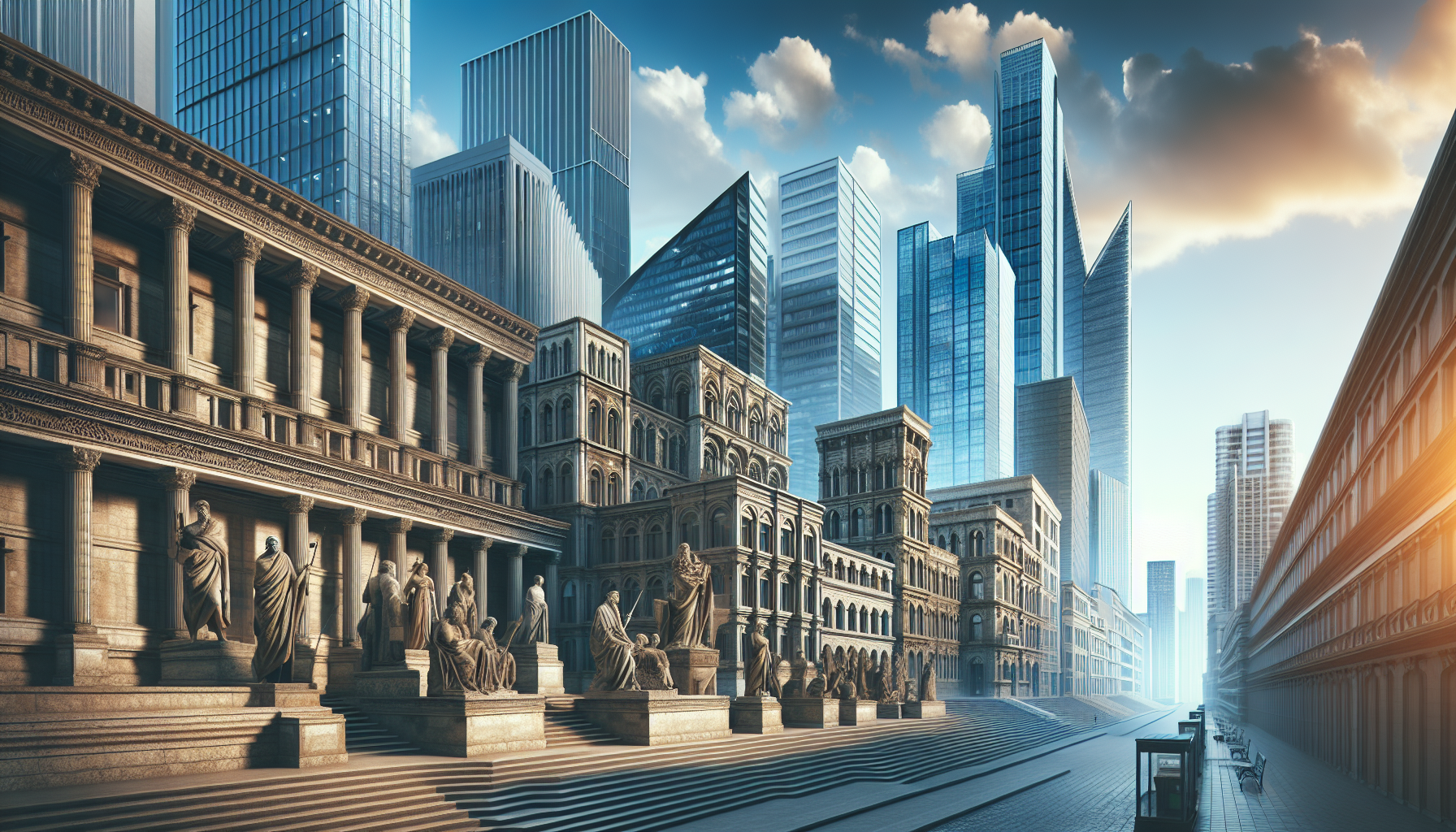
Public buildings have shaped historical urban development more powerfully than almost any other category of architecture, because they concentrate political authority, economic exchange, social services, religion, culture, and collective identity in visible, durable places. In urban history, the term public building usually includes structures funded, commissioned, regulated, or maintained for shared civic use: city halls, courthouses, markets, libraries, baths, schools, hospitals, railway stations, post offices, museums, and assembly halls. These buildings do more than occupy land. They organize movement, define civic centers, anchor neighborhoods, attract infrastructure, and signal what a city values at a given moment. After working through municipal archives, historic planning documents, and conservation projects, I have repeatedly seen that when a major public building appears, the surrounding street network, land values, and development pattern rarely remain unchanged for long.
This matters because cities are cumulative systems. Decisions made around public buildings often outlast the governments that made them. A forum in a Roman settlement, a cathedral close in a medieval town, an eighteenth-century customs house on a port waterfront, or a twentieth-century transit terminal can still influence present-day block sizes, commercial corridors, and tourist economies. Public buildings also reveal the practical mechanics of urban growth. They answer fundamental questions: where power was exercised, where goods were exchanged, where citizens gathered, where sanitation improved, where education expanded, and where states projected legitimacy. For anyone studying historical urban development, these structures are not decorative side notes. They are essential evidence for understanding why one district became dominant, why another declined, and how urban life was organized across centuries.
Civic Authority and the Making of Urban Centers
One of the clearest roles of public buildings in historical urban development is the creation of civic centrality. Administrative buildings such as town halls, palaces, courthouses, and tax offices gathered decision-making in one location and turned that location into the symbolic and practical core of the city. In many European towns, the market square and the town hall formed a paired system: commerce operated under the watch of civic authority, and the surrounding streets filled with guild houses, shops, and residences for merchants. In Italian communes, the palazzo pubblico did not simply house officials; it reshaped the public realm through towers, arcades, and open squares designed for assemblies and proclamation.
The pattern appears globally. In imperial Chinese capitals, administrative compounds were integrated into larger planned urban hierarchies, with ceremonial axes and controlled access expressing state order. In colonial Latin America, the Laws of the Indies standardized the plaza mayor, placing the cabildo, cathedral, and other official institutions around a central square. This arrangement was not aesthetic accident. It fixed the center of governance, worship, and trade in a walkable core, influencing parcel subdivision and pedestrian flow for generations. Modern cadastral maps often still preserve those original alignments.
These civic buildings also affected property values and investment. Areas near stable government institutions generally attracted legal offices, inns, printers, stationers, and later banks. When a capital city relocated ministries or built a new parliament complex, adjacent districts often experienced road improvements, utility upgrades, and speculative building booms. Washington, D.C., Ottawa, New Delhi, and Canberra are unusually explicit examples because their monumental public architecture was tied directly to planned growth, but the same principle operated in older, less formal urban settings as well.
Markets, Exchange Buildings, and the Urban Economy
Public buildings have long structured economic life by concentrating exchange, standardizing measurement, and reducing transaction friction. Covered markets, weigh houses, customs houses, granaries, exchanges, and slaughterhouses made trade legible and governable. They enabled cities to tax goods, inspect quality, and enforce market rules. In practice, this meant that traders, carriers, and consumers converged around designated facilities, turning nearby streets into dense commercial environments. When I review historic fire insurance plans, the clustering effect is obvious: warehouses, cart yards, lodging houses, and workshops gather around the public infrastructures of exchange.
Consider the medieval market hall. By bringing stalls under one roof or into one regulated precinct, it protected food supply chains and gave authorities a way to supervise weights and prices. Later, nineteenth-century iron-and-glass markets such as Les Halles in Paris or municipal markets across Britain and Latin America expanded this role with improved ventilation, drainage, and circulation. These buildings were public health interventions as much as commercial spaces. They pulled perishable trade away from muddy streets and into controlled environments, helping cities manage growth as populations surged.
Port cities offer another clear example. Customs houses and bonded warehouses were decisive urban institutions because they processed imports, exports, and revenue. In Liverpool, Havana, Calcutta, and Shanghai, public trade buildings helped define waterfront districts and linked docks to road and rail systems. Where the customs apparatus expanded, so did the need for offices, insurance firms, banks, and telegraph links. Urban development followed the paper trail of commerce as much as the movement of ships.
| Public building type | Main historical function | Typical urban impact | Example effect on growth |
|---|---|---|---|
| Town hall or courthouse | Administration, law, taxation | Creates civic center and service cluster | Legal and commercial offices concentrate nearby |
| Market hall | Food distribution and trade regulation | Strengthens retail streets and pedestrian traffic | Dense mixed-use blocks develop around the market |
| Railway station | Regional connectivity and passenger movement | Expands city edge and reshapes land values | Hotels, warehouses, and new suburbs emerge |
| Library or museum | Education and cultural prestige | Raises institutional significance of a district | Schools, parks, and formal boulevards follow |
| Hospital or bathhouse | Public health and sanitation | Improves infrastructure and service access | Sewer, water, and road upgrades spread outward |
Religion, Education, and Cultural Institutions as Urban Anchors
Although not every religious building is public in the modern administrative sense, historically many functioned as civic anchors with public consequences. Cathedrals, mosques, monasteries, temples, and pilgrimage complexes generated traffic, employment, charity, lodging, and infrastructure. Medieval cathedral towns are prime examples. The cathedral precinct attracted schools, scriptoria, hospitals, markets, and burial grounds, while feast days and pilgrim routes stimulated inns and retail. In cities such as Canterbury, Santiago de Compostela, and Cologne, sacred architecture shaped street hierarchies and long-distance urban reputation.
Educational buildings had similarly powerful effects. Universities often transformed secondary towns into durable intellectual centers. Bologna, Oxford, Al-Qarawiyyin in Fez, and later university districts in Berlin or Boston demonstrate how lecture halls, libraries, laboratories, and student housing generate specialized economies. Book trades, boarding houses, cafés, printing operations, and transportation links tend to follow. Once a city becomes associated with learning, public and philanthropic investment frequently intensifies, reinforcing a cycle of institutional growth.
Museums, opera houses, exhibition halls, and public libraries played a major role in nineteenth- and early twentieth-century urban development by elevating districts through cultural prestige. The British Museum, the Metropolitan Museum of Art, and major municipal libraries in industrial cities were not isolated monuments. They often arrived with boulevards, parks, improved transit access, and coordinated civic design. Their influence was social as well as spatial. They made certain neighborhoods destinations for education and leisure, changing patterns of evening activity, retail demand, and class interaction.
Public Health, Welfare, and the Infrastructure of Everyday Urban Life
Many of the most transformative public buildings were built to solve urban problems that became acute with density: disease, fire, crowding, poverty, and inadequate sanitation. Bathhouses, hospitals, workhouses, almshouses, schools, fire stations, and public toilets are often overlooked in grand urban narratives, yet they were central to making large cities governable. In the nineteenth century, cholera outbreaks and industrial pollution forced municipalities to connect buildings with systems. A hospital required reliable water, drainage, access roads, and often nearby housing for staff. A school required safe routes and neighborhood-level planning. A fire station depended on street widths, water supply, and strategic distribution.
Paris under Haussmann is often cited for boulevards, but the deeper lesson is administrative capacity. Public buildings were integrated with sewers, parks, barracks, schools, and markets in a coordinated urban modernization effort. London’s Metropolitan Board of Works and later the London County Council invested in embankments, schools, housing, and public health facilities that altered district structure far beyond the sites themselves. Similar patterns appeared in colonial and postcolonial cities, though often unevenly, with European quarters receiving earlier services than indigenous neighborhoods.
Libraries and schools deserve particular emphasis because they normalized neighborhood-scale public investment. A branch library placed within walking distance of residents could stabilize an area, support literacy, and justify transit and lighting improvements. School construction also revealed demographic shifts. When records show repeated school enlargement, historians can often trace suburbanization, migration, or industrial labor growth in parallel.
Transport Buildings and the Expansion of Urban Form
Transport-related public buildings have repeatedly changed the scale and direction of urban development. Gates, bridges, ferry terminals, post offices, railway stations, tram depots, airports, and bus terminals connect the city to wider networks and reorganize local land use. Among these, the nineteenth-century railway station had perhaps the most dramatic effect. It compressed travel time, redirected freight, and created entirely new urban edges. Districts once considered peripheral became valuable because they touched the rail corridor.
Stations also generated specialized urban landscapes. Hotels, restaurants, cab stands, newspaper kiosks, warehouses, and workers’ housing accumulated around them. In cities such as St. Pancras in London, Gare du Nord in Paris, or Chhatrapati Shivaji Terminus in Mumbai, the station was both infrastructure and urban icon. It announced modernity while physically restructuring circulation. New roads were cut to connect station forecourts with older commercial centers, and industrial premises clustered where sidings allowed cheap goods movement.
Postal buildings deserve more attention than they usually receive. Before digital communications, a central post office was a critical node in commercial and administrative life. Businesses preferred nearby addresses because mail speed mattered. Telegraph and telephone exchanges extended the same principle. Public communication buildings therefore influenced office districts, just as railway stations influenced industrial and residential expansion.
Monumentality, Identity, and Political Messaging
Public buildings do not only serve functions; they communicate ideology. Architecture has long been used to express sovereignty, reform, imperial ambition, nationalism, and civic confidence. The choice of style matters historically. Neoclassical courthouses referenced order and republican virtue. Gothic revival parliaments linked modern states to imagined medieval continuity. Socialist civic centers emphasized collective power through axial planning and monumental massing. Even modest municipal buildings can reveal a government’s desired public image through materials, siting, and ornament.
This symbolic role affects development because identity attracts resources. A city that builds a grand museum district, memorial axis, or capitol complex is making a claim about status. That claim often draws tourism, philanthropy, state spending, and private construction. Yet the benefits are uneven. Monumental projects have frequently displaced residents, erased older neighborhoods, or diverted money from basic services. Brasilia’s planned public core, for example, achieved exceptional symbolic clarity while also generating dependence on dispersed satellite settlements. Historic urban development is full of such tradeoffs.
Preservation adds another layer. Once public buildings become heritage assets, they influence redevelopment through conservation controls, adaptive reuse, and place branding. Former town halls become museums, old stations become mixed-use landmarks, and historic bathhouses become cultural venues. When handled well, this preserves urban memory while sustaining economic life. When handled poorly, it can produce superficial heritage districts that prioritize visitors over residents.
Why Public Buildings Remain the Best Lens for Historical Urban Development
Studying public buildings is one of the most reliable ways to understand historical urban development because these structures connect policy, economy, infrastructure, and everyday life in tangible form. They show where institutions invested money, where authorities expected growth, and how residents interacted with the city. A courthouse reveals legal geography. A market hall reveals supply chains. A school reveals demographic pressure. A station reveals regional integration. Together, they form a practical map of urban priorities across time.
For a hub page within the broader study of historical urban development, public buildings provide the ideal entry point into miscellaneous but essential themes: governance, trade, religion, health, education, transport, symbolism, preservation, and social control. They also encourage comparative analysis. The same building type can operate differently in a medieval Islamic city, an industrial British port, a colonial administrative capital, or a postwar welfare state. That variation is exactly why the subject is so useful. It prevents simplistic stories about urban progress and instead shows how built form emerges from institutions, conflict, technology, and culture.
The main takeaway is straightforward: if you want to understand how a city grew, changed, and defined itself, follow its public buildings. Look at where they were placed, how they were funded, what networks supported them, and who benefited from them. That method consistently reveals the deeper structure of urban history. Use this article as a starting point, then explore the connected topics across the Historical Urban Development hub to build a fuller picture of how cities were made.
Frequently Asked Questions
Why have public buildings played such a central role in historical urban development?
Public buildings have been central to historical urban development because they gathered the most important functions of urban life into permanent, highly visible places. City halls, courthouses, markets, schools, libraries, baths, hospitals, railway stations, and religious institutions did far more than serve practical needs; they helped organize how a city worked, where people met, how goods moved, and how authority was expressed. In many periods of history, the location of a major public building could determine where roads converged, where businesses clustered, and where neighborhoods expanded. A marketplace, for example, could transform an open space into a commercial core, while a courthouse or administrative building could establish a district as the center of governance and legal order.
These structures also gave cities continuity over time. Private buildings often changed quickly with shifts in ownership or fashion, but public buildings were usually designed to last, which made them anchors of urban identity. They provided recognizable landmarks that residents associated with civic life, collective memory, and public ritual. Ceremonies, debates, trade, education, welfare, and transportation often revolved around them, making public architecture deeply tied to the daily and symbolic life of the city. In that sense, public buildings did not merely occupy urban space; they actively shaped the social, political, and economic development of entire urban environments.
How did public buildings influence the physical layout and growth of historic cities?
Public buildings strongly influenced the physical form of historic cities by acting as fixed points around which streets, squares, infrastructure, and neighborhoods were organized. In many premodern and early modern cities, key civic structures were deliberately placed at strategic locations such as central plazas, crossroads, river edges, or fortified zones. Once established, these buildings attracted movement and activity, encouraging nearby development. Markets generated surrounding shops and warehouses, cathedrals and temples drew pilgrims and vendors, and railway stations later stimulated hotels, offices, housing, and industrial facilities. As a result, the placement of a major public building often had a long-term impact on land values, traffic patterns, and urban density.
They also helped define districts with specialized functions. A cluster of administrative buildings could create a government quarter, while hospitals and schools could shape educational or institutional zones. In many cities, public buildings were used to formalize urban plans, frame public squares, and establish monumental axes that conveyed order and power. During the nineteenth and early twentieth centuries especially, governments frequently used public architecture to modernize cities, introducing new boulevards, transit links, sanitation systems, and civic centers. Even when cities grew irregularly, public buildings often served as orientation points that helped residents navigate the urban landscape. Their influence was therefore not only symbolic but also spatial, guiding both everyday circulation and long-term urban expansion.
What kinds of public buildings were most important in shaping urban life in the past?
A wide range of public buildings shaped urban life, and their importance often depended on the historical period, political system, and economic structure of a given city. Administrative buildings such as city halls, palaces of governance, and courthouses were crucial because they concentrated political authority and legal processes in one place. These buildings made government visible and accessible, at least in principle, and often stood at the center of civic space. Markets and exchange halls were equally significant because they connected urban populations to regional and international trade networks, supporting merchants, craftsmen, consumers, and tax systems. In many cities, the market was the real economic heart of urban life.
Religious and cultural institutions were also highly influential. Churches, mosques, temples, synagogues, monasteries, and related structures often served not only spiritual purposes but also educational, charitable, and social functions. Libraries, museums, theaters, and schools later became essential to civic culture and public learning, helping define the city as a place of knowledge and shared identity. Social-service buildings such as hospitals, baths, almshouses, and charitable institutions demonstrated how public architecture could address health, welfare, and hygiene. In the industrial age, transportation buildings such as railway stations and post offices became especially transformative, connecting cities to larger national systems and accelerating urban growth. Taken together, these different building types reveal that public architecture shaped nearly every dimension of urban life, from law and trade to culture, mobility, and social care.
In what ways did public buildings express political power and collective identity?
Public buildings have long been used to project political power because architecture can communicate authority in immediate and lasting ways. The scale, materials, decoration, and placement of a city hall, parliament, courthouse, or ceremonial gateway could signal stability, legitimacy, wealth, and control. Monumental facades, grand staircases, domes, towers, and formal plazas were not merely aesthetic choices; they were visual statements about who governed the city and how that power should be understood. Rulers, municipal governments, and later nation-states often invested heavily in public buildings to demonstrate administrative capacity and to embody ideals such as justice, order, progress, or civic pride.
At the same time, public buildings helped create a sense of collective identity among urban residents. They gave communities shared places for gathering, celebration, mourning, education, worship, and civic participation. A public library could symbolize enlightenment and access to knowledge, a town hall could represent local self-government, and a memorial building could anchor public remembrance. Because these buildings were used by many different groups over long periods, they became part of the city’s common language of belonging. Even when access was unequal or political messages were contested, public buildings remained important stages on which urban societies defined themselves. They told residents and visitors alike what the city valued, who it claimed to serve, and how it wished to be remembered in history.
Why do historians and urban planners still study historic public buildings today?
Historians and urban planners continue to study historic public buildings because these structures offer unusually rich evidence about how cities developed over time. A single public building can reveal political priorities, economic systems, social hierarchies, technological capabilities, and cultural values from the era in which it was built and modified. Its location may show how the city was organized, its style may reflect changing ideals of governance or identity, and its adaptations may document shifts in use, population, and infrastructure. For historians, public buildings are therefore not just architectural objects; they are records of urban life in material form.
For urban planners, historic public buildings remain relevant because they show how civic architecture can shape public space, movement, and community life across generations. Many older public structures still function as landmarks, institutional anchors, and neighborhood catalysts, even when their original uses have changed. Studying them can help planners understand why certain urban centers remain vibrant, why some civic spaces succeed while others fail, and how design influences public trust and accessibility. These buildings also raise important questions about preservation, adaptive reuse, and social inclusion. Protecting a historic market hall, courthouse, school, or station is often about more than conserving a facade; it is about maintaining the urban memory and civic meaning embedded in the built environment. That is why historic public buildings remain essential to both the interpretation of the past and the planning of resilient, meaningful cities in the present.