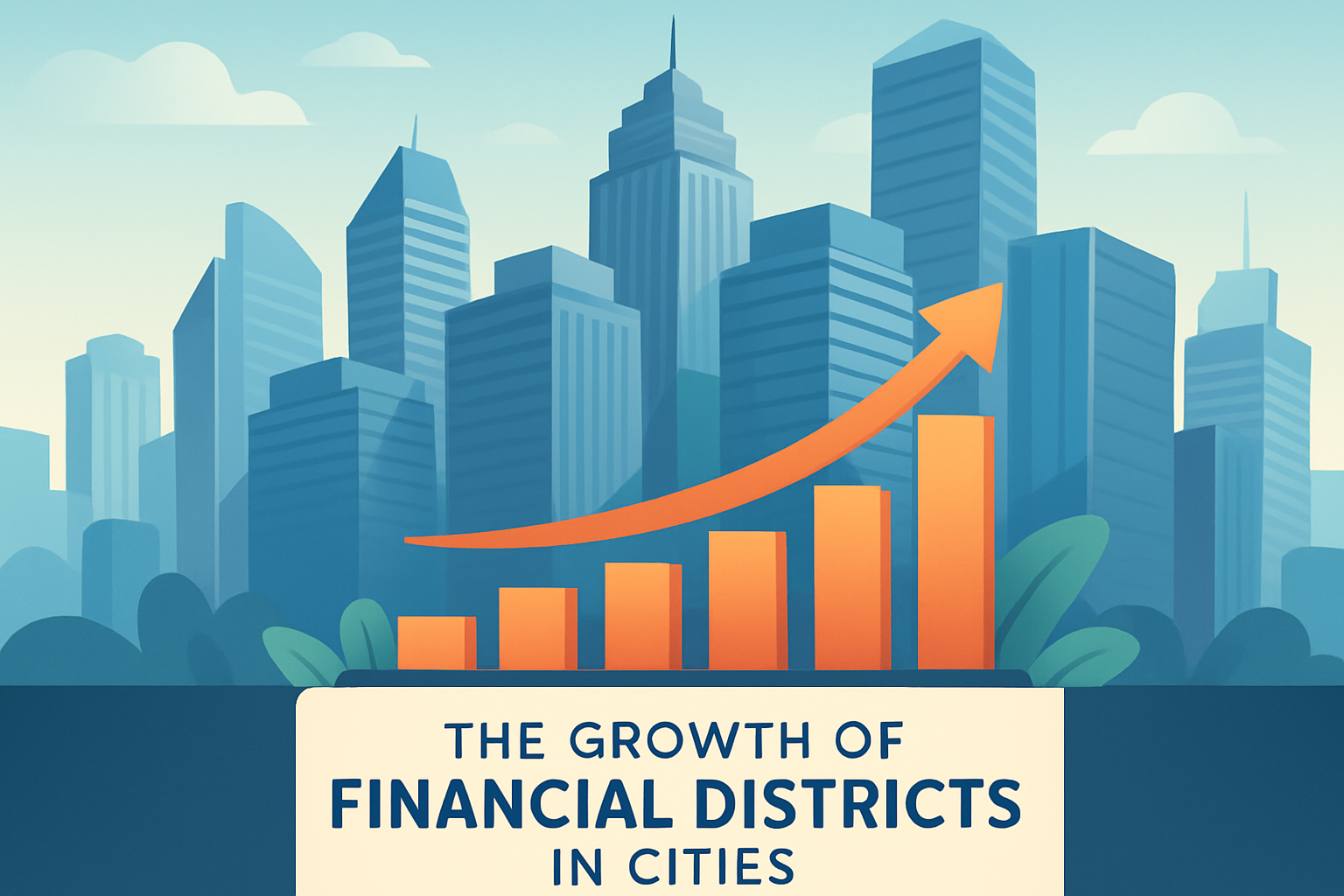
The growth of financial districts in cities is a compelling aspect of urban development, intertwined with economic advancement and global connectivity. These districts, often distinguished by towering skyscrapers and bustling streets, serve as the epicenters of economic activity where banks, investment companies, and financial service firms converge. Understanding the formation and expansion of financial districts is crucial for appreciating their role in shaping city dynamics and contributing to global economies.
Financial districts matter because they signify the economic health and potential of a city. They are the command centers for global finance, influencing local economies and providing employment opportunities. The rise of financial districts signifies more than just accumulation of capital; it’s about creating a conducive environment for business, fostering innovation, and integrating cities into the broader global economy. This article explores the factors driving the growth of financial districts, their historical context, and the influence they exert on urban landscapes and economies.
Historical Context and Evolution of Financial Districts
Financial districts have a rich history, shaped by politics, trade, and innovation. Historically, cities like London, New York, and Hong Kong have been pivotal in the evolution of financial districts. London’s financial district, famously known as “The City,” dates back to Roman times, where trade and commerce were concentrated. Over centuries, it evolved into the financial capital of Europe, shaped by industrialization and imperial trade networks.
Similarly, Wall Street in New York emerged in the 18th century, originally a street market where traders met. It has evolved into the world’s leading financial center, thanks to industrial expansion and the growth of global trade. These examples illustrate how historical factors like trade routes, colonization, and technological advancements have been catalysts in the growth of financial districts.
Factors Driving the Growth of Financial Districts
Several factors contribute to the growth of financial districts, including economic policies, technological advancements, and international trade agreements. Governments often implement economic policies that create favorable conditions for financial services, such as tax incentives for banks and corporations to set up offices in certain areas.
Technological advancements have also played a pivotal role. The advent of the internet and trading platforms has allowed financial services to flourish, encouraging the development of infrastructure to support this growth. For example, Singapore has leveraged its strategic location and business-friendly policies to grow its financial district, drawing international corporations and becoming a crucial financial hub in Asia.
- Strategic location and connectivity
- Business-friendly economic policies
- Advanced technological infrastructure
- Robust legal and regulatory framework
Socioeconomic Impact on Cities
The expansion of financial districts significantly impacts urban development and demographics. As financial districts grow, they attract a workforce that requires diverse services, including housing, transportation, and entertainment, thereby spurring urban development. Cities with thriving financial districts often experience rapid population growth, urban migration, and increased standards of living due to high-income job opportunities.
For instance, the growth of the financial district in Tokyo has led to significant changes in its urban landscape, with modern architectural marvels replacing traditional structures. The district has become a hub for expatriates and skilled workers, contributing to the city’s cosmopolitan atmosphere. However, this growth also poses challenges, such as rising living costs and increased economic disparity, highlighting the need for balanced urban policies.
Globalization and the Rise of New Financial Districts
Globalization has had a profound impact on the emergence of new financial districts across the world. Cities like Dubai and Shanghai have seen remarkable growth, positioning themselves as global financial centers. Dubai, with its strategic location between Europe and Asia, has leveraged globalization to enhance its financial district, attracting multinational banks and financial institutions through visionary urban planning and regulatory frameworks.
Shanghai has similarly emerged as a major financial hub in Asia, driven by China’s economic reforms and open-market policies. The Pudong district, once an underdeveloped area, has transformed into a bustling financial center with the support of government initiatives and foreign investments. This underscores how globalization facilitates the exchange of capital, technology, and labor, leading to the rise of new financial powerhouses.
Real Estate and Infrastructure Development
Real estate and infrastructure development are closely linked to the growth of financial districts. The demand for commercial space and modern facilities compels cities to invest in infrastructure improvements, such as transportation systems and energy-efficient buildings. Skyscrapers and state-of-the-art office complexes are often the symbols of successful financial districts, serving as economic landmarks.
For example, Canary Wharf in London exemplifies successful real estate development in expanding a financial district. Once a derelict dockyard, massive investment transformed it into a key financial center, equipped with modern infrastructure and high-speed transport links. Such developments not only attract businesses but also enhance a city’s stature and global competitiveness.
| City | Key Financial District | Notable Features |
|---|---|---|
| New York | Wall Street | Global financial hub, historic architecture |
| London | The City | International banking, legal services |
| Tokyo | Marunouchi | Skyscrapers, multinational corporations |
| Dubai | DIFC | International business, strategic location |
| Shanghai | Pudong | Modern skyline, economic reforms |
Environmental Considerations and Sustainable Growth
As financial districts continue to expand, the emphasis on sustainable urban planning becomes imperative. Cities are increasingly integrating environmental considerations into the development of financial districts, focusing on green buildings and sustainable practices to reduce carbon footprints. The construction of environmentally-friendly skyscrapers and the implementation of energy-efficient transportation systems serve not only to attract socially conscious businesses but also to mitigate the environmental impact of rapid urbanization.
A leading example of this shift is the development of the Marina Bay Financial Centre in Singapore. This financial district is designed with sustainability in mind, featuring green buildings and energy-efficient technologies. Such innovative practices not only set a precedent for future developments but also reinforce the importance of balancing economic growth with environmental responsibility.
The Future of Financial Districts
Looking ahead, the evolution of financial districts will likely be shaped by digital innovation, changing work patterns, and geopolitical shifts. The rise of fintech and the increasing importance of cybersecurity are influencing the infrastructure needs of financial districts, driving change towards more digital-centric environments.
Additionally, the COVID-19 pandemic has accelerated changes in working habits, leading to a potential reevaluation of space needs within financial districts. With remote working becoming more prevalent, flexible office spaces and digital infrastructure could redefine how financial districts function in the future. As financial districts continue to grow, they will need to adapt to these dynamic trends, maintaining their relevance in a rapidly changing global landscape.
Conclusion
The growth of financial districts in cities is a testament to the dynamic nature of urban development and economic expansion. These districts not only enhance a city’s global standing but also contribute to local and national economies by creating employment opportunities and spurring infrastructure development. However, with growth comes the responsibility of addressing challenges such as environmental sustainability and urban disparity.
By understanding the factors driving the growth of financial districts and their impact on cities, stakeholders can make informed decisions to foster sustainable urban development. As global cities continue to evolve, so too will their financial districts, shaping the future of economic landscapes across the globe. The growth of these districts offers exciting opportunities for investment, innovation, and collaboration, underscoring the importance of strategic planning and forward-thinking policies. Engaging in conversations about these issues and considering how they may personally affect you or your community is the first step in contributing to this global narrative.
Reflect on how these transformations could impact your life and community. Whether you are an investor, urban planner, or concerned citizen, the growth of financial districts presents both opportunities and challenges that warrant attention and engagement.
Frequently Asked Questions
1. What factors contribute to the growth of financial districts in cities?
The growth of financial districts in cities is influenced by a mixture of economic, geographic, and political factors. A major factor is the economic advantage offered by cities that serve as financial hubs; they attract banks, investment firms, and other financial institutions. These districts offer a dense concentration of financial services and expertise that can stimulate more business formation and economic activities. Geographic location also plays an essential role; cities located on major trade routes, or with easily accessible ports, are naturally suited to evolve into financial centers. Political factors, such as government policies and financial regulations, also affect how these districts grow. Policies that promote business and investment are pivotal in attracting financial companies and professionals. Additionally, factors such as advanced technology infrastructure, sophisticated transport networks, and a skilled workforce contribute significantly. The presence of a supportive business environment spurs innovation and competition, ensuring the district remains attractive and vibrant.
2. How do financial districts impact urban development and the overall economy of a city?
Financial districts play a crucial role in urban development, serving as powerful catalysts for economic growth and commercial activity. They attract skilled professionals and businesses, which, in turn, can lead to increased demand for real estate, an upsurge in job opportunities, and a boost in infrastructure development within and around the district. This ripple effect extends to enhancing public transportation systems to accommodate commuting employees and improving public services to attract international firms. On a broader scale, financial districts help stimulate the local economy through increased tax revenues and consumption of local goods and services. They can elevate the global profile of a city, attracting foreign investment and fostering international business relationships. The overall economy benefits from a diversified financial sector that brings about stability and resilience to economic fluctuations.
3. What challenges do cities face in developing and maintaining thriving financial districts?
Cities face numerous challenges in both developing and maintaining thriving financial districts. One significant challenge is ensuring efficient land use and sustainable development. As these districts expand, there is often competition for limited space, leading to concerns about urban sprawl and environmental impact. Balancing development with green spaces and public areas requires careful urban planning. Another challenge is maintaining competitiveness in an increasingly globalized economy. Cities must continuously innovate and adapt to changing financial markets to attract and retain top financial institutions. Regulatory challenges also play a role, as cities must navigate complex financial regulations and create a favorable regulatory environment without compromising on security or risk management. Additionally, the development of a financial district can sometimes lead to increased living costs and economic inequality within the city, prompting social challenges that need to be addressed, such as affordable housing and equitable public services.
4. How do technological advancements influence the development of financial districts?
Technological advancements significantly influence the development and competitiveness of financial districts. Innovations in information technology and communication have transformed how financial services are delivered, encouraging the growth of fintech companies within these areas. The adoption of cutting-edge technology, like AI, blockchain, and big data analytics, enhances operational efficiency and customer service, making these districts attractive to global firms. High-speed internet connectivity and smart infrastructure are crucial in supporting the digital operations of financial institutions. Technology also facilitates better traffic management and urban planning initiatives through data-driven insights, making the districts more navigable and livable. Moreover, advancements in construction technology enable the development of modern, sustainable skyscrapers that maximize space and minimize environmental impact. As digitalization continues, financial districts that leverage technological advancements effectively can better position themselves as centers of innovation and economic activity.
5. What role do financial districts play in fostering global connectivity and international relations?
Financial districts function as vital nodes in the global financial network, fostering international connectivity and cooperation. They serve as points of contact for global companies and investors, facilitating cross-border transactions, investments, and trade. The concentration of multinational corporations and international banks within these districts enhances their role as hubs of global economic exchange. Moreover, financial districts enable the flow of capital, ideas, and talent across borders, contributing to international business development and economic diplomacy. They often play host to international finance-related conferences, seminars, and forums, bringing together thought leaders and decision-makers from around the world. Such events promote cross-cultural exchanges and partnerships, strengthening international relations. By acting as a melting pot of cultures and markets, financial districts help bridge economic and cultural gaps, thus fostering a sense of interconnectivity and mutual economic dependence on a global scale.