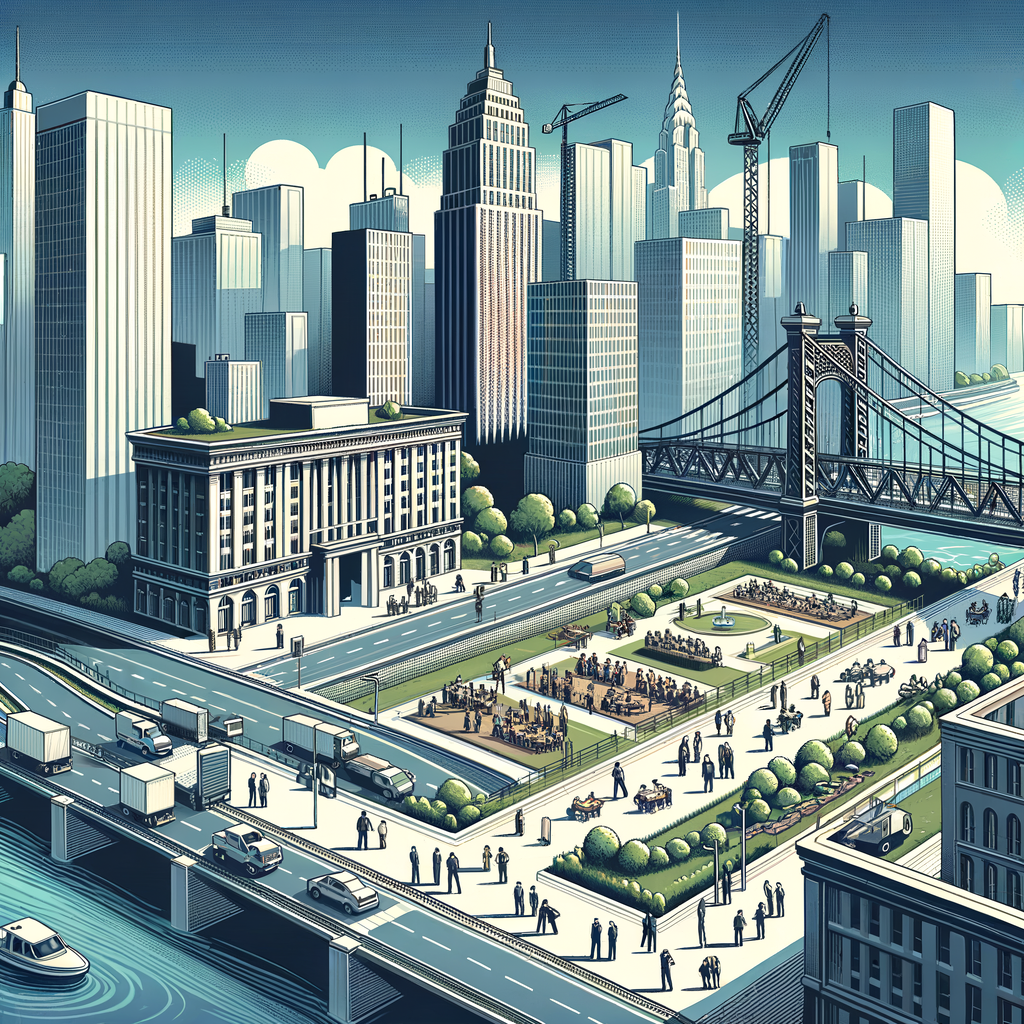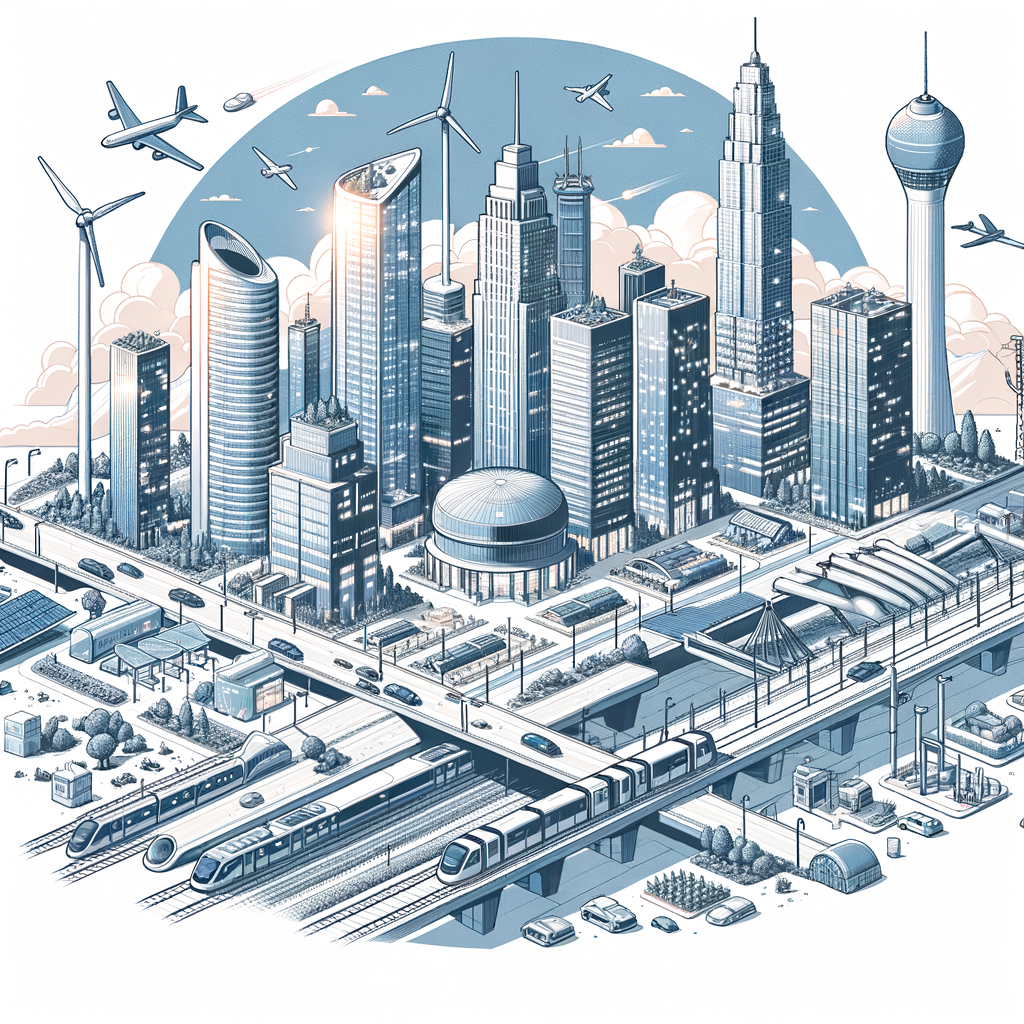
Around the globe, cities are growing rapidly, necessitating innovative urban infrastructure projects to enhance livability, sustainability, and functionality. This transformation caters to the ever-increasing population demands and urban challenges. Consequently, progressive cities worldwide are investing in cutting-edge infrastructure projects aimed at reducing congestion, minimizing environmental footprints, and improving quality of life. From the bustling streets of Singapore to the historic avenues of Copenhagen, these projects highlight the harmonious blend of technology and human-centered design. As cities extend upward and outward, the integration of smart technology and green credentials becomes essential. New-age transport solutions, ecologically intelligent buildings, and advanced sanitation systems are redefining urban landscapes. These modern infrastructural wonders not only facilitate efficient urban management but also preserve natural resources. In doing so, cities are becoming sustainable, resilient, and more comfortable for their inhabitants. Placing an emphasis on innovation, cities are seeking ways to drive economic growth while reducing carbon emissions. Strategies involve utilizing renewable resources and integrating digital technologies to optimize urban operations. Moreover, citizens increasingly demand that their cities offer solutions to social issues like housing shortages, public health, and inequality. Cities face a critical mandate to adopt principles prioritizing equity and well-being, ensuring inclusivity in urban growth. Implementing far-reaching solutions, urban planners must contemplate future needs alongside today’s demands. The following sections explore some of the most remarkable urban infrastructure projects from around the world, showcasing their unique solutions and the transformative potential they hold for the future of city life.
Transformative Infrastructure Projects
Elon Musk’s Boring Company in Los Angeles
Los Angeles, a city infamous for its traffic congestion, has turned to unorthodox solutions, such as Elon Musk’s Boring Company undertaking. This revolutionary infrastructure project proposes a network of underground tunnels to ease above-ground traffic woes. These subterranean pathways aim to ferry passengers across the city at high speeds via high-tech pods riding on magnetic tracks. This ambitious endeavor promises to significantly reduce commute times and enhance connectivity across Los Angeles. It offers a case study in minimizing urban sprawl, minimizing disruption to the surface landscape, and pursuing zero-emission public transport. Given the challenges associated with high-density population regions, Los Angeles is stepping forward with a bold vision that takes transportation to an entirely new level. This project epitomizes the ingenuity needed to address urban mobility’s evolving dynamics in sprawling cities like Los Angeles.
The High Line in New York City
The High Line in New York City offers an innovative approach to urban infrastructure by transforming a derelict elevated railway line into a linear park and public space. It stretches along Manhattan’s West Side, blending nature, art, and architecture in an urban setting. This project capitalizes on existing infrastructure to create a green lung within a densely populated city, demonstrating how adaptive reuse provides solutions for urban renewal without expansive costs. The High Line integrates landscaped pathways, art installations, and performance spaces, inviting locals and tourists alike to explore Manhattan from a unique vantage point. By revitalizing underutilized spaces, it emphasizes environmental sustainability and urban community engagement. This has generated an economic uplift in surrounding neighborhoods, attracting businesses, and enhancing property values. The success of the High Line has sparked a global movement encouraging cities to repurpose obsolete infrastructures into thriving community spaces.
Marina Bay Sands in Singapore
Singapore’s Marina Bay Sands in the Marina Bay area exemplifies cutting-edge urban infrastructure with a focus on integration and sustainability. This iconic structure amalgamates luxury hospitality, shopping, entertainment, and convention facilities with a striking architectural design. The development anchors a new era of urban infrastructure, catering to both commercial and tourism demands while advancing sustainability goals. Marina Bay Sands leverages modern technology for energy efficiency, water conservation, and waste reduction, heralding Singapore as a beacon of sustainable urban planning. The building features a rooftop infinity pool offering panoramic views of the city skyline, demonstrating how urban infrastructure can seamlessly merge leisure, aesthetics, and function. It serves as an example of embracing sustainable design practices in urban ecosystems. As Singapore continues paving the path for urban resilience and resource conservation, Marina Bay Sands stands out as a landmark achievement in innovative architectural design.
Masdar City in Abu Dhabi
Masdar City in Abu Dhabi stands as a testament to what future urban landscapes can become when shaped by sustainability and smart technology frameworks. Envisioned as a zero-carbon, zero-waste city, Masdar’s infrastructure is designed to minimize energy consumption, harness renewable resources, and support sustainable living. It is equipped with solar-powered grids, energy-efficient buildings, and smart urban mobility solutions such as automated transport systems. This pioneering eco-city experiment reflects Abu Dhabi’s commitment to environmental preservation and diversification from oil-dependence, promoting knowledge-driven economies. Masdar’s infrastructure development showcases how renewable energy and sustainable urban architecture coexist, adapting centuries-old desert design principles to complement modern technology. In essence, Masdar City provides a live model for modern cities, underscoring innovation and environmental convictions. Cities across the globe observe Masdar to gather insights on creating modern, sustainable urban habitats that remain practical and scalable.
Bicycle Superhighways in Copenhagen
Copenhagen, a leader in green urban planning, is reimagining urban mobility with its network of bicycle superhighways. These dedicated cycling routes connect suburbs with the city center, offering a safe, sustainable alternative for daily commuting. Designed to accommodate cycling’s growing popularity, these superhighways ensure efficient, painless integration with existing urban transport infrastructure. By prioritizing cyclists, the city effectively reduces car dependency, traffic congestion, and CO2 emissions. Bicycle superhighways include features like air pumps, navigational signs, and resting spaces to accommodate longer journeys, promoting cycling as an appealing choice. They symbolize Copenhagen’s cultural shift towards active transportation and its commitment to achieving carbon neutrality by 2025. The idea of bicycle superhighways has influence beyond Copenhagen, inspiring cities worldwide to rethink their urban designs. By embedding cycling as central to commuting, cities leverage ecological benefits and foster a healthier populace.
The Crossrail Project in London
London’s Crossrail Project, now branded as the Elizabeth Line, showcases an ambitious endeavor to expand and enhance the city’s public transport infrastructure. It represents one of the most significant infrastructure projects Europe has undertaken, aiming to establish a high-frequency, high-capacity connection across London and its outskirts. The Elizabeth Line incorporates underground tunnels, repurposed rail corridors, and new stations, extending the reach and capacity of London’s transport network. It stands as an example of massive-scale investment to accommodate population growth and modernize transport systems, significantly cutting travel times between key urban and suburban areas. As a catalyst for economic growth, Crossrail strengthens local businesses, spurs job creation, and boosts retail opportunities, demonstrating infrastructure’s broad socio-economic impact. Commuters are afforded enhanced mobility and connectivity, benefiting from a reliable transit system that supports London’s status as a leading global city. With completion targets centered around environmental sustainability, energy efficiency, and reduced urban congestion, Crossrail exemplifies a next-generation urban infrastructure.
Conclusion
Innovative urban infrastructure projects around the world reflect a concerted effort to create cities that respond to contemporary challenges while preparing for future demands. The examples showcased highlight a common objective: to foster urban environments that promote sustainability, connectivity, and livability. They signify a paradigm shift in urban development, where advanced technology, resourceful planning, and community engagement amalgamate to create sustainable ecosystems. As urban populations swell, infrastructure projects transition from mere functional installations to vibrant, dynamic spaces driven by sustainability and efficiency. These exemplary endeavors underline the importance of visionary leadership and collaboration among stakeholders, including government bodies, private enterprises, and the community. By adopting forward-thinking measures, cities ensure adaptive resilience, enhancing their appeal and vitality for generations to come. The strategic implementation of these projects cherishes cultural and environmental uniqueness while embracing modernity. Globally, urban planners continue to draw inspiration from such groundbreaking initiatives, further propelling an innovative legacy in urban development. As we advance towards a new era, these infrastructures illuminate the path to thriving, sustainable, and interconnected urban futures, empowering cities to evolve in harmony with their inhabitants and the environment.