
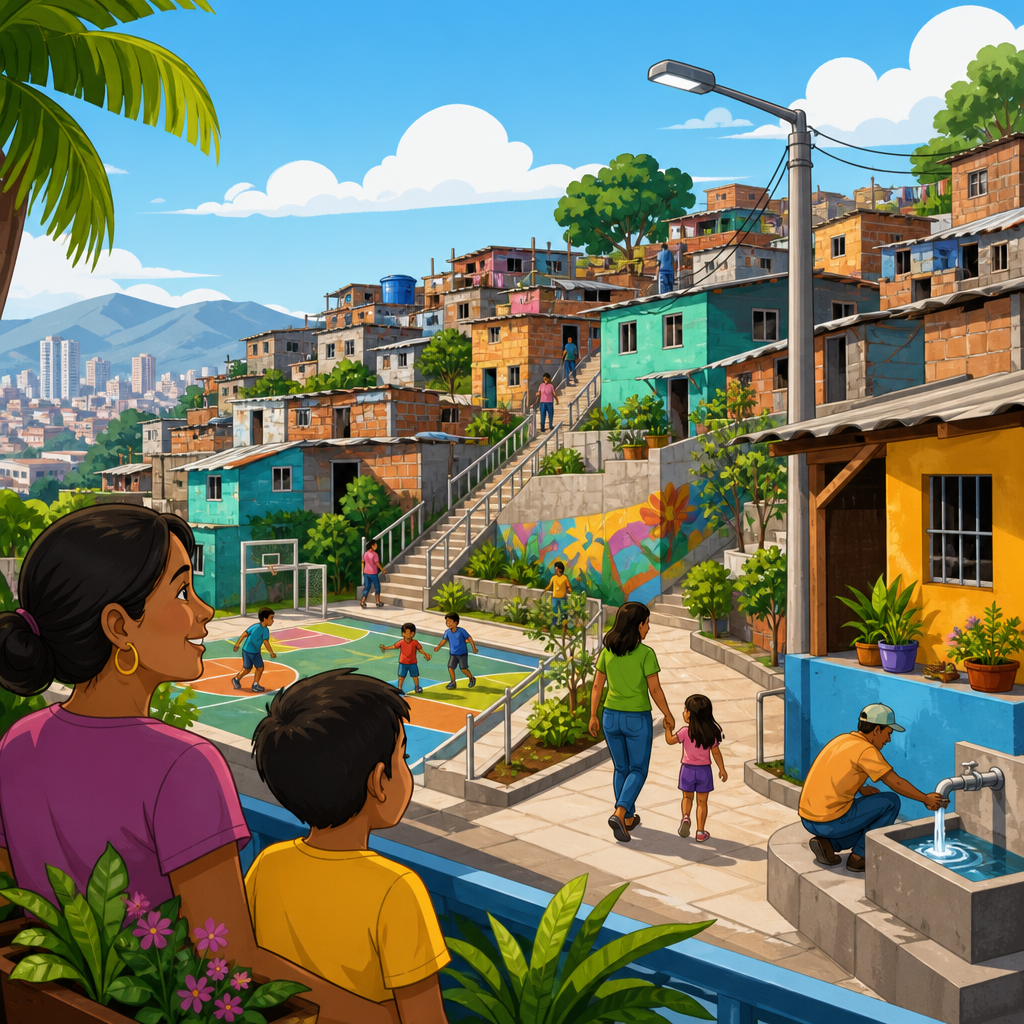
Informal settlement upgrading in Latin America improves living conditions when it combines secure land tenure, reliable basic services, safer public space, and accountable local governance rather than treating housing alone as the problem. In practice, upgrading means improving neighborhoods that residents have often built incrementally over decades, usually on land lacking formal title, infrastructure, drainage, or legal recognition. These areas are called favelas in Brazil, villas in Argentina, asentamientos in Peru, barrios populares in Colombia, and campamentos in Chile, but the underlying challenge is similar: households face overlapping deficits in water, sanitation, mobility, disaster resilience, public health, and state presence. I have worked with municipal plans and project evaluations in the region, and the pattern is consistent. Projects that focus narrowly on visible construction often produce short-term gains and long-term frustration. Projects that align engineering, tenure regularization, social services, and resident participation tend to deliver measurable improvements in safety, health, and household stability. This matters because Latin America remains one of the world’s most urbanized regions, yet urban inequality is still sharply territorial. Where a family lives shapes exposure to floods, violence, transport costs, school access, and chronic disease. Upgrading is therefore not a cosmetic intervention. It is a practical strategy for reducing multidimensional poverty while preserving social networks and livelihood access better than mass relocation usually does.
What informal settlement upgrading includes and why in-situ improvement usually works best
Informal settlement upgrading is the coordinated improvement of land, housing conditions, infrastructure, environmental safety, and public institutions in an existing low-income settlement, usually without displacing most residents. The core principle is in-situ improvement: keep communities where they are when risks are manageable, then legalize, service, and integrate the area into the city. That approach generally outperforms peripheral relocation because residents already have jobs, transport routines, childcare arrangements, and neighborhood support systems. In Medellín’s hillside barrios, in Rio de Janeiro’s favela urbanization efforts, and in Peru’s long-running titling and service expansion programs, the strongest outcomes came when the state recognized what residents had already built and then filled the service and governance gaps.
Upgrading normally includes five components. First, basic networks such as piped water, sewerage, drainage, electricity, waste collection, and paved access roads. Second, tenure measures such as occupancy certificates, cadastral registration, collective or individual titles, and rules for inheritance or transfer. Third, risk reduction through slope stabilization, retaining walls, flood control, safer pathways, and emergency access. Fourth, social infrastructure including schools, clinics, childcare centers, parks, and street lighting. Fifth, institutional integration through addresses, postal recognition, policing reforms, tax systems, and community participation mechanisms. When one or two elements are missing, results weaken. For example, paving roads without drainage can worsen runoff. Issuing titles without service delivery can raise land values but leave households paying more for little practical benefit.
The best upgrading programs begin with parcel-level diagnostics and settlement-wide planning. Teams map topography, plot occupancy, service deficits, hazard exposure, and circulation patterns, then sequence interventions according to risk and cost. This is not glamorous work, but it is decisive. If a sewer main is placed without resolving lot boundaries, later regularization becomes more expensive. If stairs and access lanes are designed without considering ambulance turning radii or waste collection, daily life remains precarious. Good upgrading solves the routine failures that make poverty more punishing.
Which interventions produce the clearest gains in living conditions
The interventions with the most reliable impact are water, sanitation, drainage, all-weather access, and public lighting. These are basic, but they change daily life more consistently than iconic architecture. A household connection to safe water reduces time spent buying or hauling water, lowers contamination risk, and supports hygiene. Sewerage and fecal sludge management reduce diarrheal disease, parasitic infection, and environmental contamination. Drainage is especially important in tropical and hillside settlements because heavy rain turns paths into channels, damages structures, and increases mosquito breeding. Paved stairs, retaining walls, and vehicle access improve emergency response and lower injuries. Street lighting raises perceived safety and often extends the hours in which residents can move, study, or trade.
Housing improvements matter too, but they are most effective when paired with neighborhood infrastructure. Replacing dirt floors, strengthening walls, and improving roofs can reduce respiratory illness, vector exposure, and fire risk. Yet a structurally better home still performs poorly if the street floods, the toilet drains nowhere, or the nearest bus stop requires climbing an unsafe slope. This is why integrated programs repeatedly outperform stand-alone housing subsidies in dense informal areas. In site visits, residents usually describe improvement in concrete terms: fewer children sick from waterborne illness, less mud inside the house, lower transport time, more stable electricity, and no need to fear every major storm.
| Intervention | Main mechanism | Typical living condition improvement | Common limitation if implemented alone |
|---|---|---|---|
| Piped water | Reliable household supply | Better hygiene, less time collecting water, lower cost than vendors | Quality problems if storage and pressure remain poor |
| Sewerage and sanitation | Safe waste removal | Lower disease exposure, cleaner public space | Fails without maintenance and drainage coordination |
| Drainage | Stormwater management | Less flooding, erosion, and standing water | Upstream runoff can overwhelm local works |
| Access roads and stairs | Mobility and emergency entry | Safer travel, faster ambulance and fire response | Can trigger eviction pressure if land status is unresolved |
| Lighting and public space | Visibility and social use | Higher perceived safety, more community activity | Limited effect where violence is organized and persistent |
| Tenure regularization | Legal security | More household investment, reduced eviction fear | Benefits vary if credit and services do not follow |
Transport connectivity also matters more than many project documents admit. Upgrading succeeds when residents can reach jobs, schools, and health services at reasonable cost and time. Medellín’s escalators and cable-car integration are famous because they reduced friction between steep informal neighborhoods and the formal city. But the lesson is broader than any one technology. The real gain comes from reliable integration into metropolitan mobility systems, not from signature infrastructure alone.
Land tenure, participation, and metropolitan integration determine whether gains last
Secure tenure improves living conditions because it changes incentives for both households and the state. When residents believe they can remain, they invest in walls, roofs, bathrooms, and small businesses. When municipalities formally recognize an area, utilities can justify network extensions, cadastral systems can be updated, and maintenance responsibilities become clearer. Still, tenure is not a magic switch. In several Latin American programs, titles increased perceived security but had modest direct effects on mortgage access because very low-income households lacked formal income or banks remained reluctant to lend. The practical value of tenure usually appears first in reduced eviction anxiety, better service eligibility, and stronger bargaining power with public agencies.
Participation matters because upgrading changes circulation, property lines, relocation needs within the settlement, and rules for shared space. Without resident input, projects often misread actual use patterns. I have seen beautifully drawn plans fail because they blocked informal vending routes, ignored where water trucks could turn, or located a community center on land residents knew would flood. Effective participation is not a one-off meeting. It includes mapping with residents, transparent criteria for compensation or on-site resettlement, grievance channels, and publicly posted construction schedules. Community organizations, women’s groups, youth leaders, and tenants need seats at the table, not just homeowners. Tenants are often overlooked even though rent is common in consolidated informal areas.
Long-term success also depends on metropolitan integration. Upgraded settlements need to be folded into routine city management: utility billing systems, school catchment areas, bus planning, health outreach, waste collection contracts, policing, and maintenance budgets. If the project unit leaves and ordinary agencies do not take over, assets decline fast. This is one reason neighborhood pilots can look impressive while citywide impact remains limited. Scaling upgrading requires legal frameworks, interagency coordination, and predictable finance, not only design talent.
What the strongest Latin American examples show and where projects still fail
Across Latin America, the strongest examples share an integrated logic. Medellín combined mobility, public space, social urbanism, and service expansion in historically excluded hillside communities. Brazil’s favela urbanization programs, despite uneven implementation, demonstrated the value of pairing drainage, circulation, sanitation, and public equipment. Chile’s settlement policies showed that basic service connection and progressive housing support can stabilize families, though peripheral relocation often weakened access to jobs. In Peru, large-scale titling helped normalize state recognition, but titling alone was never enough where infrastructure lagged. The common lesson is straightforward: living conditions improve most when upgrades reduce daily exposure to health risk, time poverty, environmental hazard, and institutional neglect at the same time.
Projects fail for equally clear reasons. One failure mode is underestimating land and environmental risk. Settlements on floodplains, unstable ravines, landfill edges, or contaminated sites cannot always be upgraded safely in place. In those cases, selective or staged relocation may be necessary, but it should remain as close as possible to existing livelihoods and schools. Another failure mode is fragmented budgeting. A city may fund paving but not drainage, or build a clinic without legal road access or staff. A third is displacement after improvement. Once infrastructure and legal recognition raise land values, low-income renters and even owners can be priced out through higher rents, speculation, or debt. Anti-displacement tools such as phased regularization, rental monitoring, cooperative tenure, occupancy registries, and social housing reserves near upgraded areas are essential.
Violence and weak governance can also blunt physical gains. Lighting and parks help, but they do not substitute for accountable policing, conflict mediation, and youth opportunity. In some neighborhoods, criminal control over utilities, land sales, or transport means physical works must be paired with state legitimacy and community protection measures. Finally, maintenance is the silent determinant of durability. Drains clog, retaining walls crack, pumps fail, and public spaces degrade if cities do not fund operations. Successful upgrading is not a ribbon-cutting event. It is a permanent municipal responsibility.
How cities should measure real improvement
If the question is what actually improves living conditions, the answer should be tested with outcomes residents can feel and cities can measure. The best indicators include continuous water access, sewer or safe sanitation coverage, flood frequency, travel time to work, emergency response time, household energy reliability, school attendance, disease incidence, tenure security, and exposure to eviction. Add resident satisfaction, especially among women, older adults, and tenants, because aggregate averages can hide serious inequities. Baseline data, georeferenced service maps, and follow-up surveys are essential. So is comparing upgraded areas with similar non-upgraded settlements over time.
The central takeaway is simple. Informal settlement upgrading works when it treats neighborhoods as part of the city and residents as long-term urban citizens, not temporary problems to be moved out of sight. The biggest improvements come from integrated service delivery, risk reduction, tenure security, and sustained public management. If you are building an urban planning and policy strategy, start with those fundamentals, measure outcomes that matter in daily life, and design every intervention to last beyond the project cycle.
Frequently Asked Questions
1. What does informal settlement upgrading in Latin America actually involve?
Informal settlement upgrading is the process of improving existing neighborhoods rather than clearing them and relocating residents elsewhere. In Latin America, that usually means working in areas known as favelas in Brazil, villas in Argentina, barrios populares, asentamientos, or other locally specific forms of self-built communities. These neighborhoods have often been constructed incrementally by residents over many years or even decades, with homes expanding room by room as families save money and needs change. The central idea behind upgrading is that the settlement itself is not simply a “housing deficit” to be replaced. It is a living neighborhood with social networks, livelihoods, schools, transport links, and a long history of resident investment.
In practical terms, upgrading commonly includes extending water, sanitation, drainage, electricity, waste collection, paved roads, footpaths, street lighting, and emergency access routes. It can also include slope stabilization, flood mitigation, retaining walls, and environmental recovery where settlements are exposed to landslides or water contamination. Beyond infrastructure, effective upgrading often addresses legal recognition, land tenure regularization, public spaces, community facilities, and mechanisms for resident participation. The most successful approaches treat the neighborhood as part of the wider city, connecting it physically, legally, and politically to municipal systems instead of leaving it in a permanent gray zone.
2. Why is secure land tenure so important for improving living conditions?
Secure land tenure matters because it changes the incentives and possibilities for both households and public institutions. When residents have protection against eviction, formal recognition, or some legally meaningful claim to remain in place, they are far more likely to invest in improving their homes. Families are more willing to spend scarce income on stronger walls, better roofing, extra rooms, sanitation connections, or safer electrical systems when they believe they will not lose the property unexpectedly. Tenure security also reduces the chronic stress and uncertainty that comes with living under constant threat of displacement.
For governments and service providers, tenure clarification makes it easier to extend infrastructure and maintain it over time. Water networks, sewerage, drainage, roads, and public facilities are harder to justify politically and administratively in places considered “temporary” or “illegal.” A recognized settlement is more likely to appear on official maps, receive budgets, and be included in urban planning. That said, tenure does not always mean immediate individual freehold titles for every resident. In many contexts, collective forms of tenure, occupancy certificates, long-term use rights, or staged regularization can meaningfully improve security while avoiding speculation or conflict. What improves living conditions is not title alone, but the practical effect of legal stability: lower eviction risk, stronger claims to public services, and greater confidence to invest in the neighborhood.
3. Is improving housing enough, or do services and public space matter more?
Improving housing by itself is rarely enough. Better walls, roofs, or floor materials can make homes more comfortable, but they do not solve the deeper conditions that shape health, safety, and opportunity. In many informal settlements, the most severe problems come from unreliable water, lack of sanitation, open sewage, poor drainage, flooding, fire risk, dangerous electrical connections, and the absence of safe routes for walking, school access, or emergency response. A family can live in a structurally improved dwelling and still face serious illness, insecurity, and daily hardship if the neighborhood lacks basic infrastructure.
Reliable services and safer public space often produce wider benefits than isolated housing improvements. Piped water reduces the time and expense of informal water access. Sewerage and drainage lower disease exposure and help prevent flooding. Street lighting, paved alleys, stairways, and connected circulation routes can reduce accidents and improve mobility for children, older adults, and workers commuting early or late. Public spaces such as parks, plazas, sports courts, and community centers matter as well because they support social life, recreation, visibility, and collective safety. In short, living conditions improve most when upgrading treats the neighborhood as an urban system. Housing quality is important, but it works best when combined with infrastructure, accessibility, environmental management, and inclusive public space.
4. How does local governance affect whether upgrading succeeds?
Local governance is one of the biggest factors separating durable upgrading from short-lived interventions. Even well-designed projects can lose impact if residents are excluded, maintenance is neglected, or public agencies fail to coordinate. Informal settlements often sit at the intersection of multiple institutions: municipal public works departments, land agencies, utility companies, housing authorities, environmental regulators, and at times national ministries or metropolitan bodies. If those actors do not align budgets, legal procedures, and timelines, upgrading can stall or deliver fragmented results.
Accountable local governance improves outcomes in several ways. First, it makes projects more responsive to actual needs through meaningful resident participation. Community input helps identify priority routes, drainage bottlenecks, service gaps, and social risks that outside planners may miss. Second, it helps ensure transparency in decisions about who benefits, where infrastructure goes first, and how relocation is handled when a small number of households must move for safety reasons. Third, it supports long-term maintenance. Roads, drains, lighting, and sanitation systems need ongoing management, not just one-time installation. Finally, good governance helps integrate upgraded settlements into routine city administration so they are no longer treated as exceptional spaces outside normal service provision. When local institutions are responsive, transparent, and capable, upgrading is more likely to improve daily life in lasting ways rather than producing temporary gains.
5. What actually leads to lasting improvements in living conditions in informal settlements?
Lasting improvements usually come from combining several elements rather than relying on a single solution. Secure tenure or legal recognition reduces eviction risk and encourages household investment. Basic services such as water, sanitation, drainage, electricity, and waste collection improve health and lower everyday burdens. Safer streets, paths, lighting, and public spaces strengthen mobility, security, and community use of the neighborhood. Accountable governance ensures that these gains are maintained, expanded, and distributed fairly. Together, these elements help transform a settlement from an underserved area surviving through improvisation into a recognized part of the city with rights, services, and civic presence.
Equally important is respecting the incremental logic through which these neighborhoods have developed. Residents are not passive recipients of aid; they are long-term builders of homes, social ties, and local economies. Programs work better when they support that reality instead of trying to erase it. This means phased implementation, resident participation, context-specific technical solutions, and attention to affordability so improvements do not trigger displacement through rising costs or speculation. In the Latin American context, what actually improves living conditions is not housing replacement alone, but neighborhood upgrading that connects legal security, infrastructure, safety, and governance. The most effective interventions recognize that people need not just a better house, but a healthier, safer, and more fully acknowledged urban environment.


