
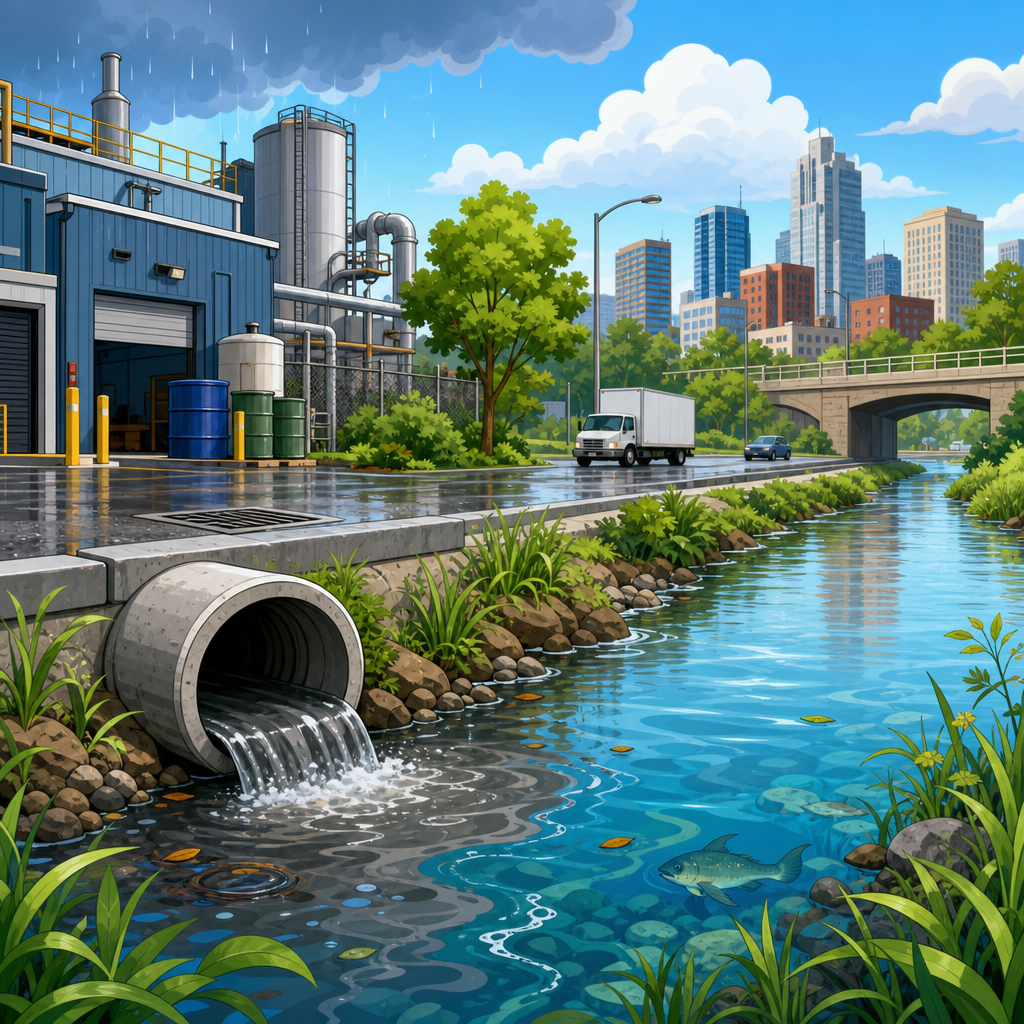
Industrial stormwater and water quality in urban corridors are tightly linked because paved surfaces, freight activity, exposed materials, and aging drainage systems move pollutants quickly from industrial land into streams, rivers, wetlands, and municipal infrastructure. In practice, industrial stormwater means rain or snowmelt that contacts manufacturing areas, loading docks, equipment yards, waste storage, fueling zones, rail spurs, and outdoor processing spaces before entering a conveyance or a receiving water. Urban corridors are linear districts shaped by roads, rail, utilities, warehouses, factories, logistics hubs, and dense neighborhoods, so runoff problems there combine land use pressure, high impervious cover, and direct human exposure. Water quality refers to the chemical, physical, and biological condition of water, including indicators such as total suspended solids, oil and grease, nutrients, pH, temperature, metals, chloride, bacteria, and dissolved oxygen. I have worked with municipal and industrial stormwater programs long enough to see the same pattern repeatedly: sites focus on drainage capacity until a spill, fish kill, permit violation, or neighborhood complaint reveals that conveyance without treatment simply transfers risk downstream. This topic matters because urban corridors are economic engines, but they also concentrate legacy contamination, combined sewer constraints, flood hazards, environmental justice concerns, and regulatory scrutiny under local, state, and federal programs. Strong industrial stormwater management protects waterways, lowers enforcement risk, supports redevelopment, and makes infrastructure investments more durable. A useful hub article must therefore connect pollution sources, regulations, monitoring, controls, maintenance, and planning choices into one practical framework.
How industrial stormwater affects urban water quality
Industrial stormwater degrades urban water quality through three main pathways: pollutant contact, hydraulic transport, and cumulative loading. Pollutant contact happens when precipitation lands on raw materials, scrap, vehicle residues, ash, pallets, dust, or disturbed soil. Hydraulic transport follows as runoff moves through gutters, trench drains, storm sewers, ditches, outfalls, and channelized streams. Cumulative loading matters because dozens or hundreds of sites in one corridor may each contribute modest pollutant levels that together impair a waterbody. The most common industrial pollutants are sediment, petroleum hydrocarbons, zinc, copper, lead, aluminum, iron, nitrogen, phosphorus, chlorides, surfactants, solvents, and trash. In older warehouse districts, I often see galvanized roofs, brake dust, tire wear, and uncovered metal stock creating measurable zinc and copper in discharge samples. At food and beverage sites, high biochemical oxygen demand can occur when product residues or wash water reach storm drains. At concrete and masonry facilities, elevated pH and solids are common. At ports and intermodal yards, runoff can carry fuel sheen, rubber particles, and fine sediments into tidal waters.
Urban corridors intensify these effects because they are dominated by impervious surfaces that shorten runoff travel time and reduce infiltration. A one-inch rain on a large logistics property can produce tens of thousands of gallons of runoff within hours, especially where roofs and pavement drain directly to inlets. Fast runoff erodes channels, raises stream temperature, and delivers first-flush pollutant pulses that stress aquatic life. Receiving waters near industrial districts are often already burdened by municipal separate storm sewer system discharges, sanitary sewer leaks, road salt, and construction runoff, which means industrial loads can push a stream from stressed to impaired. The U.S. Environmental Protection Agency’s Multi-Sector General Permit framework reflects this reality by requiring sector-specific controls, routine inspections, corrective actions, benchmark monitoring, and in some cases effluent limitation guideline compliance. Even where a facility has no process wastewater discharge, stormwater can still become a regulated waste pathway once it contacts industrial activities. Understanding that distinction is foundational for operators, planners, and neighbors assessing risk in urban corridors.
Regulatory drivers and permit obligations
The core legal requirement in the United States is straightforward: stormwater associated with industrial activity generally needs permit coverage under the National Pollutant Discharge Elimination System. Depending on the state, facilities may operate under the EPA Multi-Sector General Permit, a state general permit, or an individual permit with facility-specific conditions. The permit structure usually requires a stormwater pollution prevention plan, site maps, identification of potential pollutant sources, control measures, employee training, routine facility inspections, visual assessments, discharge monitoring, and documented corrective action when problems are found. Benchmark values are not always direct numeric limits, but they are meaningful indicators that controls need adjustment. Numeric effluent limits, where applicable, are enforceable and often apply to specific sectors such as asphalt plants, airports, landfills, transportation facilities, or certain manufacturing categories.
Urban corridor facilities also face local requirements that shape runoff quality. Municipal separate storm sewer system programs can impose illicit discharge rules, spill reporting, pretreatment coordination, and design standards for redevelopment. Total maximum daily loads for impaired waters may lead to tighter local oversight of sediment, bacteria, temperature, or metals. Brownfield agreements, industrial redevelopment approvals, and waterfront permits may include stormwater retrofits as conditions of project completion. In my experience, violations rarely stem from a single dramatic failure. They usually come from routine management gaps: outdated maps, missing inspection logs, clogged treatment units, undocumented non-stormwater discharges, or a housekeeping problem that everyone assumed someone else owned. Good compliance is operational, not clerical. The best-run sites align environmental staff, maintenance crews, operations managers, and contractors around one clear standard: if rain can touch it, control it, cover it, contain it, or keep it out of the drainage system.
Typical pollutant sources in industrial corridors
Different industrial uses produce distinct stormwater signatures, and recognizing those patterns helps target controls. Metal fabricators often contribute iron, zinc, aluminum, cutting oils, and fine particulate matter. Fleet and freight yards generate diesel residues, lubricants, hydraulic fluid, antifreeze, brake dust, tire particles, and sediment tracked by heavy vehicles. Recycling and scrap operations can release metals, plastics, and contaminated contact water if piles remain uncovered. Warehousing seems low risk until outdoor storage, forklift charging, leaking compactors, wash areas, and damaged dumpsters are assessed carefully. Rail corridors add herbicides, creosote concerns near older timber ties, and loading losses. Ports and marine terminals may see sediment, fuel, and cargo residues, while cold storage and food distribution sites can create high organic loads if wastes are not sealed and hauled promptly.
| Facility type | Common pollutants | Typical source area | Practical control |
|---|---|---|---|
| Fleet yard | Oil, grease, zinc, copper, sediment | Parking rows, fueling zones, maintenance aprons | Covered fueling, absorbents, sweeping, drain inlet protection |
| Metal fabrication | Iron, aluminum, zinc, cutting fluids, solids | Outdoor stock, saw areas, scrap bins | Cover materials, berm scrap areas, clean spills immediately |
| Food distribution | Organic matter, trash, nutrients, bacteria | Dumpsters, compactors, loading docks | Leakproof containers, washwater containment, frequent inspections |
| Concrete products | High pH water, cement fines, sediment | Washout zones, batch areas, aggregate piles | Dedicated washout, perimeter controls, stabilized storage |
Legacy infrastructure adds another source category that many site plans understate. Cracked pavement accumulates pollutants and channels dirty water into subsurface voids. Old dry wells can bypass surface treatment entirely. Cross-connections between sanitary and storm lines, or between process drains and catch basins, are more common in older industrial districts than operators expect. I have seen facilities discover during dye testing that a floor drain thought to be sanitary actually discharged to a creek through a buried storm lateral. Those discoveries are expensive, but they also show why corridor-wide mapping and outfall investigation matter. Pollution is not only created by current operations; it is also mobilized by inherited site conditions and incomplete utility records.
Best management practices that actually work
Effective industrial stormwater control follows a hierarchy. First, prevent contact by moving activities indoors, adding roofs, or relocating materials away from drainage paths. Second, improve housekeeping through sweeping, sealed containers, inventory discipline, and rapid spill cleanup. Third, use source controls such as berms, curbing, secondary containment, drain covers, and designated wash areas. Fourth, install treatment controls where runoff still needs polishing before discharge. The reason this order matters is cost and reliability. Covering a scrap bin usually outperforms trying to treat contaminated runoff after every storm. Sweeping a yard weekly with a regenerative air sweeper can remove fine particles before they become suspended solids and metal loads in runoff. Spill kits near fueling points reduce response time dramatically compared with storing supplies in one remote maintenance office.
Treatment systems have a place, but they must match the pollutant profile and maintenance capacity. Hydrodynamic separators are useful for gross solids and floatables, not dissolved metals. Media filters can reduce sediment-bound pollutants and some metals, but they clog quickly if pretreatment is poor. Oil-water separators help with free product, yet they are ineffective for emulsified oils or high sediment loads without regular cleaning. Bioretention cells, bioswales, permeable pavement, and underground detention can improve flow control and treatment on redevelopment sites, especially where municipalities require water quality volume capture. However, industrial settings demand robust pretreatment and durable design. A bioretention cell placed next to a salt storage area or heavy truck turning radius will fail early. The lesson from field implementation is simple: the best best management practices are the ones operations staff can maintain every month, not the ones that look most innovative at ribbon cutting.
Monitoring, data interpretation, and outfall investigation
Sampling is where assumptions are tested. Industrial permits commonly require visual assessments and analytical monitoring during qualifying storm events, often with defined antecedent dry periods and sampling windows. Good sampling starts with representative outfall identification, safe access, calibrated field meters, clean containers, chain-of-custody documentation, and staff who know the difference between stormwater discharge and non-stormwater flow. Parameters vary by sector, but total suspended solids, chemical oxygen demand, pH, oil and grease, nitrate, phosphorus, and specific metals are frequent indicators. Benchmark exceedances should trigger root-cause analysis, not excuse-making. If zinc is high, look first at galvanized surfaces, tire wear, outdoor metal stock, and dust accumulation. If total suspended solids spike after every small storm, inspect sweeping frequency, unpaved edges, aggregate storage, and erosion around truck routes.
Outfall investigation combines desktop review and field work. Start with as-builts, sewer atlases, permit maps, and aerial imagery. Then verify each drainage area using smoke testing, dye testing, lift station records, and wet-weather walkthroughs. In urban corridors, one outfall may receive runoff from several parcels under different ownership, which makes source tracing more complex. I rely heavily on dry-weather screening because continuous flow during dry conditions often reveals washwater discharges, groundwater infiltration, cooling water, or sanitary leakage. Portable fluorometers, conductivity meters, ammonia strips, and temperature readings can narrow likely sources quickly. Data trends matter more than isolated values. A single elevated copper result may reflect an unusual maintenance activity, while three years of recurring exceedances at the same outfall point to a structural control problem. Facilities that pair monitoring with maintenance logs and rainfall data make better decisions because they can connect water quality results to specific site conditions rather than treating each sample as an isolated compliance event.
Planning and policy strategies for healthier urban corridors
Industrial stormwater is not only a facility issue; it is a corridor planning issue. Land use decisions determine how much impervious area is created, how close loading and storage functions sit to waterways, and whether redevelopment includes modern drainage and treatment. The most effective urban policies integrate zoning, capital planning, watershed targets, and freight needs rather than regulating each parcel in isolation. Municipalities can require stormwater retrofits at major site renovation, adopt performance standards for source control, prioritize green streets in industrial districts, and map high-risk outfalls for phased intervention. Transportation agencies should coordinate bridge drainage, deicing practices, and roadside maintenance with adjacent industrial discharges, because receiving waters respond to total load, not jurisdictional boundaries.
Equity must be part of this discussion. Many urban industrial corridors sit beside lower-income neighborhoods and communities of color that already face higher flood exposure, truck traffic, heat, and asthma burdens. Poor water quality adds another layer of harm through odors, visible sheen, trash accumulation, mosquito habitat, and reduced access to safe open space. Better stormwater management can support both environmental performance and economic resilience when it is designed realistically. Shared treatment facilities, corridor-scale sweeping contracts, technical assistance for small operators, and grant programs for canopy structures or material storage improvements often produce stronger results than punitive enforcement alone. The most durable approach is to treat industrial water quality as basic infrastructure management. If your city is updating an urban planning and policy agenda, audit the industrial corridors first, map the outfalls, compare permits to actual site conditions, and build a retrofit pipeline that reduces pollutant loads where people and waterways are most exposed.
Industrial stormwater and water quality in urban corridors can be managed successfully when operators and public agencies treat runoff as a controllable pathway, not an unavoidable byproduct of economic activity. The key points are consistent across sectors. Pollutants originate where precipitation contacts exposed materials, vehicles, wastes, and disturbed surfaces. Urban corridors amplify those loads because impervious cover, aging infrastructure, and dense overlapping land uses move runoff rapidly into receiving waters. Regulatory programs set the baseline through permits, plans, inspections, monitoring, and corrective actions, but compliance alone is not the full goal. The real objective is sustained pollutant reduction through source control, practical maintenance, accurate mapping, and disciplined operations.
The strongest results come from combining facility-level actions with corridor-scale planning. Cover outdoor materials before investing in complex treatment. Verify drainage patterns instead of trusting legacy maps. Use monitoring data to identify repeating causes, not just to satisfy reporting deadlines. Coordinate municipal storm sewer management, freight planning, redevelopment standards, and watershed restoration so each investment supports the next one. Where communities have experienced flooding, disinvestment, or visible pollution, prioritize transparent communication and measurable improvements at the outfall level. Cleaner water in industrial districts is achievable, and it delivers multiple benefits: lower compliance risk, more reliable infrastructure, healthier waterways, and more credible redevelopment. Review your highest-risk sites and outfalls now, then set a practical action plan for the next storm season.
Frequently Asked Questions
What is industrial stormwater, and why does it matter so much in urban corridors?
Industrial stormwater is rainwater or snowmelt that comes into contact with industrial activities or materials before flowing into a storm drain, ditch, channel, pipe network, stream, river, or wetland. In urban corridors, that contact often happens on paved and highly active surfaces such as loading docks, equipment yards, outdoor storage areas, fueling stations, maintenance zones, rail spurs, truck courts, scrap areas, and waste handling spaces. Once stormwater picks up pollutants from those areas, it can move quickly through storm sewer systems that are designed to convey water efficiently, not treat it. That speed matters because pollutants may reach receiving waters with very little opportunity for natural filtration or infiltration.
The issue is especially important in urban industrial districts because these landscapes concentrate many of the conditions that increase runoff volume and pollutant loading at the same time. Impervious cover prevents water from soaking into the ground. Frequent freight movement can deposit oils, grease, sediment, tire wear particles, and metals. Exposed raw materials and byproducts may contribute solids, nutrients, pH-altering substances, or chemical residues. Aging drainage infrastructure can create direct and poorly understood connections between private sites, municipal systems, and nearby waterways. As a result, industrial stormwater is not just a site-level housekeeping concern; it is a water quality, infrastructure, and regulatory issue that can affect entire urban watersheds.
What kinds of pollutants are commonly found in industrial stormwater runoff?
The pollutants found in industrial stormwater depend on the activities taking place at a site, but several categories appear again and again in urban corridors. Sediment is one of the most common because vehicle traffic, eroding stockpiles, exposed soils, and dirty paved surfaces all contribute particulate matter. Oil and grease are also frequent concerns around fueling areas, vehicle fleets, mechanical equipment, and loading zones. Metals such as zinc, copper, lead, iron, aluminum, and chromium may be present from metal fabrication, galvanized surfaces, brake and tire wear, scrap handling, industrial dust, and outdoor material exposure. Nutrients can appear where organic materials, food-related processing, landscaping residues, or wash water are involved.
Other pollutants may include total suspended solids, chemical oxygen demand contributors, solvents, detergents, salts, trash, plastics, hydrocarbons, and pollutants associated with specific sectors such as cement dust, coal residue, wood treatment chemicals, or fertilizer ingredients. In some settings, stormwater can also carry bacteria if waste handling, sanitary cross-connections, animal activity, or unmanaged organic debris are present. The practical takeaway is that runoff acts like a transport mechanism: it mobilizes whatever is left exposed on industrial surfaces. That is why pollutant prevention usually starts with source control, material management, and keeping rain away from contact areas whenever possible.
How does industrial stormwater affect streams, rivers, wetlands, and municipal infrastructure in cities?
Industrial stormwater affects natural systems and built systems at the same time. In streams and rivers, polluted runoff can reduce water clarity, increase sedimentation, alter pH, contribute toxic metals, and lower oxygen levels indirectly through organic loading or chemical reactions. These changes can harm aquatic life, disrupt habitat, impair spawning areas, and reduce the overall ecological function of urban waterways. Wetlands can be particularly vulnerable because they often receive runoff from multiple upstream sources and may accumulate sediment, metals, and hydrocarbons over time. Even when a single storm event seems minor, repeated runoff over months and years can create a significant cumulative impact.
On the infrastructure side, industrial runoff can clog catch basins, pipes, culverts, and treatment structures with sediment and debris. Oil, trash, and solids can increase maintenance burdens for municipal systems and private facilities alike. In combined or aging drainage networks, stormwater can contribute to surcharge conditions, cross-system contamination concerns, and operational stress during large rainfall events. There is also a financial and compliance dimension: poor water quality can trigger enforcement actions, cleanup obligations, and capital spending on drainage upgrades or retrofit treatment controls. In dense urban corridors, these effects are interconnected, which is why industrial stormwater management is often treated as both an environmental protection strategy and an asset management priority.
What are the most effective ways industrial facilities can reduce stormwater pollution?
The most effective programs combine prevention, operational discipline, and structural controls. Prevention comes first because it is usually the most reliable and cost-effective approach. Facilities can reduce pollutant contact by covering raw materials and waste containers, moving sensitive activities indoors, protecting dumpsters, managing outdoor stockpiles, and minimizing exposure in loading and transfer areas. Good housekeeping is equally important: regular sweeping, prompt spill cleanup, leak inspections, stabilized material storage, and routine maintenance of paved surfaces can dramatically reduce the amount of contaminants available to be washed away during storms. Employee training matters too, because even strong plans fail if the people operating forklifts, managing deliveries, or handling waste do not understand how runoff is generated and where it flows.
Structural best management practices are typically used to reinforce source controls. These may include berms, curbing, grading improvements, inlet protection, sediment traps, oil-water separators, vegetated swales, filter systems, detention structures, and treatment units designed for industrial pollutant profiles. In some urban settings, green infrastructure such as bioretention or permeable pavement can help, although these solutions must be matched carefully to site conditions, pollutant types, groundwater protection needs, and maintenance capacity. A strong stormwater program also includes drainage mapping, inspection routines, benchmark monitoring where required, and periodic review of site operations as tenants, products, or equipment change. The goal is not simply to install devices; it is to build a system that consistently keeps pollutants from contacting stormwater in the first place and captures what cannot be avoided.
How do permits, inspections, and compliance requirements typically apply to industrial stormwater in urban areas?
In many jurisdictions, industrial facilities that discharge stormwater associated with industrial activity must comply with permit requirements under federal, state, or local water quality programs. In the United States, this often means coverage under a National Pollutant Discharge Elimination System, or NPDES, industrial stormwater permit, whether issued directly by a state or under a federal framework. Permit obligations commonly include preparing and maintaining a stormwater pollution prevention plan, identifying potential pollutant sources, implementing best management practices, conducting routine inspections, performing corrective actions, training staff, and in some sectors collecting stormwater samples for analytical monitoring. Local sewer or stormwater authorities may also impose additional requirements related to illicit discharges, site drainage modifications, or connection approvals.
Inspections and compliance reviews generally focus on whether the facility understands its drainage pathways, has identified exposed industrial activities, maintains effective controls, and responds appropriately when problems are found. Regulators and municipal inspectors often look for visible evidence such as stained pavement, leaking containers, unsecured waste, clogged inlets, poorly maintained treatment devices, or unprotected outdoor materials. Facilities in urban corridors should take compliance seriously because proximity to sensitive waters, neighboring properties, and municipal systems can increase scrutiny and consequences. The best approach is proactive: keep records organized, update plans when operations change, verify that controls actually function in the field, and treat stormwater management as an ongoing operating responsibility rather than a paperwork exercise. That mindset not only supports compliance but also reduces liability, protects nearby waterways, and improves overall site performance.


