
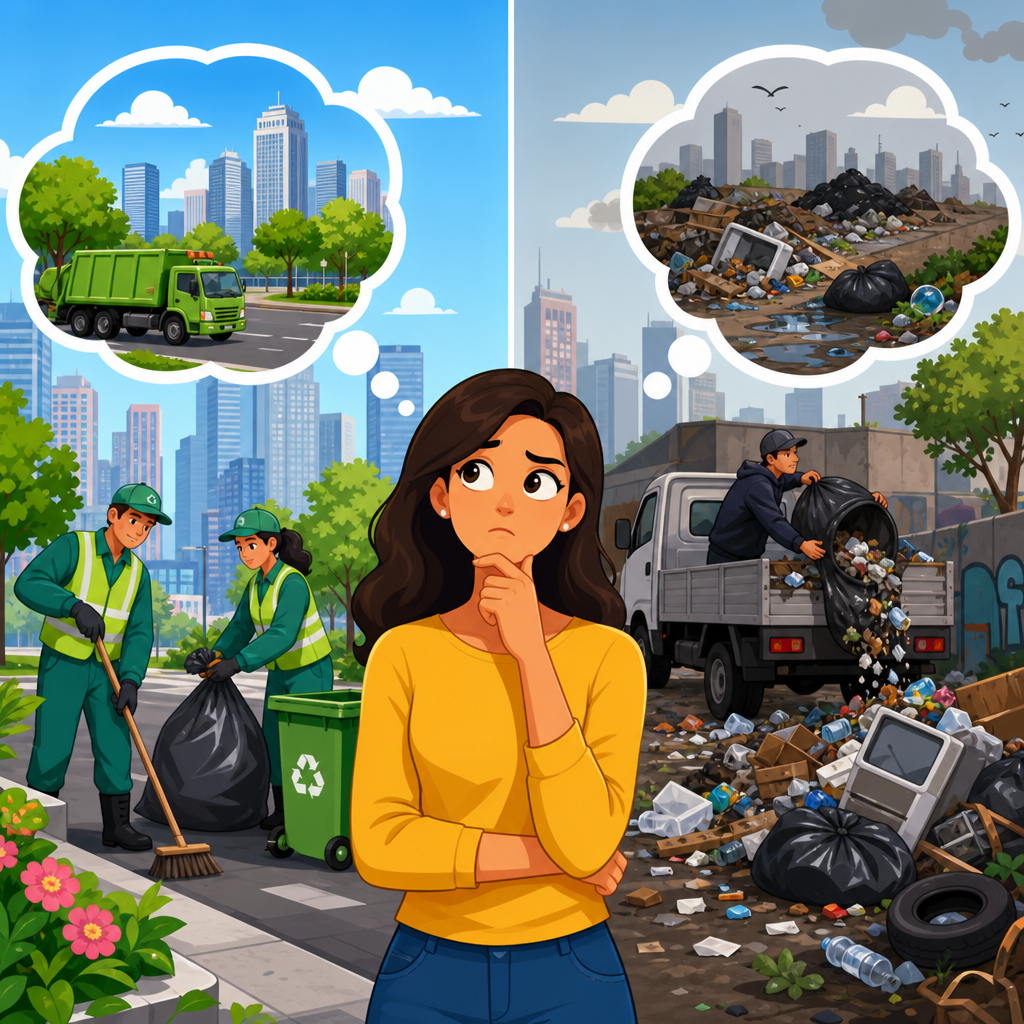
Illegal dumping in cities is more than a sanitation problem; it is a governance, land-use, public health, and behavior problem that cleanup crews alone cannot fix. Illegal dumping refers to the unauthorized disposal of waste on streets, vacant lots, alleys, riverbanks, construction sites, and other spaces not approved for solid waste handling. In practice, the term covers a wide range of materials, from household trash and bulky furniture to construction debris, tires, yard waste, appliances, and hazardous substances such as paint, used oil, and solvents. Cities often respond by removing piles quickly, because visible waste undermines neighborhood confidence and creates immediate hazards. That response is necessary, but after years of watching municipal programs struggle with repeat sites, I have seen the same pattern: a cleaned lot can be re-dumped within days if the underlying conditions remain unchanged.
The issue matters because illegal dumping imposes costs far beyond the price of a truck and a cleanup crew. It degrades environmental quality, blocks sidewalks and storm drains, attracts pests, increases fire risk, and lowers residents’ sense of safety. Dumped materials can contaminate soil and waterways, especially when demolition waste, asbestos-containing materials, batteries, or electronic waste are involved. Public agencies also absorb significant financial burdens. Many U.S. cities spend millions annually on collection, code enforcement, and site restoration, while property owners face reduced values and added maintenance costs. Communities with long histories of disinvestment often bear the highest burden, making illegal dumping an equity issue as well as an operational one. When waste accumulates in the same neighborhoods repeatedly, residents receive a clear message that standards are not being upheld equally.
Understanding why cleanup alone fails starts with a simple distinction between symptoms and causes. Waste piles are the symptom. The causes include gaps in collection service, disposal fees that encourage evasion, weak enforcement, poorly managed vacant land, contractor misconduct, informal hauling, and the belief that certain places are unmonitored. Effective urban policy must address both the material flow of waste and the social conditions that shape where it ends up. This article explains the drivers of illegal dumping, the limits of cleanup-first strategies, the public harms cities need to measure, and the policy tools that actually reduce repeat dumping over time. For planners, public works leaders, and neighborhood advocates, the central lesson is direct: cities solve illegal dumping when they redesign the system that produces it, not when they only remove its visible aftermath.
Why illegal dumping happens in the first place
Illegal dumping is usually framed as irresponsible individual behavior, but city data and field experience show that disposal patterns are shaped by infrastructure and incentives. When legal disposal is expensive, inconvenient, confusing, or physically hard to access, some residents and small operators look for shortcuts. Construction and demolition debris is a common example. A small contractor renovating kitchens or bathrooms may face tipping fees, transportation costs, and time delays at authorized facilities. If oversight is weak, dumping rubble in an alley or on a vacant parcel becomes the cheaper option. The same logic applies to mattresses, sofas, tires, and appliances when bulky item collection is infrequent or poorly advertised.
Service gaps also matter. In neighborhoods with narrow streets, fragmented multifamily ownership, or inconsistent container storage space, routine waste collection can break down. Overflowing bins and missed pickups create conditions where litter becomes piles and piles become tolerated dumping grounds. Vacant land intensifies the problem. An unmanaged lot with broken fencing, poor lighting, and no active use sends a signal that nobody is watching. Environmental criminology describes this as an opportunity structure: the place itself lowers the perceived risk of being caught. Once one pile appears, others often follow because people infer informal permission from existing disorder.
Informal hauling networks can make matters worse. Residents sometimes hire low-cost haulers found through handwritten signs or online marketplaces, assuming waste will be disposed of legally. In reality, unlicensed operators may collect payment, then unload mixed waste in secluded urban spaces to avoid fees. Cities that track complaints often find clusters linked to home cleanouts, evictions, and minor remodeling jobs. That means the party creating the waste and the party dumping it are not always the same, complicating enforcement. The practical implication is important: a city cannot cite its way out of illegal dumping if legal disposal options remain harder than illegal ones.
Why cleanup alone does not produce lasting results
Rapid cleanup is essential for health and morale, but by itself it rarely changes the conditions that generate repeat dumping. In some cases, fast removal can even create a maintenance loop in which crews repeatedly service the same hotspot without reducing incident frequency. I have seen locations cleaned ten or more times in a year because they remained accessible by truck, hidden from street activity, and close to neighborhoods with limited bulky waste options. The city restored appearance, yet the site still functioned as a convenient illegal transfer point.
Cleanup-only strategies fail for three main reasons. First, they do not change the economics. If disposal costs, hauling practices, or service barriers remain intact, the incentive to dump persists. Second, they do not change place management. A vacant lot without barriers, lighting, surveillance, or stewardship remains easy to target. Third, they do not build accountability. If residents do not know legal options, if haulers are unlicensed, or if fines are rarely enforced, there is little deterrence. The result is an expensive cycle of removal, complaint, and recurrence.
There is also a data problem. Many cities measure success by tonnage removed or the number of cleanup events completed. Those are activity metrics, not outcome metrics. A stronger approach tracks repeat incidents by address, time-to-recurrence, material type, complaint source, and whether a site has received environmental design improvements or targeted enforcement. Without that level of analysis, agencies can overestimate progress because they are counting effort instead of prevention. Lasting reduction requires cities to ask not only how much waste was removed, but why that waste appeared there, who benefited from illegal disposal, and what system failure allowed it.
The public health, environmental, and neighborhood costs
Illegal dumping harms cities in ways that are immediate, cumulative, and unevenly distributed. The most visible impacts include blocked sidewalks, rodent harborage, standing water, and fire hazards from combustible debris. Less visible impacts can be more serious. Tires collect water and support mosquito breeding. Electronic waste can release lead and other metals if broken apart. Dumped paint, antifreeze, and used oil can migrate into soil and stormwater systems. In cities with combined sewer infrastructure, debris that clogs drains can worsen localized flooding during heavy rain.
Neighborhood effects are equally significant. Repeated dumping undermines trust in public institutions and in the enforceability of local rules. It discourages walking, reduces use of parks and vacant land, and can depress corridor revitalization efforts by signaling neglect to residents, investors, and visitors. Researchers have long observed that visible disorder influences perceived safety, even when crime rates do not rise in parallel. That perception matters because it changes daily behavior. Parents choose different routes to school, older adults avoid certain blocks, and small businesses spend more on maintenance and private security.
Costs also fall unevenly. Wealthier areas often have stronger private management, fewer vacant lots, and more political leverage to secure rapid response. Lower-income neighborhoods, especially those with industrial edges or fragmented ownership, are more likely to absorb repeat dumping. This concentration raises clear fairness concerns. When one part of a city routinely hosts waste generated elsewhere, the problem is not just illegal disposal; it is an urban policy failure involving land stewardship, code enforcement, and unequal service quality.
What effective city responses look like
Reducing illegal dumping requires coordinated action across sanitation, code enforcement, planning, police, transportation, housing, and public health. The most effective programs combine prevention, service design, enforcement, and site remediation. Prevention starts by making legal disposal easier. Cities can expand free or low-cost bulky item pickup, extend transfer station hours, create neighborhood drop-off events, and simplify rules for mattresses, tires, and renovation debris. Clear public communication matters: residents should know what can be set out, when collection occurs, and how to verify licensed haulers.
Enforcement works best when it is targeted, evidence-based, and paired with legal alternatives. Camera programs at chronic hotspots can help when local law allows them, especially for truck-based dumping at industrial edges or vacant parcels. License checks for haulers, chain-of-custody documentation for debris, and contractor education are often more effective than broad punitive campaigns aimed at residents alone. Some cities require waste management plans for construction permits, making it easier to trace where demolition or renovation debris should go. Others use tire manifests, appliance tracking, or serial investigations linked to eviction cleanouts and property turnovers.
Site design is another decisive tool. Access control, bollards, fencing, gates, lighting, landscaping, and regular activation can change how a place functions. A lot used for dumping because it is dark, open, and hidden may stop attracting waste once sightlines are improved and vehicle entry is blocked. Temporary measures can work, but long-term success usually comes from active land use: community gardens, side-lot programs, pocket parks, art installations, food truck courts, or redevelopment. Land that is used and watched is less likely to become a dumping ground.
| Strategy | What it addresses | Typical example | Main limitation |
|---|---|---|---|
| Bulky waste expansion | Convenience and cost barriers | Free scheduled pickup for mattresses and sofas | Requires funding and public awareness |
| Hauler regulation | Informal disposal networks | Licensing, manifests, and penalties for illegal loads | Needs inspection capacity |
| Hotspot cameras | Low perceived risk of being caught | Portable cameras at repeat truck-dumping sites | Privacy, legal, and maintenance concerns |
| Environmental design | Site vulnerability | Bollards, fencing, lighting, and lot activation | Can shift dumping elsewhere if used alone |
| Vacant land stewardship | Long-term neighborhood neglect | Side-lot transfer or community-managed green space | Needs sustained local partners |
Planning, policy, and measurement that reduce repeat dumping
Urban planning has a direct role in solving illegal dumping because the problem is tied to land use, access, logistics, and neighborhood management. Zoning decisions can separate incompatible uses, but planners also need to think about where legal disposal infrastructure is located and who can reach it. If transfer stations or reuse centers are concentrated far from small contractors and low-income households, travel time becomes part of the dumping equation. Integrating waste convenience into citywide planning is as practical as planning for transit access or stormwater control.
Policy design should start with a hotspot map and a materials profile. Are the worst sites receiving household overflow, contractor debris, tires, or mixed dumping from multiple sources? Each stream points to a different intervention. Household overflow suggests service redesign. Contractor debris suggests permit enforcement and hauler oversight. Tire clusters often indicate automotive businesses or illicit hauling. Mixed waste near encampments, alleys, or multifamily corridors may require coordinated outreach, container management, and property owner accountability. Treating all dumping as one category leads to blunt programs that miss the cause.
Measurement should focus on recurrence and system performance. Useful indicators include repeat incidents per site, median days between cleanup and re-dumping, share of incidents tied to licensed versus unlicensed haulers, percentage of bulky waste requests completed on time, and complaint rates normalized by parcel type or roadway miles. Many cities already use 311 systems, GIS dashboards, and route software; the missed opportunity is linking those datasets to code cases, permit records, vacancy inventories, and enforcement outcomes. Once agencies connect those dots, they can prioritize a small number of chronic generators and chronic places that drive a large share of the workload.
The strongest results come from treating illegal dumping as a preventable urban systems problem. Cleanup still matters, because residents deserve clean streets and safe public spaces. But cleanup is the reset, not the cure. The cure is a package of easier legal disposal, disciplined enforcement, better site design, active vacant land management, and performance measures centered on recurrence rather than volume removed. City leaders who adopt that approach protect public health, reduce long-term costs, and restore confidence that every neighborhood is entitled to the same standard of care. If your city is still judging success by how fast a pile disappears, the next step is to map why it returned and redesign the conditions that welcomed it back.
Frequently Asked Questions
What is illegal dumping, and why is it a bigger issue than ordinary littering?
Illegal dumping is the unauthorized disposal of waste in places that are not approved for collection, processing, or landfill use. In cities, that can include streets, sidewalks, alleys, vacant lots, riverbanks, underpasses, construction sites, and other neglected or lightly monitored spaces. It often involves much more than scattered litter. Illegal dumping can include household garbage, mattresses, tires, appliances, yard waste, furniture, construction and demolition debris, and sometimes hazardous materials that create immediate safety and health concerns.
The reason it is more serious than everyday littering is scale, impact, and complexity. A few discarded wrappers create a nuisance, but repeated dumping of bulky or mixed waste can block drainage systems, attract rodents and insects, contaminate soil and water, increase fire risk, and make public spaces unusable. It also places a heavy financial burden on city governments, which must repeatedly send crews and equipment to remove waste from the same locations. Over time, chronic dumping can signal weak enforcement, poor service access, and neighborhood disinvestment. That is why illegal dumping is best understood not just as a cleanliness issue, but as a governance, land-use, public health, and behavior problem that affects how a city functions.
Why does cleanup alone fail to stop illegal dumping in urban areas?
Cleanup is necessary, but by itself it is reactive rather than preventive. Removing dumped waste can restore a site temporarily, yet it does not address the underlying reasons people dump there in the first place. If residents, landlords, contractors, or haulers lack affordable legal disposal options, if enforcement is weak, if vacant land is poorly managed, or if social norms in a given area tolerate dumping, the same site often fills up again within days or weeks. Cities then fall into an expensive cycle of cleanup, repeat dumping, and another cleanup.
There is also an environmental design problem. Locations that are isolated, poorly lit, difficult to monitor, or visibly neglected tend to attract repeat offenses because they appear low-risk to violators. In some neighborhoods, residents may already believe the city is absent or unresponsive, which can reinforce the idea that illegal dumping is unlikely to have consequences. In addition, one visible pile of waste often encourages more dumping, creating a “broken windows” effect where disorder signals permission.
For cleanup to have lasting value, it usually must be paired with broader interventions: reliable bulky-item pickup, accessible drop-off facilities, construction debris controls, surveillance or targeted inspections, fines that are actually enforced, community reporting systems, and redevelopment or stewardship of vacant parcels. Without those supporting measures, cleanup crews are treating the symptom while the causes remain unchanged.
What are the main causes of illegal dumping in cities?
Illegal dumping usually results from a mix of practical, economic, regulatory, and behavioral factors rather than a single cause. One major driver is limited access to legal disposal. If residents cannot easily dispose of mattresses, old furniture, yard waste, tires, or renovation debris, some will resort to dumping in alleys or vacant lots. This can happen when collection schedules are infrequent, drop-off centers are too far away, fees are too high, or rules are confusing.
Another common cause is cost avoidance. Contractors, property managers, informal haulers, and even households may dump waste illegally to avoid landfill charges, transport costs, or the time required to use proper facilities. Construction and demolition debris is especially vulnerable to this pattern because disposal can be expensive and enforcement is often uneven. Where oversight is weak, illegal dumping becomes a low-cost alternative for bad actors.
Land-use conditions matter as well. Vacant land, abandoned properties, dead-end streets, and poorly maintained industrial edges can become predictable dumping grounds because they offer concealment and few guardians. In some places, chronic dumping is also linked to broader urban inequality. Neighborhoods with fewer municipal resources, weaker infrastructure, and less political attention may experience slower cleanup, fewer preventive investments, and more repeat violations.
Behavior and social norms also play an important role. When people see waste already accumulated in a space, they may assume dumping there is common or tolerated. Over time, that normalizes the behavior. This is why effective city responses usually combine service improvements, site design changes, enforcement, and public communication rather than relying on a single tactic.
How does illegal dumping affect public health, safety, and neighborhood quality of life?
The public health effects of illegal dumping can be immediate and long-term. Piles of mixed waste attract rats, flies, mosquitoes, and stray animals. Food waste and standing water increase vector activity, while decaying materials create odor and unsanitary conditions. If dumped materials include chemicals, paint, solvents, asbestos-containing debris, sharp metal, or broken glass, the health risks rise substantially. Children, sanitation workers, unhoused residents, and nearby property occupants may all be exposed to injury or contamination.
Safety impacts are also significant. Dumped waste can obstruct sidewalks, alleys, bike routes, and emergency access paths. Tires, dry vegetation, and construction debris can increase fire hazards, especially in hot or dry conditions. Materials dumped near storm drains or waterways can worsen flooding and spread pollution downstream. In transportation corridors, illegal dumping can reduce visibility and create hazards for drivers and pedestrians.
Quality of life suffers in ways that are both visible and cumulative. Residents may feel neglected when public spaces are repeatedly used as trash sites, and that perception can erode trust in city institutions. Property values may decline, legal businesses may be discouraged from investing nearby, and public spaces that should support recreation or community use can become avoided and stigmatized. In that sense, illegal dumping does not just dirty a neighborhood; it weakens social confidence, undermines urban maintenance, and contributes to patterns of decline if left unaddressed.
What solutions actually help reduce illegal dumping over the long term?
Long-term reduction usually requires a coordinated strategy that makes legal disposal easier and illegal disposal harder. On the service side, cities often see better results when they expand bulky-item collection, simplify disposal rules, provide low-cost or free drop-off options, and make special waste programs easier to use. Residents are more likely to follow the rules when the legal path is clear, affordable, and convenient. For contractors and haulers, permit systems, load tracking, and proof-of-disposal requirements can reduce opportunities to dump construction or renovation waste illegally.
Enforcement matters, but it works best when it is targeted and credible. That can include surveillance at chronic hotspots, license plate investigations, fines, action against repeat offenders, and accountability for landlords, haulers, or businesses linked to recurring violations. At the same time, enforcement should be paired with education so residents understand what qualifies as illegal dumping, where materials should go, and how to report violations or request pickup.
Physical improvements to dumping hotspots are also important. Better lighting, barriers, fencing, signage, lot maintenance, rapid removal, landscaping, and redevelopment of vacant parcels can all reduce the attractiveness of a site for dumping. Community stewardship programs, neighborhood watch efforts, and resident reporting tools help create local ownership and faster response times. The strongest approaches treat illegal dumping as a systems issue: waste access, land management, enforcement, public communication, and neighborhood investment all need to work together. When cities focus only on removing trash, the problem returns. When they change the conditions that allow dumping to flourish, the results are far more durable.


