
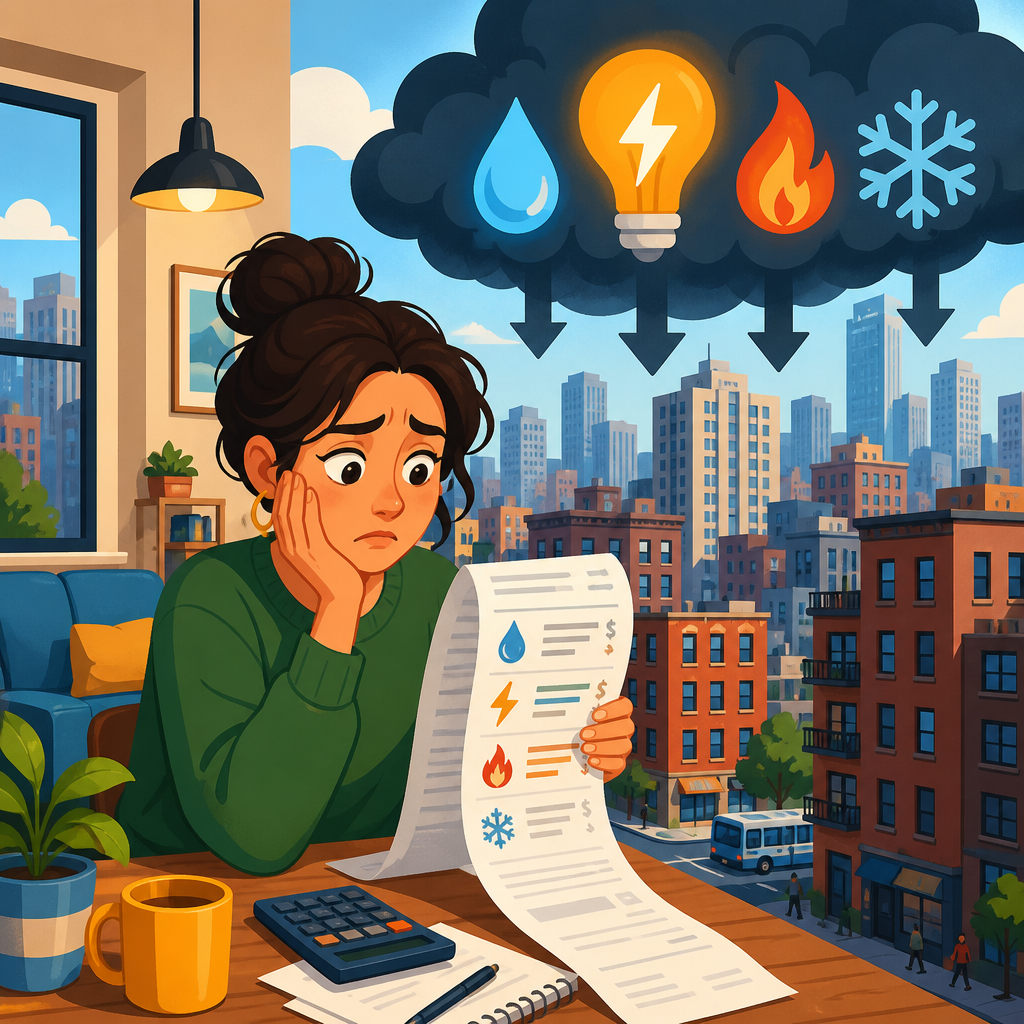
High utility bills are no longer a side issue in city budgets; they are a central urban affordability crisis shaping where people live, how healthy they remain, and whether local economies stay stable. Utility bills usually include electricity, natural gas, water, wastewater, trash, and sometimes district energy or stormwater fees. In housing policy, these costs are often treated as separate from rent or mortgages, yet households experience them as one combined monthly burden. When utility prices rise faster than wages, the practical cost of living in a city rises even if headline housing prices appear unchanged.
I have worked on affordability analyses where a unit looked “affordable” on paper because the rent met standard thresholds, but the building had poor insulation, old electric resistance heat, and high water charges. Tenants paid the difference through unpredictable monthly bills. That pattern is common in older apartment stock, fast-growing Sun Belt metros, and legacy industrial cities with aging water systems. It matters because utility burdens are unevenly distributed. Renters, low-income households, seniors, and residents of poorly maintained buildings typically pay a larger share of income for basic service than higher-income owners in efficient homes.
The crisis is urban because city residents depend on complex networks of generation, pipes, treatment plants, substations, and rate structures controlled by utilities and public agencies. It is an affordability issue because even modest rate increases can push already stretched households into arrears, service shutoff risk, or tradeoffs between cooling, medicine, food, and transportation. Federal housing metrics often use a 30 percent income-to-housing ratio, but that measure can miss utility stress. A household spending 28 percent on rent and another 8 percent on utilities is not comfortably housed. Any serious urban planning and policy agenda has to treat utility costs as a core part of housing affordability, public health, infrastructure management, and climate resilience.
Why utility costs have become a defining affordability pressure
Several forces have converged to make urban utility bills harder to absorb. First, infrastructure replacement costs are rising. Water and wastewater systems in many American cities were built decades ago and now require major capital upgrades for lead service line replacement, sewer separation, treatment modernization, and climate resilience. Those costs are often recovered through rates and fees. Second, energy markets have become more volatile. Natural gas prices, fuel supply disruptions, and extreme weather events affect both wholesale power costs and household heating expenses.
Third, climate change is increasing demand at the exact moment systems need expensive adaptation. Hotter summers raise cooling loads, while wildfire smoke, storms, and flooding drive grid hardening, backup investments, and emergency operations. Fourth, utilities are spreading fixed costs across customer bases that may be shrinking in some cities or under pressure from conservation. Paradoxically, when households use less water or electricity, utilities can still raise rates because the system itself remains expensive to run and maintain. That makes efficiency essential for households but financially complicated for providers.
For residents, the result is not just “higher bills” but higher bill volatility. Volatility is especially damaging for low-income households because budgeting fails when a normal summer bill doubles during a heat wave. In practice, the affordability problem is often worst in buildings with inefficient envelopes, deferred maintenance, old appliances, or master-metering arrangements that obscure accountability. Cities can no longer frame this as a private budgeting problem. It is a structural issue produced by housing quality, utility regulation, land use, aging infrastructure, and climate exposure.
Who pays the highest utility burden in cities
Utility burden refers to the share of household income spent on essential utility services. The households with the highest burden are not always those with the highest usage. In many cities, very low-income households consume relatively little but pay a lot in percentage terms because their incomes are so constrained. A family earning $25,000 annually that spends $250 per month on combined utilities faces a 12 percent annual utility burden before rent. That is severe by any practical standard.
Renters are especially vulnerable because they usually cannot choose major efficiency upgrades. If a landlord does not replace failing windows, insulate attics, seal ductwork, fix leaking toilets, or upgrade HVAC equipment, the tenant pays through recurring bills. This is the classic split incentive problem. Property owners make capital decisions, while tenants absorb operating costs. Public housing residents and voucher holders can face the same issue when utility allowances do not keep pace with real consumption patterns or local rate changes.
Neighborhood patterns also matter. Older urban districts often contain brick multifamily buildings with steam heat, single-pane windows, and outdated plumbing. Newer suburban-style developments inside city limits may have larger floor areas and higher summer cooling loads. Households with medical equipment, young children, or elderly members face less flexibility because they cannot safely reduce heating or cooling to dangerous levels. Language barriers, digital access gaps, and confusing billing formats can further limit access to assistance or dispute resolution.
| Household or building condition | Why bills run high | Typical policy response |
|---|---|---|
| Low-income renter in older building | Poor insulation, old appliances, landlord split incentives | Weatherization, rental standards, utility allowance reform |
| Senior homeowner on fixed income | Rising rates, deferred repairs, high heating or cooling needs | Bill assistance, home retrofit grants, arrearage management |
| Family in heat-vulnerable neighborhood | Heavy summer cooling demand, limited tree cover, inefficient AC | Cooling assistance, tree canopy, building efficiency upgrades |
| Resident in city with aging water system | Capital costs for pipe replacement and treatment upgrades | Income-based water rates, leak repair, affordability programs |
Housing quality, urban form, and the hidden cost of “cheap” units
A low advertised rent can hide a high total cost of occupancy. In planning reviews, I have seen naturally affordable units in older buildings lose their advantage once tenants accounted for winter gas bills, summer electric bills, coin laundry, and water pass-through charges. This matters because many urban affordability strategies focus narrowly on unit production while ignoring performance. If cities permit or preserve housing that is structurally inefficient, they may be locking households into permanent utility stress.
Building science explains why. Heat moves through roofs, walls, windows, and air leaks. Duct losses, unbalanced systems, uninsulated hot water pipes, and oversized equipment all drive waste. Water bills rise from leaks, old fixtures, irrigation inefficiency, and billing errors that go unnoticed because tenants lack submeters or owners delay repairs. Urban form also affects utility costs indirectly. Tree canopy reduces heat gain. Compact development can lower infrastructure costs per capita. District energy systems can improve efficiency in some contexts, while poorly maintained towers can generate extreme peak loads and elevator energy costs.
The policy implication is straightforward: affordability should be measured as housing plus utilities, not housing alone. Enterprise green standards, ENERGY STAR multifamily tools, ASHRAE guidance, and local building performance standards already provide practical frameworks. The challenge is implementation. Retrofitting occupied buildings requires capital, tenant protections, contractor capacity, and verification. Still, the evidence is clear. Efficient buildings reduce both emissions and recurring household costs, and those savings are most valuable when targeted to residents with the least financial cushion.
Rate design, regulation, and why monthly bills feel unfair
Many residents assume high utility bills simply reflect wasteful use, but bill design is often a major factor. Utility rates usually combine fixed charges and volumetric charges. Fixed charges recover customer-related costs and are owed even when usage is low. Volumetric charges rise with consumption. When fixed charges are too high, low-use households lose the financial benefit of conservation and face regressive outcomes. That is one reason a frugal apartment resident can still receive a painful bill.
Electric utilities may also use time-of-use pricing, demand charges in certain cases, fuel cost adjustments, and seasonal rates. Water systems may rely on increasing block rates, meter charges, stormwater fees, and wastewater charges linked to winter water usage or estimated return flows. None of these tools is inherently wrong. In fact, many support sound system management. The issue is whether regulators, municipal leaders, and public utility commissions evaluate affordability alongside cost recovery, conservation, and infrastructure investment.
Good policy starts with data transparency. Cities and utilities should know which neighborhoods have the highest arrears, shutoff risks, leak incidence, and energy burden. They should track whether assistance programs reach eligible households and whether rate cases assess distributive effects. Philadelphia’s Tiered Assistance Program and other income-based approaches show that affordability can be built into rate structures. Arrearage management, percentage-of-income payment plans, and seasonal protections can reduce crisis. The tradeoff is funding: someone must cover reduced revenue or structure cross-subsidies carefully. Still, doing nothing simply shifts costs into evictions, health emergencies, and service instability.
Public health, climate risk, and the consequences of unaffordable service
When utility service becomes unaffordable, the consequences move quickly beyond budgeting. In heat waves, households may underuse air conditioning, increasing risks of heat exhaustion, dehydration, cardiovascular stress, and death. In cold climates, inadequate heating contributes to respiratory illness, mold, and unsafe space-heater use. Water shutoffs undermine sanitation, medication adherence, childcare, and school attendance. These are not isolated hardships; they are public health failures with clear spatial patterns in vulnerable neighborhoods.
Climate risk intensifies the problem. Urban heat islands raise ambient temperatures where pavement dominates and tree canopy is sparse. Flooding can damage electrical systems and contaminate water infrastructure, triggering emergency costs that eventually show up in rates. Smoke events increase the need for indoor filtration and sealed buildings, both of which depend on reliable electricity. Resilience therefore has an affordability dimension. A city cannot be climate-ready if large parts of its population cannot afford safe indoor temperatures or reliable water service.
Hospitals, schools, housing agencies, and utilities should treat utility affordability as preventive policy. Targeted cooling centers help, but they are not a substitute for safe homes. Medical baseline programs, shutoff moratoria during extreme weather, backup power planning for vulnerable residents, and neighborhood-level resilience hubs all matter. The strongest approach combines emergency protections with long-term building upgrades and fair rate structures. That combination reduces both monthly burden and disaster vulnerability.
What cities can do now to reduce utility burden
The most effective city response is coordinated rather than piecemeal. Start with measurement: require affordability analyses that include estimated utilities in housing plans, preservation strategies, and subsidy programs. Update utility allowances using real consumption data by building type and climate zone. Enforce rental housing quality standards that address insulation, HVAC safety, leaks, and basic efficiency. Pair code enforcement with financing so owners can comply without displacing tenants.
Next, direct investment toward the highest-burden households and buildings. Weatherization Assistance Program funds, Low Income Home Energy Assistance Program support, state green banks, Inflation Reduction Act incentives where applicable, and utility demand-side management programs can be braided for deeper retrofits. Cities should prioritize predevelopment support, contractor training, and trusted community intermediaries because many small landlords and vulnerable homeowners cannot navigate fragmented programs on their own.
Finally, align infrastructure and social policy. Water affordability programs should sit beside leak repair, not instead of it. Electrification plans should include bill protection, load management, and envelope upgrades so residents do not swap one unaffordable system for another. Public dashboards, shutoff data disclosure, and routine affordability reporting create accountability. Urban affordability policy works best when leaders ask a simple question at every decision point: will this lower total household cost or quietly raise it?
High utility bills expose a basic truth about cities: affordability is not just the price of shelter, but the full cost of keeping that shelter safe, habitable, and connected to essential services. Electricity, gas, water, wastewater, and related fees shape whether households can remain stable month after month. When those costs rise without matching income growth or building improvements, the burden falls hardest on renters, seniors, low-income families, and residents of older housing stock.
The solutions are known. Measure housing plus utilities together. Improve building performance. Reform rate design where it produces regressive outcomes. Protect households during extreme weather and arrears crises. Invest in aging infrastructure without ignoring the people paying the bills. Cities that treat utility affordability as core policy, not a side program, can reduce displacement pressure, improve health, and make climate adaptation more equitable.
For planners, housing officials, utility leaders, and advocates, the next step is practical: audit where utility burden is highest in your city and link that map to building conditions, rate structures, and assistance gaps. That is where effective urban planning and policy should begin.
Frequently Asked Questions
Why are high utility bills considered part of the urban affordability crisis, not just a separate household expense?
High utility bills are part of the urban affordability crisis because most households do not experience housing costs in neat, separate categories. Families may see rent, mortgage payments, electricity, natural gas, water, wastewater, trash collection, and other service charges listed on different bills, but in practical terms they all come out of the same monthly budget. When utility costs rise, the effective cost of staying housed rises too. That means a unit that appears affordable on paper can become unaffordable once recurring service charges are included.
In cities, this issue is especially serious because utility rates often increase alongside other urban cost pressures such as rent growth, transportation expenses, insurance, and food prices. Residents who are already financially stretched may be forced to make difficult tradeoffs, including reducing heating or cooling, skipping medication, delaying rent, or falling behind on water and power payments. These choices can quickly lead to health risks, housing instability, and debt. In that sense, utilities are not a side issue at all; they are a core part of what determines whether people can safely remain in their homes.
High utility burdens also affect neighborhood stability and local economies. When households spend more on basic services, they have less money to spend at local businesses, less capacity to build savings, and less resilience during emergencies. Over time, utility unaffordability can contribute to displacement, arrears, service shutoff risk, and worsening inequality across cities. Treating utilities as central to affordability gives policymakers a more accurate picture of what residents are actually facing month to month.
What types of utility costs are usually included in the total monthly burden for urban households?
The total utility burden for urban households usually extends well beyond just electricity or gas. In most cities, households may pay for electricity, natural gas, water, wastewater or sewer service, trash and recycling collection, and in some places stormwater fees or district energy charges. Depending on the building type and local billing structure, these services may be paid directly by the resident, folded into rent, or partially passed through as separate fees. Even when they are bundled, they still shape the true cost of living in a home.
Electricity often covers lighting, appliances, cooling, and in some homes space heating or water heating. Natural gas may be used for cooking, heating, or hot water. Water and wastewater bills can be substantial in older buildings or in cities with aging infrastructure and higher rate structures. Trash, recycling, and stormwater charges are sometimes overlooked in affordability discussions, but they can add meaningful costs over time, especially for lower-income households with very little budget flexibility.
The exact combination of charges varies by city, utility provider, climate, and housing stock. For example, residents in older multifamily buildings may face inefficient heating systems and poor insulation, while those in hot climates may struggle with steep summer electric bills from air conditioning. In some regions, district steam or centralized heating systems add another layer of cost. Looking at all of these charges together is important because affordability is shaped by the total recurring burden, not by any one bill in isolation.
How do rising utility bills affect health, housing stability, and quality of life in cities?
Rising utility bills can have direct and indirect effects on health, housing stability, and everyday quality of life. When households cannot comfortably afford heating, cooling, water, or electricity, they may begin rationing essential services. That can mean keeping indoor temperatures at unsafe levels, limiting the use of medical devices, reducing bathing or laundry, or living with mold and dampness because ventilation and climate control are too expensive. For children, older adults, and people with chronic illnesses, these conditions can be especially harmful.
The housing impacts are equally serious. Utility arrears can pile up quickly, and households struggling to pay service bills may also fall behind on rent. In some cases, an unpaid utility balance can trigger shutoff notices, fees, or barriers to establishing service elsewhere, which makes it harder for families to move or recover financially. Even before a crisis point is reached, persistent utility stress creates instability by making it difficult to budget, save, or plan for other necessities. A resident may technically remain housed while living in conditions that are financially and physically unsustainable.
Quality of life also suffers in less visible but important ways. Constant worry about bills increases stress, affects mental health, and undermines a sense of security at home. People may avoid using lights, fans, air conditioning, or heat even when needed, and that changes daily routines, comfort, and productivity. For remote workers, students, and caregivers, reliable and affordable utility service is foundational. In urban affordability discussions, utility costs matter because they influence not just whether people have housing, but whether that housing remains safe, healthy, and livable.
Why do some city residents face much higher utility burdens than others?
Utility burdens vary widely because they are shaped by both income and infrastructure. A household with a modest bill can still be heavily burdened if its income is low, while a household with higher earnings may absorb the same charge more easily. This is why affordability is not just about the size of the bill; it is about the share of household income required to keep essential services on. Lower-income residents, seniors on fixed incomes, and renters in poorly maintained buildings often face the steepest pressure.
Housing conditions are a major factor. Older buildings may have outdated appliances, leaky windows, poor insulation, inefficient boilers, or plumbing problems that waste energy and water. Residents in these homes can end up paying more every month because the building itself performs poorly. Renters are particularly vulnerable because they often have little control over efficiency upgrades, even though they are the ones paying the monthly utility bills. This split incentive between landlords and tenants is one reason utility unaffordability can persist for years.
Local rate design, climate, and infrastructure investment also matter. Households in regions with extreme heat or cold naturally need more energy to remain safe. Cities with aging water systems, costly repairs, or uneven pricing structures may see higher water and sewer bills. In some places, fixed charges make bills less manageable for low-usage households, while in others, seasonal spikes create sudden budget shocks. These differences help explain why utility burdens are not evenly distributed across a city and why affordability policy has to account for building quality, neighborhood conditions, and income disparities together.
What can cities and policymakers do to reduce utility unaffordability for residents?
Cities and policymakers can reduce utility unaffordability by treating it as a structural affordability issue rather than a temporary billing problem. One important step is to measure housing costs more realistically by considering rent or mortgage payments alongside recurring utility expenses. When public agencies, housing authorities, and planners look at combined housing and utility burdens, they can better identify which neighborhoods and populations are under the greatest stress and target support more effectively.
Practical solutions include energy and water efficiency upgrades, especially in older rental housing and low-income owner-occupied homes. Weatherization, insulation improvements, leak repairs, efficient appliances, modern heating and cooling systems, and better building maintenance can lower recurring bills while improving health and comfort. Policymakers can also support affordability through utility assistance programs, arrearage relief, shutoff protections, income-based rate structures where allowed, and consumer protections that make bills easier to understand and manage. These tools are often most effective when designed to reach residents before they fall deeply behind.
Longer term, cities can align housing, climate, and infrastructure policy so that utility affordability becomes part of broader resilience planning. That may include stronger building standards, targeted retrofits in high-burden neighborhoods, landlord accountability for unsafe or inefficient housing, and better coordination between utilities and housing agencies. The goal is not only to lower one month’s bill, but to reduce the ongoing monthly burden that determines whether urban households can remain stable. When cities address utility costs directly, they strengthen public health, support local economic activity, and make urban living more sustainable and genuinely affordable.


