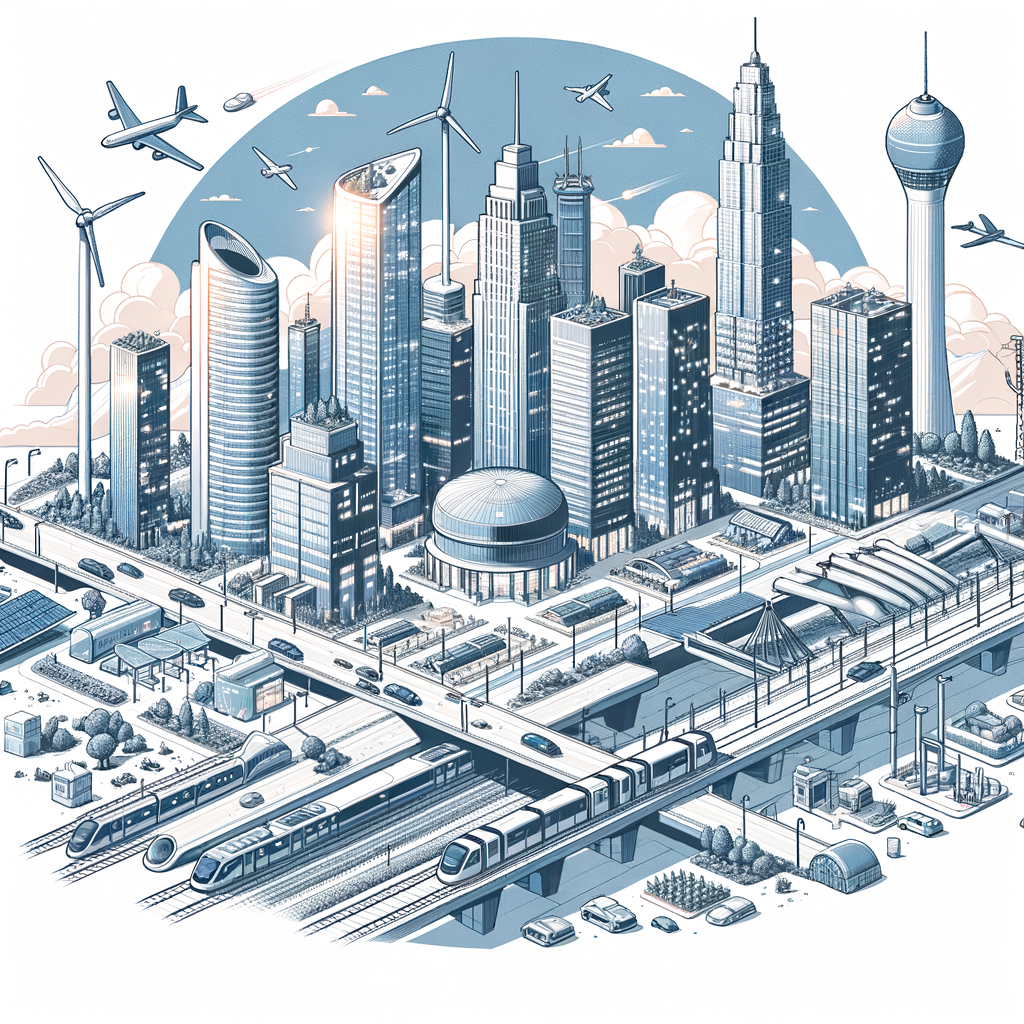
Urban infrastructure plays a crucial role in defining the quality of life for the residents of any city. The dynamic environments of urban centers necessitate efficient, sustainable, and innovative infrastructure solutions. Increasing urban populations, rapid technological advancements, and the pressing need to address climate change emphasize the importance of robust infrastructures. Cities across the globe have experimented with various initiatives to improve their urban infrastructure, some of which have become exemplary for others to follow. These success stories illustrate a variety of approaches that can be tailored to different urban needs. Cities have focused on enhancing public transportation systems, developing green spaces, and introducing smart technologies to enforce smart infrastructure solutions. This article delves into several case studies that highlight these successful urban infrastructure initiatives, showcasing the strategies, implementations, outcomes, and lessons from these transformative projects.
The Revival of Urban Transport in Bogotá, Colombia
Bogotá, the vibrant capital of Colombia, faced severe transportation challenges due to rapid urban growth and inadequate infrastructure planning. To alleviate congestion and improve commuter experiences, the city introduced the TransMilenio bus rapid transit (BRT) system. Launched in 2000, the system was designed to provide high-capacity, efficient, and sustainable public transportation. The lanes were dedicated solely to articulated buses, effectively functioning as surface subways. Stations were strategically placed and integrated with pedestrian pathways to encourage accessibility. The introduction of TransMilenio drastically reduced travel time, traffic congestion, and air pollution. Before its implementation, Bogotá’s traffic was notorious, causing heavy emissions and economic losses due to time wasted in gridlocks. Post-implementation studies have demonstrated that TransMilenio has increased the average speed of buses and commuter movement across the city. Meanwhile, the emphasis on public transport usage significantly reduced carbon footprints through lowered vehicular emissions.
Turning Wastelands into Green Spaces: New York City’s High Line
The High Line in New York City is a sterling example of converting obsolete urban areas into vibrant public spaces. Occupying defunct elevated railway tracks on the west side of Manhattan, the High Line was transformed into a linear park, a unique recreational strip that provides an urban green sanctuary. Initiated in 1999 by the community-based non-profit organization Friends of the High Line, with the assistance of the local government, financing came through innovative public-private partnerships. The High Line opened in phases, with the first section unveiled to the public in 2009. Designers embraced sustainable landscaping: native species supplied the flora, ecosystem diversity flourished, and the park’s layout seamlessly integrated into the surrounding urban landscape. The High Line has since become a major tourist attraction, boosting local businesses and property values. Its success enforced the principle that thoughtfully integrated public spaces can transform urban experiences, revitalize neighborhoods, and enhance community quality of life.
Singapore’s Intelligent Water Management System
Singapore, known for its urban planning prowess, has introduced several innovative infrastructure projects, including a comprehensive water management system. Due to limited natural water resources, Singapore faced an urgent need to secure water sustainability and self-sufficiency. Consequently, the government embarked on the “Four National Taps” initiative to diversify water sources. These include local catchment areas, imported water, desalinated water, and reclaimed water (NEWater). Singapore harnesses advanced technologies for water recycling, desalination, and smart water conservation measures. The city-state boasts state-of-the-art water treatment plants and real-time tracking of water consumption through smart systems. PUB, Singapore’s national water agency, continuously educates the populace on conserving water and reuses treated wastewater for industrial processes, watering greenery, and other non-potable uses. The results have been remarkable. Singapore effectively doubled its water catchment area, improved water quality, and cut reliance on external supplies. These achievements exemplify how smart technological infrastructures can lead to national self-sufficiency and maintain ecological balance.
Integrating Smart Technology: Barcelona’s Public Spaces
Barcelona, one of Europe’s forward-thinking smart cities, has redefined public infrastructure through intensive smart technology integration. With the aim of increasing efficiency, connectivity, and sustainability, Barcelona’s city planners implemented numerous technologically driven projects. One example is the Smart Lighting system, which utilizes motion sensors to adjust street lighting based on pedestrian and vehicular movements, significantly lowering energy consumption and reducing costs. Barcelona’s waste management system employs sensor-equipped bins that alert waste collectors when full, optimizing collection schedules and reducing unnecessary waste pick-ups. Traffic control is another highlight, where sensors embedded in roads provide data to manage and optimize traffic flow, easing congestion and reducing pollution. These smart initiatives have led to considerable energy savings, reduced the carbon footprint, and have improved the overall quality of urban life. Barcelona stands as an excellent model for how cities can harness technology to create smarter, more sustainable urban environments.
Case Study of Sustainable Mobility: Copenhagen, Denmark
Copenhagen is celebrated worldwide for its commitment to becoming the first carbon-neutral capital by 2025. Essential to this goal is its comprehensive infrastructure plan promoting sustainable mobility, with bicycles as focal to urban travel. The government invested extensively in cycling tracks, “cycling superhighways,” and bike-friendly policies. Copenhagen’s cycling network covers around 400 kilometers, making bike commuting safe, accessible, and appealing to residents. “Green waves,” where cyclists can glide through traffic lights without stopping, further boost rider convenience. Policymakers encouraged cycling by providing dedicated bike lanes, parking facilities, and seamless connectivity to public transit systems. Support for car-free zones and initiatives to limit car usage furthered green transit. Consequently, more than 60% of Copenhageners bike to work or school daily. The city has experienced reduced traffic congestion, lowered air pollution, improved public health, and a remarkably diminished carbon footprint. Elevated as a greener living epitome, Copenhagen influences other cities aiming to achieve sustainable modalities.
Sustainable Urban Drainage at London’s Olympic Park
London’s Olympic Park, constructed for the 2012 Summer Olympics, exemplifies remarkable urban infrastructure planning, particularly in sustainable drainage systems. Situated on a prior industrial wasteland, major restoration was needed to mitigate flood risks from nearby rivers. The engineering team designed a multifaceted system, incorporating natural water retention features — green roofs, swales, and wetlands — to slow down water runoff and increase water quality. Rainwater harvesting methods and permeable surfaces were widely used to reduce strain on underground drainage. Post-Olympics, the Park remains a hub for sporting events and residential life, transforming into a vivid community space, now enhanced with biodiversity within the landscape. The drainage initiatives form part of a broader environmental strategy, demonstrating how sustainable infrastructure can efficiently manage urban water systems while enhancing ecological resilience and urban vitality.
Conclusion
The above case studies illustrate diverse ways cities globally innovate to tackle urban infrastructure challenges effectively. From reviving public transit systems, as seen in Bogotá, to sophisticated water management in Singapore, successful urban projects are driven by meticulously engineered plans, resident engagement, and the courage to embrace change. The revitalization of urban areas like New York’s High Line accentuates how creating dynamic public spaces refreshes city landscapes and stimulates economic and social rejuvenation. Meanwhile, Barcelona’s integration of smart solutions and Copenhagen’s promotion of cycling advocate for adopting tomorrow’s technology today, showcasing how urban infrastructure can evolve sustainably and intelligently. London’s Olympic Park further demonstrates that urban challenges often present opportunities for innovation, positioning cities as blueprints for future infrastructure developments. As urban landscapes continue to expand and evolve, these tangible successes act as guiding lights for cities worldwide aspiring to enhance their infrastructure, ensuring sustainability, livability, and resilience for generations to come.