Introduction to Urban Planning and Social Inclusion
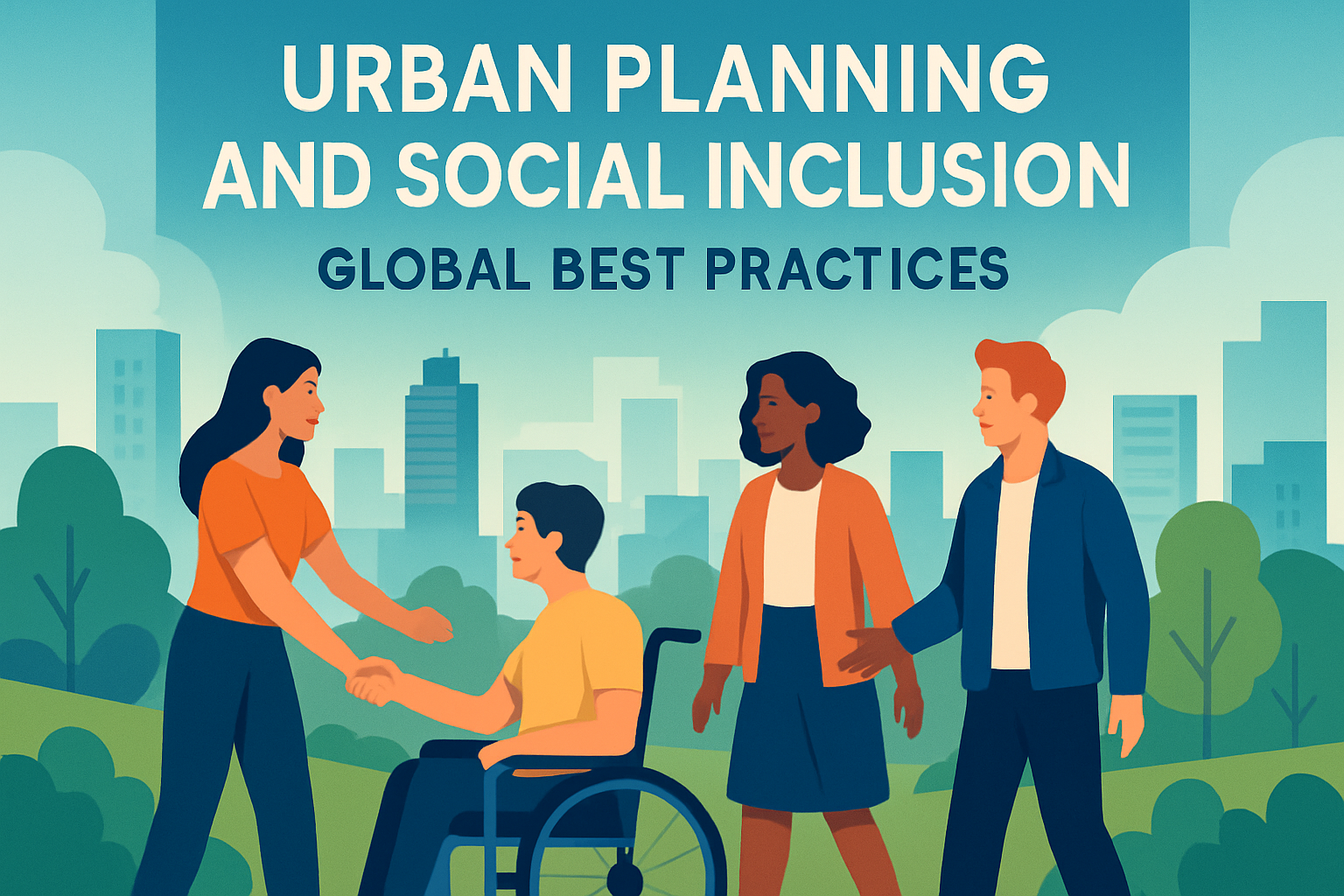
Urban planning refers to the process of designing and managing the development of urban areas, with the goal of ensuring sustainable growth and maintaining the quality of life for residents. It encompasses a wide array of considerations, including land use, zoning, transportation, and public spaces. Social inclusion, on the other hand, is a concept that emphasizes equitable access to resources and opportunities for all individuals, regardless of their socio-economic background, race, age, or ability. The intersection of these two disciplines is crucial for creating cities that are not only efficient and economically vibrant but also equitable and welcoming for all.
The importance of integrating social inclusion into urban planning cannot be overstated. In cities around the world, disparities in access to housing, public transportation, education, and healthcare often exacerbate social inequalities. By incorporating principles of social inclusion into urban planning frameworks, cities can promote cohesion, reduce inequality, and improve the overall well-being of their inhabitants. These strategies can lead to more resilient, adaptable, and harmonious communities. As urban populations continue to grow at unprecedented rates, understanding and implementing best practices in urban planning and social inclusion becomes ever more essential.
Strategic Zoning for Inclusive Communities
Strategic zoning is a pivotal tool in creating inclusive communities. Zoning dictates how land can be used in different parts of a city, influencing residential, commercial, and industrial development. By prioritizing mixed-use developments that combine residential, commercial, and recreational spaces, urban planners can create vibrant neighborhoods that cater to various demographics and foster economic activity.
Case in point is Curitiba in Brazil, renowned for its innovative zoning and transit-oriented development. The city’s planning efforts have focused on integrating land use with public transportation, enabling residents from diverse economic backgrounds to access affordable housing and employment opportunities. Curitiba’s Bus Rapid Transit (BRT) system, combined with pedestrian-friendly zones and affordable housing near transit lines, exemplifies how strategic zoning can result in socially inclusive environments.
- Mixed-use developments enhance accessibility.
- Transit-oriented planning optimizes land usage.
- Zoning policies can minimize socio-economic segregation.
Transportation Systems as Equalizers
Transportation systems play a significant role in promoting or hindering social inclusion. An effective public transportation network can provide individuals with access to job opportunities, education, and healthcare, contributing significantly to reducing inequality. Cities that prioritize inclusive transportation systems are better positioned to support diverse populations.
An example of this is the city of Copenhagen in Denmark. The city boasts an extensive biking infrastructure, integrated seamlessly with public transit options like buses and trains. Copenhagen’s commitment to cycling not only promotes environmental sustainability but also ensures accessibility for residents of all income levels. By reducing dependency on car ownership, the city has successfully lowered economic barriers to mobility, fostering greater inclusion.
- Public transportation can bridge socio-economic gaps.
- Biking infrastructure supports inclusive mobility.
- Affordable transit options reduce reliance on cars.
Participatory Urban Planning Processes
Incorporating community input into urban planning processes is vital for fostering environments that reflect the needs and desires of all residents. Participatory planning involves engaging various stakeholders, including residents, businesses, and advocacy groups, in decision-making processes. This approach not only empowers communities but also leads to more tailored and sustainable urban solutions.
Portland, Oregon, serves as an exemplary case of successful participatory urban planning. The city actively involves residents in its land-use planning through workshops, public forums, and feedback sessions. This inclusive approach ensures that diverse voices are heard and accounted for, leading to more equitable and effective urban policies. Portland’s commitment to community engagement has fostered trust and collaboration between city officials and residents, paving the way for inclusive growth.
- Participatory planning empowers diverse communities.
- Community input leads to tailored urban solutions.
- Engagement fosters trust and collaboration.
Designing Accessible Public Spaces
Public spaces are vital components of urban areas, serving as arenas for social interaction, recreation, and cultural expression. Designing these spaces to be accessible and welcoming to all, regardless of physical ability, age, or socio-economic status, is crucial for social inclusion. Inclusive public spaces facilitate community engagement and help dissolve the isolation of marginalized groups.
The city of Barcelona in Spain has been a forerunner in designing accessible public spaces. Its “Superblocks” initiative restricts traffic in certain city areas, creating pedestrian-friendly zones. Within these Superblocks, green spaces and benches encourage social interaction and inclusivity. Additionally, Barcelona’s commitment to universal design ensures that public spaces accommodate individuals with disabilities, making the city more accessible and inclusive for everyone.
- Public spaces promote social interaction and recreation.
- Universal design enhances accessibility for all users.
- Superblocks minimize traffic and encourage pedestrian activity.
Housing Policies for Social Justice
Affordable and accessible housing is a cornerstone of social inclusion. Cities that implement housing policies aimed at reducing homelessness and ensuring affordable living conditions are better positioned to support diverse populations. Equitable housing policies not only address poverty and displacement but also foster community development and social cohesion.
Vienna, Austria, is often cited as a model for affordable housing practices. The city invests heavily in social housing, with nearly 60% of its residents living in subsidized housing provided by the government. Vienna’s focus on maintaining a good quality of life for all its citizens through affordable rent and diverse housing options has made it an exemplar of social inclusion in urban planning.
- Equitable housing combats poverty and displacement.
- Government subsidies support affordable housing options.
- Diverse housing fosters community development.
Concluding Thoughts on Urban Planning and Social Inclusion
The integration of social inclusion in urban planning is not merely a desirable goal but a necessary strategy for developing sustainable and harmonious cities. By adopting best practices such as strategic zoning, inclusive transportation systems, participatory planning processes, accessible public spaces, and equitable housing policies, urban areas around the globe can better accommodate diverse populations and promote equitable growth.
For city planners, policymakers, and residents alike, the journey toward social inclusion is a collaborative effort. By learning from successful global examples and continuously engaging communities, cities can move toward a future where everyone has the opportunity to thrive. By embracing these practices, we can create urban environments that are not only prosperous and dynamic but also inclusive and just for all citizens. Your active participation in advocating for and implementing these principles can help transform our cities into places of opportunity and belonging. Together, we can build a future of inclusive urban living.
Frequently Asked Questions
1. What is the role of urban planning in promoting social inclusion?
Urban planning plays a critical role in promoting social inclusion by crafting environments that are accessible, equitable, and conducive to the wellbeing of all residents. A well-executed urban plan identifies and mitigates barriers that different societal groups may face, whether they are related to transportation, housing, public spaces, or access to essential services. By incorporating diverse voices into the planning process, cities can ensure that developments reflect the needs and aspirations of all community members, rather than a select few. This engagement is crucial in creating not only physical spaces but also fostering communities that are vibrant, resilient, and inclusive.
For example, urban planners can implement inclusive zoning laws that encourage or require affordable housing, ensuring low-income residents are not displaced by rising property values. This can help maintain diverse neighborhoods instead of forcing marginalized groups to move to less-resourced areas. Public transportation systems can be designed to connect all parts of a city efficiently, providing equitable access to jobs, education, and healthcare across different demographics. In terms of public spaces, planners can focus on building parks, recreational areas, and cultural centers that are accessible and welcoming to all, promoting social interactions among diverse population groups. These efforts collectively support a community’s ability to adapt and thrive amid economic, social, and environmental shifts, driving a dynamic yet inclusive urban growth.
2. How do global best practices address the challenges of social inclusion in urban planning?
Global best practices address social inclusion challenges by drawing on successful strategies and innovative solutions from cities around the world. One approach is participatory planning, which involves residents in the decision-making process, ensuring their voices and concerns shape the urban development agenda. Cities like Barcelona and Porto Alegre are renowned for implementing participatory budgeting, where residents have a say in how public funds are spent, leading to projects that echo the community’s needs and priorities.
Another key practice is emphasizing mixed-income and mixed-use developments, which prevent segregation and promote social cohesion. In Vienna, this approach is reflected in their extensive social housing program, which seamlessly integrates residents of different income levels and fosters community ties. Such models are crucial for sharing insights and experiences that can be tailored to fit local contexts, thereby addressing unique challenges faced by different urban areas.
Furthermore, cities engage in regular evaluation processes to assess the inclusivity of their policies and projects, using tools like the Equality Impact Assessment. This process involves analyzing how different groups may be affected by a project and adjusting plans accordingly to ensure no group is disproportionately disadvantaged. These practices underscore the importance of viewing urban spaces as evolving ecosystems that require continuous attention and adaptation to remain inclusive.
3. How does transportation planning contribute to social inclusion in urban areas?
Transportation planning is pivotal to social inclusion as it directly influences access to opportunities and resources. A well-integrated transportation system can champion inclusivity by connecting underserved or geographically isolated areas to economic and social activities. Efficient transportation networks reduce travel times and costs, thereby enhancing accessibility to essential services such as healthcare, education, and employment, especially for low-income and marginalized communities.
Cities like Singapore have invested in extensive public transportation infrastructure that integrates buses, trains, and bikes, ensuring efficient coverage and affordability. Similarly, Bogotá’s TransMilenio Bus Rapid Transit system has been praised for greatly expanding transit access to urban peripheries, significantly affecting the quality of life for low-income populations. By reducing the dependency on cars, well-planned transportation also improves air quality and minimizes environmental impacts, contributing to healthier living conditions.
Beyond physical developments, cognizance of diverse needs is essential in transportation planning. Features like low-floor buses and accessible train platforms enable mobility for the disabled and elderly, ensuring inclusivity in the urban transit ecosystem. Recognizing transport as a social equalizer, urban planners and policymakers must continue to prioritize and innovate comprehensive and inclusive transportation solutions.
4. How do public spaces promote social inclusion within cities?
Public spaces are a cornerstone of urban social inclusion as they offer free and open areas for interaction, recreation, and cultural expression, bringing together people from varied backgrounds. Well-planned public spaces promote a sense of belonging and community cohesion, acting as platforms for social engagement, cultural exchange, and collective activities that transcend social divides.
Cities successful in this realm, such as Curitiba in Brazil, have integrated green spaces, pedestrian pathways, and interactive environments that foster community interaction and inclusion. These spaces often host regular cultural events and community activities that reflect the diverse demographics of a city, encouraging personal investment and pride from its residents.
Furthermore, the strategic location and design of public spaces also play important roles in social inclusion. Equitably distributed parks and recreational areas ensure all community members have quality spaces within reach, especially children and families in economically disadvantaged neighborhoods. Features catering to diverse groups, such as age-appropriate playgrounds, wheelchair-accessible pathways, and multi-use courts, ensure that public spaces are truly for everyone. Public art installations and cultural markers also reflect and celebrate local history and diversity, enhancing social equality and collective identity within the urban landscape.
5. What challenges do urban planners face in fostering social inclusion, and how can they overcome them?
Urban planners face several challenges in fostering social inclusion, including limited financial resources, bureaucratic obstacles, and resistance to change from established stakeholders. Ensuring participatory processes sometimes conflicts with traditional top-down approaches, and striving for inclusivity may incur higher costs or more time-consuming negotiations, especially in entrenched systems resistant to change.
To overcome these challenges, planners can leverage a combination of innovative strategies and stakeholder collaboration. Forming partnerships with community organizations, private sectors, and government entities can enhance resource capabilities and foster collaborative environments conducive to inclusive planning. Advocacy and engagement can increase public awareness and support, driving demand for inclusive policies and practices at institutional levels.
Leveraging technology to facilitate broader public engagement through digital platforms and social media can democratize participation processes and gather more comprehensive input from diverse groups. Additionally, adopting flexible and adaptive planning practices enables cities to quickly respond to unforeseen challenges while remaining committed to long-term inclusivity goals. By embracing a continuous learning approach and remaining open to global best practices and new solutions, urban planners can effectively navigate hurdles and uphold the tenets of social inclusion in urban development.