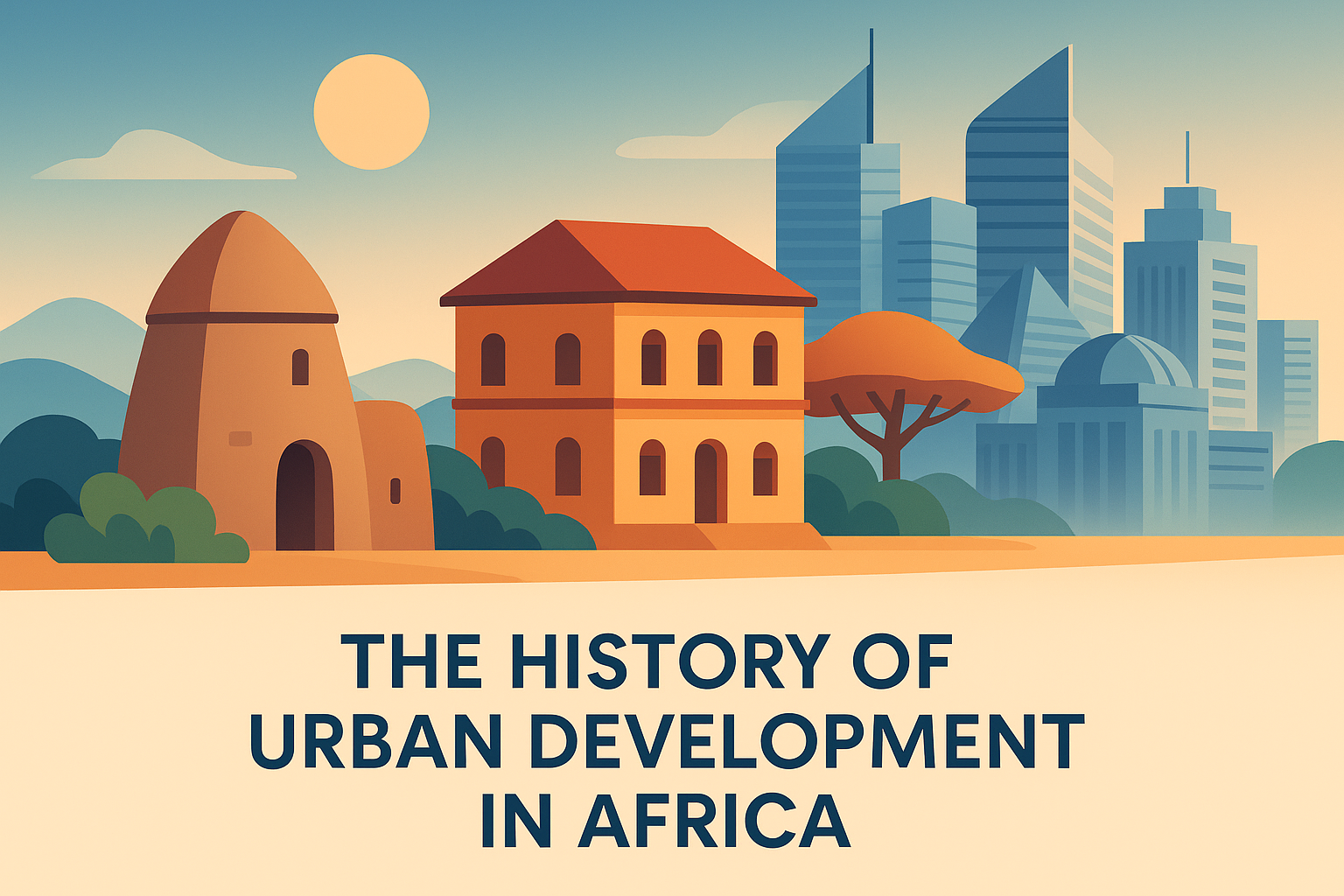
Urban development in Africa is a subject that encompasses a broad range of historical, social, and economic factors. Urbanization involves the movement of populations from rural areas to urban centers, leading to the growth of cities and towns. Understanding the history of urban development in Africa is crucial because it influences the way African cities are organized, governed, and how they will evolve in the future. The field of urban development analyzes factors such as colonialism, economic development, and political policies that have shaped the infrastructural and social landscapes of African cities. This topic matters because it not only provides insights into past trends but also offers guidance on how current challenges can be addressed and future growth can be managed to improve the quality of life for African urban dwellers.
Colonial Legacy and Urban Development
The colonial period significantly impacted the urban development of the African continent. European colonizers established cities as administrative centers to facilitate resource extraction and control over occupied territories. These cities were often designed to segregate European settlers from the indigenous populations, resulting in spatially divided urban areas. For instance, Nairobi, the capital of Kenya, was developed as a settler city with designated zones for Europeans, Asians, and Africans. This segregation was institutionalized through policies such as the “White Highlands” in Kenya, where land ownership was restricted based on race. The legacy of colonial urban planning is still evident in many African cities, reflected in socio-economic disparities and infrastructural challenges.
Post-Independence Challenges and Growth
In the post-independence era, African governments faced the dual challenge of decolonizing urban spaces and managing rapid urbanization. Many nations experienced significant population growth in cities due to rural-urban migration, driven by economic opportunities and better living standards. However, the lack of adequate infrastructure and resources to accommodate this influx has led to the proliferation of informal settlements, commonly referred to as slums. For example, Kibera in Nairobi is one of the largest informal settlements in Africa, home to hundreds of thousands of residents lacking basic services like clean water, sanitation, and electricity. Addressing these challenges has become a priority for urban planners and policymakers.
Economic Development and Urbanization
Economic development has played a pivotal role in urbanization across Africa. As countries have liberalized their economies, cities have emerged as hubs for commerce, trade, and industry. Economic growth has spurred investment in urban infrastructure, attracting foreign direct investment and boosting employment opportunities. For instance, Lagos in Nigeria has become a major economic center, attracting businesses from various sectors such as finance, technology, and entertainment. However, rapid urban growth without commensurate infrastructure development has also resulted in challenges like traffic congestion, pollution, and inadequate housing. The balance between economic growth and sustainable urban development has become a focal point for policymakers.
Culture and Urban Identity
African cities are not only economic and administrative centers but also cultural hubs. Urbanization has brought diverse communities together, fostering cultural exchange and influencing urban identities. Cities like Johannesburg, Accra, and Dakar are known for their vibrant music, arts, and fashion scenes, which have gained international acclaim. The cultural richness of these cities contributes to their uniqueness and draws tourists and cultural enthusiasts from around the world. However, the preservation of cultural heritage in the face of modernization poses challenges. Ensuring that urban development doesn’t erase cultural landmarks or marginalize indigenous cultures is essential for maintaining a city’s identity.
Sustainable Urban Solutions
As African cities continue to grow, the focus on sustainable urban development has gained urgency. Sustainability involves managing resources efficiently, reducing environmental impacts, and enhancing the quality of life for urban residents. Various cities have embarked on initiatives to promote sustainable development. Kigali, the capital of Rwanda, is often cited as an example of successful urban planning in Africa. Known for its cleanliness and green spaces, Kigali has implemented policies to ensure efficient waste management, public transportation, and environmental conservation. The city’s approach to sustainability offers valuable lessons for other urban centers on the continent.
| City | Notable Development Aspect | Challenge |
|---|---|---|
| Nairobi | Economic Hub | Segregated Urban Areas, Informal Settlements |
| Lagos | Business and Commerce Center | Traffic Congestion, Inadequate Housing |
| Kigali | Sustainability and Urban Planning | Balancing Modernization with Cultural Heritage |
The Role of Technology in Urban Development
Technology has emerged as a game-changer in the field of urban development. Smart cities and digital infrastructure have the potential to transform urban living through improved services and efficiency. For example, Cape Town in South Africa is leveraging technology to enhance service delivery and promote transparency. Initiatives include the use of data analytics to manage resources, mobile applications for reporting municipal issues, and digital platforms for citizen engagement. Embracing technology can streamline urban management, enhance public service delivery, and foster economic development. However, tech-driven solutions must be inclusive to prevent widening the digital divide among urban populations.
Efforts to Address Housing and Infrastructure Needs
The demand for housing and infrastructure in African cities continues to outpace supply, leading to challenges in providing adequate and affordable housing. Governments and private sectors are exploring innovative approaches to address these needs. For instance, Morocco has embarked on a large-scale social housing program aimed at alleviating urban housing shortages. This program incentivizes private sector investment in affordable housing projects, demonstrating a model that other African countries can replicate. Meanwhile, partnerships between governments and international organizations have been established to improve urban infrastructure, focusing on transportation, sanitation, and utilities. Successful implementation of such initiatives can significantly improve living conditions in urban areas.
Urban Governance and Policy Implementation
Effective governance and policy implementation are crucial for successful urban development. African urban centers require responsive governance structures that can adapt to rapidly changing dynamics. Initiatives like participatory governance models, where residents are actively involved in decision-making processes, have shown promise. Cities such as Accra have started implementing local governance reforms to enhance transparency, accountability, and public participation. However, challenges such as corruption, bureaucratic inefficiencies, and political instability continue to hinder governance efforts. Strengthening urban governance requires institutional capacity building, the establishment of clear legal frameworks, and fostering collaboration between stakeholders at all levels.
Key Takeaways and Future Directions
The history of urban development in Africa is rich and complex, influenced by a myriad of factors, from colonial legacies to economic opportunities and technological advancements. Understanding this history is essential for addressing current urban challenges and guiding future growth. The key takeaways include the need for inclusive urban planning that considers socio-economic disparities, the importance of sustainable development practices, the potential of technology to enhance urban living, and the necessity of effective governance and policy implementation. By learning from past experiences and embracing innovative approaches, African cities can overcome challenges and unlock new opportunities for development.
Continued efforts are needed in fostering collaborations between governments, the private sector, and civil society to create resilient and sustainable urban environments. Readers are encouraged to explore how they can contribute to urban development in their communities, whether through advocacy, entrepreneurship, or grassroots initiatives. By working together, we can make Africa’s cities more inclusive, vibrant, and sustainable places for all residents to thrive.
Frequently Asked Questions
1. What are the main historical factors that have influenced urban development in Africa?
The history of urban development in Africa is complex and influenced by a multitude of factors, particularly colonialism, which played a significant role. During the colonial era, European powers imposed urban development plans that often disregarded existing African social structures and urban centers. These plans focused on exploiting resources and establishing administrative control, leading to the creation of new cities designed to serve colonial interests. This resulted in segregated and unequal urban spaces that separated the colonizers from the local African people, often leading to long-lasting socio-economic divides.
Post-independence, many African nations sought to redefine their cities and address the inequalities rooted in colonial urban planning. Other historical influences include the trans-Saharan trade, which led to the growth of historic cities like Timbuktu and Gao, and indigenous urbanization, where pre-colonial societies developed complex urban centers based on their own cultural and trade networks. Additionally, the struggle for independence and subsequent civil and ethnic conflicts have also played a role in how cities have developed over time, often impacting urban infrastructure and function.
2. How has the movement from rural to urban areas impacted African societies?
The movement from rural to urban areas, commonly known as urbanization, has significantly impacted African societies in various ways. One of the most notable effects is the rapid growth of cities, which has led to increased economic opportunities and improved access to services such as education and healthcare for many people. However, this shift has also posed challenges, such as straining urban infrastructure and inadequate housing, leading to the rise of informal settlements or slums.
Urbanization has also altered societal structures and economic dynamics. Traditional rural lifestyles and economies based on agriculture have been replaced by diverse urban economies where commerce, services, and industry play key roles. Socially, the movement has led to increased diversity in urban centers, creating a melting pot of cultures, but it has also resulted in tension between migrant populations and established urban communities. These changes have sparked conversations around integration, governance, and the provision of services, necessitating innovative urban planning approaches to accommodate the rapidly growing urban populations.
3. What role does economics play in the urban development of African cities?
Economics plays a central role in the urban development of African cities. Economic factors dictate the flow of investment in infrastructure, housing, and services, shaping the way cities grow and function. Over time, African cities have become hubs of economic activity, attracting both local and international investors who view urban centers as the engine of economic growth. Industries ranging from manufacturing to technology have sprouted, contributing to the diversification of urban economies.
The dynamics of global and local economies directly influence urban development policies and strategic planning. For example, cities strive to attract foreign direct investment (FDI) to bolster infrastructure projects, such as transportation networks, which are pivotal for economic growth. However, economic disparities persist, and the challenge of equitably distributing resources continues to affect urban planning strategies. Governments and urban planners must balance economic development with the need for social equity to ensure that wealth and opportunity do not remain concentrated in the hands of a few.
4. How did colonialism affect urban development in Africa?
Colonialism had profound and lasting effects on urban development in Africa. European powers established cities primarily for administrative control and resource exploitation, often implementing urban plans that favored their interests over those of the local populations. One significant impact was the introduction of Western architectural and planning styles, which imposed foreign urban models on African landscapes without regard for indigenous cultures or needs.
This legacy of colonial urban planning manifested in the creation of highly segregated urban spaces. Colonizers often lived in well-planned, affluent areas with access to resources, while indigenous populations were pushed to less-developed peripheries, leading to socio-economic inequalities that persist to this day. The neglect of indigenous cities and planning principles led to a disconnect between urban form and function in post-colonial cities. Today, African cities are working to address these issues, creating more inclusive urban environments that reflect the continent’s rich heritage and diverse populace.
5. What are some modern challenges facing urban development in Africa?
African cities face numerous modern challenges in terms of urban development, with rapid urbanization being one of the most significant. As populations continue to grow, cities struggle to provide sufficient infrastructure and services, such as transportation, sanitation, and clean water. Informal settlements proliferate, highlighting the need for adequate housing solutions for millions of urban residents.
Environmental sustainability presents another major challenge. Given the effects of climate change, cities must develop resilience strategies to cope with issues like flooding, heatwaves, and water scarcity. Urban planners are increasingly incorporating sustainability measures into development to address these environmental challenges while promoting green spaces and reducing carbon footprints.
Governance also poses challenges, as cities grapple with the need for effective management and accountability. Decentralization of power to local governments can enhance urban governance, but it requires capacity-building to ensure that local authorities can effectively manage resources and deliver services. Moreover, balancing economic growth with social equity remains crucial, as cities must address growing inequalities to create viable and inclusive urban environments for all.