

In today’s rapidly changing world, the intersection of urban planning and economic development stands as a critical aspect of fostering sustainable growth. Urban planners and policymakers across the globe are grappling with unprecedented challenges such as population growth, technological advancements, and climate change. Their efforts are directed towards creating prosperous and resilient cities that balance economic activities with the well-being of the community.
Effective urban planning and economic development strategies not only enhance the livability of urban areas but also create opportunities for businesses, generate employment, and attract investment. This article delves into the connection between urban planning and economic development, offering strategies that cities can adopt to promote growth while maintaining a high quality of life for residents.
The Foundations of Economic Development in Urban Planning
Economic development in urban settings is multifaceted, involving a complex interplay between various factors such as infrastructure, human capital, governance, and environmental sustainability. A well-planned urban environment can stimulate economic growth by providing an efficient and attractive setting for businesses and entrepreneurs. It can also help to build social inclusiveness, ensuring that growth benefits a wide cross-section of the population.
One foundational strategy is focusing on infrastructure development. Robust infrastructure, including transportation networks, utilities, and communication systems, is the backbone of economic activities in urban areas. Without well-maintained and efficiently managed infrastructure, cities can struggle to support businesses and attract new investments.
Another cornerstone is human capital. Cities should invest in education, training programs, and connectivity to create a skilled workforce that can meet the demands of modern economies. Access to quality education and lifelong learning opportunities is crucial for fostering innovation and competitiveness.
Moreover, good governance plays a pivotal role. Transparent, accountable, and participatory governance structures enable better urban management and decision-making. They involve the community in the planning process, ensuring that development projects align with the needs and aspirations of residents.
Innovative Urban Design and Economic Resilience
Urban design has a substantial impact on economic development. Innovative designs that incorporate mixed-use developments, green spaces, and walkable neighborhoods can boost local economies by attracting residents and tourists. Integrating commercial, residential, and leisure spaces within close proximity fosters a vibrant urban atmosphere that supports small businesses and creates job opportunities.
Furthermore, adaptive reuse of existing structures can be an economically sensible strategy. Renovating and repurposing old buildings, rather than constructing new ones, preserves historical value and reduces costs associated with demolition and construction. Such projects can revitalize neglected areas and stimulate investment.
Increasing urban resilience is another critical aspect. Resilient cities are better equipped to withstand economic shocks, natural disasters, and social upheavals. Strategies for enhancing resilience include diversifying the economic base, investing in sustainable infrastructure, and promoting energy-efficient buildings. By mitigating risks and ensuring continuity, resilient urban environments are more attractive to businesses and investors.
Lastly, placemaking, an approach that focuses on creating public spaces that promote health, happiness, and well-being, can drive economic development. Well-designed public spaces encourage social interaction, cultural activities, and economic transactions, making them hubs of community life and economic activity.
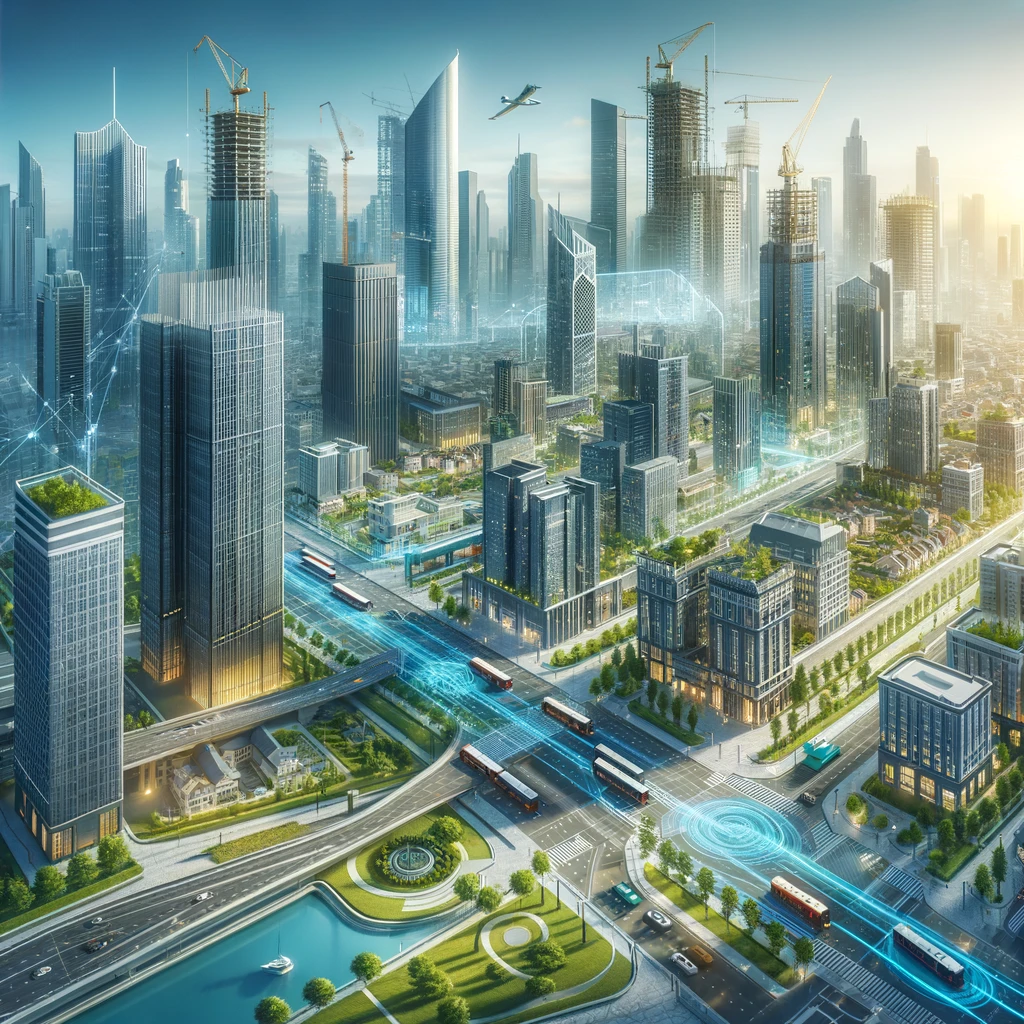
Transportation and Mobility: Catalysts for Economic Growth
Effective transportation and mobility solutions are essential for the economic prosperity of urban areas. Efficient public transit systems reduce congestion, lower pollution levels, and provide accessible transport options for all community members. A well-integrated transportation network also enhances connectivity, making it easier for people to move around the city and for goods to be transported efficiently.
Investment in public transportation infrastructure, such as buses, subways, and bike-sharing programs, can significantly reduce the economic burden of traffic congestion. For instance, cities like Copenhagen and Amsterdam have prioritized cycling infrastructure, fostering a culture of biking that reduces traffic and enhances the health and well-being of residents.
In addition, leveraging smart technology in transportation can yield significant economic benefits. Innovations like intelligent traffic management systems, autonomous vehicles, and ride-sharing platforms enhance mobility and reduce travel time. They can also provide valuable data insights for urban planners to optimize city layouts and transit routes.
Finally, increasing walkability should be a priority. Designing pedestrian-friendly streetscapes with wide sidewalks, safe crossings, and amenities like benches and greenery can bolster local economies. Walkable cities encourage foot traffic to local businesses, reduce reliance on cars, and improve public health outcomes.
The Role of Housing in Economic Development
Housing is intrinsically linked to economic development. Providing affordable and adequate housing options for residents is a paramount aspect of urban planning. Without accessible housing, cities can face issues like increased homelessness, social inequality, and economic instability.
Increased investments in affordable housing projects can stimulate economic growth by creating construction jobs and generating demand for building materials and services. It also ensures that a broader segment of the population can reside in the city, contributing to a diversified and inclusive labor force.
Mixed-income housing developments are particularly beneficial. They promote social integration and reduce the socioeconomic divides within urban communities. By offering a range of housing options, these developments can attract a mix of residents, fostering inclusive and vibrant neighborhoods.
Moreover, implementing policies that protect tenants and support homeownership can create a stable residential base, essential for long-term economic growth. Measures such as rent controls, housing vouchers, and down payment assistance programs enable more people to live securely and invest in their communities.
Lastly, smart housing solutions can address modern urban challenges. Sustainable building practices, energy-efficient homes, and the incorporation of renewable energy sources reduce environmental impacts and lower living costs, making cities more attractive for residents and businesses alike.
The Impact of Technology and Innovation
Technology and innovation are powerful drivers of urban economic development. The rise of smart cities—urban areas that use data and technology to improve the quality of life for residents—is transforming how cities operate and grow. These advancements encompass various aspects, from energy management to public services.
Implementing smart city technologies can enhance the efficiency of urban systems. For example, smart grids optimize electricity consumption, reducing costs for both consumers and providers. Similarly, smart water management systems ensure efficient use of water resources, crucial for both economic activities and sustainability.
Beyond infrastructure, technology drives economic development by enabling new business models and industries. The proliferation of digital platforms, e-commerce, and telecommuting has reshaped urban economies, creating opportunities for startups and tech companies to thrive.
Additionally, cities can foster an innovation ecosystem by supporting research and development hubs, tech incubators, and innovation districts. These areas, typically clustered around universities or research institutions, promote collaboration and knowledge exchange, driving economic growth through innovation and entrepreneurship.
Finally, ensuring digital inclusion is vital. Providing universal access to high-speed internet and digital literacy programs enables all residents to participate in the digital economy. This inclusivity fuels economic growth by tapping into the talent and creativity present across diverse communities.
Environmental Sustainability and Economic Growth
Environmental sustainability is a cornerstone of resilient and prosperous urban economies. Sustainable urban planning enhances economic opportunities while preserving natural resources and reducing environmental impacts. Renewable energy, green building practices, and sustainable waste management are critical components of this approach.
Investing in green infrastructure—such as parks, green roofs, and urban forests—provides multiple economic benefits. It improves air and water quality, reduces the heat island effect, and enhances the aesthetic appeal of urban areas, making them more attractive to residents and businesses.
Renewable energy projects, such as solar and wind farms, create green jobs and drive economic growth while reducing carbon emissions. Encouraging energy efficiency through programs and incentives also lowers operational costs for businesses and households, promoting economic stability.
Sustainable transportation options, such as electric vehicles and public transit systems, reduce dependence on fossil fuels and support the transition to a low-carbon economy. These measures align with global efforts to combat climate change, positioning cities as leaders in sustainability while attracting environmentally conscious investors and residents.
Finally, promoting circular economy practices—where waste is minimized, and materials are reused—can lead to significant economic savings and job creation. By fostering industries around recycling, remanufacturing, and sustainable product design, cities can build more resilient economies that are less dependent on finite resources.
Conclusion: Towards Sustainable Urban Economic Development
Urban planning and economic development are intricately linked, and the success of one often hinges on the effectiveness of the other. Cities that implement thoughtful, innovative strategies for growth can create dynamic and resilient urban environments that cater to the needs of their populations while fostering economic prosperity.
Investing in robust infrastructure, promoting sustainable transportation, providing affordable housing, leveraging technology, and committing to environmental sustainability are essential strategies. By prioritizing these areas, urban planners and policymakers can ensure that cities are well-equipped to tackle future challenges and capitalize on opportunities.
Moreover, involving the community in the planning process ensures that development aligns with residents’ needs and aspirations, fostering a sense of ownership and commitment to the city’s growth. Transparent governance, coupled with inclusive policies, ensures that the benefits of economic development are widely shared, reducing inequality and enhancing social cohesion.
As cities worldwide continue to evolve, the integration of urban planning and economic development remains a cornerstone of sustainable growth. By embracing innovation, inclusivity, and sustainability, cities can build prosperous futures for their residents and set benchmarks for thriving, resilient urban economies.
Frequently Asked Questions
1. What is the role of urban planning in economic development?
Urban planning plays a crucial role in economic development by creating a framework within which cities and towns can grow and evolve in a sustainable and organized manner. It involves designing land use, infrastructure, transportation, and public spaces in a way that enhances the economic opportunities and quality of life for residents. By strategically planning for business zones, residential areas, and green spaces, urban planners help to foster environments that attract investment, boost job creation, and support a thriving community. Effective planning also helps in anticipating future needs and challenges, ensuring that cities can adapt and continue to prosper over time.
2. How can urban planning support sustainable economic growth in the face of climate change?
Urban planning can be an essential tool in supporting sustainable economic growth while addressing the challenges posed by climate change. Planners can incorporate climate-sensitive strategies by designing cities that reduce carbon footprints, improve energy efficiency, and enhance resilience to environmental impacts. By prioritizing public transportation, encouraging mixed-use developments, and preserving natural habitats, urban planning can reduce greenhouse gas emissions and pollution. Additionally, implementing policies that promote green building practices and renewable energy sources can spur economic activity in emerging sectors. Such planning not only safeguards the environment but also attracts eco-friendly businesses and residents who value sustainability, thus boosting economic development.
3. What strategies can urban planners use to accommodate rapid population growth?
Urban planners face significant challenges due to rapid population growth, necessitating a variety of strategies to accommodate expanding urban populations effectively. One approach is to encourage higher-density developments that make efficient use of limited space, such as vertical housing and multi-use buildings. Implementing comprehensive public transportation systems can alleviate traffic congestion and provide reliable mobility options for a growing population. Planners can also focus on infrastructure improvements like expanding water supply, sewage systems, and power grids to support new residents. Addressing housing affordability is crucial, ensuring that economic growth does not come at the cost of community displacement. Ensuring access to services, such as schools, healthcare, and parks, can ensure that the growing population has all necessary amenities readily available.
4. How do technological advancements impact urban planning and economic development?
Technological advancements are transforming urban planning and economic development by offering innovative tools and approaches to design smarter, more efficient cities. Smart city technologies, like IoT (Internet of Things) devices, provide real-time data that can optimize traffic flow, energy use, and public safety. Digital platforms enable more efficient communication between planners and the public, fostering greater community engagement in planning processes. Advanced modeling and simulation software allow urban planners to visualize and analyze the impact of proposed developments before implementation. Economically, technology spurs growth by nurturing digital economies, enhancing logistics and supply chain efficiencies, and creating new opportunities for business innovation. By embracing technology, cities are more equipped to respond to current challenges and future demands, promoting sustainable and robust economic growth.
5. What are some common challenges urban planners face when balancing economic activities with community well-being?
Urban planners often encounter challenges when trying to balance economic activities with the well-being of communities. One of the key challenges is managing land use conflicts, where the interests of different stakeholders—such as developers, residents, and environmentalists—may clash. Ensuring affordable housing options while promoting economic development poses another significant challenge, as rising property values can lead to gentrification and displacement of low-income residents. Addressing environmental concerns is also critical, as increased economic activities often lead to pollution and resource depletion. Planners must engage diverse community voices in the decision-making process to equitably address these concerns. Additionally, managing infrastructure demands amid tight budgets requires innovative financing and prioritization strategies. By navigating these challenges, urban planners can create harmonious environments where economic vitality supports rather than detracts from community well-being.


