

Urban planning is no longer just about developing land or building infrastructure. In a world increasingly aware of environmental challenges and the need for sustainable practices, urban planning has evolved into a complex, multidisciplinary field that integrates social, economic, and environmental sustainability. This article will explore some of the best practices in sustainable urban planning that aim to create better living conditions for all while minimizing environmental impact.
Introduction
As the global population continues to grow, particularly in urban areas, the importance of sustainable urban planning becomes ever more crucial. By 2050, it is projected that nearly 70% of the world’s population will live in urban areas. This rapid urbanization presents both opportunities and challenges, including the need for sustainable housing, efficient public transportation, effective waste management, and the conservation of natural resources. Sustainable urban planning strives to balance these needs by promoting development that is socially inclusive, economically viable, and environmentally responsible. By implementing best practices in urban planning, cities can ensure a higher quality of life for their residents while protecting the environment for future generations.
Green Infrastructure
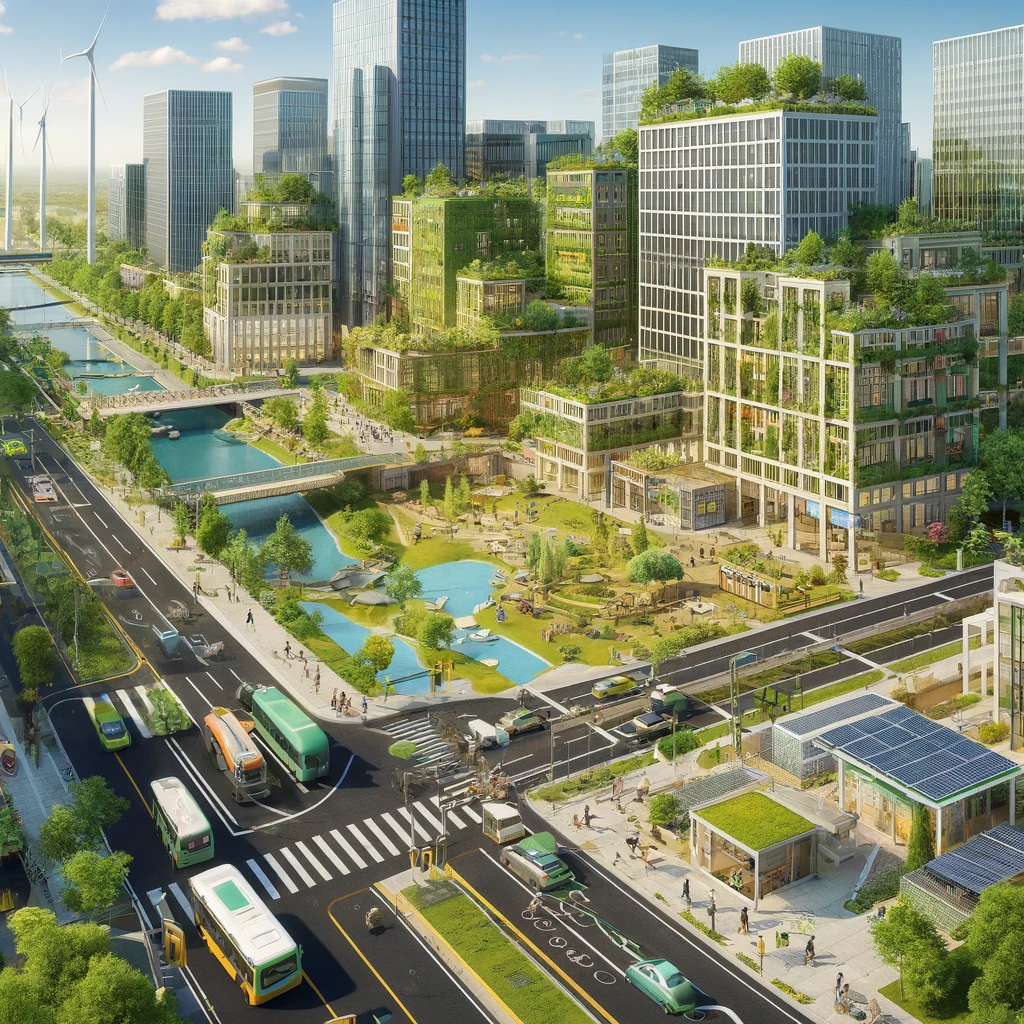
Green infrastructure refers to an interconnected network of natural and semi-natural areas, designed and managed to deliver a wide range of ecosystem services. This can include parks, green roofs, community gardens, and permeable surfaces that reduce stormwater runoff. Green infrastructure provides multiple benefits: it helps manage urban heat islands, reduces flooding risks, improves air and water quality, and enhances biodiversity. Incorporating green infrastructure into urban planning not only improves environmental sustainability but also contributes to the physical and mental well-being of residents. For example, New York City’s High Line, a linear park built on a disused railway, has become a model of how green infrastructure can transform urban spaces into vibrant community assets.
Efficient Public Transportation Systems
Efficient public transportation systems are a cornerstone of sustainable urban planning. They reduce reliance on private vehicles, leading to lower greenhouse gas emissions and reduced traffic congestion. Investments in public transit infrastructure, such as bus rapid transit systems, light rail, and bicycle-sharing programs, are essential to creating a more sustainable urban environment. These systems should be designed to be accessible, affordable, and safe for all residents. For instance, Curitiba in Brazil is renowned for its innovative Bus Rapid Transit (BRT) system, which has significantly reduced traffic congestion and pollution, serving as a model for cities worldwide.
Mixed-Use Development
Mixed-use development is a principle that combines residential, commercial, and recreational spaces within the same area. This type of development fosters vibrant, walkable communities where people can live, work, and play without the need for long commutes. Mixed-use developments reduce urban sprawl, decrease the need for extensive road networks, and encourage the use of public transportation and non-motorized travel methods like walking and cycling. Policies that promote mixed-use development can significantly enhance the sustainability of urban areas. An example of successful mixed-use development is the city of Vancouver’s Downtown area, which integrates various types of land use, creating a dynamic urban environment.
Sustainable Building Practices
Sustainable building practices play a critical role in reducing the environmental impact of urban development. These practices include the use of energy-efficient materials, water-saving fixtures, renewable energy sources, and strategies for reducing waste during construction. LEED (Leadership in Energy and Environmental Design) certification is one of the most widely recognized standards for sustainable building design. Sustainable buildings not only lower the ecological footprint of urban areas but also provide healthier living environments for residents. A notable example is the Bullitt Center in Seattle, often referred to as the “greenest commercial building in the world,” which incorporates a wide range of sustainable features, from rainwater harvesting systems to solar panels.
Community Engagement and Social Equity
Community engagement is a fundamental aspect of sustainable urban planning. It ensures that the voices of all residents, especially marginalized and vulnerable groups, are heard and considered in the planning process. Policies and planning practices must promote social equity by providing equal access to resources, opportunities, and amenities for all community members. Engaging communities in the planning process leads to more inclusive and resilient urban developments that reflect the needs and aspirations of the people who live there. Boston’s Imagine Boston 2030 initiative is a prime example of how comprehensive community engagement can shape a city’s long-term planning vision, focusing on affordability, mobility, and inclusivity.
Smart Cities and Technology
Advancements in technology are playing an increasingly vital role in sustainable urban planning. Smart city technologies, such as sensors, data analytics, and Internet of Things (IoT) devices, allow urban planners to monitor and optimize urban systems in real time. These technologies can enhance energy efficiency, improve waste management, and streamline public transportation systems. Additionally, smart city initiatives can provide residents with real-time information to help them make more sustainable choices in their daily lives. For example, Barcelona has implemented a range of smart city projects, including smart street lighting and waste management systems that have significantly improved the city’s sustainability and efficiency.
Conclusion
Implementing best practices in sustainable urban planning is essential for creating cities that are livable, resilient, and environmentally friendly. From green infrastructure and efficient public transportation to mixed-use development, sustainable building practices, community engagement, and the integration of smart technologies, there are numerous strategies that urban planners can employ to achieve these goals. By prioritizing sustainability in urban planning, cities can address pressing challenges such as climate change, resource depletion, and social inequality, ensuring a better quality of life for current and future generations. As we continue to innovate and adopt sustainable practices, the vision of thriving, sustainable urban environments can become a reality.
Frequently Asked Questions
1. What is sustainable urban planning, and why is it important?
Sustainable urban planning refers to designing and developing urban areas in a way that is environmentally responsible, socially inclusive, and economically viable. This approach seeks to create a harmonious balance between human needs and the planet’s health, aiming to ensure that cities remain livable for future generations. It is essential because urban areas are growing rapidly and already account for a significant portion of global energy consumption and greenhouse gas emissions. As more people move into cities, the demand for resources will increase, putting further strain on the environment. Sustainable urban planning helps mitigate these impacts by promoting efficient land use, reducing waste, enhancing green spaces, and encouraging public transportation, all of which contribute to a reduced carbon footprint and improved quality of life.
2. What are some key principles of sustainable urban planning?
The key principles of sustainable urban planning involve a holistic approach that integrates social, environmental, and economic dimensions. Firstly, it focuses on reducing the environmental impact of buildings and infrastructure by using sustainable materials and energy-efficient technologies. Secondly, it emphasizes the importance of mixed land use, which blends residential, commercial, and recreational spaces to minimize the need for long commutes and foster community interaction. Thirdly, sustainable urban planning encourages the development of comprehensive public transportation systems, reducing reliance on private cars and thereby decreasing emissions and congestion. Fourthly, it integrates green infrastructure, such as parks, green roofs, and urban forests, to enhance biodiversity and offer recreational spaces for city dwellers. Lastly, it involves participatory planning processes that engage communities in decision-making, ensuring that development meets the needs and aspirations of all residents.
3. How can cities improve public transportation as part of sustainable urban planning?
Cities can improve public transportation by investing in efficient, accessible, and affordable transit options. This can involve expanding and modernizing existing systems, such as buses, subways, and trains, to make them more reliable and attractive to commuters. Implementing dedicated bus lanes and priority signaling at intersections can significantly enhance the speed and efficiency of public transit. Additionally, incorporating innovative technologies such as real-time tracking and contactless payment systems can improve user experience. Sustainable urban planning also involves creating an integrated transportation network that includes pedestrian-friendly pathways and bicycle lanes, encouraging active travel modes and reducing the dependency on cars. Moreover, cities can adopt policies that incentivize the use of public transportation, such as subsidized fares for low-income groups and students, or congestion pricing schemes to discourage car use in busy urban centers. By making public transportation more accessible and appealing, cities can cut down on emissions, reduce traffic congestion, and improve air quality.
4. What role do green spaces play in sustainable urban planning?
Green spaces are an integral part of sustainable urban planning as they provide numerous environmental, social, and health benefits. Environmentally, parks and green areas act as the lungs of a city, absorbing carbon dioxide and releasing oxygen, thereby improving air quality. They also help manage stormwater by allowing rain to soak into the ground, reducing the impact of urban flooding. Socially, green spaces serve as gathering places for recreation and community events, fostering social ties and reducing the urban heat island effect by providing shade and cooling areas during hot weather. From a health perspective, access to green spaces is linked to better physical and mental well-being, offering residents a place to exercise, relax, and unwind. Sustainable urban planning integrates a network of green spaces within the urban landscape to ensure that every resident has access to these vital areas for recreation and ecological connectivity. By doing so, cities not only become more pleasant places to live but also promote biodiversity and the conservation of urban wildlife habitats.
5. How can urban planning contribute to economic sustainability?
Urban planning can significantly contribute to economic sustainability by fostering environments that attract businesses and investment while also providing opportunities for job creation. By implementing mixed-use developments, cities can ensure that commercial, residential, and recreational areas coexist, reducing travel times and creating vibrant, thriving economic hubs. Efficient transportation systems reduce infrastructure costs associated with road expansions and maintenance and encourage workforce mobility, widening access to job markets. Sustainable urban planning also promotes affordable housing projects to support diverse communities and enable economic participation from all societal sectors. Furthermore, green building practices and eco-friendly developments can spur innovation and investments in new technologies and industries, generating new business opportunities and creating jobs in emerging sectors. By prioritizing sustainable practices, cities can enhance their economic resilience and adaptability, providing a stable foundation for long-term prosperity.


