
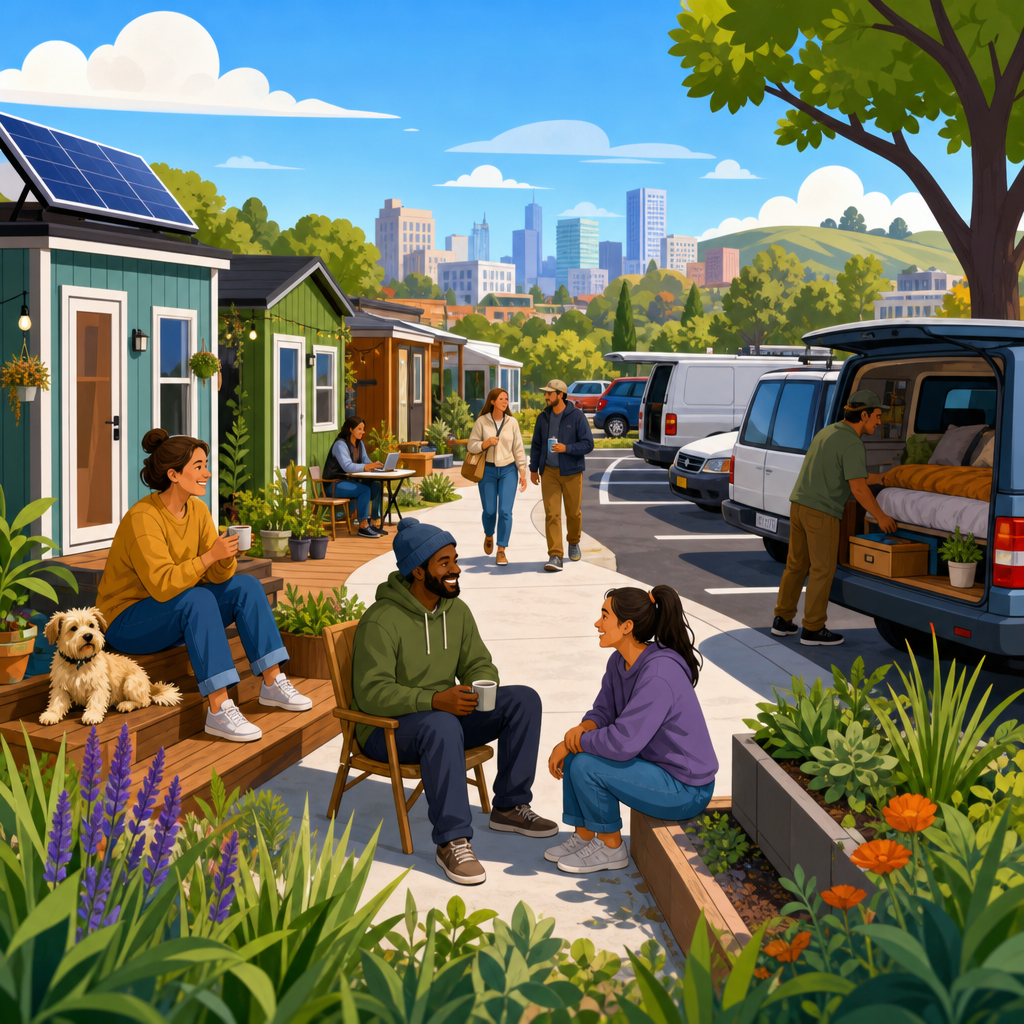
Sustainable encampment alternatives and safe parking programs are practical responses to visible homelessness that aim to improve safety, public health, and long-term housing outcomes without relying solely on sweeps, citations, or emergency shelters. In city planning, an encampment alternative is a managed setting created to reduce the harms associated with unsanctioned outdoor living, while a safe parking program designates legal places where people living in cars, vans, or RVs can stay overnight with rules, sanitation, and access to services. These approaches matter because homelessness has changed: many people are unsheltered, shelter capacity is limited, rents remain high, and traditional systems often fail people who cannot tolerate congregate shelter, need to stay near work or school, or own a vehicle that functions as both transportation and home.
I have worked with local governments and service providers evaluating these programs, and the central lesson is straightforward: they work best when cities treat them neither as permanent housing nor as symbolic enforcement substitutes. They are interim interventions within a broader homelessness response system. A well-designed program lowers immediate risk, creates a predictable point of contact for outreach teams, reduces neighborhood conflict, and improves the odds that participants can move toward case management, health care, income supports, and eventually permanent housing. A poorly designed program simply relocates visible poverty without reducing instability.
Understanding the terminology is essential. Managed outdoor shelter, sanctioned camping, tiny home villages, bridge housing, navigation centers, and safe parking are related but distinct models. Managed outdoor shelter usually refers to regulated tent or cabin sites with staffing, hygiene facilities, security, and service connections. Tiny home villages provide small private structures, often insulated and lockable, but typically still rely on shared bathrooms and communal spaces. Navigation centers are low-barrier indoor shelters designed for rapid service engagement and housing placement. Safe parking programs serve households residing in vehicles, usually with overnight stays, restrooms, trash removal, and rules around arrival times, guests, generators, and vehicle operability. The differences matter because each model suits different populations, sites, budgets, and legal constraints.
For urban planners and policymakers, the topic matters for three reasons. First, public health concerns are immediate: unmanaged encampments can expose residents to weather, fire risk, sanitation problems, and victimization. Second, legal and constitutional constraints affect how jurisdictions regulate public space and enforce camping restrictions. Third, fiscal realities force choices. A city can spend substantial sums on repeated cleanups, policing, and emergency medical responses while achieving little durable improvement. Redirecting a portion of that spending toward managed alternatives can produce better outcomes if programs are aligned with housing strategy, behavioral health services, and regional coordination.
What Sustainable Encampment Alternatives Include
Sustainable encampment alternatives are structured, lower-barrier environments intended to reduce harm while people wait for housing or stabilize enough to enter it. The most common options include managed tent sites, pallet or modular cabin villages, tiny home villages, converted motel bridge housing, and designated outdoor shelter with intensive onsite services. Sustainability in this context does not simply mean environmental performance, though energy efficiency and waste management matter. It means operational durability, neighborhood compatibility, clear governance, and measurable exits to housing rather than indefinite warehousing.
In practice, the strongest programs share several features. They have a defined target population, such as single adults, couples, pet owners, or people exiting a specific encampment. They establish written eligibility criteria and stay expectations. They include sanitation infrastructure, potable water, regular waste pickup, and safe storage. They provide onsite staffing every day, not sporadic outreach. They use housing-focused case management with realistic caseloads. They coordinate with street medicine teams, mental health clinicians, and coordinated entry systems. They also maintain transparent community relations through hotlines, advisory groups, and published operating standards.
Real-world examples show why design details matter. Some West Coast cities have opened tiny home villages with lockable units and centralized services for people who repeatedly declined congregate shelter. Participants often accepted those placements because privacy, pet accommodation, and autonomy reduced barriers. Other jurisdictions created sanctioned tent sites quickly but underinvested in management, leading to conflict, resident turnover, and weak housing placement rates. The difference was not the concept alone; it was staffing, rules enforcement, and the availability of pathways onward.
Location is one of the most contested planning choices. Sites near transit, clinics, and employment improve access and reduce isolation. Yet parcels near services may also trigger stronger neighborhood opposition. Industrial zones can be easier to permit, but they may expose residents to traffic, noise, or environmental hazards and make daily travel harder. Experienced planners use objective siting criteria: proximity to buses, distance from schools where required, utility access, emergency vehicle circulation, drainage conditions, and compatibility with surrounding uses. They also plan for winterization, shade, fire breaks, ADA accessibility, and women’s safety from the first sketch, not as afterthoughts.
How Safe Parking Programs Work
Safe parking programs are designed for people whose vehicles are their last remaining form of shelter. That group includes employed adults priced out of rentals, families trying to keep children in the same school district, older adults on fixed incomes, veterans, and people recovering from medical crises or job loss. A safe parking site typically offers legal overnight parking, bathrooms, handwashing, trash service, and a staffed check-in process. Better programs add showers, electricity for charging devices, Wi-Fi, transportation passes, and direct connections to benefits and housing navigation.
The most effective model is simple: reduce nightly uncertainty so households can focus on stabilization. When people no longer fear tickets, towing, or late-night displacement, they sleep more consistently, show up to work, keep school routines, and remain reachable by case managers. That predictability is valuable from a policy perspective because vehicle dwellers are often highly mobile and can disappear from fragmented service systems. A designated site creates a stable point of engagement without forcing people to surrender the vehicle they rely on.
Programs vary by operator and site type. Faith-based organizations often host small lots with volunteer support. Nonprofits may operate multiple sites under city contract. Some municipalities use public lots, transit-adjacent parcels, or underused government property. Rules usually address insurance, registration where feasible, quiet hours, no dumping, no open flames, and maximum stay length. Yet rigid rules can backfire if they exclude the very people most at risk, such as those with inoperable vehicles, poor documentation, or untreated behavioral health conditions. Good program design balances safety with realistic accommodation.
| Program Type | Best Fit | Core Features | Main Limitation |
|---|---|---|---|
| Managed tent site | People comfortable outdoors who need immediate low-barrier placement | Sanitation, staffing, storage, service referrals | Weather exposure and limited privacy |
| Tiny home village | Individuals or couples needing privacy and security | Lockable units, shared facilities, onsite case management | Higher capital and operating costs |
| Navigation center | People ready for intensive service connection indoors | Low-barrier shelter, housing navigation, clinical access | Not suitable for everyone who avoids congregate settings |
| Safe parking lot | Vehicle dwellers seeking legal overnight refuge | Parking spaces, restrooms, staffing, case management | Limited to households with vehicles |
One operational lesson I have seen repeatedly is that safe parking succeeds when transportation and homelessness teams work together. Traffic engineering, lot lighting, stormwater controls, and neighborhood circulation affect operations as much as social services do. If a site entrance causes queueing on a narrow street or lacks turning space for larger RVs, conflict appears quickly. If lighting is too dim, residents feel unsafe; if too bright, neighbors object. These are solvable site planning issues, but they require urban planning discipline alongside social service expertise.
Policy, Legal Standards, and Funding Choices
Cities considering encampment alternatives and safe parking programs must navigate land use rules, building and fire codes, public health standards, environmental review, and homelessness law. In many states, emergency declarations or temporary ordinances can speed approval, but shortcuts still require minimum health and safety protections. Fire marshal review is especially important where tents, heaters, cooking equipment, or closely spaced sleeping units are involved. For vehicle sites, drainage, hazardous waste handling, and generator policies need clear standards. Programs also need written grievance procedures, data privacy policies, and agreements defining operator responsibilities.
Legal context matters beyond permits. Court decisions and state laws have constrained how jurisdictions enforce anti-camping rules when adequate shelter is unavailable or inaccessible. That does not eliminate a city’s authority to regulate public space, but it changes the practical policy calculus. If enforcement cannot stand on its own, cities need lawful alternatives. Managed sites and safe parking can strengthen that position only when they are genuinely accessible, appropriately located, and not burdened by exclusionary conditions that make them unusable for many unsheltered residents.
Funding is often a blend of local general funds, state homelessness grants, federal emergency dollars, philanthropy, and sometimes health system partnerships. Capital costs differ sharply by model. A bare-bones lot with portable toilets costs far less than a tiny home village with utility connections and communal buildings, but lower upfront cost can mean weaker outcomes if service capacity is inadequate. The most financially sound approach is to compare total system cost, including police response, sanitation cleanup, emergency room use, and repeated encampment resolutions. Cities that only compare line-item shelter costs miss the larger fiscal picture.
Performance measurement should be built in from the start. Useful metrics include occupancy, average length of stay, exits to permanent housing, income gains, benefit enrollment, returns to unsheltered homelessness, incident rates, and neighborhood complaint trends. Data should be disaggregated by household type, race, age, disability status, and vehicle type where relevant. Without that granularity, inequities stay hidden. Public dashboards can improve accountability, but only if definitions are consistent and operators are not rewarded for easy placements while avoiding higher-need participants.
What Makes These Programs Effective and Where They Fall Short
The best sustainable encampment alternatives and safe parking programs are low-barrier, service-rich, and explicitly temporary. Low-barrier means accepting pets, partners, possessions, and varied schedules whenever possible. Service-rich means more than handing out referrals; it means warm handoffs to housing specialists, document recovery, employment support, behavioral health care, and landlord engagement. Temporary means the operator and the city keep housing exits as the primary outcome rather than allowing sites to become permanent islands of managed poverty.
There are clear benefits. Residents gain safety, stability, and legal refuge. Outreach workers know where to find people. Emergency services can respond more efficiently. Nearby public spaces may become cleaner and less conflict-ridden. School attendance can improve for families in vehicles because they are no longer moved each night. Employers benefit when workers are more rested and reachable. In planning terms, these programs reduce unmanaged risk while buying time for slower housing production and subsidy expansion.
There are also limitations. These programs do not solve the housing shortage. They can be expensive per household if scale is too small. Poorly chosen sites can concentrate poverty in isolated areas. Strict curfews or sobriety rules may exclude people most in need. Some residents cycle out without securing housing, especially in tight rental markets with low vacancy rates and high screening barriers. Neighborhood backlash can consume staff time and distort decision-making. For those reasons, cities should never present safe parking or managed encampments as stand-alone answers.
The most successful jurisdictions link interim programs to a broader strategy: prevention for households at risk, diversion from shelter when safe alternatives exist, rapid rehousing for people with shorter homelessness histories, permanent supportive housing for people with disabling conditions, and preservation of existing affordable units. They also coordinate regionally because homelessness does not stop at city boundaries. If one jurisdiction creates services and the next relies mainly on enforcement, the system becomes unstable and politically brittle.
How Urban Planning and Policy Can Move Forward
For planners, the path forward is disciplined and pragmatic. Start with a clear unsheltered homelessness assessment that distinguishes people in tents, vehicles, and RVs; identifies service gaps; and maps likely host sites near transit and essential destinations. Engage providers, public health officials, people with lived experience, and adjacent neighborhoods before finalizing locations. Use standard operating plans that specify staffing ratios, sanitation schedules, emergency protocols, and community communication channels. Procure operators with demonstrated experience, not just good intentions. Most importantly, pair every new site with a housing placement plan and a funding strategy that extends beyond pilot-period enthusiasm.
Sustainable encampment alternatives and safe parking programs are not shortcuts around housing policy. They are tools for reducing harm, restoring order, and creating humane pathways off the street when designed with care and operated with discipline. Cities that define the target population, choose sites rationally, fund onsite services, and measure outcomes honestly get better results than cities that improvise under pressure. If your community is weighing these options, focus on evidence, operations, and housing exits first. That is how interim shelter becomes a bridge instead of a dead end.
Frequently Asked Questions
What are sustainable encampment alternatives, and how are they different from unsanctioned camps?
Sustainable encampment alternatives are organized, managed places designed to reduce the immediate harms of unsheltered homelessness while creating a pathway to more stable housing. Unlike unsanctioned camps, which often emerge without access to sanitation, waste collection, security, or coordinated services, these alternatives are intentionally planned around health, safety, and accountability. They may include features such as hygiene facilities, clean water, trash pickup, storage, case management, and clear site rules. The goal is not to make homelessness permanent, but to stabilize people in the short term so they are easier to reach, safer from crisis, and better connected to housing and support services.
In practice, these settings can take several forms, including managed outdoor sites, tiny home villages, sanctioned camping areas, or transitional communities with on-site staffing. What makes them “sustainable” is not simply allowing camping in a different location. It is the presence of operations planning, resident engagement, neighborhood coordination, and an explicit strategy for moving people toward better outcomes over time. Cities often consider these models when emergency shelters are full, inaccessible, or poorly matched to the needs of specific groups, such as couples, people with pets, or individuals who avoid congregate shelter because of trauma, safety concerns, or restrictive rules.
How do safe parking programs work for people living in cars, vans, or RVs?
Safe parking programs create legal, designated places where people living in vehicles can stay overnight without fear of being moved along, cited, or towed, as long as they follow program requirements. These sites are typically located on public land, nonprofit property, faith-based campuses, or commercial lots that have agreed to participate. A well-run program usually offers more than just a parking space. It may include access to restrooms, handwashing stations, showers, security, case management, referrals to healthcare and benefits, and help finding permanent or transitional housing. Some programs operate only at night, while others serve people who need a 24-hour location because of disability, work schedules, or family needs.
Safe parking is especially important because vehicle residency occupies a gray area between homelessness and shelter. A car, van, or RV may provide more privacy and security than sleeping outdoors, but it is not a stable housing solution. Participants still face risks such as mechanical breakdowns, fines, harassment, limited sanitation, and exposure to extreme weather. By offering a sanctioned place to stay, safe parking programs can reduce neighborhood conflict, improve public health conditions, and help service providers maintain consistent contact with participants. For many households, especially people who are employed, families with children, and older adults on fixed incomes, safe parking can serve as a practical bridge while they work toward something more permanent.
Do encampment alternatives and safe parking programs actually improve public health and safety?
Yes, when they are properly designed and consistently managed, these programs can significantly improve both public health and safety compared with unmanaged street encampments or dispersed vehicle habitation. Public health benefits often include better access to sanitation, fewer unmanaged waste issues, safer food storage, and more regular contact with outreach workers and healthcare providers. This reduces the risk of communicable disease spread, untreated injuries, exposure-related illness, and environmental hazards. When people have access to toilets, showers, trash removal, and basic hygiene services, the surrounding area also tends to experience fewer visible health concerns that commonly drive complaints and crisis responses.
From a safety perspective, designated sites can reduce vulnerability to assault, theft, fire risk, and dangerous interactions with traffic or law enforcement. Staff presence, clear site rules, and participant screening policies can help create a more predictable environment. Safe parking sites can also lessen unsafe overnight parking patterns near schools, parks, or narrow residential streets by directing vehicle dwellers to locations that are better equipped to handle their needs. That said, success depends heavily on program quality. A poorly managed site without staffing, services, sanitation, or community coordination may simply relocate the problem. The strongest programs are those that combine day-to-day operations with housing navigation, behavioral health support, and a realistic plan for exits into more stable living arrangements.
Why do cities use these approaches instead of relying only on sweeps, citations, or emergency shelters?
Cities turn to sustainable encampment alternatives and safe parking programs because traditional responses often do not resolve the underlying problem. Sweeps and citations may temporarily clear a location, but they rarely reduce homelessness on their own. People typically move to another block, another lot, or another jurisdiction, often losing important documents, medications, survival gear, and contact with service providers in the process. This can make it harder, not easier, to connect them to housing. Emergency shelters remain an important part of the system, but they are not always available, accessible, or appropriate for everyone. Some shelters have limited beds, strict curfews, separation by gender, restrictions on pets or possessions, or environments that feel unsafe for people with trauma histories.
Encampment alternatives and safe parking programs give local governments a practical middle path between doing nothing and relying solely on enforcement. They can reduce visible disorder while preserving continuity of care, which is crucial for housing placement and case management. These models also help cities use resources more strategically by concentrating sanitation, outreach, and support services in designated settings instead of responding repeatedly through emergency systems. In many communities, they are part of a broader homelessness response that includes shelter, prevention, rapid rehousing, permanent supportive housing, and behavioral health services. They are not a substitute for affordable housing production, but they can serve as an immediate harm-reduction tool while longer-term housing solutions are developed.
What makes a safe parking program or encampment alternative effective in the long term?
Long-term effectiveness depends on treating these programs as structured interventions rather than indefinite holding areas. Strong programs begin with clear goals: improve safety, reduce public health risks, stabilize participants, and move people toward housing as quickly as possible. To do that, they need reliable funding, skilled staff, clear operating standards, and partnerships across agencies and nonprofits. Effective sites usually include intake and assessment, individualized case planning, housing search assistance, transportation support, document replacement help, benefit enrollment, and connections to mental health, substance use treatment, and employment services when needed. Data tracking also matters. Cities should measure outcomes such as length of stay, exits to housing, returns to homelessness, participant wellbeing, and neighborhood impacts.
Community trust is another key factor. Programs tend to work better when local residents and businesses understand how the site will operate, who is responsible for oversight, and how concerns will be addressed. Transparency about rules, security, sanitation schedules, and performance results can reduce conflict and build credibility. Just as important, effective programs are grounded in dignity. Residents are more likely to engage with services when they are treated respectfully and given some level of autonomy, privacy, and predictability. In the long run, the best encampment alternatives and safe parking programs are those integrated into a larger housing strategy, where temporary stabilization is paired with realistic pathways to permanent homes rather than managed as an endpoint in itself.


