
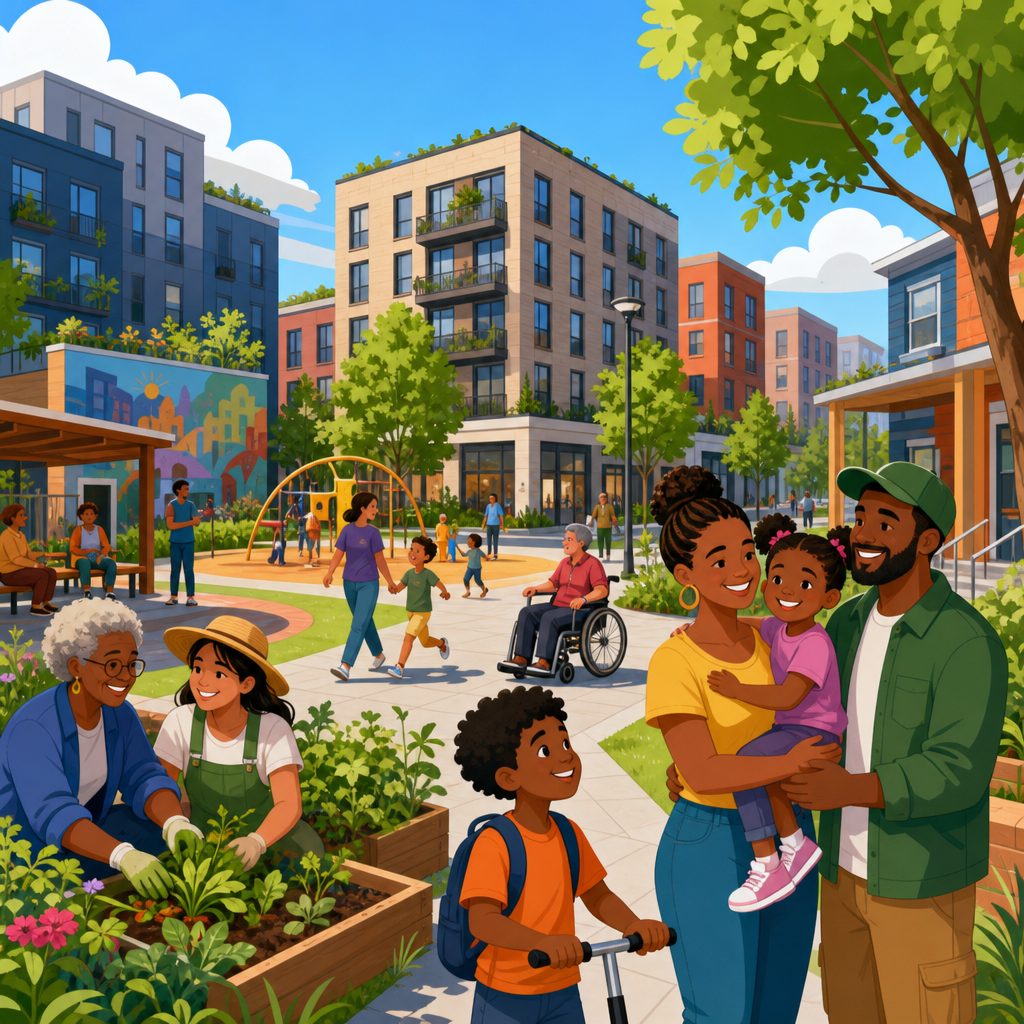
Public housing redevelopment without resident displacement is the standard that separates equitable neighborhood investment from renewal that simply moves poverty elsewhere. In practice, the phrase means modernizing or rebuilding publicly assisted housing while guaranteeing that current residents can remain in place during construction, return after phased work, or transfer to comparable homes without losing affordability, community ties, or legal protections. I have worked on housing and planning projects where the hardest part was not drawing a new site plan; it was structuring the financing, relocation process, resident engagement, and management rules so the original households were still there when the ribbon cutting happened. That is why this topic matters. Public housing authorities, city agencies, nonprofit developers, lenders, and resident leaders all say they support redevelopment, but good outcomes depend on operational details: right-to-return policies, one-for-one replacement, temporary relocation standards, accessible unit planning, school continuity, and transparent oversight. With aging public housing stock, rising repair backlogs, and increasing land pressure in many cities, redevelopment will continue. The central question is whether it can improve buildings without breaking communities. Good practice shows that it can, but only when resident protection is treated as a binding project requirement rather than a public relations promise.
What resident-centered redevelopment actually requires
Resident-centered redevelopment starts with a simple rule: no current household should be worse off because the property is improved. That rule sounds obvious, yet it requires specific safeguards. First, the project must preserve deep affordability, usually for households at very low incomes, not just create mixed-income housing that reduces the number of units available to former residents. Second, it must guarantee a real right to remain or return, documented in relocation plans, leases, and board approvals, with clear timelines and grievance procedures. Third, it must replace occupied units on a one-for-one basis unless residents explicitly support another approach and comparable housing is contractually secured nearby. Fourth, it must account for family size, disability accommodations, language access, and supportive service needs before any demolition or major rehabilitation begins.
In the strongest projects I have seen, these commitments are locked in early, before design is finalized and before financing applications are submitted. The reason is practical. Once tax credit syndicators, construction lenders, and local governments underwrite a project, changing unit counts or phasing later becomes expensive and politically difficult. A resident protection framework should therefore shape the capital stack from the outset. That includes relocation budgets, moving assistance, staffing for case management, legal counseling, and reserve funds to cover gaps if construction runs late. The Uniform Relocation Act may apply in some transactions, but relying only on minimum legal compliance is not enough. Good practice adds local protections that cover informal caregiving arrangements, transportation costs, storage, utility transfers, and culturally competent communication.
Definitions also matter. Redevelopment is not just demolition and replacement. It can include substantial rehabilitation, phased occupied rehab, infill construction, disposition with rehabilitation under federal programs, or conversion to long-term project-based subsidy through Section 8 structures. Likewise, displacement is not limited to formal eviction. It includes households who never make it back because temporary housing is too far from work, because screening criteria change, because rents or utility allowances shift, or because residents lose trust and self-select out. When agencies measure success only by completion dates and financing closings, these hidden losses go uncounted. Measuring the right things changes behavior. A strong redevelopment plan tracks return rates, school continuity, changes in commute times, resident satisfaction, lease-up barriers, and post-occupancy stability for at least several years after completion.
Policy principles that prevent displacement
Good practice rests on a small set of policy principles that should appear in every redevelopment framework. One-for-one replacement is the anchor. If 200 occupied public housing units are removed, 200 equally affordable replacement units for eligible households should exist in the final plan, with bedroom sizes that match actual resident need. Right to return is the second anchor. Residents should not be re-screened using stricter standards than applied before redevelopment, except for narrowly defined safety issues required by law. If a tenant was lease-compliant before relocation, that tenant should have a protected path back. Third, affordability must be durable. A twenty-year affordability period may satisfy some finance programs, but public housing residents need permanent or near-permanent protections, especially in rapidly appreciating markets.
A fourth principle is resident choice within a protected system. Some households want to stay on site through phased construction if possible. Others prefer a temporary voucher or transfer to another assisted unit. Good practice offers options without coercion. A fifth principle is transparency. Residents should receive written materials in plain language explaining construction phasing, temporary moves, estimated timelines, utility responsibilities, relocation payments, and appeal rights. Sixth is accountability. Independent relocation monitoring, regular board reporting, and public dashboards reduce the risk that commitments drift as budgets tighten.
Federal tools can support these principles, but they do not implement themselves. The Rental Assistance Demonstration, commonly called RAD, has enabled many authorities to address capital needs by converting operating subsidy structures, but outcomes vary significantly by local execution. HUD guidance, fair housing law, Section 504 accessibility requirements, the Fair Housing Act, and local tenant protections all shape project design. The best agencies integrate these obligations into one resident protection protocol instead of treating each as a separate checklist. That integrated approach is especially important for elderly residents, families with children, and households including members with disabilities, who face the highest risk when relocation planning is generic rather than individualized.
Phasing, relocation, and construction management in practice
The most important operational decision is whether redevelopment can be phased to keep residents on site or nearby. When land area permits, building a first replacement phase on underused land, parking lots, or adjacent parcels can sharply reduce disruption. Residents can move directly into new units, old buildings can then be removed, and later phases can proceed with fewer temporary moves. Where sites are tight, agencies need off-site relocation partnerships with nearby owners or other public housing properties. Distance matters. A temporary move of two miles is fundamentally different from a move across a region that disrupts schools, childcare, healthcare, and transit routines.
Relocation management should be treated as professional project delivery, not as an afterthought assigned to overextended property staff. Every household needs an interview, a written needs assessment, and a named relocation contact. Construction schedules should be translated into resident-specific move plans with contingency dates. In one project I advised, the authority reduced resident complaints dramatically after publishing building-by-building move calendars and holding weekly office hours with the general contractor and relocation staff together. That sounds simple, but it solved a major trust problem: residents could finally get one answer instead of three conflicting answers from different teams.
| Practice area | Poor practice | Good practice |
|---|---|---|
| Replacement units | Fewer deeply affordable units after redevelopment | One-for-one replacement with matching bedroom mix |
| Right to return | New screening standards block former residents | Automatic protected return for lease-compliant households |
| Relocation | Late notice and distant temporary housing | Early planning, nearby options, paid moving support |
| Accessibility | Accessible units added without consulting users | Individual accommodation plans and accessible routes verified |
| Communication | Technical notices few residents understand | Plain-language updates, interpreters, regular meetings |
| Oversight | Promises tracked informally | Public metrics, independent monitoring, grievance process |
Construction management also affects displacement risk. Delays caused by environmental remediation, utility conflicts, labor shortages, or financing gaps can turn temporary moves into long absences. Good practice therefore includes schedule contingency, strong owner representation, and realistic procurement timelines. Predevelopment due diligence is essential. Before relocation starts, teams should complete hazardous materials surveys, geotechnical work, utility coordination, entitlement mapping, and procurement planning. Too many resident protection failures begin with an unrealistic assumption that construction will proceed without interruption. When delays happen, housing authorities need written extension policies, temporary rent protections, and storage assistance so families are not penalized for events outside their control.
Financing and governance that align with resident protection
Redevelopment without displacement succeeds only when financing terms support the social commitments. Most public housing authorities cannot pay for major reconstruction from operating funds alone, so they assemble layered capital stacks that often include Low-Income Housing Tax Credits, tax-exempt bonds, HOME funds, Community Development Block Grant resources, local housing trust funds, energy incentives, and conventional debt. Each source brings deadlines and underwriting assumptions. If resident protections are not embedded in those assumptions, pressure builds to cut unit counts, accelerate moves, or narrow eligibility. The safer approach is to budget resident protection as a core development cost, just like foundation work or roofing.
Developers and authorities should underwrite relocation conservatively. That means including multiple moves if needed, wage replacement for time spent on mandatory appointments when permitted by local policy, utility connection fees, furniture replacement where unit layouts change, and support for digital access so residents can receive updates and complete paperwork. It also means recognizing operating implications after completion. New buildings may have different maintenance systems, security protocols, and amenity costs. If management plans are not adjusted, residents can face rule changes or fee structures that feel like indirect displacement. Good governance addresses that risk through lease review, resident advisory input, and affordability covenants that survive ownership or management transitions.
Governance structures matter as much as money. Projects are stronger when resident councils have formal seats in decision-making, not just occasional consultation. Some agencies establish community working groups with voting roles on relocation standards, common area design, and service priorities. Others adopt development agreements that require regular public reporting on unit counts, return rates, and hiring commitments. The strongest boards ask management the same questions lenders ask: How many current households will remain on site during each phase? How many accessible units are being delivered? What percentage of relocated households have signed return plans? What happens if construction is delayed six months? When leadership treats these as board-level metrics, project teams respond accordingly.
Design, services, and neighborhood integration
Physical design is often discussed in aesthetic terms, but for residents the most important design question is whether the rebuilt community works for daily life. Good redevelopment produces units large enough for actual family composition, provides durable materials that lower maintenance failures, and creates safe common spaces without over-securitizing the property. Accessibility should exceed bare minimum compliance where possible. That includes step-free routes, clear wayfinding, visual alarms, adaptable bathrooms, and community spaces usable by residents with different mobility and sensory needs. Universal design principles reduce costly retrofits and support aging in place.
Services also matter. Residents who are temporarily relocated may need help with school transfers, paratransit recertification, benefits paperwork, or new healthcare routes. Strong projects budget for service coordination before, during, and after construction. This is especially important where redevelopment introduces mixed-income components. Mixed-income design can bring investment and reduce concentrations of distress, but only if original residents have equal access to amenities, management attention, and community facilities. Separate entrances, unequal finishes, or amenity restrictions undermine trust and can violate the spirit of equitable redevelopment even when technically legal.
Neighborhood integration should be evaluated honestly. Redevelopment often brings new retail, streetscape improvements, stormwater upgrades, and safer lighting, but those benefits can also raise surrounding land values. Without broader anti-displacement policy, nearby renters in unsubsidized housing may still be pushed out. Cities should therefore pair public housing redevelopment with preservation funds for naturally occurring affordable housing, right-to-counsel programs, inclusionary housing tools where lawful, property tax relief for low-income homeowners, and transit planning that keeps residents connected to jobs. Good practice looks beyond the site boundary. A successful project does not merely rebuild apartments; it stabilizes a community’s ability to remain in the neighborhood as conditions improve.
How to judge whether a redevelopment plan is credible
Residents, advocates, and local officials can evaluate a proposal by asking direct questions. Are all occupied units being replaced, and at what affordability levels? Is the right to return written into binding documents? Will current residents face any new screening criteria, work requirements, minimum rents, or utility cost changes? How far away are temporary units, and who pays for every move-related cost? What is the phasing plan if construction is delayed? How many units will be fully accessible, and how was that number determined? Who monitors commitments, and how can residents appeal decisions? If a plan cannot answer these questions clearly, it is not ready.
The most credible plans also publish measurable outcomes. Look for targets on resident retention, average relocation distance, school stability, completed accessibility modifications, and post-occupancy satisfaction. Good authorities do not hide behind aggregate numbers. They report how many households returned, how long they were away, and why some did not come back. That level of transparency builds legitimacy and improves future projects. Public housing redevelopment without resident displacement is achievable, but only when promises are translated into financing, design, phasing, management, and oversight. If you are evaluating a project in your city, insist on those details early, because resident protection is strongest before demolition starts.
Frequently Asked Questions
What does “public housing redevelopment without resident displacement” actually mean in practice?
In practice, redevelopment without resident displacement means far more than simply promising that people can come back someday. It means creating a redevelopment process in which current residents keep meaningful housing security from the first planning meeting through construction, temporary moves if they are necessary, and final re-occupancy. A good process protects affordability, preserves eligibility, respects lease rights, and prevents families from being pushed out by administrative barriers, screening changes, rent increases, or long construction timelines that function as displacement by another name.
At a minimum, good practice usually includes a legally enforceable right to remain, return, or relocate to a comparable home without losing subsidy or assistance; one-on-one relocation planning for each household; clear timelines; resident participation in redevelopment decisions; and replacement of deeply affordable units on a one-for-one basis or better. It also means minimizing moves whenever possible through phased construction, on-site replacement, or nearby options that allow households to stay close to schools, jobs, transit, healthcare, childcare, faith communities, and support networks. The central principle is that redevelopment should improve housing conditions without making residents bear the cost of neighborhood reinvestment.
What are the most important protections residents should expect during a no-displacement redevelopment process?
The strongest redevelopment efforts are built around protections that are specific, enforceable, and easy for residents to understand. Residents should expect written commitments covering continued affordability, comparable replacement housing, moving assistance, counseling, and a clear right to return after redevelopment if temporary relocation occurs. Those protections should apply to all current households, including seniors, people with disabilities, large families, mixed-status households where legally applicable, and residents with complicated lease or income histories who are often most vulnerable to being screened out during redevelopment.
Good practice also includes procedural protections. Residents should receive advance notice in plain language, meetings at accessible times and locations, translation and interpretation services, disability accommodations, and access to independent legal or tenant advocacy support. Rent should remain affordable according to program rules, utility costs should be addressed, and households should not face stricter rescreening standards than those that applied before redevelopment unless required by law and accompanied by due process. Strong grievance procedures, resident tracking systems, and public reporting are also essential. Without those accountability tools, even well-worded promises can break down over time. The best standard is simple: no household should lose housing stability, subsidy, or community connection because the property is being improved.
How can housing authorities and development teams modernize public housing while allowing residents to stay connected to their community?
The most effective approach is to design the redevelopment around residents’ lives rather than around construction convenience alone. Phased redevelopment is often the clearest example. Instead of emptying an entire site at once, one section is rebuilt while residents remain in another section, and households move in a planned sequence that minimizes disruption. In some cases, rehabilitation can occur building by building or floor by floor, allowing residents to remain on site with temporary accommodations. Where on-site stays are not possible, nearby temporary or permanent relocation options can preserve access to the same schools, transit routes, medical providers, jobs, and social networks.
Community continuity also depends on operational details that are often overlooked. Families need relocation counselors who can work with them individually. Children need support to avoid school disruption. Seniors and disabled residents may need accessible transportation, home setup assistance, and coordinated healthcare continuity. Residents should be able to move with their existing vouchers or subsidies intact, and moving costs should be fully covered, including deposits, utility transfers, packing help, and furniture accommodations when needed. Good redevelopment teams also preserve social infrastructure: resident councils, community rooms, childcare relationships, local service providers, and informal mutual aid networks. Redevelopment succeeds when the physical buildings improve while the resident community remains whole and supported.
Why is resident engagement so important, and what does meaningful participation look like?
Resident engagement matters because the people who live in public housing understand the site’s daily realities better than any consultant, architect, or agency official. They know where safety problems occur, which building systems fail most often, what accessibility barriers exist, how families use common space, and which relocation options are realistic. Meaningful participation improves redevelopment outcomes, reduces mistrust, and helps prevent plans that look strong on paper but create hardship in real life. It is also a matter of equity: residents should not be treated as passive recipients of a plan that reshapes their homes, routines, and future.
Meaningful participation goes beyond a few public meetings after major decisions have already been made. It includes resident involvement from the earliest stages of planning, before financing structures, demolition choices, unit mixes, and relocation strategies are locked in. Good practice may include resident advisory committees with real influence, compensated participation, regular design workshops, surveys, door-to-door outreach, multilingual communications, and transparent sharing of budgets, schedules, and phasing options. It also means agencies must respond to what they hear, explain how resident input changed the plan, and document unresolved concerns honestly. The test is straightforward: if engagement is real, residents can identify specific decisions they helped shape, from unit layouts and accessibility upgrades to relocation sequencing and return policies.
What does good practice look like when measuring whether redevelopment truly avoided displacement?
A redevelopment should not be judged only by whether a new building was completed on time or whether financing closed successfully. The real measure is what happened to the original residents. Good practice requires tracking outcomes household by household from the start of planning through final occupancy and beyond. Key indicators include how many residents remained on site during construction, how many were temporarily relocated, how many returned, how many transferred to comparable homes, whether affordability was preserved, whether households experienced increased rent burden, and whether any residents lost assistance because of procedural hurdles tied to redevelopment.
Strong evaluation also looks at quality-of-life outcomes. Did families remain connected to their schools and jobs? Were disability accommodations maintained or improved? Did residents report feeling informed and respected? Were there patterns showing that certain groups, such as seniors, Black households, large families, or residents with disabilities, faced higher barriers to return? Public reporting should be transparent and disaggregated, not limited to broad success claims. Independent oversight, resident review of data, and post-occupancy follow-up are especially valuable. A project can only credibly claim to have avoided displacement if the evidence shows that current residents kept affordable housing, legal protections, and community continuity throughout the redevelopment process—not merely that replacement units were eventually built.


