
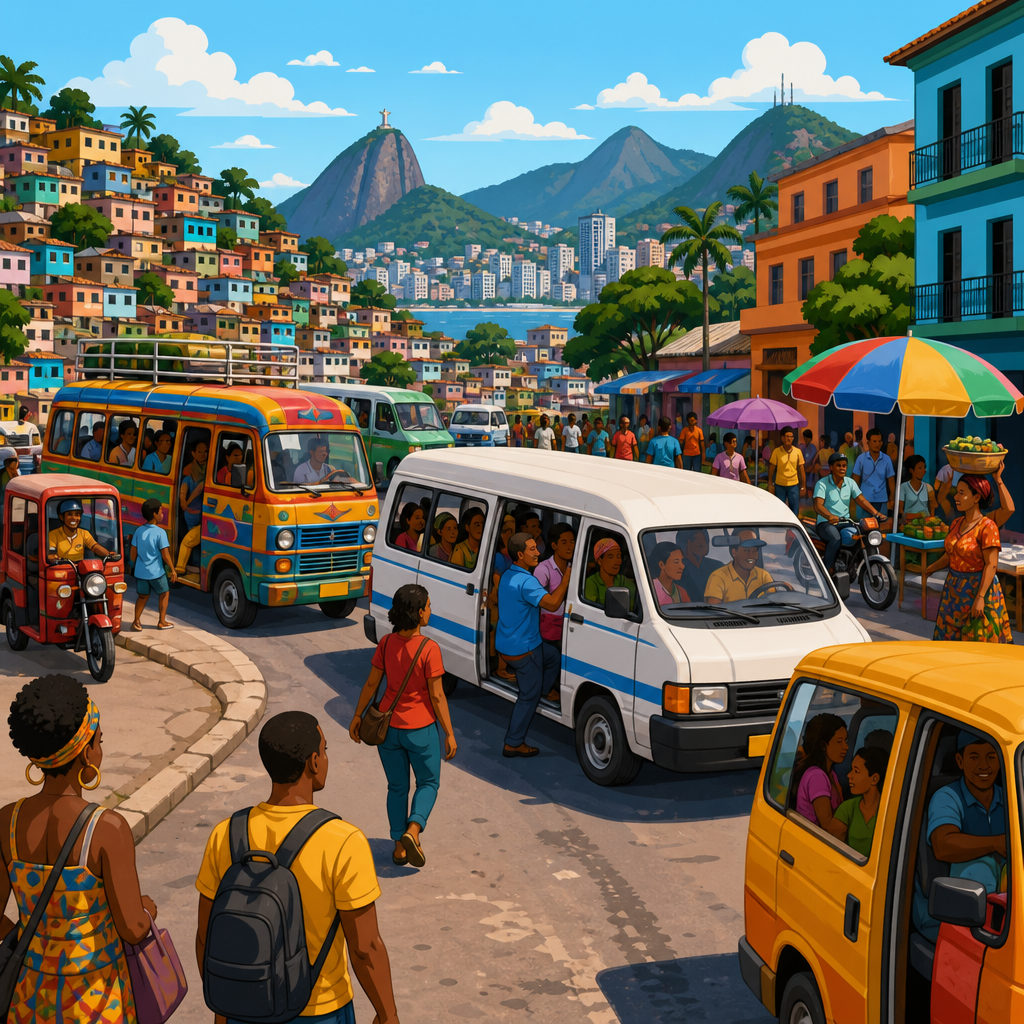
Informal transit shapes daily life in many African and Latin American cities because it fills the gap between where people need to go and what formal transport systems can reliably provide. The term refers to privately operated, loosely regulated passenger services such as minibuses, shared taxis, motorcycle taxis, mototaxis, tro-tros, matatus, dala dalas, jeepneys, and colectivos. These services usually run with flexible routes, frequent departures, cash fares, and decentralized labor arrangements. In transport planning, they are often described as paratransit: not fully informal in the sense of being invisible, but not fully integrated into state-run networks either. That distinction matters, because millions of riders depend on them every day for work, school, health care, childcare, shopping, and social ties.
I have worked on transport strategy projects where official route maps suggested a city was reasonably covered, yet field visits at 6:30 a.m. told a different story. The first vehicles arriving in peripheral neighborhoods were not municipal buses or rail feeders. They were owner-operated vans, motorcycles, and shared minibuses responding in real time to commuter demand. That pattern is common from Nairobi and Dar es Salaam to Lagos, Accra, Mexico City, Bogotá, Lima, and São Paulo’s outer districts. Informal transit matters because urban expansion has outpaced formal infrastructure, while household budgets require affordable mobility options close to home.
Understanding informal transit also requires clear definitions of mobility, accessibility, and regulation. Mobility is the ability to move; accessibility is the ability to reach jobs and services within reasonable time and cost. A city can have high vehicle movement yet poor accessibility if the poor cannot afford the trip or the route does not connect to employment centers. Regulation, meanwhile, exists on a spectrum. Some systems have associations, route permits, and fare guidelines; others operate through negotiated territorial control, informal terminals, and ad hoc enforcement. The result is a transport ecosystem that is adaptive and entrepreneurial, but often fragmented, unsafe, and politically contested.
This topic matters for urban planning and policy because informal transit is not a marginal leftover. In many cities it carries a large share of motorized trips and often provides the only practical first-and-last-mile service. It influences land values, labor markets, gendered travel patterns, congestion, emissions, and road safety outcomes. It also reveals a core planning truth: residents organize mobility solutions long before institutions catch up. Any serious urban policy on buses, rail, climate, public space, or inclusion must therefore account for how informal transit actually works on the street, not just how transport plans imagine it should work.
Why Informal Transit Emerged and Endures
Informal transit emerged because rapid urbanization, limited public investment, and weak service coverage created persistent unmet demand. In many African cities, colonial-era transport networks were designed for compact administrative centers rather than today’s dispersed metropolitan regions. In Latin America, state bus companies and regulated private operators often failed to keep pace with peripheral growth, especially after waves of migration and informal settlement. When a formal route ends five kilometers from a new neighborhood, entrepreneurs step in with vehicles that can navigate rough roads, variable demand, and uncertain incomes. This is not a temporary anomaly. It is a rational response to structural urban conditions.
The economics are straightforward. A minibus or shared taxi requires far less capital than a metro line or full-size bus fleet. Operators can start small, adjust routes quickly, and deploy labor flexibly. Riders accept tradeoffs because frequency and proximity matter. A commuter may prefer a crowded matatu that departs immediately over a cleaner bus that arrives unpredictably every forty minutes. Informal transit also survives because it is socially embedded. Drivers, conductors, dispatchers, loaders, mechanics, unions, route associations, and local officials form dense networks of information and negotiation that help the system function even when formal governance is weak.
Endurance does not mean efficiency in every respect. Informal systems often duplicate profitable corridors while underserved areas still struggle at off-peak times. Competition for passengers can lead to dangerous driving, fare opacity, and labor precarity. Yet repeated attempts to simply ban these services usually fail, because governments rarely replace their capacity fast enough. Transport history in cities such as Nairobi, Lagos, and Lima shows the same lesson: if policy treats informal transit only as a problem to eliminate, riders bear the cost through longer walks, higher fares, and fewer connections.
How Informal Transit Works on the Ground
Operationally, informal transit is defined by responsiveness. Vehicles depart when nearly full, alter stopping patterns according to demand, and use cash collection or increasingly mobile payments. Route structures vary. Some services follow recognized corridors with semi-fixed stops; others branch into neighborhoods based on passenger requests or traffic conditions. Dispatching may occur through terminal marshals, association leaders, street brokers, WhatsApp groups, or simple driver knowledge built over years. In Accra, tro-tro stations function as critical organizing nodes. In Nairobi, matatu routes are branded and highly legible to regular users despite limited official signage. In Mexico City, colectivos often complement metro and bus rapid transit lines by feeding areas beyond walking distance.
The labor model is equally important. Vehicles may be owner-driven, leased for a daily target, or controlled by small fleets. Where the target system dominates, drivers and conductors must earn enough to cover lease fees, fuel, maintenance, police payments, and wages before taking home income. That structure creates incentives for speeding, aggressive passenger solicitation, and overloading. It also means reforms that ignore operator livelihoods usually face resistance. When I have sat in stakeholder meetings after roadside observations, the gap between policy intent and income reality was always obvious. You cannot redesign routes, formalize fares, or mandate vehicle upgrades without understanding who carries financial risk every day.
| City | Common informal mode | Primary role | Typical policy challenge |
|---|---|---|---|
| Nairobi | Matatu | Citywide trunk and feeder service | Safety, fleet modernization, route discipline |
| Accra | Tro-tro | Affordable mass commuting | Terminal management, congestion, labor formalization |
| Dar es Salaam | Dala dala | Flexible service before and alongside BRT | Integration with formal corridors |
| Lima | Combi/colectivo | High-frequency corridor coverage | Oversupply, emissions, fragmented regulation |
| Mexico City | Pesero/colectivo | Metro feeder and peripheral access | Fleet age, concessions, fare integration |
These examples show that informal transit is not one model but a family of operating arrangements. The shared characteristic is decentralized adaptation to demand. For planners, that means a single template rarely works. Policies must distinguish between services acting as essential feeders, those dominating entire corridors, and those competing directly with new mass transit investments.
Accessibility, Inclusion, and Everyday Urban Opportunity
The strongest argument for informal transit is accessibility. In peripheral settlements where streets are unpaved, densities are irregular, and household incomes are low, formal buses often do not penetrate deeply enough. Informal vehicles bridge that last mile, and in many places the first ten miles as well. They reduce walking distances, particularly for older adults, market traders, domestic workers, and schoolchildren carrying supplies. They also extend the service day. Early morning and late evening trips, when formal frequencies drop, are often sustained by informal operators following demand from shift workers, cleaners, security guards, and vendors.
For women, the picture is mixed but important. Informal transit can improve access by offering closer boarding points and more flexible trip chaining for childcare, shopping, and work. At the same time, overcrowding, harassment, poor lighting at terminals, and fare negotiation can increase vulnerability. Good policy starts with this dual reality. Safety measures need to include lighting, visible complaint channels, cashless payment options where feasible, driver training, and better terminal design. Accessibility cannot be measured only by route coverage. It must include whether a rider can travel with dignity, predictability, and personal security.
Informal transit also supports local economies in direct ways. Street vendors cluster near terminals; mechanics and fuel sellers depend on fleets; small shops align their hours to passenger peaks. In many neighborhoods, transport nodes are economic anchors. Removing service without phased alternatives can damage livelihoods beyond the transport sector itself. Conversely, thoughtful integration with bus rapid transit or municipal bus systems can stabilize demand and improve access. Bogotá’s feeder and trunk logic, Mexico City’s corridor rationalization efforts, and Dar es Salaam’s BRT transition all show that the central question is not whether change should happen, but how to protect accessibility while improving performance.
Governance, Regulation, and the Politics of Reform
Regulating informal transit is difficult because the state is rarely starting from a blank slate. Existing operators hold political influence, route knowledge, and customer trust. Many belong to associations that collect fees, allocate departures, settle disputes, and negotiate with officials. These organizations can support reform or block it. Successful programs usually move in stages: mapping routes, registering vehicles and workers, clarifying concessions, improving terminals, standardizing fares, and then integrating schedules or fleets. Abrupt replacement schemes tend to fail when compensation is inadequate, procurement is opaque, or new services launch before network design is realistic.
Evidence from Latin America is instructive. Bogotá’s TransMilenio improved travel times on major corridors, but integrating traditional bus operators required years of negotiation and remains incomplete in some dimensions. In Santiago, major bus reform initially suffered from poor transition planning, weak fleet allocation, and insufficient user information. In African contexts, attempts to formalize minibuses often struggle with fragmented ownership and limited administrative capacity. The lesson is consistent: reform is not only technical. It is political, financial, and social. Good plans account for operator debt, labor transition, enforcement capability, and rider behavior.
Data has become a powerful tool. OpenStreetMap, GTFS mapping projects, GPS tracking, and smartphone-based passenger surveys now make informal networks more visible. Organizations such as the World Resources Institute and local civic tech groups have helped cities digitize routes that previously existed only in drivers’ heads. Once mapped, informal transit can be analyzed for redundancy, gaps, travel times, and integration opportunities. But data alone does not solve governance. Enforcement capacity, transparent contracts, and credible institutions remain decisive. Without them, route maps become reports on shelves while street-level behavior stays the same.
Planning Better Integration, Not Simple Erasure
The most effective urban policy treats informal transit as a system to be improved and integrated, not erased by decree. Integration can take several forms: fare coordination with smart cards or mobile money, designated stops, vehicle standards, route franchising, feeder contracts, and access to finance for fleet renewal. Some cities need stronger corridor regulation to reduce oversupply; others need neighborhood feeder recognition to protect access. In both cases, planners should start with passenger journeys rather than institutional boundaries. Riders care about total travel time, total cost, transfer friction, and reliability across the entire trip.
There are tradeoffs. Formalization can improve safety, emissions, and labor protections, but it can also raise fares or reduce service flexibility if poorly designed. Larger vehicles may be more efficient on trunk corridors yet less suitable on steep, narrow, or low-demand streets. Cashless fare systems can improve transparency, though they may exclude unbanked users if not paired with simple top-up options. Fleet electrification offers long-term air quality benefits, especially for minibuses and motorcycles, but financing and charging infrastructure remain barriers. Serious planning acknowledges these constraints instead of promising a frictionless transition.
For urban planning and policy, the practical agenda is clear. Map actual travel patterns. Design reform around accessibility outcomes. Include operators early. Upgrade terminals and street management. Create realistic enforcement. Build multimodal networks where rail, BRT, municipal buses, walking, cycling, and informal services each play defined roles. Most of all, judge success by whether low- and middle-income residents can reach opportunity faster, safer, and at a manageable cost. Informal transit shapes mobility because it responds to the city people have, not the one plans once assumed. The task now is to harness that responsiveness within a fairer, safer, and more legible transport system.
For readers building out a wider urban planning and policy knowledge base, this hub topic connects directly to land use, infrastructure finance, street design, climate adaptation, gender equity, public governance, and metropolitan growth. Informal transit sits at the center of those debates because movement determines who can participate in urban life. Study the vehicles, certainly, but study the institutions, neighborhoods, and household decisions around them as well. If you are researching city mobility, start by tracing one real commuter trip from the edge of the metropolis to a job center. That journey will show exactly why informal transit remains indispensable, and where better policy can make the greatest difference.
Frequently Asked Questions
What is informal transit, and why is it so important in African and Latin American cities?
Informal transit refers to privately operated passenger transport services that work outside, alongside, or in the gaps of formal public transportation systems. Common examples include matatus in Kenya, tro-tros in Ghana, dala dalas in Tanzania, jeepneys in the Philippines and parts of Latin American discussion, colectivos in several Latin American cities, shared taxis, minibuses, motorcycle taxis, and mototaxis. While the vehicles, names, and operating cultures vary by place, they share several defining features: flexible routes, frequent departures, cash-based fares, decentralized ownership, and a strong ability to respond quickly to passenger demand.
Its importance comes from practicality. In many cities, formal bus and rail networks do not reach every neighborhood, do not run frequently enough, or do not match the actual travel patterns of workers, students, traders, and caregivers. Informal transit fills that mobility gap. It often connects peripheral settlements to markets, job centers, schools, clinics, and major transport hubs. For many residents, especially those in fast-growing urban areas, it is not a backup option but the main way they move through the city every day.
Informal transit is also important because it adapts faster than formal systems. When new neighborhoods appear, roads change, or travel demand shifts, informal operators can often reroute or add service quickly without waiting for long planning cycles. That flexibility makes these systems highly responsive, even if they can also be less predictable. In short, informal transit matters because it provides access where formal systems are limited, supports urban economies, and keeps cities functioning in ways that are often underappreciated in official transport planning.
How does informal transit shape everyday mobility and access to opportunity?
Informal transit shapes mobility by making daily travel possible for millions of people who might otherwise face long walks, expensive private transport, or unreliable commutes. In many African and Latin American cities, the journey to work or school depends on combining several modes: walking to a roadside stop, boarding a minibus or shared taxi, transferring near a market or intersection, and then continuing by another vehicle or on foot. Informal transit is often the connective tissue in that chain.
Its biggest contribution is access. It brings transport closer to where people actually live, including informal settlements, low-income suburbs, and areas underserved by formal buses or rail. That means broader access to employment, education, healthcare, wholesale markets, social networks, and government services. Small traders can move goods, domestic workers can reach employers, and students can travel to school with more regularity than would be possible if they relied only on limited formal routes.
It also shapes time. Because many services depart when full or run at short intervals, passengers often experience less waiting than they would with infrequent scheduled routes. At the same time, congestion, route negotiations, and demand-based operations can make travel times variable. Even so, for many users, the tradeoff is worthwhile because the system offers proximity, frequency, and availability in places where formal transport may be sparse or absent. Informal transit therefore does more than move people; it expands the geography of opportunity and influences who can participate in city life on a daily basis.
What are the main advantages and disadvantages of informal transit systems?
Informal transit has several clear advantages. First is flexibility. Operators can adjust routes, stopping patterns, and service levels based on actual demand, which is especially useful in rapidly growing cities. Second is coverage. These services often reach neighborhoods that large buses or rail lines do not serve well. Third is frequency. Because many vehicles are small and numerous, passengers can often find a ride quickly. Fourth is employment. Informal transit creates work not only for drivers but also for conductors, dispatchers, mechanics, washers, fuel vendors, and small-scale vehicle owners.
There are, however, important disadvantages. Safety is a major concern in some cities, particularly where vehicles are poorly maintained, driver training is limited, or competition for passengers encourages risky driving. Affordability can also be uneven. Although a single trip may seem inexpensive, repeated transfers can make commuting costly for low-income households. The use of cash fares and informal fare-setting can create uncertainty for passengers, especially during fuel price spikes or peak periods.
There are also governance challenges. Because the sector is loosely regulated and highly fragmented, it can be difficult for authorities to enforce standards related to labor conditions, emissions, accessibility, and service quality. Informal transit may contribute to congestion if too many vehicles compete on busy corridors, and passengers may face inconsistent information about routes and fares. So the picture is mixed: informal transit is highly effective at delivering mobility under difficult urban conditions, but it often does so with tradeoffs in safety, predictability, and oversight.
Why do informal transit systems continue to thrive even when cities invest in formal public transportation?
Informal transit continues to thrive because formal investment does not automatically eliminate the mobility gaps that people experience every day. A new bus rapid transit line, municipal bus fleet, or urban rail corridor can improve travel on major routes, but many trips begin and end far from those main corridors. People still need first-mile and last-mile connections, neighborhood circulation, and service at times or places where formal systems remain thin. Informal transit succeeds because it serves those overlooked realities.
Another reason is that travel demand in many cities is complex and dispersed. Not everyone travels from a residential suburb to a central business district on a fixed schedule. Many riders make shorter, irregular, multi-stop trips tied to informal work, street vending, caregiving, or market activity. Informal operators are often better positioned to serve these patterns because they can react quickly and operate with lower overhead costs than large formal systems.
Cost and institutional capacity also matter. Building and maintaining comprehensive formal transport networks requires sustained funding, strong regulation, coordinated planning, and political continuity. Many cities face limits in one or more of these areas. Informal transit therefore persists not because it is temporary or marginal, but because it performs essential functions that formal systems have not fully replaced. In many cases, the most realistic urban transport future is not formal versus informal, but a better integration of both.
How can cities improve informal transit without removing the services people depend on?
Cities can improve informal transit most effectively by recognizing it as a core part of the transport ecosystem rather than treating it only as a problem to eliminate. A practical starting point is mapping routes, stops, fare practices, and travel demand. Many informal systems are poorly documented in official plans even though they carry large shares of daily passengers. Better data allows cities to understand what the sector is already doing well and where the most urgent problems lie.
From there, targeted reforms can raise quality without destroying access. These may include vehicle safety inspections, driver training, clearer fare structures, digital payment options, designated stopping areas, and stronger enforcement against dangerous driving. Cities can also support operator associations or cooperatives that make it easier to professionalize services, negotiate with government, and introduce standards gradually. Importantly, reforms should be designed with drivers, owners, and passengers involved, because top-down policies often fail when they ignore how the system actually works on the ground.
Integration is often more effective than replacement. Informal transit can complement formal buses, rail lines, and bus rapid transit by feeding passengers into trunk corridors and covering lower-density areas where large vehicles are less efficient. When cities coordinate routes, ticketing, terminals, and passenger information, they can improve reliability and reduce conflict between modes. The goal should be safer, cleaner, more accountable service while preserving the flexibility and reach that make informal transit indispensable. That kind of balanced approach is more likely to improve mobility for the people who rely on these systems every day.


