
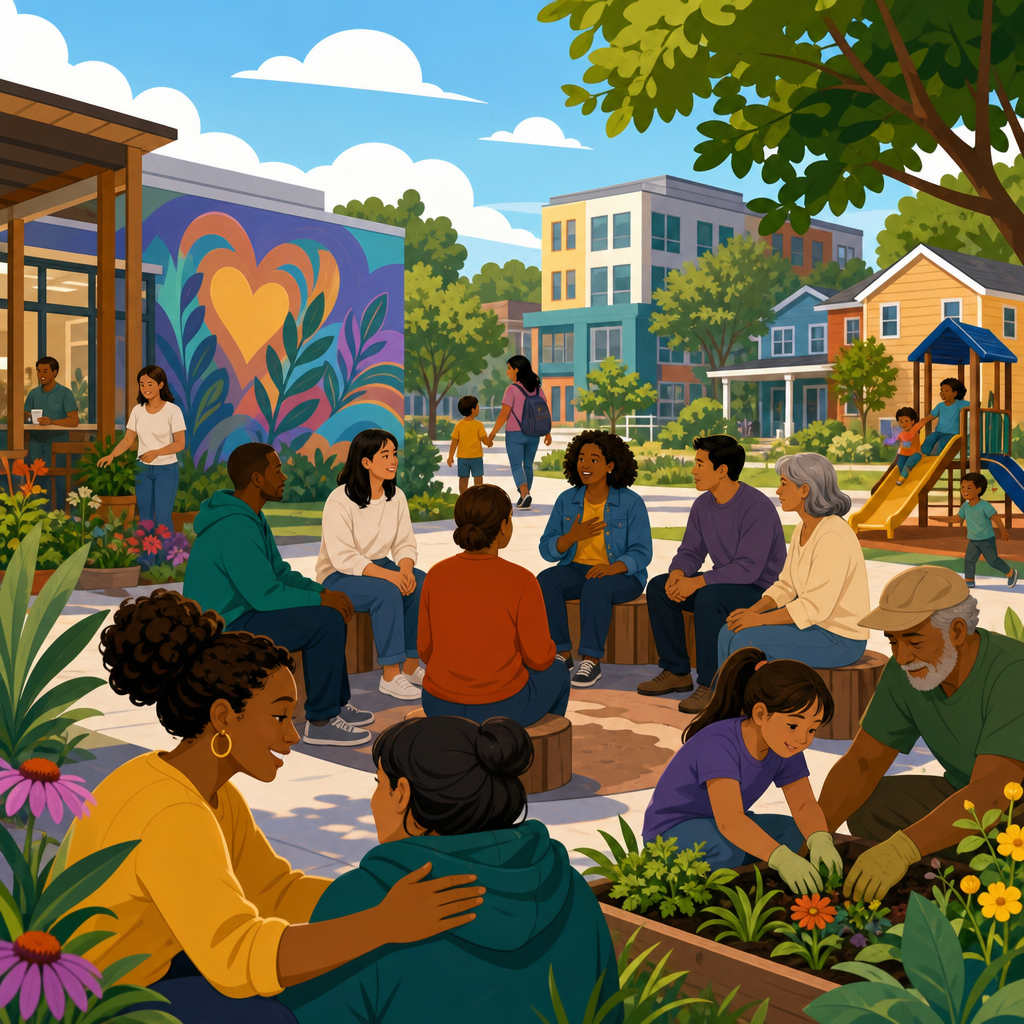
Healing-centered community development is an approach to affordable housing and neighborhood revitalization that treats trauma, connection, and long-term wellbeing as core design requirements rather than secondary social services. In practice, it asks a straightforward question: if poverty, displacement, violence, and chronic instability shape how people experience housing, what would communities look like if planning, architecture, property management, and resident engagement were designed to support recovery? I have seen projects succeed or fail on this exact point. Buildings with solid financing and attractive units still struggled when shared spaces felt unsafe, rules were punitive, or residents had no meaningful role in decisions. By contrast, developments that paired stable housing with dignity, choice, and trusted support created stronger outcomes for residents and operators alike.
For affordable housing organizations, public agencies, and mission-driven developers, this matters because trauma is not rare or abstract. It is often embedded in the conditions housing systems are meant to address: eviction, homelessness, domestic violence, over-policing, environmental hazards, and intergenerational disinvestment. A trauma-informed recovery strategy recognizes how those experiences influence behavior, health, and trust. A healing-centered strategy goes further. It includes trauma awareness, but it also builds on culture, relationships, agency, and community assets. The goal is not simply to avoid harm inside a property. The goal is to create the physical, social, and operational conditions that help people regain stability and participate in collective life.
In affordable housing, key terms need to be precise. Trauma-informed design means shaping spaces and services with an understanding of how stress and adversity affect the nervous system, perception, and behavior. Recovery means restoring safety, routine, and the capacity to make decisions and sustain relationships. Community development means more than constructing units; it includes economic opportunity, public space, health access, mobility, governance, and neighborhood identity. When these concepts are integrated, the result is a development model that improves resident retention, reduces conflict, supports staff performance, and strengthens the surrounding community. It is not a soft add-on. It is an operating framework with measurable implications for leasing, maintenance, resident services, and long-term asset performance.
This hub article explains how healing-centered community development works in real projects and why it belongs at the center of affordable housing strategy. It covers design principles, resident engagement, operating policies, partnerships, and metrics. It also serves as a gateway to deeper work on trauma-informed property management, supportive housing, public space design, community safety, and equitable resident leadership. If you are building, preserving, financing, or operating affordable housing, this framework can help you move beyond compliance and toward communities that are stable, trusted, and genuinely restorative.
What healing-centered community development means in affordable housing
Healing-centered community development starts with a practical observation: residents do not experience housing as a standalone unit, and trauma does not stop at the front door. The layout of a site, the tone of a lease-up meeting, the visibility of staff, the quality of landscaping, and the predictability of rules all affect whether a place feels regulating or destabilizing. In my work with housing teams, the most effective operators understood that stress responses often look like missed appointments, conflict, withdrawal, or distrust. Treating those behaviors only as compliance failures usually escalates problems. Designing and operating with context in mind creates better outcomes.
This approach combines several established disciplines. Public health contributes evidence on adverse childhood experiences, toxic stress, and social determinants of health. Planning contributes place-based investment strategies and resident participation methods. Architecture and environmental psychology contribute research on light, acoustics, visibility, privacy, and territoriality. Housing operations contribute lease enforcement, maintenance systems, and service coordination. Standards from Enterprise Community Partners, the Center for Active Design, and trauma-informed care models in healthcare and education all offer useful guidance. The difference is integration. A healing-centered project aligns these insights from concept design through ongoing management.
The strongest definition is simple: design and govern housing so people experience safety, dignity, control, social connection, and pathways to opportunity. Safety includes both physical security and emotional predictability. Dignity means avoiding stigmatizing layouts or policies that single residents out as problems to be managed. Control means meaningful choices about one’s home, routines, and participation. Social connection means creating places where neighbors can build trust without being forced into interaction. Opportunity means linking housing to childcare, transit, workforce programs, education, and culturally relevant supports. These elements are mutually reinforcing; when one is missing, the others are harder to sustain.
Core design principles that support trauma-informed recovery
Physical design has a direct effect on regulation, stress, and trust. Residents recovering from instability often need environments that are legible, calm, and easy to use. That begins with arrival. Clear wayfinding, visible entries, adequate lighting, and unobstructed sightlines reduce uncertainty. Sound control matters more than many teams expect; chronic noise elevates stress and can trigger hypervigilance. Durable materials also matter because neglected finishes signal abandonment and lower confidence that management will respond to concerns. Good healing-centered design is therefore not decorative. It is operationally strategic.
Privacy and connection must be balanced carefully. Too little privacy can make residents feel exposed, while too little shared space weakens social support. The best projects provide layered thresholds: public streets, semi-public courtyards, semi-private stoops or porches, and private units. This progression lets residents choose their level of engagement. Family housing benefits from visible play areas near seating so caregivers can supervise comfortably. Senior housing often benefits from short walking loops, resting points, and community rooms adjacent to active circulation routes. Permanent supportive housing may require quieter retreat spaces, private meeting rooms, and staff areas that are accessible without dominating resident life.
Outdoor space is especially important. Research consistently links trees, shade, and green space with lower stress and better mental health. In practice, even modest interventions help: shaded benches, gardens, safe walking paths, and courtyards designed for multiple age groups. In one redevelopment I reviewed, a fenced lawn that residents rarely used was replaced with a central garden, play area, and covered seating. Usage increased because the space now supported both solitude and casual contact. Design should also account for climate resilience. Extreme heat, flooding, and power outages are traumatic in themselves, and lower-income communities are often most exposed. Backup power, cooling strategies, stormwater management, and resilient community rooms improve both safety and recovery.
| Design element | Why it matters for recovery | Practical housing example |
|---|---|---|
| Clear wayfinding | Reduces confusion and stress during arrival and daily movement | Color-coded floors, multilingual signage, visible elevator lobbies |
| Acoustic control | Lowers hypervigilance and supports sleep and concentration | Insulated walls, soft surfaces in corridors, quiet mechanical systems |
| Layered shared space | Supports choice between privacy and social contact | Porches, courtyards, community rooms, small seating niches |
| Trauma-sensitive lighting | Improves comfort, orientation, and perceived safety | Even exterior lighting, daylight in corridors, non-harsh fixtures |
| Access to nature | Supports regulation, physical activity, and social interaction | Gardens, shade trees, walking paths, visible green courtyards |
Resident engagement, governance, and cultural responsiveness
No project becomes healing-centered through design alone. Residents must have meaningful influence over priorities, rules, and spaces. That starts before schematic design. Traditional engagement often relies on one public meeting, technical drawings, and comment periods that favor people with time, language access, and planning literacy. Better practice uses paid resident advisors, small-group interviews, multilingual materials, childcare, food, and meetings held where residents already gather. When teams compensate community expertise, participation becomes more representative and more useful.
Cultural responsiveness is equally important. Recovery is shaped by identity, history, and community memory. A development in a neighborhood affected by displacement should not erase local culture through generic branding and placemaking clichés. Public art, naming, programming, and partnerships should reflect who lives there and who lived there before. I have seen trust improve markedly when housing organizations worked with resident leaders, local artists, faith institutions, and neighborhood businesses instead of importing all decisions from consultants. People are more likely to use and protect spaces they recognize as theirs.
Governance structures should translate participation into authority. Resident councils, shared rule-setting, participatory budgeting for small capital improvements, and transparent grievance procedures all support agency. The key is consistency. If management invites feedback but never closes the loop, distrust grows. If staff explain what can change, what cannot, and why, residents often accept limits more readily. Healing-centered governance is not permissive management. It is fair, predictable, and collaborative. That distinction matters because residents who have experienced institutional harm frequently assess trustworthiness through follow-through, not mission statements.
Operations, services, and staff practice
The daily operating model determines whether a property actually supports recovery. Screening, lease enforcement, maintenance response, visitor policies, and incident management all send signals about power and belonging. Housing operators should review policies for unnecessary triggers. For example, aggressive signage, excessive surveillance in common rooms, or zero-tolerance rules that ignore context can make residents feel criminalized. Clear expectations are necessary, but they should be communicated in respectful language and paired with graduated responses, mediation, and opportunities to repair harm.
Staff training is essential because frontline interactions shape resident experience more than architectural intent. Property managers, maintenance technicians, concierge staff, and security personnel need practical skills in de-escalation, motivational communication, and referral pathways. They do not need to become clinicians, but they do need to recognize stress responses and avoid escalating them. In strong operations, staff know how to offer choices, set boundaries calmly, document incidents accurately, and connect residents to support. Regular supervision matters too. Burned-out staff are less patient, less observant, and more likely to rely on punitive habits.
Services should be integrated without making housing feel like a clinic. The best model is usually coordinated, voluntary, and easy to access. Community health workers, case managers, benefits navigators, and workforce partners can use on-site rooms, but resident privacy must be protected. Digital access is now part of recovery as well. Reliable internet, device support, and telehealth access help residents maintain benefits, jobs, school participation, and care. The operational goal is straightforward: reduce friction in daily life, increase trust in management, and make support available before crises intensify.
Measuring outcomes and building a long-term strategy
Healing-centered community development should be evaluated with the same rigor as any other affordable housing strategy. Useful metrics include turnover, eviction filings, lease violations, maintenance completion times, common-area usage, resident satisfaction, and staff retention. Health-related indicators such as emergency room use, school attendance, or social isolation may also be relevant when appropriate data-sharing agreements exist. Qualitative evidence matters too. Resident interviews often reveal whether spaces feel calming, whether policies feel fair, and whether people believe their voice matters.
Implementation works best when teams treat this as a portfolio-wide discipline rather than a one-time pilot. Start with an assessment of buildings, policies, and partnerships. Map pain points across the resident journey: application, move-in, daily living, crisis response, and renewal. Then prioritize improvements with the highest impact. Sometimes that means capital upgrades such as lighting, entry redesign, or outdoor seating. Sometimes it means rewriting notices, changing security protocols, or adding resident leadership stipends. Financing may come from operating budgets, capital reserves, healthcare partnerships, local grants, or community benefit investments from hospitals.
The long-term benefit is resilient housing that performs better socially and financially. Residents are more likely to stay housed when they trust management, understand expectations, and feel connected to neighbors and services. Staff are more effective when policies support judgment instead of constant enforcement. Owners protect assets when buildings are cared for, conflicts are addressed early, and communities see the development as a source of stability rather than disruption. For affordable housing leaders, the path forward is clear: audit your current practices, engage residents as decision-makers, and redesign both spaces and systems around recovery. That is how housing moves beyond shelter and becomes the foundation for lasting community wellbeing.
Frequently Asked Questions
What is healing-centered community development, and how is it different from traditional affordable housing or neighborhood revitalization?
Healing-centered community development is an approach to housing and neighborhood revitalization that treats trauma, safety, dignity, and belonging as foundational design priorities rather than add-on services. Traditional affordable housing models often focus primarily on units produced, rents stabilized, or physical upgrades completed. Those outcomes matter, but healing-centered practice asks a broader question: how do residents actually experience a place after years of displacement, chronic stress, violence, neglect, or instability? Instead of assuming that a new building alone creates wellbeing, this approach recognizes that the built environment, resident services, property management, and community decision-making all shape whether people feel secure enough to recover, connect, and thrive.
In practical terms, the difference is both philosophical and operational. A healing-centered strategy considers how lighting, acoustics, public space, maintenance practices, leasing procedures, staff interactions, and community programming affect nervous system regulation, social trust, and long-term health. It also shifts the role of residents from passive recipients of development to active co-creators of their environment. That means deeper resident engagement, stronger partnerships across housing, health, and community institutions, and a commitment to reducing re-traumatization in everyday systems. The result is not just better housing stock, but neighborhoods intentionally designed to support stability, agency, and collective recovery.
Why does trauma-informed design matter in community development and affordable housing?
Trauma-informed design matters because housing is never just about shelter. For many residents, home is experienced through the lens of prior instability, eviction, overcrowding, community violence, discrimination, family disruption, or homelessness. When development fails to account for that reality, even well-intentioned projects can reproduce stress. Confusing wayfinding, harsh lighting, poor sound insulation, aggressive rule enforcement, inaccessible common areas, or impersonal management systems can all make residents feel watched, unsafe, or powerless. Trauma-informed community development helps practitioners understand that environment and operations directly influence whether a person feels calm, respected, and in control.
This is especially important in neighborhoods that have experienced concentrated disinvestment or repeated cycles of displacement. In those contexts, residents are not only reacting to individual trauma but also to collective and historical harm. Trauma-informed design addresses that by creating spaces that are predictable, welcoming, and supportive of connection without feeling institutional. It can include visible sight lines, access to nature, flexible gathering spaces, culturally resonant design elements, quieter interiors, clear communication, and resident-centered service delivery. These choices may seem modest on their own, but together they can reduce chronic stress, increase trust, improve resident retention, and help communities rebuild social bonds that are essential for resilience.
What does healing-centered design look like in practice at the building and neighborhood level?
At the building level, healing-centered design shows up in both physical and operational details. Physical features may include natural light, good ventilation, sound control, calming materials, intuitive layouts, private and communal spaces that residents can choose between, and outdoor areas that support rest and social interaction. Safety is designed to feel supportive rather than punitive, so access control, visibility, and circulation are handled in ways that reduce fear without making residents feel criminalized. Family-friendly common spaces, community rooms, gardens, porches, play areas, and wellness rooms can all contribute to a sense of belonging when they are thoughtfully located and consistently maintained. Just as important, property management practices are aligned with dignity: clear communication, predictable procedures, respectful conflict resolution, and staff trained to respond to distress without escalating it.
At the neighborhood level, healing-centered community development extends beyond the building envelope. It may involve safer streets, improved lighting, parks, community-serving retail, youth spaces, public art, transit access, and preservation strategies that reduce displacement pressure. It also means designing processes, not just places. Resident engagement is structured so people have meaningful influence over priorities, programming, and stewardship. Partnerships with schools, health providers, local nonprofits, and cultural organizations help create an ecosystem of care rather than a standalone development. In strong examples, healing-centered practice connects physical design with economic opportunity, social infrastructure, and resident leadership so that revitalization supports long-term recovery instead of simply introducing new investment into a vulnerable community.
How can developers, planners, and housing organizations implement a healing-centered approach without turning it into a buzzword?
The most important step is to treat healing-centered development as an organizational commitment, not a branding exercise. That starts with listening seriously to residents and frontline staff about how people experience existing spaces and systems. Teams should examine where harm may be occurring now, whether through eviction practices, maintenance delays, inaccessible meetings, stigmatizing security protocols, or design decisions that ignore daily realities. From there, organizations can build clear standards that link trauma-informed principles to actual project decisions, including site planning, unit layout, public space design, staffing, resident engagement, and operations. If the concept only appears in a vision statement but not in procurement, budgeting, training, or management policies, it is unlikely to produce meaningful change.
Implementation also requires cross-disciplinary collaboration. Architects, developers, service providers, property managers, community organizers, and public agencies need shared goals and measurable practices. Staff training matters, but it cannot substitute for structural change. For example, resident meetings should be accessible and compensatory when appropriate, maintenance systems should be responsive and transparent, and lease enforcement should be fair and de-escalatory. Organizations should also define what success looks like beyond standard development metrics. In addition to occupancy and financing performance, they may track resident satisfaction, perceived safety, community participation, housing stability, staff-resident trust, and use of shared spaces. A healing-centered approach becomes credible when it changes how decisions are made, how power is shared, and how daily interactions support dignity over time.
Can healing-centered community development improve long-term outcomes for residents and neighborhoods?
Yes, it has strong potential to improve long-term outcomes because it addresses conditions that often undermine the success of housing interventions. Stable housing is essential, but stability alone does not automatically repair the effects of chronic stress or social fragmentation. When residents live in environments that support safety, autonomy, connection, and cultural identity, they are better positioned to engage in education, employment, parenting, health care, and community life. Healing-centered development can strengthen housing retention, reduce conflict, improve perceptions of safety, and encourage social cohesion. It can also help residents build trust in institutions that may previously have felt punitive or absent.
At the neighborhood scale, the benefits can extend to stronger civic participation, healthier public spaces, and more resilient local networks. Communities that are designed for connection tend to be better able to organize, share information, respond to crises, and support vulnerable neighbors. Over time, this can reinforce a positive cycle: residents feel more ownership, public areas are used more actively, services become more responsive, and revitalization is less likely to feel imposed from the outside. While healing-centered community development is not a cure-all for structural inequality, it offers a more realistic and humane framework for addressing the lived effects of poverty, displacement, and violence. In that sense, it improves outcomes not only by changing buildings, but by changing the relationships, systems, and everyday experiences that make recovery possible.


