Urban development is a significant marker of human progress and civilization. In examining North America, understanding its development offers a lens into economic growth, population trends, technological advancements, and social changes. Defined broadly, urban development refers to the process by which rural areas become more urban through the establishment and growth of cities and towns. Intricately tied to economic, environmental, and cultural shifts, urban development has shaped the landscapes and societies of North America in profound ways. Recognizing this evolution is crucial, as it impacts everything from infrastructure and housing to societal norms and environmental considerations. By reflecting on the history of urban development, we can better appreciate how far we have come and gain insight into what the future may hold for urban living and city planning.
Colonial Beginnings and Port Cities
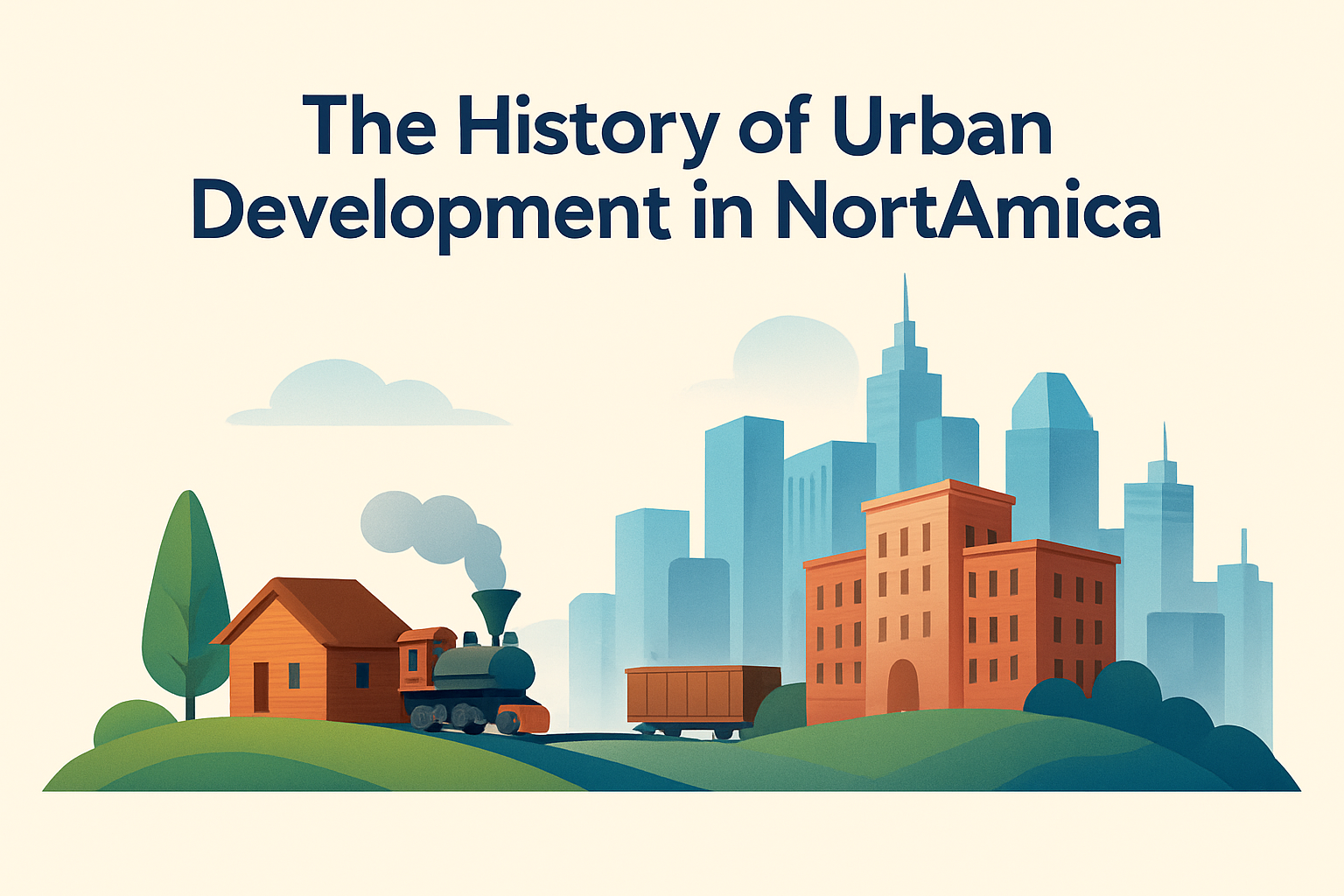
Early urban development in North America began with the arrival of European colonists in the late 15th and early 16th centuries. Colonies initially established local economies heavily reliant on agriculture, but as trading grew, port cities emerged as hubs of commerce and communication. This laid the groundwork for future urban centers, such as New York, Boston, and Philadelphia, which began as key maritime ports in colonial America. These cities benefited from their strategic coastal locations, promoting trade and interaction between Europe, Africa, and other colonies. They quickly became melting pots of cultures, a characteristic that remains true today. The significance of these ports provided a fundamental framework for population growth, leading to urban expansions as these small towns grew into significant urban centers.
Industrial Revolution and Urbanization
The Industrial Revolution during the 19th century significantly accelerated urban development in North America. The shift from agrarian economies to industrial-driven ones led to massive rural-to-urban migration. Factories became the lifeblood of urban centers, offering employment opportunities that attracted people in droves. Cities such as Chicago, Detroit, and Pittsburgh swelled in population due to their roles as industrial powerhouses, driven by their geographic positions and infrastructure. This influx brought about challenges, such as overcrowding, pollution, and inadequate infrastructure. Social reforms and policies were instigated to address these issues, leading to the development of public transportation and improved living conditions. The impact of industrialization was profound, marking a pivotal change in the pace and scale of urban development, fostering a legacy of growth and innovation.
Suburbanization and the Automobile Age
Post-World War II North America witnessed a dramatic transformation with the advent of suburbanization. The increasing accessibility to automobiles revolutionized urban development by enabling people to live further from their workplaces in cities, leading to the growth of suburban neighborhoods. With the development of interstate highways and transportation infrastructure, these suburbs expanded rapidly. Levittown, New York, for example, became a prototype for mass-produced suburbs, offering standardized homes at affordable prices. The move to suburban living was driven by the appeal of more space, better housing, and perceived safety and community spirit. However, this shift contributed to urban sprawl, which brought with it new challenges including increased traffic congestion, environmental degradation, and a change in urban core dynamics.
Modern Urban Development and Revitalization
In recent decades, there has been a resurgence in urban living, fueled by changing economic paradigms and cultural shifts. Many North American cities have initiated revitalization projects to attract people back to city centers. Innovations in technology, sustainability efforts, and creative urban planning have played key roles in these initiatives. For instance, cities like San Francisco have become hubs of technology and innovation, with a focus on drawing talent and fostering economic growth. Revitalization also typically includes updating infrastructure, improving public transportation, and promoting green spaces to enhance urban living environments. The trend towards urban renewal reflects broader societal shifts towards sustainability and community-oriented development, emphasizing the importance of combining modern needs with respectful nods to historical urban designs.
Impact of Technology on Urban Development
The role of technology in shaping urban development cannot be underestimated. From the construction of skyscrapers to advanced public transportation systems, technological advances have continually influenced the evolution of North American cities. An example is smart cities, such as Seattle, which integrate technology to manage resources efficiently and improve the quality of urban life. Through sensor networks, big data, and automation, cities can optimize everything from traffic flows to energy consumption and waste management. The integration of technology has subsequently driven digital transformation across various aspects of urban life, providing unprecedented opportunities for improvement and innovation in urban planning and development.
| Era | Key Developments | Example Cities |
|---|---|---|
| Colonial | Port Cities Established | New York, Boston, Philadelphia |
| Industrial Revolution | Factory and Infrastructure Growth | Chicago, Detroit, Pittsburgh |
| Post-WWII | Suburbanization | Levittown, Los Angeles |
| Modern Era | Urban Revitalization and Tech Integration | San Francisco, Seattle |
Challenges and Future Directions
Despite significant progress, urban development continues to face numerous challenges. Issues such as affordable housing, sustainable development, and increasing population density require strategic planning and effective policies. As cities expand, dealing with carbon emissions and minimizing ecological footprints emerges as a pressing issue. In response, cities are increasingly adopting more sustainable models, such as smart growth initiatives that focus on environmentally friendly practices and resource-efficient technology. Furthermore, while adapting to the impacts of climate change, urban planners must also ensure social equity and community resilience, creating environments where all residents can thrive. Future urban development in North America must balance these diverse aspects, subtly honoring its history while boldly embracing innovation and sustainability.
Conclusion
The history of urban development in North America showcases an intriguing journey from colonial settlements and trading ports to sprawling metropolises and tech-savvy cities. Key stages have been marked by colonization, industrialization, suburban expansion, and revitalization, offering valuable lessons on adaptation and growth in the face of dynamic challenges. These transitions have shaped modern urban landscapes, influencing lifestyles, economies, and the environmental conscience of present and future generations.
Appreciating the depth and breadth of this history offers an understanding of the forces shaping today’s cities and those that will guide the cities of tomorrow. It highlights the significance of urban planning and sustainable development as we face evolving technological, societal, and environmental demands. Ultimately, the careful study of North America’s urban development history provides insights necessary for creating livable, resilient, and vibrant future urban communities, encouraging us all to participate actively in shaping our shared urban future.
As communities and individuals, recognizing our role in this intricate history empowers us to advocate for and build healthier, more sustainable urban environments. Whether it’s through supporting local initiatives, advocating for smart growth policies, or simply becoming more informed citizens, each step contributes to a legacy of mindful urban development.
Frequently Asked Questions
1. What are some of the key historical phases of urban development in North America?
The history of urban development in North America can be divided into several key phases, each marked by distinct characteristics and influences. Initially, before European colonization, Indigenous peoples had established their own forms of urban settlements, some with sophisticated societal structures, such as Cahokia near present-day St. Louis. With European colonization in the 16th and 17th centuries, cities began to emerge based around trade, and ports like Boston, New York, and Quebec City became vital hubs.
The Industrial Revolution in the 19th century marked another crucial phase, as it spurred the rapid growth of urban areas through industrialization and the migration of workers seeking jobs in factories. Major cities such as Chicago and Detroit arose as manufacturing centers. Fast forward to the 20th century, the proliferation of automobiles and infrastructural expansions, including the construction of highways, facilitated urban sprawl, giving rise to suburbs. Then the latter part of the 20th century saw deindustrialization in many regions leading to urban decline, while others, especially in the Sun Belt, experienced booming growth due to favorable economic and climatic conditions.
Each of these phases reflects broader economic, technological, and social trends, demonstrating that urban development is continually evolving, driven by complex and interconnected factors.
2. How did technological advancements impact the urban development in North America?
Technological advancements have played a pivotal role in shaping urban development across North America, acting both as enablers of growth and as transformative forces altering the fabric of urban life. During the Industrial Revolution, innovations in machinery and manufacturing processes necessitated the movement of populations towards urban centers where these industries were concentrated. Railroads exemplified early technological leaps, connecting cities and enabling not just movement of goods but also labor mobility.
In the 20th century, the automobile revolutionized urban forms, leading to the spread of suburbs as personal vehicles allowed for greater commuting distances. This period also saw technological advancements in building materials and construction techniques that enabled the creation of skyscrapers, fundamentally altering city skylines and accommodating dense urban populations.
The latter half of the 20th century into the 21st has been defined by digital revolutions, revolutionizing communication networks and data management. Modern urban development takes place against a backdrop of smart technology still emerging but promising to impact everything from urban planning to public services in cities. Collectively, these technological changes underpin vibrant, growing cities, continuously reshaping both infrastructure and lifestyles.
3. What role have economic factors played in urban development in North America?
Economic factors are foundational to understanding urban development in North America, as they dictate patterns of population movement, dictate the rise and fall of cities, and impact urban policy and planning.
Initially, economic activity such as trade, fueled the establishment of port cities. As time progressed, industrialization became the engine of urban growth in the 19th century, with cities prospering based on their proximity to resources and manufacturing capability. These industrial centers attracted a labor force leading to populous metropolitan areas.
However, economic booms can also lead to busts. The Great Depression was a testament to this, causing severe hardships and altering urban landscapes through neglected infrastructure and rising unemployment. Post-World War II, economic prosperity led to the rise of consumerism and the growth of suburbs, manifesting in a shift in population densities.
Currently, economic factors such as globalization have enabled cities like New York and Los Angeles to become major global players, managed through diverse economic infrastructures including finance, entertainment, and technology sectors. Conversely, some cities adapting slower to these economic shifts have faced decline and transition challenges. Economics remains, therefore, an indispensable lens through which the narrative of urban development is continuously written.
4. How has urban development influenced social changes in North America?
The process of urban development has inherently been intertwined with profound social changes across North America, influencing everything from demographics to cultural landscapes.
Initially, urban settings provided an environment where diverse communities could intersect, contributing to a melting pot of cultures, especially visible in cities with large immigrant populations. This diversity enriched cultural dimensions and social networks, bringing about a vibrant communal life, artistic endeavors, and culinary innovativeness. Urbanization also ushered in shifts in social hierarchies; for example, the industrial period saw immense labor movements advocating for workers’ rights, catalyzing significant social reforms.
The creation of suburbs in the 20th century contributed to demographic shifts, influencing family structures and social dynamics. At the same time, urban centers became places where countercultural movements gained momentum, challenging societal norms and pushing for progressive policies around civil rights, environmental consciousness, and gender equality. Across centuries, urban environments have served as stages where significant social dialogues and changes have been lived and embodied, reflecting broader social evolutions aligned with the growth of cities and urban consciousness.
5. What are some environmental considerations associated with urban development in North America?
Environmental concerns have long played a critical role in the discourse around urban development in North America, shaping policies and informing sustainable practices.
Historically, rapid urban growth led to extensive use of natural resources, prompting severe pollution and environmental degradation. Industrial activities drove smog and contaminated waterways putting public health and ecosystem diversity at risk, exemplified in the notorious river fire incidents in cities such as Cleveland’s Cuyahoga River.
As awareness increased throughout the latter half of the 20th century, urban planning began incorporating green spaces and advocating for eco-friendly practices to combat pollution and promote public well-being. The concept of sustainable development emerged, guiding cities to foster growth while maintaining an ecological balance.
In recent years, climate change poses new challenges. Rising sea levels threaten coastal cities, prompting considerations for resilient infrastructure and disaster preparedness. Many cities are now actively developing sustainable transport solutions, increasing energy efficiency in buildings, and preserving biodiversity within and around urban environments.
The interplay between urbanization and the environment thus remains a critical area, with the future of urban development relying heavily on effectively managing this balance to ensure that urban centers can thrive within ecological constraints.