
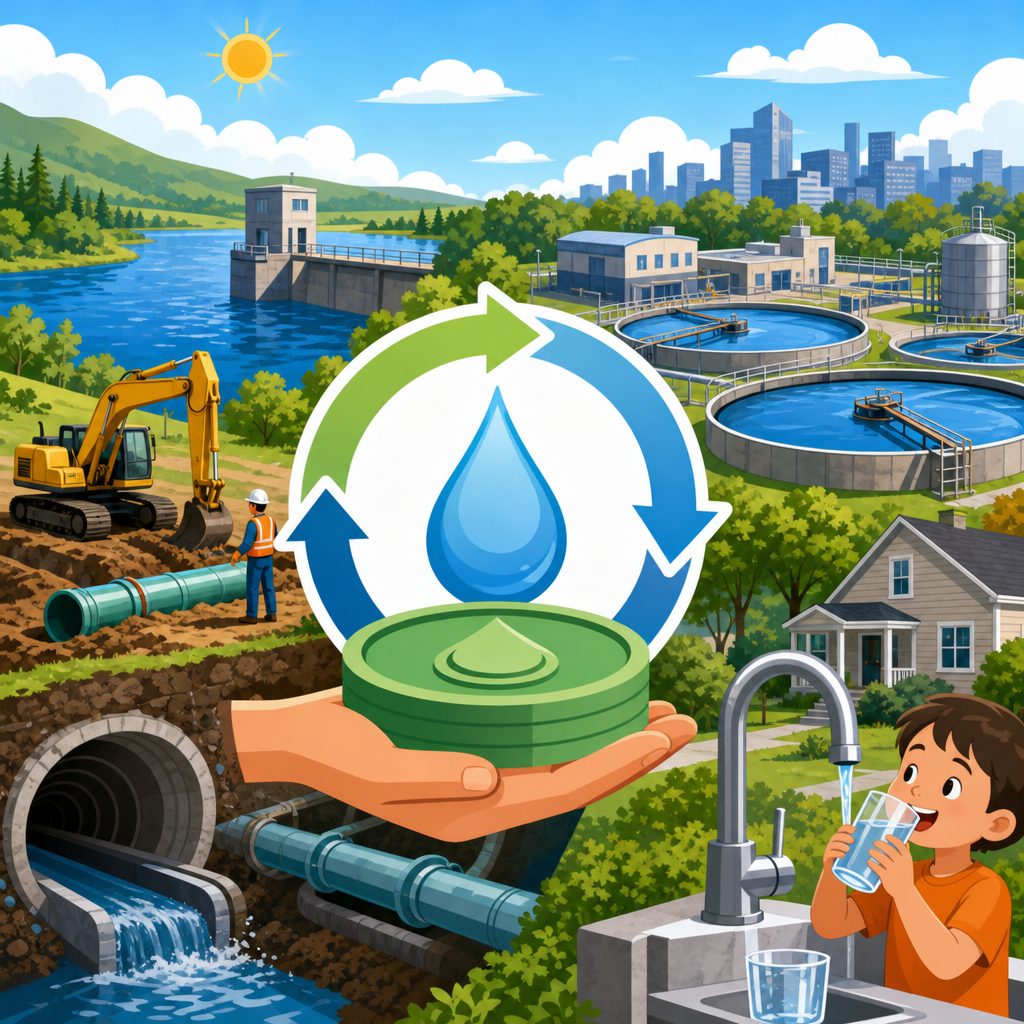
State Revolving Funds are among the most important, and least understood, financing tools behind water and sewer upgrades in the United States. In practical terms, these funds help cities, counties, utilities, and special districts pay for projects such as replacing aging water mains, repairing leaking sewers, upgrading treatment plants, reducing lead exposure, and improving resilience against floods, drought, and contamination. I have worked with capital planning teams that could identify urgent infrastructure needs years in advance but still struggled to move projects because affordable financing was missing. State Revolving Funds, often called SRFs, exist to close that gap. They combine federal capitalization grants, state matching funds, loan repayments, and bond proceeds into a long-term financing system that keeps lending money back into water infrastructure. That revolving structure is what makes them durable. Instead of a one-time grant that disappears after a project is built, an SRF loan is repaid over time and then redeployed to support the next round of upgrades. For communities facing deferred maintenance, regulatory pressure, or population growth, that mechanism matters because it stretches scarce public dollars much further than conventional grant programs alone.
The term State Revolving Fund usually refers to two distinct programs administered under federal environmental law: the Clean Water State Revolving Fund for wastewater and stormwater projects, and the Drinking Water State Revolving Fund for public water system improvements. Both are overseen by the U.S. Environmental Protection Agency, but each state runs its own program, publishes its own intended use plan, sets priority criteria, and reviews applications under its own procedures. That state-level administration explains why project sponsors can have very different experiences depending on where they are located. Some states aggressively support principal forgiveness for disadvantaged communities, while others rely more heavily on standard low-interest loans. Some give strong priority to nutrient removal or combined sewer overflow control, while others focus on lead service line replacement or treatment reliability. Understanding those differences is essential for planners, utility managers, and local officials who want to use SRFs strategically rather than treating them as a generic funding source.
How State Revolving Funds Work in Practice
At their core, State Revolving Funds are infrastructure banks for public water systems and wastewater systems. Congress appropriates funding to EPA, EPA provides capitalization grants to states, states contribute a required match, and the state program makes loans or other assistance to eligible recipients. As borrowers repay principal and interest, the money returns to the fund and is lent again. Many state programs also leverage the fund by issuing bonds backed by loan repayments, which expands total lending capacity well beyond annual federal appropriations. In the programs I have seen most closely, this leverage can turn a limited annual infusion into a much larger, multi-year project pipeline.
Eligibility and terms vary, but most SRF assistance is offered at interest rates below market, with repayment periods commonly extending up to twenty years and in some cases thirty years for eligible communities. That longer amortization period materially lowers annual debt service, which can determine whether a project is affordable without abrupt rate spikes. Assistance can support planning, design, land acquisition tied to the project purpose, construction, and in some states related measures such as green infrastructure or source water protection. The key point is that SRFs are not just construction lenders. They are financing platforms that can align technical compliance, asset management, affordability, and long-term capital planning.
Because each state publishes a project priority list and intended use plan, applicants need to understand the annual funding cycle. A strong application typically connects the project to public health outcomes, permit compliance, asset condition, climate resilience, and readiness to proceed. Readiness matters more than many first-time applicants expect. A city that has completed preliminary engineering, environmental review, rate analysis, and procurement planning is often positioned to secure assistance faster than a city with a serious need but incomplete documentation. In other words, need alone does not guarantee funding. Preparation turns need into an approvable project.
Why Water and Sewer Upgrades Depend on SRF Financing
Water and wastewater systems across the country face a convergence of problems: aging pipes, rising treatment standards, more intense rainfall, emerging contaminants, workforce constraints, and decades of deferred maintenance. The American Society of Civil Engineers has repeatedly highlighted the scale of the infrastructure gap, and EPA’s needs surveys consistently show hundreds of billions of dollars in drinking water and clean water investment requirements over twenty-year periods. Local utilities generally pay for these upgrades through user rates, connection fees, reserves, and debt. The challenge is that many communities, especially smaller towns and older industrial cities, do not have enough revenue capacity to self-fund major projects quickly.
That is where SRFs become central. A low-interest SRF loan can reduce borrowing costs significantly compared with conventional municipal debt, preserving ratepayer affordability while still enabling critical work. For example, replacing a deteriorated interceptor sewer or modernizing a filtration plant may be nonnegotiable because of permit obligations or public health risks. Delaying the project can increase operating failures, emergency repair costs, sanitary sewer overflows, water loss, and legal exposure. By lowering the financing burden, SRFs let utilities address problems before they become both more dangerous and more expensive.
The role of SRFs has expanded as infrastructure policy has evolved. They now support not only traditional treatment plant upgrades but also lead service line replacement, energy efficiency improvements, cybersecurity-related equipment tied to utility operations, stormwater controls, water reuse, and resilience measures that protect facilities from flooding or drought. This flexibility is important because modern utility risk is no longer limited to simple pipe age. Today’s capital planning has to account for climate impacts, environmental justice concerns, contaminant monitoring, and the operational fragility of systems that run continuously and cannot fail without immediate consequences.
Clean Water and Drinking Water Programs: Similar Structure, Different Missions
The Clean Water and Drinking Water SRF programs share a financing model, but they address different infrastructure needs. The Clean Water SRF primarily supports wastewater treatment, collection systems, nonpoint source pollution control, estuary protection, and many stormwater projects. That means a city dealing with inflow and infiltration, combined sewer overflow consent decree obligations, or nutrient discharge limits will often look first to the Clean Water program. A county implementing green streets or detention improvements to reduce runoff pollution may also fit within that framework, depending on state rules and project design.
The Drinking Water SRF focuses on public water systems and projects needed to achieve or maintain compliance with the Safe Drinking Water Act, protect public health, or consolidate struggling systems. Typical uses include treatment upgrades, transmission and distribution improvements, storage, source development, and replacement of lead service lines. If a utility must install corrosion control treatment, improve filtration to address microbial risk, or replace undersized mains that create pressure and reliability issues, the Drinking Water program is usually the relevant path.
| Program | Primary Focus | Typical Eligible Projects | Common Driver |
|---|---|---|---|
| Clean Water SRF | Wastewater, stormwater, water quality | Treatment plants, sewers, overflow control, green infrastructure | Permit compliance and pollution reduction |
| Drinking Water SRF | Public water system safety and reliability | Treatment, mains, storage, lead service line replacement | Public health protection and regulatory compliance |
In practice, many communities need both. I have seen utilities with a failing wastewater lift station and a separate need for finished water storage rehabilitation in the same five-year capital plan. The financing strategy then becomes a sequencing exercise: match each project with the right SRF program, coordinate engineering schedules, and align debt issuance or loan closings with construction readiness. Communities that treat SRFs as part of an integrated capital stack rather than isolated transactions tend to perform better over time.
How Communities Access Funds and Build Competitive Applications
Successful SRF applications are built long before forms are submitted. The strongest applicants usually start with an asset management framework that identifies condition, criticality, remaining useful life, and risk of failure. They then connect those findings to a capital improvement plan, rate study, and affordability analysis. This matters because state reviewers want evidence that the project is necessary, technically sound, and financially sustainable. A utility that cannot show how it will operate, maintain, and repay the financed asset will face harder questions, even if the infrastructure problem is obvious.
Environmental review, engineering documentation, procurement compliance, and disadvantaged community qualifications also shape outcomes. Some states can offer principal forgiveness, negative interest, or additional subsidization to communities meeting affordability or environmental justice criteria. Those benefits can be transformative. A small town replacing failing lagoon infrastructure or a city undertaking neighborhood-scale lead service line replacement may be able to move forward only because part of the assistance does not need to be repaid. However, subsidized funding is usually limited and competitive, so timing and documentation are critical.
I have found that local leaders often underestimate how much coordination is needed among engineers, finance officers, legal counsel, and operations staff. The engineer may define the scope, but the finance director has to model debt service and rate impacts. Legal staff must confirm procurement and bond counsel issues. Operations personnel need to verify that the selected technology can be maintained with available staff and training. SRF financing works best when these functions are integrated early. Otherwise, projects can be delayed by scope changes, missing approvals, or affordability concerns discovered too late.
Benefits, Limits, and the Equity Question
The clearest benefit of State Revolving Funds is lower-cost capital for essential infrastructure. That translates into lower lifetime project costs, reduced pressure on rates, and a greater ability to bundle proactive upgrades instead of waiting for emergencies. SRFs also create discipline. Because projects move through state review, environmental procedures, and financial underwriting, utilities are often pushed to improve planning, document asset need, and strengthen long-term budgeting. In my experience, even applicants that do not receive immediate funding often emerge with better capital planning practices because the process forces clarity.
Still, SRFs are not a complete solution. Loans must usually be repaid, and repayment ultimately comes from ratepayers, taxes, or dedicated local revenue. For communities with low household incomes, shrinking customer bases, or extensive legacy infrastructure, even subsidized loans may not fully solve affordability constraints. Federal and state grant programs, water rate assistance policies, and regionalization strategies may still be necessary. Another limitation is administrative complexity. Small systems often lack the staff capacity to navigate engineering reports, environmental documentation, Davis-Bacon requirements where applicable, American iron and steel or domestic content rules, and ongoing reporting obligations.
Equity is therefore central to the role of SRFs. If the programs are administered well, they can direct support toward communities with the highest health and affordability needs. If administered rigidly, they can unintentionally favor applicants with more consultants, more staff, and more polished submissions. Many states are trying to correct this imbalance through technical assistance, set-asides, principal forgiveness, and simplified pathways for smaller systems. That effort is not peripheral. It is essential if water and sewer upgrades are to reach places where service failures cause the greatest harm.
What the Future Looks Like for Water Infrastructure Finance
State Revolving Funds will remain foundational because the investment backlog is persistent and the need is broad. Utilities are moving from reactive replacement to risk-based capital planning, and that shift fits the SRF model well. Programs increasingly reward projects that improve resilience, reduce energy use, and target public health threats such as lead exposure. Recent federal funding surges have also increased attention to how quickly states can move money, how well they can track outcomes, and whether disadvantaged communities are truly benefiting.
The next phase of water and sewer upgrades will likely be defined by better data and sharper prioritization. Utilities are using GIS-based asset inventories, condition assessment tools, hydraulic modeling, and affordability metrics to justify investments more clearly than in the past. States, in turn, are looking for projects that are ready to proceed, aligned with statutory goals, and capable of delivering measurable benefits. The communities that succeed will be those that pair technical evidence with a realistic financing plan and sustained public communication.
For urban planners and policy professionals, the main lesson is straightforward: State Revolving Funds are not background bureaucracy. They are one of the primary ways American communities turn infrastructure need into built projects. Understanding how they work, where they fit, and what they require can mean the difference between a deferred project and a completed upgrade that protects health, supports growth, and reduces long-term cost. If your community is planning water or sewer improvements, review your state’s current intended use plan, map projects to the correct program, and prepare early. That is how urgent infrastructure needs become fundable, financeable, and finally buildable.
Frequently Asked Questions
What are State Revolving Funds, and why do they matter for water and sewer upgrades?
State Revolving Funds, often called SRFs, are state-administered financing programs capitalized largely through federal funding and matched with state resources. They provide low-interest loans and other forms of financial assistance for critical water infrastructure projects. In practice, they are one of the main ways communities fund upgrades that would otherwise be delayed for years because of budget limits, borrowing constraints, or ratepayer affordability concerns. For utilities and local governments trying to address aging pipes, failing sewer lines, treatment plant improvements, lead service line replacement, or storm resilience, SRFs can make the difference between a project staying on the capital improvement plan and actually moving into design and construction.
There are two primary programs most people mean when they refer to SRFs: the Clean Water State Revolving Fund, which supports wastewater, stormwater, and certain nonpoint source projects, and the Drinking Water State Revolving Fund, which supports public water system improvements. These programs matter because they reduce the cost of borrowing compared with conventional municipal debt, and many states also offer principal forgiveness, disadvantaged community assistance, or extended repayment terms. That combination helps utilities tackle urgent needs while limiting the pressure to impose steep rate increases all at once. For communities facing regulatory deadlines, recurring main breaks, inflow and infiltration issues, or treatment performance concerns, SRFs are not just helpful financing tools; they are often foundational to getting infrastructure work done at a scale that protects public health and long-term system reliability.
What kinds of projects can State Revolving Funds pay for?
State Revolving Funds can support a wide range of water and sewer upgrades, but eligibility depends on the specific program and the state’s priority system. On the drinking water side, funds commonly pay for projects such as replacing aging water mains, upgrading wells and pumps, improving storage tanks, modernizing treatment facilities, addressing contaminants, and replacing lead service lines. On the clean water side, eligible work often includes sewer rehabilitation, wastewater treatment plant upgrades, combined sewer overflow corrections, pump station improvements, nutrient reduction projects, stormwater management systems, and measures that reduce infiltration and inflow. Many states also allow planning, design, and certain resilience-related improvements when they are tied to eligible infrastructure needs.
What makes SRFs especially valuable is that they can often be used for projects that directly improve safety, compliance, and operational performance at the same time. For example, a utility may bundle pipe replacement with pressure zone improvements, meter modernization, or treatment upgrades that reduce the risk of contamination and service disruption. A sewer authority may use SRF assistance to rehabilitate deteriorated interceptors, reduce wet-weather overflows, and extend the useful life of an existing plant instead of waiting for failure. Some states also prioritize projects that improve climate resilience, reduce flooding risk, strengthen emergency preparedness, or benefit disadvantaged communities. The practical takeaway is that SRFs are not limited to one narrow class of construction; they are broad, flexible programs designed to help communities modernize essential systems in a structured and affordable way.
Who can apply for SRF financing, and how does the application process usually work?
Eligibility typically includes municipalities, counties, public utilities, water districts, sewer authorities, and other public or quasi-public entities that own or operate eligible systems. In some cases, tribal entities, nonprofit systems, and certain private entities may qualify depending on state rules and the project type. Because SRFs are administered at the state level, the exact requirements, deadlines, and documentation standards vary. That said, most states follow a similar general process: applicants first identify the project, confirm eligibility, and submit information for placement on an intended use plan or project priority list. Projects are then ranked based on factors such as public health risk, regulatory need, environmental benefit, system condition, readiness to proceed, and community affordability.
Once a project is in the pipeline, the applicant usually develops engineering documentation, cost estimates, environmental review materials, financial information, and a repayment plan. States often require evidence that the utility can manage the project and repay the loan, while also meeting procurement, labor, and reporting requirements. This is where many communities benefit from early coordination among engineers, finance staff, legal counsel, and utility leadership. A strong application is not just a request for money; it demonstrates that the project is technically justified, financially feasible, and aligned with state funding priorities. Communities that prepare early, maintain current asset condition data, and connect the project clearly to health, compliance, and resilience outcomes are generally in a better position to compete successfully for SRF assistance.
How do State Revolving Funds help communities manage affordability and long-term capital planning?
One of the biggest strengths of SRF financing is that it helps utilities spread the cost of major infrastructure work over time at below-market borrowing rates. Water and sewer systems often face a difficult reality: the need is urgent, but the revenue base is limited, and political resistance to rate increases can delay action until assets fail. SRFs ease that pressure by lowering debt service costs and, in many cases, offering repayment terms that are more favorable than standard bond financing. Some states also provide principal forgiveness or targeted support for disadvantaged communities, which can materially reduce the total cost burden. That matters because affordability is not just about getting a project approved; it is about keeping systems financially stable while maintaining reliable service for customers.
From a capital planning perspective, SRFs allow utilities to move from reactive repair toward structured asset management. Instead of waiting for repeated breaks, overflows, or emergency replacements, a utility can prioritize the most critical risks and sequence projects based on system condition, compliance requirements, and lifecycle cost. This is especially important for large backlogs involving aging distribution networks, leaking collection systems, obsolete treatment equipment, or known lead exposure concerns. With more predictable financing, communities can bundle related work, coordinate construction more efficiently, and avoid the premium costs that come with emergency response. Over time, that improves operational resilience, protects public health, and creates a more sustainable path for maintaining and upgrading infrastructure without relying solely on crisis-driven spending.
What are the biggest challenges communities face when using SRFs, and how can they improve their chances of success?
The most common challenge is not that SRF money lacks value, but that many communities underestimate the preparation required to access it. A utility may know it has urgent needs, yet still struggle to turn those needs into a fundable project because the asset data is incomplete, the scope is too loosely defined, the financial plan is unclear, or internal staffing is stretched thin. Smaller systems can be especially affected, since they often have limited administrative capacity to navigate state requirements, environmental reviews, procurement rules, and engineering documentation. Timing is another issue. Projects that are conceptually important but not sufficiently developed may miss funding cycles in favor of those that are more ready to proceed.
To improve their chances, communities should start with disciplined capital planning and a realistic assessment of system risk. That means identifying priority assets, documenting failure patterns, aligning projects with public health and regulatory objectives, and developing credible cost estimates early. It also helps to engage state program staff before deadlines, because they can clarify eligibility questions and point applicants toward priority criteria that matter in that state. Many successful applicants pair engineering planning with financial strategy, showing not only why the project is necessary but also how it will be repaid and managed over its full life cycle. In practical terms, the strongest SRF candidates are usually the ones that combine technical readiness, financial clarity, and a clear public benefit story. When those elements are in place, SRFs become far more than a funding source; they become a workable path to turning urgent infrastructure needs into completed water and sewer upgrades.


