
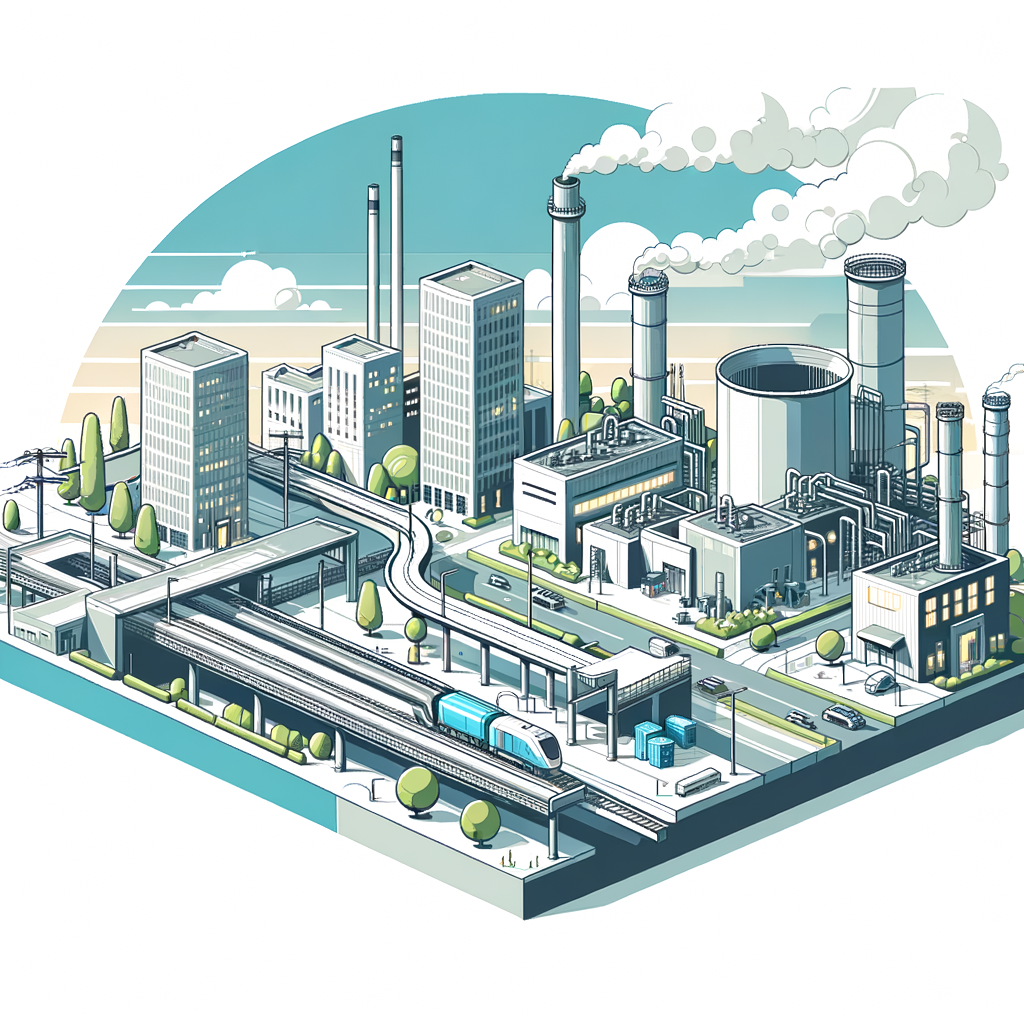
Urban infrastructure forms the backbone of city living, dramatically influencing the efficiency, sustainability, and quality of urban environments. Among the many components of urban infrastructure, waste management plays a critical role. While waste generation is an inevitable byproduct of urban life, its management poses significant challenges, especially in rapidly growing urban areas. This is where waste-to-energy (WTE) technologies come into play, offering innovative solutions that can convert waste into usable energy, thus addressing waste disposal issues while contributing to energy production. This article explores the intricate relationship between urban infrastructure and WTE technologies, examining how these innovations can transform urban waste management and energy landscapes.
The rapid global urbanization witnessed in recent decades has resulted in unprecedented challenges related to waste management. Cities, as hubs of human activity, generate vast quantities of waste daily. Without effective waste management strategies, urban areas face severe environmental and public health issues. Waste not only occupies valuable land but also generates harmful emissions if not managed properly. The environmental impact of traditional landfilling and waste incineration is significant, contributing to greenhouse gas emissions and other pollutants. Consequently, cities worldwide are seeking alternative ways to manage waste sustainably.
Waste-to-energy (WTE) technologies offer a promising solution through the transformation of waste into energy. By incinerating non-recyclable waste materials to generate electricity and heat, WTE facilities can significantly reduce the volume of waste headed for landfills, thus mitigating environmental concerns. Moreover, these technologies can extract valuable energy from waste, contributing to the local energy supply and offsetting the need for fossil fuels. As cities strive to become more sustainable, integrating WTE technologies into urban infrastructure can provide multi-faceted benefits, including improved waste management, reduced emissions, and enhanced energy security.
The Role of WTE in Urban Infrastructure
Incorporating waste-to-energy facilities into urban infrastructure involves strategically placing WTE plants within or near urban centers where waste is densest. This localization minimizes transportation costs and environmental impact associated with moving waste over long distances. Modern WTE facilities employ advanced emissions control systems to reduce pollutants and meet stringent environmental standards, addressing concerns over air quality. Moreover, WTE is not just about energy generation; it embodies the principle of the circular economy by transforming waste into a resource. This aligns with international directives and policy shifts towards waste reduction and resource recovery.
Successful urban integration of WTE technologies requires a comprehensive approach, involving stakeholders from local governments, technology providers, and the public. Educating communities about the benefits and safety of WTE facilities is crucial to overcoming public resistance born of misconceptions surrounding waste incineration. With adequate government support and public-private partnerships, cities can invest in scalable WTE projects that align with broader urban development and sustainability goals. This collaboration is essential to fostering an integrated waste management system that complements existing waste reduction and recycling efforts.
Technology and Environmental Impact
Modern WTE technologies utilize advanced combustion processes to convert waste into energy with minimal environmental impact. Unlike traditional waste management methods like open dumping and landfilling, WTE technologies reduce the volume of waste by up to 90%, significantly diminishing the space requirements for waste disposal sites. Through cutting-edge filtration and scrubbing technologies, WTE plants can limit the release of harmful pollutants like dioxins, heavy metals, and particulate matter, ensuring compliance with environmental regulations.
Furthermore, WTE facilities can contribute to a city’s energy grid by providing a stable, base-load power supply that complements other renewable energy sources. This reliability is particularly beneficial in addressing the intermittency issues associated with solar and wind power. In addition to power generation, the heat produced during the waste incineration process can be harnessed for district heating, supplying homes and industries with renewable thermal energy. This not only decreases reliance on fossil fuels but also capitalizes on heat that would otherwise be wasted, enhancing the overall efficiency of energy production.
In a bid to reduce carbon emissions, cities are increasingly viewing WTE as a pivotal component of their broader renewable energy strategies. While waste should ideally be minimized, the reality is that residual waste will always exist. WTE ensures this waste is utilized optimally, contributing to a more sustainable urban energy matrix. Innovations in WTE technology continue to evolve, with new methods such as gasification and pyrolysis gaining traction. These methods offer even higher efficiency rates and reduced emissions, further enhancing the appeal of WTE as a modern waste management solution.
Case Studies and Real-World Applications
Nations leading the charge in WTE adoption, like Germany, Sweden, and Japan, demonstrate the effectiveness of these technologies in achieving sustainable waste management goals. In Sweden, for instance, nearly half of all household waste is directed to WTE plants. This robust infrastructure not only cuts down landfill use dramatically but also meets a substantial portion of the country’s energy demand, illustrating the viability of WTE as an energy source.
Japan, with limited landfill space, has invested heavily in WTE technology, operating hundreds of plants nationwide. These facilities are critical in managing waste from densely populated areas like Tokyo, where land is scarce. Japanese WTE plants are designed to extract as much energy as possible from waste, integrating seamlessly with recycling efforts to ensure minimal environmental impact. Beyond energy recovery, the ash byproduct is utilized in construction, exemplifying the circular economy principles inherent in contemporary WTE practices.
The success stories in European and Asian countries offer valuable lessons and frameworks that can be adapted to other regions, including North America and developing countries. By observing the key policies, technological innovations, and community engagement strategies implemented in these nations, other cities can create robust roadmaps for integrating WTE into their infrastructure. This knowledge exchange is vital for overcoming socio-economic and technical challenges often associated with large-scale WTE projects.
Community Involvement and Challenges
Community acceptance and participation are critical to the success of WTE projects. Initial public apprehension regarding WTE facilities often stems from misconceptions about emissions and safety. Therefore, clear communication and transparency about WTE technologies’ environmental performance are essential. Community-focused outreach programs can help demystify these technologies, emphasizing their role in sustainable urban living and environmental protection.
Local governments can facilitate community buy-in through educational initiatives, site visits to existing WTE facilities, and stakeholder forums that encourage dialogue. Engaging citizens in discussions about waste management goals and the benefits of WTE can significantly reduce opposition and foster a collaborative approach to urban sustainability. Moreover, transparency in operations and regular reporting on environmental impacts enhances trust and accountability, ensuring that WTE plants operate within planned environmental parameters.
Despite the benefits, several challenges remain in implementing WTE technologies. Initial capital investment, operational costs, and stringent regulatory requirements can pose significant hurdles for cities. Addressing these challenges requires innovative financial models that can attract investment while ensuring projects remain economically viable. Financial incentives and subsidies from governments can also play a crucial role in offsetting initial costs and encouraging more cities to explore WTE solutions as part of their waste management strategies.
Future Prospects and Innovations
As urban centers continue to expand, the importance of sustainable waste management and energy solutions will only intensify. The future of WTE technologies lies in continuous innovation and integration with other sustainable systems. Emerging technologies like anaerobic digestion, which processes organic waste into biogas, and advances in carbon capture and storage, promise to further enhance the efficiency and environmental performance of WTE facilities.
The integration of WTE technologies with smart city infrastructures is another promising development. Smart waste management systems utilizing IoT devices and AI can optimize waste collection, monitor WTE plant performance in real-time, and enhance resource recovery processes. Such digital integration will ensure that cities not only manage waste more efficiently but also improve their overall energy and environmental footprints.
Global networks and partnerships are crucial for sharing best practices and cultivating innovative solutions to the challenges faced by WTE projects. By fostering international collaboration and knowledge exchange, cities can accelerate their transition to sustainable waste management, learning from successful implementations worldwide and adapting them to their unique urban contexts. Furthermore, as consumer awareness and demand for sustainable solutions grow, WTE will likely see increased support, investment, and development opportunities.
Conclusion
Urban infrastructure plays a decisive role in shaping the sustainability and livability of our cities. As urban populations grow, so too does the urgency to address waste management challenges in a sustainable manner. Waste-to-energy technologies offer a viable pathway to transforming waste into a valuable resource, aiding cities in managing waste sustainably while contributing to clean energy production. By adopting WTE solutions, cities can reduce landfill use, lower emissions, and enhance energy security, all key components of a sustainable urban future.
Embracing WTE technologies requires commitment and collaboration between governments, communities, and the private sector. As cities worldwide face the increasing pressures of urban waste, the deployment of WTE technologies can provide a multifaceted solution that integrates seamlessly with existing waste management frameworks. While challenges remain, the potential benefits of WTE technologies for sustainable urban development are immense.
In conclusion, by investing in waste-to-energy technologies as part of comprehensive urban infrastructure development, cities can play a pivotal role in global sustainability efforts. As technology and understanding continue to evolve, WTE can significantly contribute to a future where urban environments are cleaner, more resilient, and sustainable. Pursuing this vision will require bold policies, informed communities, and a willingness to innovate, ultimately transforming how we view and manage urban waste.
Frequently Asked Questions
1. What is the role of urban infrastructure in waste management?
Urban infrastructure is crucial for waste management as it encompasses the systems and facilities necessary for effective collection, transport, treatment, and disposal of waste. This infrastructure includes everything from garbage trucks and waste bins to landfills and recycling centers. In densely populated urban areas, it’s paramount that these systems are efficient and well-managed to prevent pollution, control costs, and minimize the negative impacts on residents’ health and the environment.
Furthermore, urban areas often face unique challenges due to high population density, limited space, and diverse waste streams. This necessitates innovative approaches and technologies, such as waste-to-energy (WTE) technologies, to manage waste effectively. These technologies not only help in reducing the volume of waste that ends up in landfills but also contribute to energy production, making urban infrastructure more sustainable.
2. What are waste-to-energy (WTE) technologies and how do they work?
Waste-to-energy (WTE) technologies refer to processes that convert waste materials into usable forms of energy, such as electricity, heat, or fuel. The most common WTE technology is incineration, which involves the combustion of waste materials at high temperatures. This process reduces the volume of waste substantially and generates energy that can be used to produce electricity or provide heating.
Another method involves anaerobic digestion, where organic waste is broken down by microorganisms in the absence of oxygen, producing biogas. This biogas can then be used as a renewable energy source. Gasification and pyrolysis are additional WTE methods, transforming waste into syngas which can then be used for energy generation. These technologies are pivotal in waste management because they help reduce the dependency on landfills, lower greenhouse gas emissions, and produce renewable energy, thereby playing a key role in sustainable urban development.
3. What are the benefits of implementing waste-to-energy technologies in urban areas?
Implementing waste-to-energy technologies offers numerous benefits, especially in urban settings. Firstly, they significantly reduce the volume of waste that needs to be disposed of in landfills, which is particularly beneficial in space-constrained urban areas. This reduction not only frees up valuable land but also helps in mitigating the environmental issues associated with landfill decomposition, such as leachate formation and methane emissions.
Moreover, WTE technologies enable cities to convert waste into a valuable resource – energy. This contributes to urban sustainability by providing a renewable source of power and heat, reducing reliance on fossil fuels. Furthermore, by diverting waste from landfills and reducing greenhouse gas emissions, WTE technologies contribute to the mitigation of climate change impacts.
Additionally, they can stimulate local economies by creating jobs in technology development, facility operation, and maintenance. The introduction of WTE facilities can also encourage technological innovation and form a critical part of integrated waste management systems in urban areas.
4. What challenges do urban areas face in adopting waste-to-energy technologies?
While waste-to-energy technologies offer numerous advantages, urban areas face several challenges in their adoption. One of the biggest hurdles is the high initial cost associated with building WTE facilities, which can be a deterrent for cash-strapped municipal budgets. Securing financing and investment for such large-scale projects requires significant planning and commitment.
Regulatory hurdles and public opposition are also challenges that urban areas may encounter. The establishment of WTE facilities often necessitates navigating complex environmental regulations and addressing public concerns about emissions and odor, even though modern WTE plants are well-equipped with pollution control measures.
Moreover, ensuring a consistent and suitable waste stream for the efficient operation of these facilities demands robust waste segregation and management practices, which can be difficult to enforce. Public education and compliance are key to overcoming this challenge, as is ensuring that technological solutions are tailored to specific urban contexts and waste compositions.
5. How do waste-to-energy technologies contribute to urban sustainability?
Waste-to-energy technologies play a critical role in promoting urban sustainability by addressing several pressing urban challenges. By converting waste into energy, these technologies help reduce the dependency on fossil fuels and contribute to reducing greenhouse gas emissions, supporting the transition towards cleaner energy sources.
Furthermore, they effectively address the pressing issue of waste management by reducing the volume of waste directed to landfills. This not only conserves land but also prevents the environmental degradation associated with landfill use, such as soil and water contamination. The integration of WTE technologies into urban infrastructure can serve as a significant step towards creating a circular economy where resources are reused and recycled, supporting sustainable urban development.
Overall, WTE technologies provide a multifaceted solution, enhancing resource efficiency, encouraging the development of renewable energy, and improving urban environmental quality. These benefits contribute to creating livable, healthy, and sustainable urban spaces for current and future generations.