
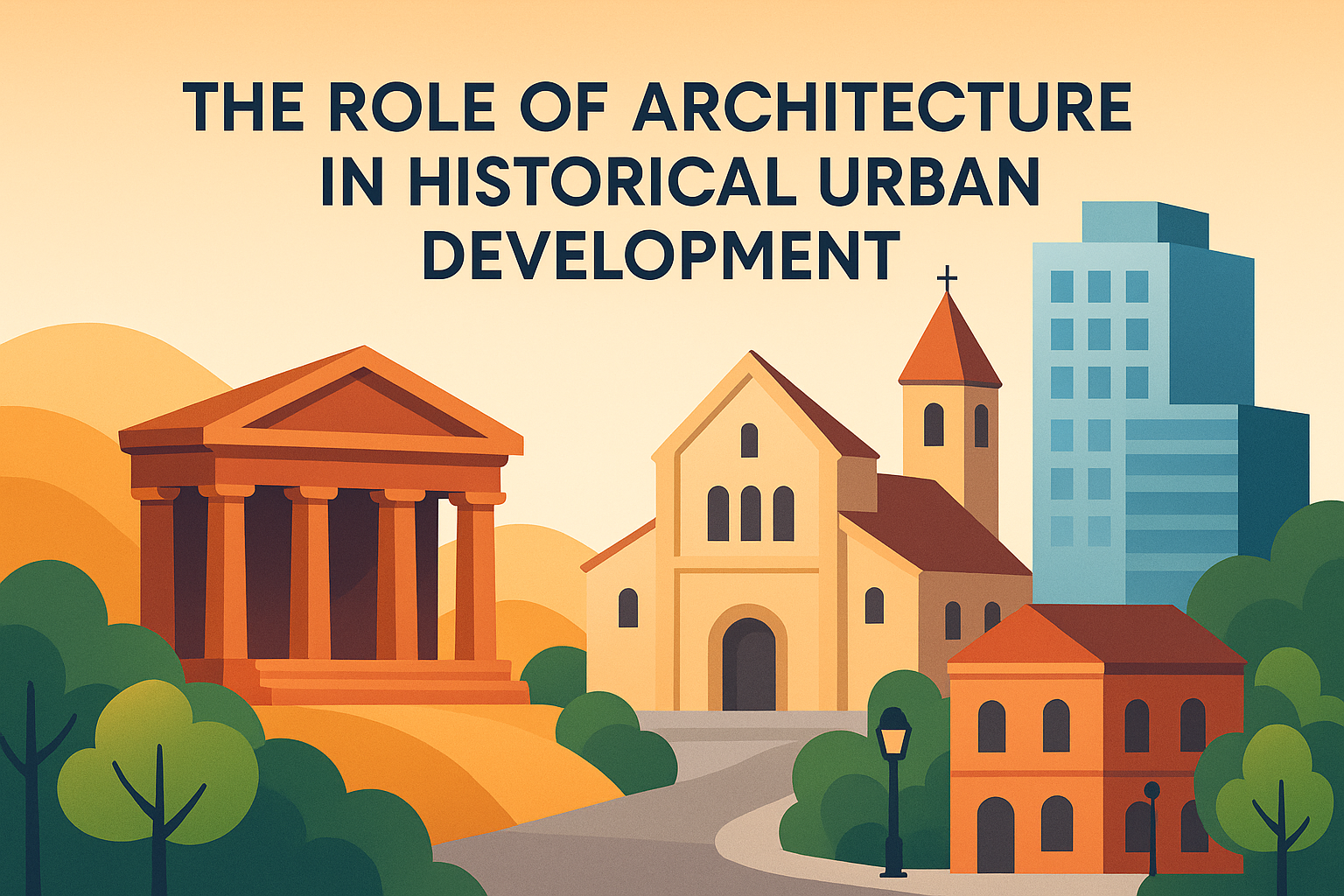
The evolution of cities throughout history provides a fascinating insight into how architecture has played a pivotal role in shaping urban landscapes. Architecture is defined as the art and science of designing and constructing buildings and other physical structures. It is a creative process that balances aesthetic appeal with functional utility. Historically, architecture has been instrumental not only in defining the visual and structural characteristics of a city but also in influencing its social, economic, and cultural evolution. By understanding the impact of architecture on urban development, we can better appreciate how cities transform over time and how they reflect the civilizations and contexts in which they exist. This exploration matters because it allows us to learn from past urban successes and failures, informing future urban planning and sustainability efforts that cater to the needs of a growing global population.
Cities have served as cultural and economic hubs throughout history, with architecture often playing a central role in dictating their growth patterns, behavior, and population dynamics. From the grandeur of ancient civilizations to the modern metropolises we see today, architecture continues to tell a story about human innovation, societal values, and technological advancement. This article explores the integral role that architecture has played in historical urban development, with a focus on its impact on city planning, society, and economic progress.
The Evolution of Urban Planning through Architecture
Urban planning, as we know it today, owes much of its development to architectural innovation. Historically, effective urban planning requires a meticulously crafted blueprint that takes into account not just the aesthetic aspects of construction but also practical components such as public facilities, transportation systems, and socio-economic factors.
Take, for example, ancient Rome. Its network of roads, aqueducts, and public buildings were feats of engineering and architecture that supported its rapid urbanization. The Roman Forum served as a multi-purpose space accommodating economic, political, and social activities. This conglomeration of functionality and grandeur underlined the importance of architecturally sound urban design in sustaining an empire.
Similarly, during the Renaissance, cities like Florence flourished as architectural innovation led to new urban forms that reflected cultural rebirth. Here, architecture focused on symmetry, proportion, and geometry, not only improving aesthetic appeal but also enhancing urban coherence and accessibility. In each transformative era, we see how architectural designs have responded to the demands of urban expansion while shaping its fabric.
Architecture’s Influence on Social Structures
The impact of architecture on societal structures cannot be overstated. Social interactions within cities have historically been driven by how spaces were designed. Architectural elements like the agora in Ancient Greece or the plazas in Spanish-influenced cities fundamentally determined the nature of public engagement.
For instance, the medieval city of Fez in Morocco is characterized by its maze-like medinas—typically centered around a grand mosque and a marketplace. The architecture here not only catered to security needs but also fostered a communal environment that facilitated trade and religious practices, highlighting architecture’s role in nurturing the social fabric.
In modern times, architecture continues to influence social interactions through the design of inclusive spaces such as parks, community centers, and public squares, which promote civic engagement and social well-being. Modernist architecture further pushed boundaries by designing open layouts and elevated structures, enhancing social interactions while maintaining a sense of freedom and openness.
Economic Impacts of Architectural Development
From ancient trade routes to the establishment of global financial hubs, architecture has been a driving force behind economic development. Infrastructure such as roads, ports, and market places were essential in facilitating trade and commerce, which catalyzed economic growth.
Consider the architecture of New York City during the late 19th and early 20th centuries—a period marked by the rise of skyscrapers. The architectural innovation of steel-frame construction revolutionized urban landscapes, allowing for increased commercial space and economic opportunities within city centers. This architectural shift not only responded to the economic demands of the time but also set the stage for New York to become a global economic powerhouse.
Moreover, cities like Dubai have leveraged bold architectural designs to enhance their global status, attracting tourism and foreign investment, thereby transforming the city into a prominent economic center. Here, architectural grandeur intersects with economic ambitions to create a cityscape that drives growth and urban prosperity.
Technological Advancements and Urban Architectural Trends
Technological advancements in construction materials and techniques have significantly influenced architectural trends and urban development. The introduction of concrete and steel changed the way cities were built, leading to innovative designs and larger structures.
- The Industrial Revolution heralded the use of cast iron and steel, giving rise to urban motifs like the railway network and suspension bridges.
- In the 20th century, the widespread use of reinforced concrete enabled the construction of high-rises that characterize modern cities.
- Post-war architecture saw the rise of Brutalism, focusing on raw, minimalist designs using concrete.
Today, architectural trends focus on sustainability, incorporating eco-friendly materials and technologies to address urbanization challenges in a changing climate. Green buildings, solar panels, and energy-efficient designs represent modern architecture’s response to environmentally conscious urban development.
Case Studies in Urban Architectural Impact
Examining specific case studies offers concrete examples of how architecture has reshaped various cities over time. Take Paris, a city remarkable for urban planning reforms under Baron Haussmann in the 19th century. This architectural overhaul introduced wide boulevards, uniform building facades, and extensive parks, reshaping Paris’ urban landscape. This reimagined city layout not only enhanced beauty but also improved urban mobility and living conditions.
Singapore offers another compelling case. In a few decades, it transitioned from a colonial port to a thriving metropolis through strategic urban planning and innovative architectural projects. The Marina Bay Sands complex, with its striking design and integration of leisure, commerce, and hospitality spaces, epitomizes Singapore’s architectural aspirations.
These examples illustrate how cities can harness architecture and urban design to respond to economic, cultural, and environmental needs, transforming their identities and enhancing quality of life for their inhabitants.
Conclusion: Embracing Architectural Innovation for Future Urban Development
As we look to the future, the role of architecture in urban development remains as critical as ever. By learning from past urban planning successes and incorporating cutting-edge architectural innovations, cities can better adapt to changing socio-economic dynamics and environmental challenges. Future architectural endeavors must be resilient, sustainable, and responsive to the needs of diverse populations.
The emphasis should be on creating inclusive, adaptable spaces that enhance living conditions while preserving cultural heritage. Investing in sustainable architecture will not only contribute to reducing environmental impact but also improve urban resilience against the repercussions of climate change. By prioritizing an integrated approach that balances tradition with modernity, cities can thrive and remain relevant in an ever-changing world.
For individuals passionate about architecture and urban design, there is a call to action: engage in conversations about sustainability and inclusivity, advocate for innovative projects, and participate in shaping urban landscapes in ways that honor the complexities and richness of human experiences. Together, we can lead the charge toward an era of urban development that celebrates both our past achievements and future possibilities.
In this endeavor, understanding the historical significance of architecture in urban development is not trivial knowledge; it is a crucial aspect of building the cities of tomorrow. Engage with the narrative. Be part of the transformative process. Shape the future.
Frequently Asked Questions
1. How has architecture influenced the development of cities throughout history?
Architecture has significantly influenced the development of cities by shaping their physical appearance and establishing their societal structure. Since ancient times, the layout and designs of buildings have not only provided functional spaces for living, commerce, and governance but also influenced how people interacted with one another and with their environment. For example, in ancient Rome, the extensive network of roads and aqueducts explicitly designed by architects connected major cities and facilitated trade and communication. Similarly, medieval Gothic cathedrals became central to the social and religious life in European cities, shaping the urban form around them. As time progressed, the advent of new materials and construction techniques during the Industrial Revolution allowed for the development of high-rise buildings, which increased urban density and changed the skyline of cities like New York and Chicago. Overall, architecture has helped urban areas grow from small settlements to complex cities by providing the necessary infrastructure and inspiring city planning that accommodates economic and social needs.
2. What role did architectural styles play in historical urban development?
Architectural styles often reflected the cultural, economic, and political ambitions of their times, thereby influencing urban development in significant ways. For example, the Renaissance period saw the harmonization of symmetry and proportion, inspiring the redesign of European city centers with grand squares and majestic public buildings. Baroque architecture, characterized by its dramatic use of light and grandeur, reinforced the authority of the monarchy and the church, prompting urban developments around such prestigious institutional structures. The rise of modernism in the 20th century, focusing on minimalism and functionality, led to the creation of open, efficient urban spaces using steel and glass, which became popular in fast-growing cities. Each architectural style has left an indelible mark on the urban fabric, dictating not only the aesthetic of a city but also influencing its growth patterns.
3. How did architectural innovations impact urban planning and expansion?
Innovations in architecture have continually driven the evolution of urban planning and the expansion of cities. One of the most significant architectural innovations was the invention of the skyscraper in the late 19th century, enabled by advancements in structural steel and elevators. This innovation allowed cities to grow vertically rather than horizonally, maximizing space in densely populated areas. Moreover, the Bauhaus movement introduced concepts of design efficiency, which translated into the modular and utilitarian urban planning seen in many modern cities. The introduction of zoning laws, aided by architectural considerations, helped organize cities into residential, commercial, and industrial areas, leading to more orderly expansion. Additionally, sustainable architecture has recently influenced urban expansion, with cities incorporating green technologies and environmentally friendly practices into their growth plans to address contemporary issues like climate change.
4. How did architecture shape the cultural identity of a city?
Architecture profoundly shapes a city’s cultural identity by embodying the values, beliefs, and history of its people. Iconic structures often become symbols of a city and play a central role in its cultural narrative. For instance, the pyramids of Giza are not only a testament to ancient Egyptian architectural prowess but also remain an enduring symbol of Egypt itself. Likewise, the Eiffel Tower is synonymous with Paris, capturing the artistic and innovative spirit of the city. Architectural styles can also reflect a city’s cultural diversity, as seen in cities like Istanbul, where Byzantine, Ottoman, and modern influences coexist within the urban landscape. Architectural landmarks often host cultural events and become gathering places for both locals and tourists, strengthening communal bonds and reinforcing a shared cultural identity.
5. In what ways did architecture respond to the social and economic needs of urban populations?
Architecture has consistently responded to the social and economic needs of urban populations by designing spaces that cater to their evolving requirements. As cities expanded through migration and industrialization, architecture adapted by providing affordable housing solutions such as tenements and later, the development of suburbs to accommodate population overflow from city centers. Public architecture, including schools, hospitals, and cultural institutions, was created to improve the quality of life within urban areas. Economically, business districts featuring high-rise office buildings emerged to consolidate commercial activities and facilitate commerce. Industrial architecture, comprising factories and warehouses, supported economic growth and provided employment opportunities. As societal awareness of environmental impact grew, sustainable architectural designs incorporating energy-efficient systems and green materials became prevalent, addressing both social responsibilities and economic sustainability. Overall, architecture evolved in tandem with the needs and aspirations of urban populations, contributing to practical and adaptable urban development.