
Introduction
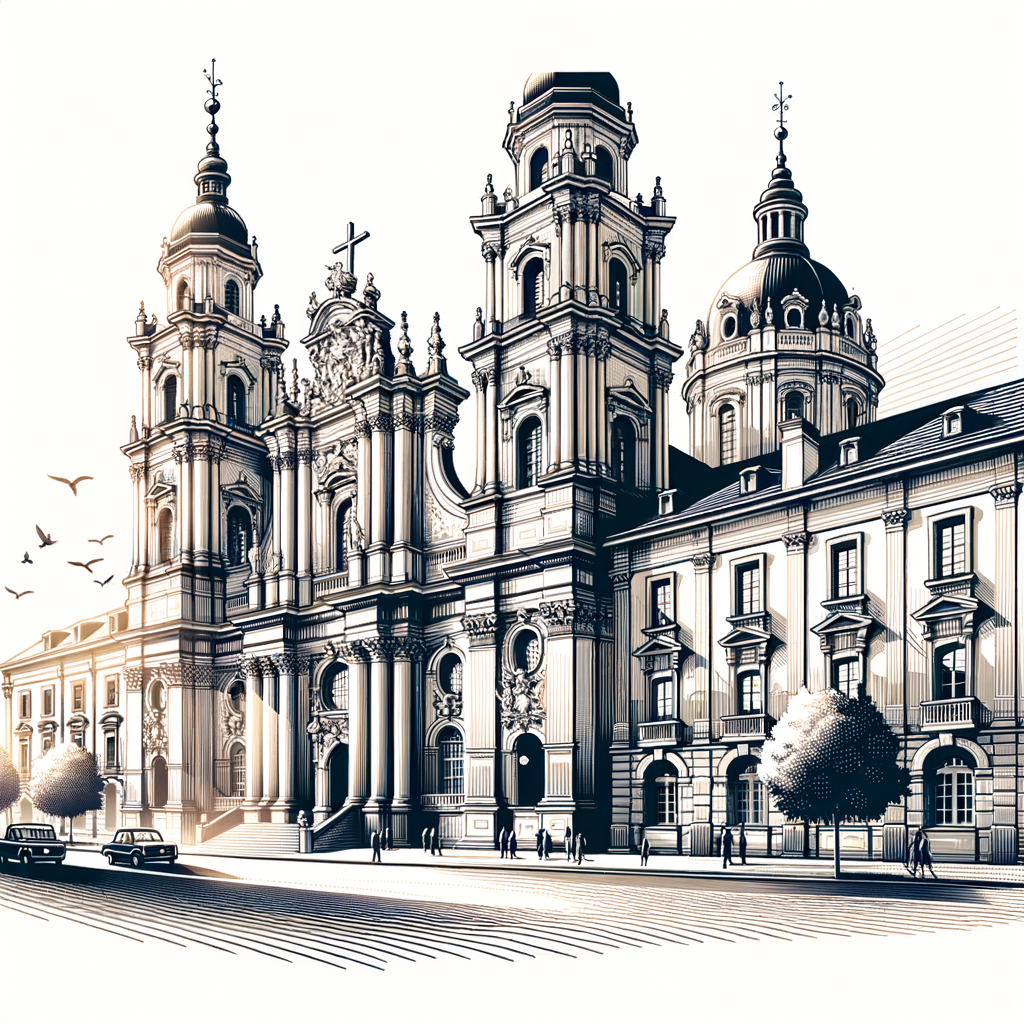
The Baroque period, spanning from the early 17th century to the mid-18th century, revolutionized the cultural, artistic, and architectural landscapes across Europe. Known for its grandeur, exuberance, and intricate detailing, the Baroque era left a lasting impact on many facets of society, including urban planning. The influence of Baroque principles on urban planning is both profound and multifaceted, shaping the way cities were designed, developed, and perceived. The period’s emphasis on symmetry, hierarchy, and aesthetic splendor spilled over into cityscapes where these artistic ideals were expressed through urban design. The integration of these principles introduced methodologies and city-building practices that forever altered the way towns evolved from their medieval roots into organized, coherent, and majestic settings. This article delves into the ways Baroque ideas influenced urban planning by examining the period’s central characteristics, notable examples, and enduring legacy in modern urban design.
In an era brimming with the desire to impress through lavish art and architecture, the principles that fueled masterpieces also began guiding the creation of urban environments. The grandiose vision of Baroque artists inspired city planners to reimagine urban spaces as entities that deserve artistic focus just as much as individual buildings. The approach accelerated a transformative shift in how cities developed and were experienced. As one embarks on an exploration of this epoch’s impact on urban design, it becomes clearer how the era forged a new path in shaping urban landscapes, blending function, magnificence, and expression in urban planning.
Characteristics of Baroque Urban Planning
The Baroque period introduced several key characteristics that significantly influenced urban planning. A deep appreciation for symmetry, grandeur, and axial planning became hallmarks of Baroque-inspired city layouts. This section will outline these defining features, illustrating their implementation within urban environments and their impacts in shaping cities.
One of the most notable characteristics of Baroque urban planning is the emphasis on symmetry and axial alignment. Symmetry was a fundamental design principle in Baroque architecture and art, often associated with the creation of harmonious, balanced, and aesthetically pleasing environments. Urban planners adopted these ideals by designing cities with strong linear perspectives and vistas that drew the eye toward focal points, such as monuments, palaces, or churches. This led to the establishment of grand boulevards, wide-open squares, and systematic street networks that enhanced navigability and visual cohesion within the city.
Another critical feature of Baroque urban planning is the grandeur of scale. Baroque planners favored elements that were monumental in size and awe-inspiring in nature. Urban spaces were expansive, imbued with a sense of openness and grandeur, reflective of both the era’s ostentatious spirit and the desire to convey power and prestige. The design of urban squares and avenues became elaborations of these principles, often lined with stately buildings and adorned with lavish decorations.
Influence on Major City Developments
Several European cities underwent significant changes under the influence of Baroque principles. Rome, a city synonymous with the Baroque period, underwent numerous transformations to align with these grand visions. The redesign of St. Peter’s Square serves as a perfect representation. Architect Gian Lorenzo Bernini designed the expansive colonnades surrounding the square to create a sense of embrace, marking a shift to more open and inviting public spaces compared to the enclosed façades of medieval cities. The square itself became a strategic location that connected St. Peter’s Basilica with the surrounding urban environment, showing how religious, civic, and aesthetic considerations intertwine under Baroque influence.
Paris, another city deeply transformed through Baroque principles, saw the implementation of the axe historique, a line of monumental structures and thoroughfares intended to emphasize order and cohesion across the urban environment. Under the patronage of Louis XIV, the grand layout of Versailles exhibited the zenith of Baroque planning. Here, symmetry, grandeur, and axial perspectives took center stage, with elements such as the Gardens of Versailles manifesting the precise geometric designs typical of Baroque style. The gardens extended beyond mere aesthetics to impact the flow and organization of entire spaces, embodying the ordered control and formalities expected from the Baroque aesthetic.
The Role of Symbolism and Ritual
The Baroque approach to urban planning also brought an intense focus on symbolism and ritual. Cities were not merely functional entities; they embodied narrative elements that celebrated history, power, and religious virtues. Consequently, planners integrated ceremonial pathways, processional routes, and monumental zones within the urban environment to accommodate religious and state ceremonies. The design of these elements emphasized grandeur and focus, supporting the performative aspect of public life.
Rome provides an illustrative case where the urban environment was deeply entwined with the Catholic Church’s influence. Baroque-era reconstructions of the city aligned axes with key religious sites, creating a cityscape where the spiritual and temporal realms visibly intersected. Notable streets such as the Via Papalis became ceremonial paths connecting various church locations with the Vatican, highlighting both the symbolic and practical aspects integrated into the urban framework.
Enduring Legacy in Modern Urban Design
The effects of Baroque principles on urban planning continue to be evident in contemporary urban spaces. The legacy of Baroque planning has provided a framework that urban planners employ to enhance functionality, aesthetics, and cultural significance in modern cities. The principles of symmetry, order, and monumental scale influence urban designs, imparting historical gravitas, and creating structures that harmonize with their cultural contexts.
For instance, famous boulevards like the National Mall in Washington, D.C., echo the Baroque dedication to grandeur and axial alignment. Similarly, Las Vegas employs Baroque inspirations in combining visual spectacle and elaborate scale, creating spaces that are both functional and awe-inspiring. These modern interpretations may adapt Baroque principles to fit contemporary needs, yet the influence remains evident throughout the design process.
Conclusion
The Baroque period, with its bold artistic visions and emphasis on harmony, transformatively influenced urban planning by integrating artistic principles into the development and conceptualization of cities. Drawing together elements of grandeur, symmetry, symbolism, and ceremony, Baroque urban planning provided a foundation that modern city planners continue to reference and build upon. The era’s legacy persists by embedding cultural narratives within city spaces and challenging urbanists to consider aesthetics alongside function.
This enduring impact demonstrates the Baroque period’s significance in shaping urban landscapes worldwide, ensuring that cities became more than conglomerates of structures but rather live choreographies of human experience. The holistic approach to urban planning that emerged during the Baroque era remains relevant as it provides the framework for understanding cities as both functional infrastructural entities and platforms for cultural expression. Cities today continue to leverage these principles, balancing time-honored design with modern innovation to create urban environments that are as functional as they are inspiring.
In conclusion, the Baroque era’s profound influence on urban planning has sustained momentum through time, imbuing modern cityscapes with recognizable touches of artistry and order. Through axial planning, ceremonial symbolism, and grand scale, the vestiges of Baroque thought remain ingrained within our urban environments, leaving a timeless imprint on the collective human experience.
Frequently Asked Questions
1. What are the defining characteristics of Baroque urban planning, and how are they different from previous periods?
Baroque urban planning is renowned for its dramatic implementation of order and spectacle, reflecting the period’s broader cultural trends. Unlike the more organic and occasionally chaotic medieval cityscapes, Baroque planning introduced elements of grandeur and symmetry that were previously less emphasized. One of the defining characteristics of Baroque urban planning is its use of vistas and axes – long, straight boulevards that converge in open plazas or squares, often centered around prominent architectural or monumental focal points. This intentional organization was designed to convey power, control, and the triumph of reason over natural complexity, echoing the political and religious hierarchies of the time.
Previously, cities grew more haphazardly, expanding based on trade routes or geographical constraints. Baroque planners, however, employed a more methodical approach, often transforming their environments through human ingenuity. They embraced the integration of expansive gardens, reflecting pools, and dynamic play of light and shadow to enhance the theatrical experience of urban spaces. Compared to prior periods, Baroque urbanism represented a shift towards deliberate and harmonious city design, utilizing geometry and uniformity to create impressive, visually stunning urban environments.
2. How did Baroque urban planning principles impact city living during the period?
Baroque urban planning significantly transformed the everyday life of city inhabitants. By employing a systematic and grand design, planners intended not only to beautify cities but also to facilitate improved infrastructural systems. Wider streets and directed traffic flow helped accommodate increasing urban populations and economic activities. The introduction of long, straight avenues made navigation easier and allowed for efficient movement of goods and people. Additionally, the planning of public squares and open spaces within the city provided venues for socialization, commerce, and ceremonial events, enhancing civic life and community spirit.
The strategic layout also reinforced the social hierarchies of the time, as these grand designs were frequently commissioned by monarchy or ecclesiastical authorities to showcase their power and influence. These elements together made city living more organized and communal, bringing both functional and aesthetic improvements to urban society. The infrastructural advancements contributed to increased urban prosperity and cultural exchanges, laying foundations that are still recognizable in modern cityscapes today.
3. Can you give specific examples of European cities that were influenced by Baroque urban planning?
Numerous European cities bear the marks of Baroque urban planning, each exhibiting unique adaptations of its principles. A primary example is Rome, where the plans of Pope Sixtus V in the late 16th century set the stage for Baroque urban development. His initiatives included the construction of straight roads converging on significant religious sites, such as Piazza del Popolo and Piazza San Pietro, connecting the spiritual and civic heart of the city through vast, elegant thoroughfares.
Another notable city is Paris, particularly under the guidance of planners like Louis XIV’s engineer, Jules Hardouin-Mansart. This era saw the creation of grand boulevards and squares, such as Place Vendôme and Place des Vosges, with the architectural style influencing French Baroque characteristics. In Germany, cities like Mannheim were laid out with rectilinear street grids and grand axes, demonstrating Baroque clarity and structured elegance. These examples signify the widespread and varied nature of Baroque influence which shaped the physical and cultural identity of numerous European cities during this period.
4. How does the Baroque approach to urban planning influence modern cityscapes?
The legacy of Baroque urban planning continues to influence contemporary cityscapes through its emphasis on grandeur, order, and public space utilization. Modern urban planning often draws inspiration from Baroque principles, particularly when designing master plans that incorporate spacious, grand thoroughfares and focal points like public squares or symbolic monuments. These elements are intended to facilitate movement and create communal spaces, mirroring the carefully articulated vistas of Baroque cities.
Moreover, the balance between aesthetic presentation and functional space in Baroque planning resonates with today’s urban design philosophy. Cities crafting iconic ‘skyline’ imagery often use Baroque-inspired frameworks, celebrating architectural highs in a cohesive and captivating manner. The integration of green spaces and public parks also echoes Baroque ideals of blending nature and urban contexts harmoniously. Modern planners still value the Baroque tradition of accentuating civic identity and cultivating environments that stimulate social interaction and cultural vitality.
5. What challenges did Baroque urban planners face, and how did they overcome them?
Baroque urban planners encountered several challenges, primarily concerning the adaptation of existing cities to fit new designs and the limitation imposed by natural geography. Existing urban layouts often meant that planners had to negotiate the integration of grandiose Baroque plans without disrupting city functionality. This required innovative solutions, such as the addition of monumental avenues that could intersect with pre-existing streets without overwhelming them. Clever use of perspective techniques also created illusions of grandeur on constrained sites, enabling expansive visual experiences within limited physical spaces.
Another challenge was ensuring the economic feasibility of sweeping transformations, necessitating collaboration with wealthy patrons and religious authorities who could finance ambitious projects. Social resistance to change was also a factor, as such transformations could symbolize power consolidation by ruling classes. Overcoming these challenges involved a degree of compromise, with architects and planners having to tailor Baroque ideals to align with the social, political, and economic fabrics of their cities. The solutions they found not only addressed these logistical difficulties but also every so often elevated the city planning discipline into an art form, merging practicality with aesthetic beauty in a lasting fusion.