
Introduction
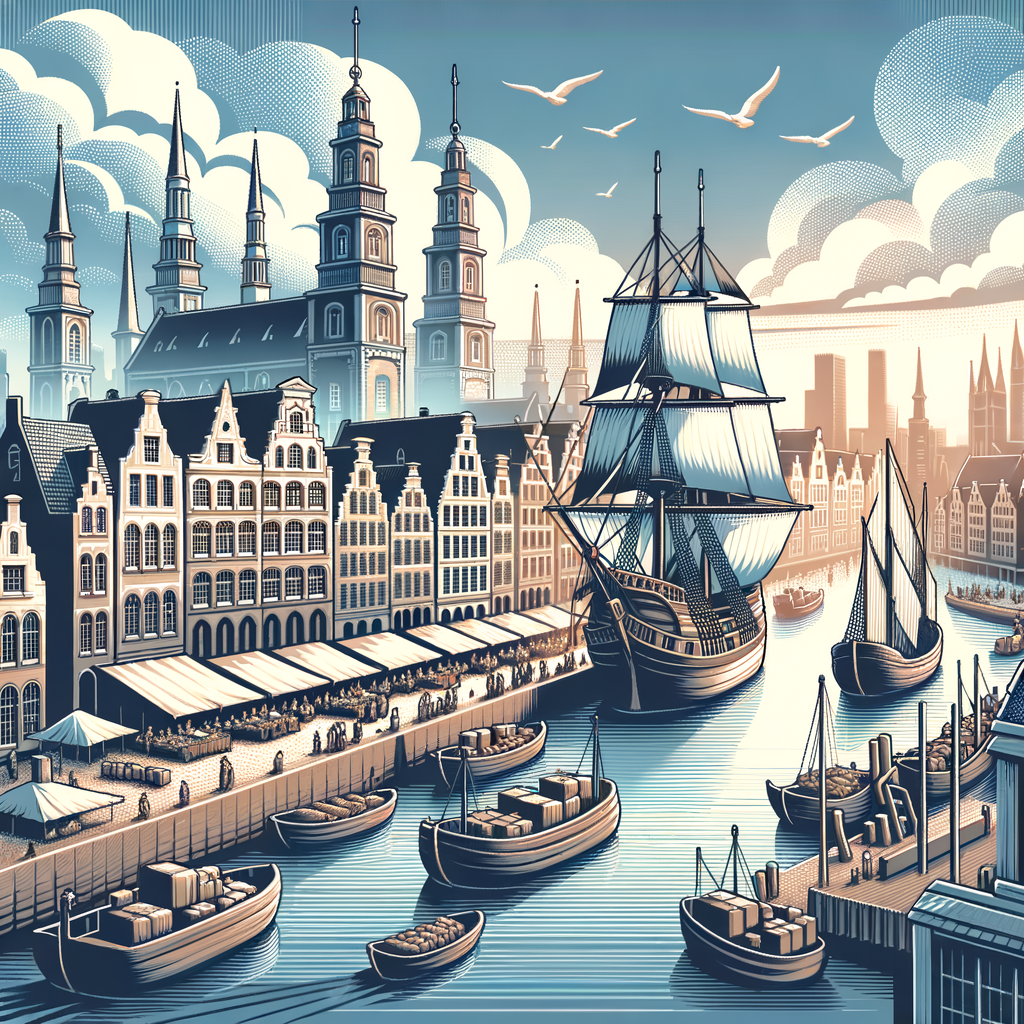
Throughout history, trade routes have been instrumental in shaping the growth and development of urban centers. These ancient pathways facilitated the exchange of goods, ideas, and cultures, connecting distant parts of the world and enhancing economic development. The flow of trade not only fostered economic prosperity but also stimulated population growth and urban expansion, transforming small settlements into thriving metropolises. The impact of trade routes on historical urban growth is visible in the establishment of major cities that acted as hubs of commerce, innovation, and cultural exchange. By analyzing these paths of commerce, it becomes evident how critical they were in the shaping of urban landscapes and social dynamics, laying the groundwork for future developments.
The Silk Road, for instance, connected the East and West and was instrumental in the exchange of goods, culture, and knowledge, influencing urban growth along its path. The city of Samarkand, located on the Silk Road, transformed from a small settlement into a vibrant urban center, showcasing the impact trade had on its development. Similarly, the Trans-Saharan trade routes facilitated the rise of cities like Timbuktu, which became centers of learning and wealth in West Africa. These historical trade routes not only contributed to the prosperity of individual cities but also played a crucial role in establishing regional connectivity and fostering global patterns of trade. This article explores the profound influence trade routes exerted on historical urban growth, examining the patterns, impacts, and evolution of urban centers across diverse regions.
The Establishment of Trade Routes
Trade routes were established out of necessity, to transport essential goods from regions of abundance to those in scarcity. The origins of these routes date back to ancient times when humans began forming settlements and engaging in barter activities. Initially, these paths were rudimentary, serving local exchanges, but gradually expanded as civilizations developed. Economic motivations, such as access to valuable resources, acted as incentive for creating these networks, linking distant regions together.
These routes were marked not only by geographic and economic factors but also by political and cultural influences. Empires and kingdoms recognized the strategic importance of these routes and often vied for control over them to ensure the flow of wealth into their coffers. In turn, the cities that lay along these trade routes benefited from increased commerce and opportunities for growth, as merchants, travelers, and artisans gathered to trade goods and exchange ideas. Thus, the establishment of trade routes was a pivotal factor in urban development, providing the necessary infrastructure for cities to thrive and grow.
The Impact of Trade on Urban Growth
Trade routes played a significant role in accelerating the urbanization process. As routes expanded, they facilitated the movement of goods and capital, providing resources necessary for sustaining burgeoning populations. These routes also brought in new ideas, technologies, and cultural practices, influencing urban planning, architecture, and society. Cities that prospered from trade often exhibited an eclectic mix of styles and traditions, reflecting the diverse origins of their inhabitants.
Economically, trade routes introduced a level of complexity that spurred innovations in financial systems, such as the first forms of banking and credit. Cities like Venice and Genoa, which thrived due to their strategic positions along Mediterranean trade routes, became centers of banking and finance, setting the stage for modern capitalism. Additionally, the concentration of wealth and resources in these urban areas attracted skilled labor and entrepreneurs, further accelerating economic development and urban growth.
Cultural Exchanges along Trade Routes
Trade routes acted as conduits for cultural exchanges, thus profoundly influencing the development of cities. This cultural amalgamation was evident in various aspects of urban life, from language and religion to art and cuisine. As merchants and travelers interacted and settled in these rising urban centers, they brought their customs, traditions, and beliefs, enriching the cities’ cultural tapestry.
In cities like Istanbul, the cultural exchange was pronounced, with influences from Byzantine, Islamic, and later Western European cultures. Such exchange not only led to the prosperity of local economies but also fostered intellectual growth and innovation, transforming these cities into hubs of knowledge and culture. The fusion of different cultures also promoted tolerance and understanding, although it did, at times, result in conflicts and challenges in maintaining societal harmony.
Trade Routes and Technological Advancements
Technological advancements were often a byproduct of trade, as the need for efficient transportation and communication intensified with increasing trade activities. Innovations such as the invention of the camel saddle and the development of caravansaries were directly linked to enhancing overland trade. Similarly, the invention of the astrolabe and development of advanced shipbuilding techniques revolutionized maritime trade, facilitating the exploration and exploitation of far-flung territories.
These advancements not only improved the efficiency of trade but also influenced the urban landscape by leading to the development of better infrastructure. Ports, roads, and bridges were constructed to support increased traffic, making cities more accessible and integrated into wider trade networks. Urban centers that embraced and quickly adapted to these technological changes had a competitive advantage over others, often becoming leading trade hubs.
Case Study: The Silk Road
One of the most famous trade routes in history, the Silk Road, serves as a prime example of how trade routes impacted urban growth. Stretching from China to the Mediterranean, this network of trade routes connected multiple civilizations, fostering unprecedented cultural and economic exchanges. The cities along the Silk Road, such as Xi’an, Kashgar, and Baghdad, experienced rapid urban development, becoming centers of trade, culture, and learning.
The Silk Road facilitated the exchange of goods such as silk, spices, and precious metals, as well as technology like papermaking and printing. This exchange not only contributed to the prosperity of cities but also led to advancements in various fields such as science, medicine, and the arts. Additionally, the cultural interactions fostered by the Silk Road led to a deeper understanding and appreciation of diverse cultures, contributing to the rich and varied urban fabric of these cities.
Case Study: The Trans-Saharan Trade Routes
The Trans-Saharan trade routes also provide a significant insight into the impact of trade on urban development. These routes facilitated the exchange of gold, salt, and other commodities between sub-Saharan Africa and the Mediterranean, leading to the rise of prosperous cities like Gao, Djenne, and Timbuktu. These cities benefitted immensely from their strategic positions, serving as major trading hubs that attracted scholars, artisans, and merchants alike.
Timbuktu, in particular, became renowned for its wealth and as a center of learning, with its famous universities attracting students from across the Islamic world. The wealth generated from trade supported the construction of impressive architectural wonders such as mosques and libraries, cementing the city’s status as an icon of cultural and intellectual exchange.
Legacy of Trade Routes in Modern Urban Development
Although ancient trade routes have diminished or been replaced by modern transportation systems, their legacy endures in historical urban layouts and cultural landscapes. Many contemporary cities owe their origins and initial growth to these trade routes, with urban designs reflecting the historical interactions that took place over centuries. The globalized world, with its network of trade and communication, can trace its roots back to these seminal pathways that promoted the exchange of goods, knowledge, and culture.
Understanding historical trade routes provides valuable insights into modern economic and urban theories, emphasizing the importance of connectivity and exchange. Such understanding continues to influence strategic urban planning and development, as cities strive to achieve the same level of prosperity and cultural richness associated with their historical counterparts. The lessons learned from the evolution of trade routes continue to inform policies and initiatives aimed at fostering economic and cultural development in an increasingly interconnected world.
Conclusion
In summary, trade routes have been vital to historical urban growth, acting as arteries that facilitated the flow of goods, ideas, and cultures across diverse regions. Their establishment was driven by economic motivations, but their impact extended far beyond mere commerce. As conduits for cultural exchange and technological advancement, trade routes helped shape the development of urban centers, influencing their economic, social, and cultural dynamics.
The rich legacies of trade routes such as the Silk Road and the Trans-Saharan trade routes underscore the profound importance of connectivity and exchange in urban development. These routes not only propelled cities into economic prosperity but were essential in shaping the intellectual and cultural fabric of societies. Their historical impacts are still felt today, as their influence continues to resonate in the patterns and development of modern urban centers.
By examining these trade networks, we gain a better understanding of the forces that shaped our cities and continue to impact them, offering valuable lessons for future urban planning and development. Ultimately, the impact of trade routes on historical urban growth highlights the enduring importance of connectivity, both economic and cultural, in shaping our collective urban futures.
Frequently Asked Questions
1. How did ancient trade routes contribute to the development of urban centers?
Trade routes have always been a catalyst for growth and prosperity, driving urban development throughout history. These early transport networks connected diverse regions and cultures, enabling the flow of goods, wealth, ideas, and innovations in an unprecedented manner. As merchants and traders traversed these paths, they brought with them not only commodities like silk, spices, and precious metals but also stories, traditions, and technological advancements from far-flung lands. The influx of goods meant economic activity surged, with bustling markets and diverse businesses blooming around trade hubs. Populations swelled as people sought the commercial opportunities afforded by being at the crossroads of major trade routes. Importantly, these routes also fostered cultural exchanges, where urban centers became melting pots of languages, beliefs, and architectural styles, enriching the local culture and making these cities thriving centers of human endeavor and civilization.
2. In what ways did trade route networking influence the economic prosperity of cities?
Trade routes functioned as economic arteries, pumping life into urban centers and setting the stage for their prosperity. Cities that lay upon major trade routes often experienced unprecedented economic booms, as they became crucial nodes in the supply chains of valuable commodities. With the constant movement of goods, merchants, and traders, these cities turned into vibrant marketplaces filled with the diverse sounds, sights, and smells of foreign goods. This nonstop commerce generated wealth, not only for the traders but also for local governments that could harness this prosperity through taxation on goods and services. Such income was frequently reinvested into urban infrastructure, architecture, and services, further cementing these cities as beacons of prosperity. Urban residents enjoyed increased jobs, from shipbuilding to constructing roads and inns. The economic success fostered by trade routes laid the foundations for sophisticated financial systems, with the development of early banking and credit systems, underpinning further economic stability and growth. All this combined made trade-centric cities pioneers of economic resilience and opulence.
3. Did trade routes have any social and cultural impacts on urban populations?
Absolutely, the social and cultural impacts of trade routes on urban populations were profound and far-reaching. As a result of being situated on these routes, cities became cultural melting pots where diverse populations intermingled. This cross-cultural interaction led to the exchange of languages, food, fashion, art, and religious practices. The syncretism in these urban settings can still be seen today in architecture that showcases a fusion of styles, cuisines that borrow from numerous culinary traditions, and festivals that celebrate a multitude of heritages. The mingling of different peoples often led to more progressive views, promoting tolerance and an appreciation for diversity. Furthermore, trade routes contributed to the spread of knowledge and innovation, brought by scholarly travelers and traders who imparted tales of distant lands, scientific discoveries, and philosophical ideas, allowing cities to become centers of learning and inspiration, pivotal in the eventual evolution of art, science, and philosophy.
4. Were there any significant urban centers that thrived directly because of their strategic position on trade routes?
Yes, many urban centers became famous specifically due to their strategic location on major trade routes, transforming them into powerful and prosperous cities. Constantinople (modern-day Istanbul) was a key city due to its position at the crossroads of the Silk Road and the Maritime Spice Route, making it a linchpin between Europe and Asia. The city flourished as a major hub of commerce and culture, drawing traders, nobles, and artisans alike. Similarly, Timbuktu in Mali thrived as a critical node in the trans-Saharan trade networks, becoming an intellectual and spiritual center renowned for its libraries and universities. Another illustration is Venice, whose strategic position along Mediterranean trade routes allowed it to become a powerful maritime republic, fostering a rich culture and economy. Cities like Aleppo, Samarkand, and Baghdad also owe their historical prominence and wealth to their roles as pivotal points in ancient trade networks.
5. How did the decline of trade routes affect historical urban growth?
The decline or shift of trade routes had immense effects on urban centers, often leading to reduced economic prosperity and population decline. When routes shifted due to exploration, political changes, or developing technologies like maritime navigation, cities that once thrived on overland trade might find themselves bypassed. For example, the decline of the Silk Road due to the advent of sea trade routes diminished the importance of many Central Asian cities that had previously been bustling with commerce. Similarly, the discovery of new sea routes during the Age of Exploration shifted global trade patterns, leading to a decline in some traditional maritime hubs. The decrease in trade activities brought about an economic downturn, leading to stagnation in urban growth, reduced cultural exchanges, and sometimes even the abandonment of once-bustling cities. These shifts served as poignant reminders of how dependent urban prosperity was on the stability and activity of the trade routes they relied upon.