
Introduction
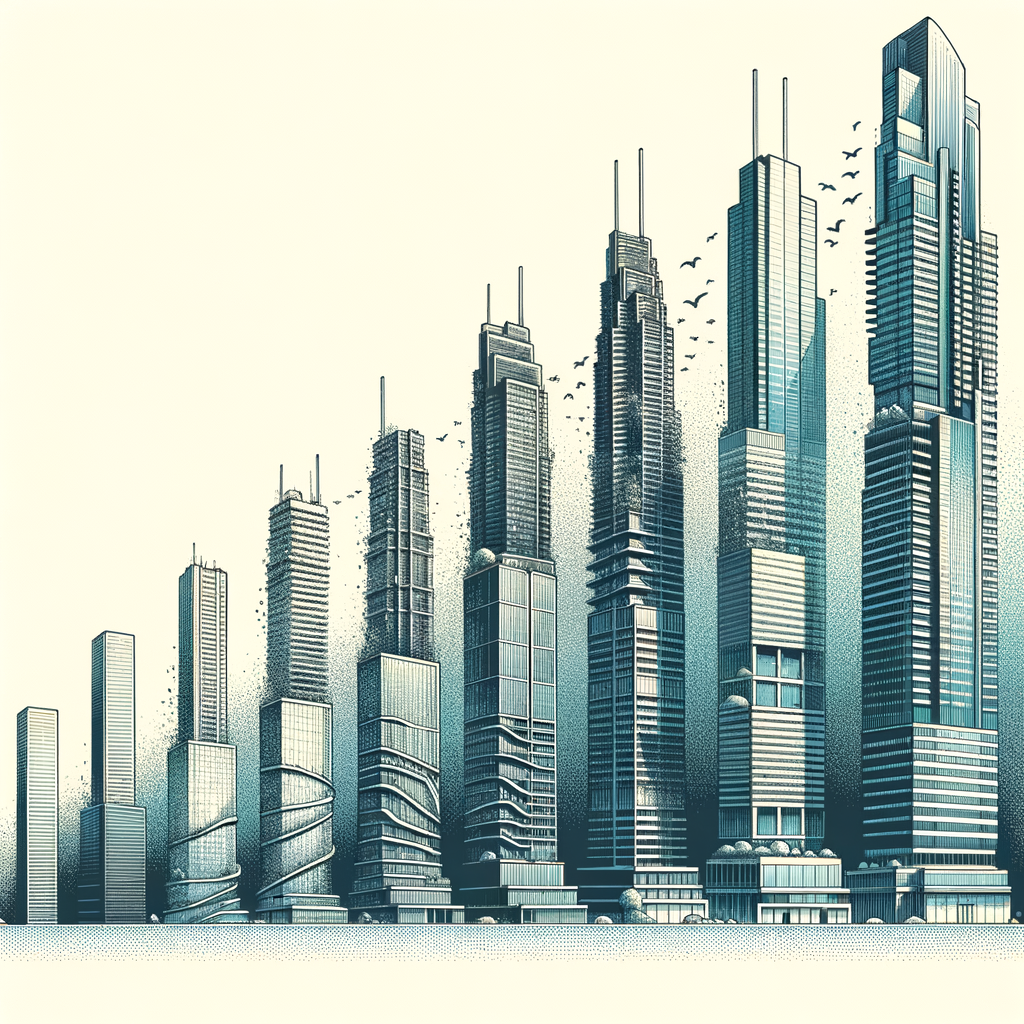
Skyscrapers have become synonymous with urban growth and modern architecture. Their presence in cities is emblematic of both progress and innovation, serving as hubs for economic activity, living spaces, and cultural engagement. The evolution of skyscrapers, from their origins in the late 19th century to the towering structures of today, reflects the changing demands and aspirations of urban communities. This transformation is deeply intertwined with advances in engineering, architectural design, and urban planning. The ascent of skyscrapers not only signifies an architectural feat but also marks substantial changes in how urban areas function and evolve. Understanding this growth offers insight into the dynamics of urban life and the role these structures play in shaping the world around us.
The rise of skyscrapers has fundamentally altered cityscapes, introducing a vertical dimension to urban planning that goes beyond mere functionality. Their development is driven by a confluence of economic pressure, technological advancements, and social trends that continue to redefine metropolitan environments. As cities around the globe expand rapidly, the demand for maximizing land use through vertical construction becomes increasingly imperative. The architectural marvel of skyscrapers thus becomes a focal point for urban planners and architects, symbolizing a city’s status, resilience, and forward-thinking vision. In this context, the growth of skyscrapers represents more than just physical structures; it encapsulates the essence of modern civilization’s race against space constraints while striving for innovation and sustainability.
The Historical Rise of Skyscrapers
The skyscraper’s journey began in the late 19th century during the Second Industrial Revolution when technological advances in construction and materials paved the way for vertical expansion. The invention of the elevator by Elisha Otis in 1853 was a pivotal moment that revolutionized building design, enabling structures to rise far beyond the constraints of stairs. The Home Insurance Building in Chicago, erected in 1885, is often credited as the first skyscraper. This structure utilized a steel frame skeleton, a breakthrough in architectural engineering, that allowed for greater height and design flexibility. As materials like steel and concrete became more prevalent and construction techniques evolved, the possibility of creating taller buildings became more attainable.
Throughout the early 20th century, skyscrapers continued to rise, primarily in the United States, particularly in cities like New York and Chicago. The race for the tallest building became a hallmark of urban pride and economic might. Iconic structures such as the Chrysler Building and the Empire State Building emerged during this era, setting new benchmarks for height and design. These towering landmarks were not merely functional offices or residences; they were testaments to human ingenuity and ambition. The aesthetics of skyscrapers also evolved during this time, blending elements of Art Deco and modernism, which reflected the cultural and technological optimism of the period.
Technological Advancements and Architectural Innovation
The 20th century witnessed rapid technological advances that further fueled the proliferation of skyscrapers. Structural engineering innovations such as the use of composite materials and the development of advanced computer simulations have allowed architects to push the boundaries of what is possible. The integration of technologies like high-speed elevators, automated building systems, and energy-efficient designs has become critical in the construction of modern skyscrapers. Flexible design strategies and the application of aerodynamic principles have also improved the resilience of these structures, enabling them to withstand natural disasters such as earthquakes and high winds.
Architectural innovation plays a pivotal role in the continuing growth of skyscrapers. As urban areas become more congested, architects are challenged to create buildings that maximize space without compromising aesthetics or functionality. The introduction of mixed-use skyscrapers, which combine residential, commercial, and recreational spaces, exemplifies this trend. By integrating different functionalities within a single structure, these skyscrapers provide a holistic approach to urban living that reduces commuting needs and encourages sustainable practices. Beyond their traditional role as commercial icons, skyscrapers are now incorporating green building practices, featuring eco-friendly technologies such as green roofs, rainwater harvesting systems, and solar panels to minimize their environmental impact.
Urban Impact and Social Dynamics
The influence of skyscrapers on urban landscapes extends far beyond their physical footprint. As cities become denser, these towering edifices manage to accommodate the increasing population by efficiently utilizing limited land resources. The vertical expansion offered by skyscrapers is crucial in megacities where horizontal expansion is either impossible or impractical. This has led to the densification of urban cores, fostering busier, more vibrant city centers that serve as focal points for cultural, economic, and social activities. In addition, skyscrapers often serve as symbols of a city’s identity, landmarks that catch the eye and heart of residents and tourists alike.
However, the rise of skyscrapers also brings challenges and complexities to social dynamics within urban areas. While they contribute to urban renewal and development, these buildings can also exacerbate socioeconomic disparities. Luxurious high-rise residences often cater to affluent individuals, potentially driving up property values and displacing lower-income communities. The shadow effect of skyscrapers, where large buildings block natural light and disrupt local ecosystems, further emphasizes the need for sustainable urban planning. Planners must balance the demand for vertical growth with considerations for public spaces and community well-being. By incorporating public spaces and amenities within or around skyscrapers, cities can foster inclusivity and equitable access, mitigating some of the potential negative impacts.
Cultural Significance and Future Trends
Skyscrapers embody cultural aspirations and signify technological dominance by representing the evolution of societal values over time. Architectural legends such as Norman Foster, Zaha Hadid, and Renzo Piano have left indelible marks on city skylines with their visionary designs. These skyscrapers are not merely engineering feats; they are cultural beacons that capture the essence of humanity’s dreams and aspirations. As more diverse architectural styles emerge, skyscrapers increasingly reflect a meld of cultures and eras, creating a tapestry of design that narrates the story of our global society.
Looking ahead, the future of skyscrapers lies in sustainable and smart city initiatives. With urban populations predicted to rise significantly, the demand for innovative and environmentally conscious architectural solutions is more pressing than ever. Future skyscrapers will likely integrate cutting-edge technologies such as smart glass, digital infrastructure, and renewable energy systems to reduce their carbon footprint and enhance livability. The concept of the “vertical city” is also gaining traction, wherein skyscrapers become microcosms of urban living, complete with vertical farming, in-house schools, healthcare facilities, and expansive communal areas. These advancements indicate a shift towards more self-sustaining ecosystems, where buildings not only serve as shelters or workplaces but as holistic environments tailored to human needs.
Conclusion
The growth of skyscrapers has played a crucial role in transforming urban landscapes across the globe. From their humble beginnings in the late 19th century to the ambitious constructions of today, skyscrapers have reshaped cities, affecting everything from economic growth to social dynamics. As they continue to evolve, skyscrapers reflect the ever-changing face of innovation, architectural art, and urban planning. They stand as markers of our technological progression and as challenges to sustainably accommodating the ever-growing urban populace. As skyscrapers rise higher and our cities become more advanced, their development prompts us to reflect on the roles these structures play in our lives, compelling us to find a balance between progress and sustainability.
Precisely how this balance will be achieved remains uncertain, yet the pursuit of harmony between skyscraper growth and urban livability continues to guide architects, engineers, and planners. Equally, the cultural and historical significance of these towering giants ensures they will remain at the forefront of urban narratives, embodying the aspirations, achievements, and identities of cities worldwide. As we look to the future, addressing the challenges and embracing opportunities presented by these modern marvels will ensure that skyscrapers remain integral to the tapestry of urban life, driving innovation, fostering community, and encapsulating the spirit of human achievement.
Frequently Asked Questions
1. What factors have contributed to the growth of skyscrapers in urban areas?
Skyscrapers have seen significant growth due to a combination of economic, technological, and social factors. Economically, urban centers have experienced increased demand for office spaces, residential areas, and commercial facilities. This demand is driven by urban population growth, globalization, and the influx of businesses seeking proximity to dense consumer and talent markets. Technologically, advances in construction materials and techniques, such as the development of steel frames, reinforced concrete, and elevators, have made it possible to build higher and more resilient structures. On the social front, there’s an increased focus on vertical living and working as cities become more congested and space becomes a premium commodity. The desire for iconic urban landscapes also fuels the push for more impressive and taller skyscrapers. These elements converge to stimulate the skyscraper boom seen in many global cities today.
2. How have skyscrapers transformed urban landscapes?
Skyscrapers have profoundly transformed urban landscapes in numerous ways. They have reshaped city skylines, symbolizing modernity and economic prosperity. By expanding vertically rather than horizontally, skyscrapers allow cities to accommodate more people and businesses within the same geographical footprint, making efficient use of limited urban space. This vertical expansion also encourages the development of lively central business districts, fostering economic activity and innovation. Additionally, skyscrapers cultivate distinctive city identities; iconic buildings often become landmarks and tourist attractions that contribute to a city’s global reputation. From a social perspective, skyscrapers often integrate retail spaces, entertainment venues, and cultural offerings, creating vibrant community hubs and bringing diverse groups together in one spatial context.
3. What engineering advancements have enabled the construction of modern skyscrapers?
Modern skyscrapers owe much of their grandeur and functionality to remarkable engineering innovations. Among these, the development of steel frame construction was pivotal, as it provided the strength required to support taller structures. Reinforced concrete further aided in providing durability against both vertical and lateral forces. The invention of safe and efficient elevators allowed buildings to rise beyond previously practical heights by enabling easy access to upper floors. Wind engineering became crucial as buildings grew taller; innovations such as tuned mass dampers, which help counteract swaying due to wind, became standard. Advances in foundation techniques have ensured stability even in challenging soil conditions. Moreover, CAD (Computer-Aided Design) and BIM (Building Information Modeling) systems have revolutionized the planning and precision in skyscraper construction, leading to more innovative and energy-efficient designs.
4. How do skyscrapers impact urban living environments?
Skyscrapers significantly impact urban living environments, both positively and negatively. On the positive side, they provide substantial residential spaces in dense urban areas, offering amenities that might otherwise be scarce or inaccessible. Thus, they play a crucial role in urban housing solutions, often incorporating luxury living with breathtaking city views. Skyscrapers also contribute to environmental sustainability through green building practices, such as energy-efficient glass, solar panels, and rainwater harvesting systems. However, they present challenges as well; tall buildings can create wind tunnels at street level, casting long shadows that affect light and temperature in surrounding areas. There is also the potential for increased traffic congestion and strain on infrastructure if not planned adequately. To mitigate these challenges, many cities prioritize comprehensive urban planning and improved public transportation systems.
5. What role do skyscrapers play in cultural and economic engagement within a city?
Skyscrapers are often seen as beacons of cultural and economic vitality. Economically, they serve as nerve centers for business and industry, housing corporate offices, financial institutions, and retail outlets, which drive economic growth and innovation. The concentration of jobs and services within skyscrapers attracts a diverse workforce, stimulating vibrant urban economies. Culturally, skyscrapers can host museums, galleries, and cultural events, acting as venues for art and interaction. Iconic skyscrapers often carry symbolic significance, representing a city’s aspirations and values. They serve as landmarks that shape global perceptions and contribute to a city’s identity. The presence of skyscrapers also promotes international engagement by drawing tourists and businesses worldwide, further integrating cities into the global economy.