
Introduction
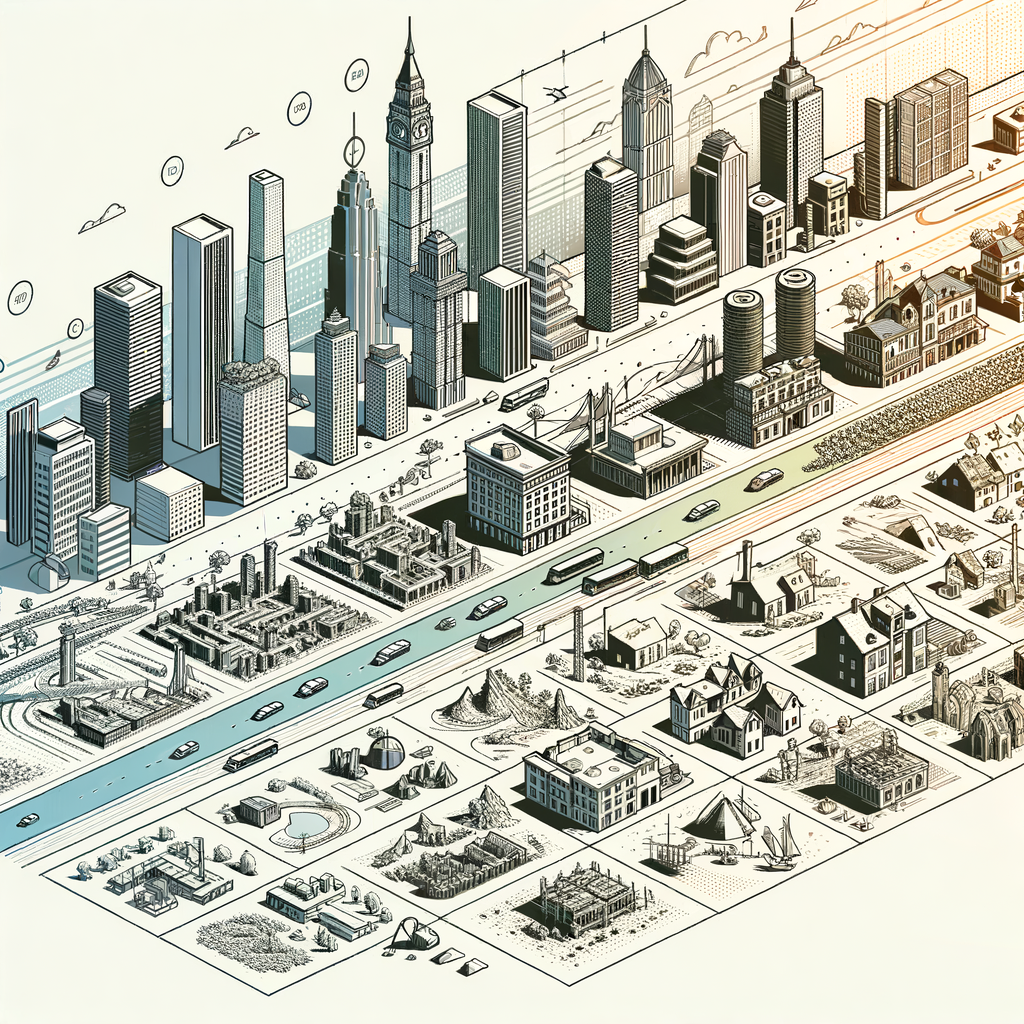
Urban planning has been a critical aspect of human civilization since the dawn of cities. As societies have evolved, so have the methods and philosophies that guide the development of urban environments. From the earliest settlements to contemporary metropolises, urban planning has undergone significant transformations. This historical overview will trace the journey of urban planning through the ages, examining how societal needs, technological advancements, and cultural shifts have influenced its evolution. The story of urban planning is one of adaptation and innovation, where the past continually informs the present and the future. By understanding the historical context, we can gain insight into contemporary planning practices and anticipate future trends.
Ancient and Classical Urban Planning
The roots of urban planning can be traced back to ancient civilizations. The Sumerians in Mesopotamia, around 3500 BCE, are often credited with developing some of the first urban settlements. These early cities, such as Ur and Uruk, featured organized layouts with houses, marketplaces, and public spaces. The need for irrigation and flood control in the fertile crescent necessitated early engineering efforts, which influenced city planning.
The Indus Valley Civilization, contemporary with Sumer, exhibited sophisticated planning, particularly in the city of Mohenjo-daro. This city exemplified a grid layout, with streets intersecting at right angles and advanced water management systems, including covered drains and sewage systems. Such features highlighted the Indus Valley’s emphasis on hygiene and order, setting a precedent for future urban developments.
In the Classical world, Greek and Roman urban planning left a lasting legacy. The Greeks embraced the concept of the city-state, or “polis,” emphasizing public spaces such as the agora and the use of grids in city layouts, famously attributed to Hippodamus of Miletus. This approach aimed to foster civic engagement and facilitated efficient urban management.
Roman urban planning expanded on Greek principles, integrating them with advanced engineering techniques. The Romans are renowned for their infrastructure, such as roads, aqueducts, and public buildings, which facilitated growth and connectivity across the empire. Roman cities featured prominently organized layouts, with forums serving as centers of administrative and commercial activity. The Roman emphasis on infrastructure and public amenities greatly influenced subsequent urban planning practices.
Medieval and Renaissance Periods
During the medieval era, urban planning was heavily influenced by feudalism and the church. Cities developed organically, often around castles, monasteries, or trade routes. These medieval towns were characterized by winding streets and irregular parceling, shaped by topography and historical circumstances. Defensive considerations, such as walls and fortified gates, were paramount in city planning.
The emergence of the Renaissance in Europe marked a shift in urban planning philosophies. Inspired by classical antiquity, Renaissance planners embraced symmetry, order, and proportion in city design. The concept of the “ideal city” emerged, aiming to reflect beauty, functionality, and the burgeoning humanist ideals of the era. This period saw the creation of iconic plans and the use of star-shaped fortifications, reflecting advancements in both aesthetic and defensive considerations.
Notably, cities like Florence and Venice showcased the integration of art, architecture, and urban planning. The Renaissance also spurred the development of city transport networks and the consideration of environmental factors, paving the way for modern planning concepts.
Industrialization and Urbanization
The Industrial Revolution of the late 18th and 19th centuries triggered profound transformations in urban planning. As factories and innovations in transport—like railroads and steamships—drove population growth in cities, urban areas faced new challenges, such as overcrowding, pollution, and poor public health. The traditional organic growth of cities was insufficient to address these issues, sparking the need for systematic planning approaches.
The emergence of the “Garden City” movement, pioneered by Ebenezer Howard, offered a vision of urban growth that combined elements of the countryside with the benefits of urban living. Garden Cities were designed with ample green spaces, and residential areas linked by efficient transport systems, promoting a healthy, balanced urban environment. This model influenced the subsequent planning of suburbs and remains pertinent in sustainable planning discussions today.
City planners like Frederick Law Olmsted also gained prominence, advocating for expansive urban parks and recreation spaces, as seen in Central Park, New York. Meanwhile, urban renewal and slum clearance initiatives transformed cityscapes, albeit often controversially. These efforts sought to modernize infrastructure and improve living conditions but sometimes displaced populations and erased historical areas.
Modernism and Post-World War II Urban Planning
The 20th century brought a radical shift in urban planning thought, heavily influenced by the modernist movement. Modernist planners, inspired by Le Corbusier and CIAM (Congrès Internationaux d’Architecture Moderne), emphasized functionalism and efficiency, envisioning cities as “machines for living.” High-rise residential buildings, zoning regulations, and the separation of different land uses typified this era.
Notable projects like Brasília, designed by Lúcio Costa and Oscar Niemeyer, demonstrated the modernist approach, featuring expansive open spaces, axial planning, and geometric forms. However, this era’s focus on automobile-centric planning and segregation of functions drew criticism for forsaking community and pedestrian needs.
After World War II, the shift towards rebuilding and managing the rapid urbanization resulted in comprehensive planning strategies. Governments invested in infrastructure development, housing, and transportation networks. Suburbanization became prominent, fueled by advances in automobile technology and rising standards of living. This period also saw significant urban sprawl, which planners continue to address today.
Contemporary Urban Planning Challenges and Approaches
Entering the late 20th and early 21st centuries, urban planning faced new challenges, necessitating adaptive and innovative approaches. Globalization has intensified urban growth, creating mega-cities that demand sustainable solutions. Planners now confront complex issues like climate change, socioeconomic inequality, and smart technology integration in urban design.
Smart city initiatives and technologies have become integral, characterized by data-driven decision-making, Internet of Things (IoT) applications, and sustainable energy solutions. Cities like Singapore and Barcelona exemplify integrating technology with urban management, enhancing efficiency and livability.
Moreover, the rise of participatory planning empowers communities to engage in the planning process, promoting diversity and inclusivity. Public participation ensures that a wide range of voices influence urban development, reflecting contemporary societal values.
Contemporary planning also emphasizes resilience in the face of environmental challenges. Climate-responsive strategies, such as green roofs, urban forests, and flood defenses, are increasingly prioritized in new developments.
Sustainability remains a core focus, with planners striving to balance economic growth, social equity, and environmental stewardship. Eco-friendly transport systems, mixed-use developments, and compact urban forms are central to this sustainable vision.
Conclusion
The evolution of urban planning reflects humanity’s dynamic relationship with its built environment. From ancient grids to modern sustainability, each era of urban planning has addressed specific challenges and leveraged available resources to improve urban living conditions. As the world continues to urbanize, the insights from historical planning practices inform contemporary strategies, shaping the cities of tomorrow.
Looking ahead, urban planners are poised to address unprecedented challenges. The integration of technology and the prioritization of sustainability and resilience will undoubtedly guide future innovations. As urban environments face increased pressure, the need for thoughtful, inclusive, and adaptable planning remains paramount. By learning from history, embracing present opportunities, and preparing for future demands, urban planning will continue to evolve, improving the quality of life for all urban dwellers.
The journey of urban planning is far from over. As cities grow and evolve, so too will the strategies and solutions devised by planners. This ongoing dialogue between past, present, and future is essential to creating vibrant, sustainable, and livable urban spaces for generations to come.
Frequently Asked Questions
1. How did urban planning start and what were the earliest methods used?
Urban planning has its roots in the very beginnings of human civilization. As communities transitioned from nomadic lifestyles to settled societies, there was a need for more structured and organized living spaces. In ancient times, planners looked to design cities that could efficiently support growing populations while providing basic services and security. The earliest methods of urban planning can be traced back to the Indus Valley Civilization, where cities like Harappa and Mohenjo-Daro exhibited remarkable planning concepts, including grid patterns and advanced drainage systems. Likewise, ancient Egypt, Mesopotamia, and later on, Greece and Rome, incorporated elements like zoning for different activities, public spaces, and heavy fortifications.
These ancient civilizations aimed to synchronize the layout of their cities with their cultural, religious, and administrative needs. For instance, the Romans were renowned for their roads, aqueducts, and public baths, which improved urban connectivity and the quality of life. Over time, these early examples of planning set the stage for more systematic approaches that incorporated innovations tailored to society’s evolving needs.
2. What major societal needs have influenced the evolution of urban planning?
The evolution of urban planning has been closely tied to the changing needs of the societies it serves. One of the major driving forces in early urban development was the need for defense and safety, prompting fortified settlements and strategic layouts. As time went on, economic activities became central to city planning, with marketplaces and trade routes influencing urban centers. The Industrial Revolution marked a significant shift where industrial and economic expansion required new planning approaches to handle mass urban migration, which led to overcrowding and unsanitary conditions.
Epicenters of production needed supporting infrastructure like railways and ports, which guided the expansion and organization of cities. In contemporary times, with the onset of globalization and information technology, urban planning now emphasizes sustainability, environmental concerns, and smart-city concepts. Current societal needs now also involve addressing inequality, providing affordable housing, and maintaining a balance between tradition and innovation. Each era has seen urban planning adapt to prioritize what the society of the time values most, demonstrating its flexibility and critical role in urban evolution.
3. How has technology impacted the field of urban planning throughout history?
Technology has always been a catalyst in the evolution of urban planning, offering new tools and methodologies to design cities that can respond to the requirements of their inhabitants. In ancient times, technological advancements in water management, such as wells and aqueducts, made urban expansion possible by addressing water supply issues. The Romans especially were experts in using technology to create infrastructure that facilitated mobility and utility distribution.
The Industrial Revolution spurred another technological leap with railways and steam power altering urban landscapes, leading to sprawling industrial cities. As we moved into the 20th century, the introduction of the automobile drastically reshaped city designs, favoring road networks and suburban development, prioritizing speed and accessibility. In recent decades, the rise of digital technology and information systems has influenced urban planning through Geographic Information Systems (GIS) and computer-aided design (CAD), allowing for more precise simulations, modeling, and data analysis.
Today, technology drives the concept of smart cities, integrating IoT devices, big data, AI, and sensors to optimize infrastructure, manage resources efficiently, and enhance the quality of urban life. The continuous integration of technology has been fundamental in planning resilient urban environments capable of adapting to social, economic, and environmental changes.
4. In what ways have cultural shifts played a role in changing urban planning strategies?
Cultural shifts have consistently been at the forefront of urban planning transformation. As societal values change, so do the philosophies around how cities should be designed and built. In ancient times, the cultural significance of religion and governance was reflected in city designs that prominently featured temples, palaces, and arenas. Cities like Athens emphasized order and aesthetics alongside practical functions, indicative of their cultural values.
The Renaissance period saw a return to classical principles of harmony, symmetry, and rationality in urban layouts, reflecting a cultural rebirth and humanistic values. The industrial era emphasized efficiency and productivity, often at the cost of aesthetic and health considerations. However, the counter movements in the 20th century highlighted planning innovations emphasizing public welfare, with garden cities and greenbelts introduced as responses to industrial excesses.
Late 20th and 21st-century planning has seen diversifying culture and lifestyles creating a demand for urban environments that support multicultural cohabitation, diverse recreational spaces, and creative use of public areas. Today’s urban planning frequently engages community participation, valuing inclusivity, diversity, and cultural identity preservation alongside modernization.
5. How do contemporary urban planning challenges compare to those of the past?
Contemporary urban planning faces a complex set of challenges that both parallel and differ from those of the past. Historically, urban challenges revolved heavily around basic infrastructure needs and immediate societal demands like defense, commerce, and sanitation. Today, while these aspects are still relevant, planners also grapple with multifaceted issues such as climate change, rapid urbanization, and social equity.
The increase in urban populations has created housing pressures, heightening past challenges of managing dense settlements but on a much larger scale. Environmental concerns have pressed planners to focus on sustainability methods that were not as prioritized in the past, introducing energy-efficient designs, renewable energy sources, and “green” building standards. Moreover, issues like social inequality, transportation congestion, and community fragmentation demand multifaceted responses and interdisciplinary collaboration.
Additionally, with the availability of new technology, contemporary urban planning involves considerations about digital infrastructures, cybersecurity, and data privacy, which were non-existent challenges in history. Balancing the march of progress while preserving cultural heritage is another nuanced challenge. Despite the evolution in challenges, the core purpose of urban planning remains unchanged: making urban environments responsive to the era’s needs while envisioning a desirable future for their inhabitants.