
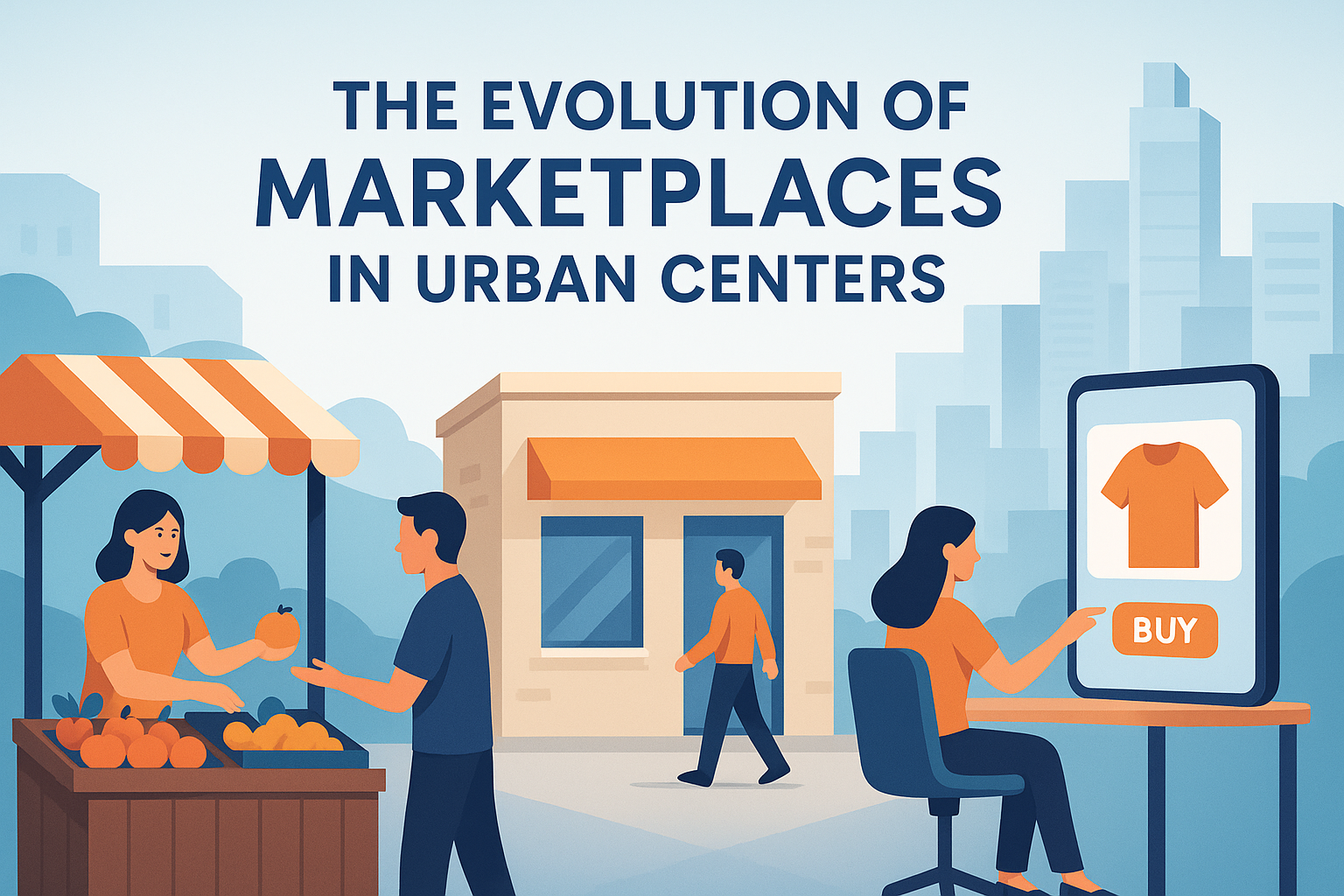
The transformation of marketplaces within urban centers traces a fascinating trajectory that mirrors societal changes, technological advancements, and economic growth. At its core, a marketplace is a venue — physical or virtual — where individuals congregate to buy and sell goods and services. The evolution of these marketplaces is crucial as it reflects urbanization trends, shifts in consumer behavior, and adaptation to technological innovations. Understanding this evolution matters because it not only shapes the commerce industry but also impacts city planning, cultural interactions, and economic development. By exploring the history and changes in urban marketplaces, we gain insights into how cities adapt to modern demands while preserving historical and cultural roots.
The Origins of Marketplaces in Urban Centers
Marketplaces have existed since ancient civilizations, serving as the heart of commerce and social interaction in urban areas. In the earliest towns, marketplaces were open spaces where local farmers and craftsmen sold their goods. These were communal hubs, often located in town squares or key intersections, facilitating not only trade but also the exchange of news, ideas, and culture. The Greek Agora and Roman Forum are iconic examples of such marketplaces, acting as both commercial and social centers. These early marketplaces were essential for the economic sustenance of cities, providing a centralized location for the distribution and exchange of goods.
As urban centers grew, so did the complexity of their marketplaces. The medieval period saw the birth of permanent structures, such as covered marketplaces and merchant guild halls, allowing for greater organization and specialization within the market. This evolution was driven by the need for permanent spaces due to increasing urban populations and the diversification of goods and services offered. For example, the famous Grand Bazaar of Istanbul, established in the 15th century, exemplifies how these complex marketplaces became significant economic powerhouses, with over 4,000 shops that continue to operate today.
The Rise of Modern Retailing Concepts
The Industrial Revolution ushered in a new era for urban marketplaces, leading to the emergence of department stores and shopping arcades. These structures revolutionized consumer shopping experiences by offering a wide variety of goods under one roof, reducing the need for consumers to visit multiple vendors. Department stores like Le Bon Marché in Paris, Harrods in London, and Macy’s in New York City became iconic during the 19th and early 20th centuries, symbolizing the modernization of retail. They not only enhanced convenience for consumers but also implemented innovations such as fixed pricing and window displays, which are standard in today’s retail environment.
Department stores’ influence extended beyond just shopping. They became cultural landmarks and meeting points within urban communities, reflecting and shaping societal norms and trends. They also set the stage for future retail innovations by incorporating advanced logistics, merchandising, and customer service strategies. Modern urban centers continue to be defined by these monumental retail spaces, reflecting the continued importance of large-scale retailing in urban economies.
Adapting to Technological Innovations
Throughout the latter half of the 20th century and into the 21st, technological advancements have radically altered urban marketplaces. The rise of the internet and e-commerce platforms like Amazon and Alibaba represent a monumental shift from traditional brick-and-mortar stores to online marketplaces. This digital transformation has expanded consumer reach, offering unprecedented access to global merchandise from the comfort of one’s home. These platforms capitalize on digital marketing, user reviews, and personalization, setting new standards for consumer expectations.
- The Internet simplified product search and comparison, enabling informed buying decisions.
- Online payment systems enhanced security and convenience for global transactions.
- Warehousing and logistics technologies reduced delivery times, bringing products to consumers faster than ever.
- Social media integrated with e-commerce, allowing for real-time communication and targeted advertising.
This technological evolution has not rendered physical marketplaces obsolete; instead, it has encouraged the integration of digital tools with physical retail. Many retailers now employ omnichannel strategies, blending the advantages of both online and offline shopping to cater to diverse consumer needs. For instance, “click and collect” services allow consumers to purchase online and pick up in-store, offering flexibility and immediacy.
Urban Marketplaces in Developing Regions
The story of urban marketplaces in developing regions offers a different perspective. In many cases, traditional markets remain central to commerce and life, yet they’re gradually incorporating modern practices and structures. For instance, in cities across Africa and Southeast Asia, traditional markets coexist with burgeoning shopping malls, reflecting a balancing act between tradition and modernity.
In cities like Nairobi, the city’s marketplaces such as Maasai Market continue to thrive by offering unique local crafts and goods. These markets are essential for local economies, providing livelihoods for many vendors and access to essential goods for residents. There is a growing trend towards upgrading these spaces, introducing better infrastructure, and adopting cashless payment systems to enhance efficiency and safety. Such developments ensure these traditional marketplaces remain relevant and competitive in a rapidly modernizing world.
The Impact of Urbanization and Cultural Trends
The continued growth of urban populations has drastically impacted the structure and operation of marketplaces. As more people move to cities, there’s increased demand for goods and services, pushing markets to expand and innovate. Modern consumers seek more than just shopping; they desire experiences that combine culture, leisure, and convenience.
Urban redevelopment projects often focus on adapting marketplaces into mixed-use spaces that include retail, dining, entertainment, and residences. This aligns with cultural trends that favor walkable urban centers with diverse amenities. A striking example is the revitalization of London’s Covent Garden, transforming from a traditional fruit and vegetable market into a dynamic cultural and shopping destination. Such transformations highlight the role of marketplaces in contemporary urban life, serving as crucial links between commerce and urban culture.
Future Directions for Urban Marketplaces
As urban centers continue to grow and evolve, marketplaces must adapt to meet future demands. Sustainability is becoming a central theme, influencing the development of eco-friendly market spaces. Innovations such as green buildings, sustainable supply chains, and the promotion of local goods are becoming more prevalent. These practices not only reduce environmental impacts but also appeal to eco-conscious consumers.
Moreover, technology will continue to shape the future of urban marketplaces. Artificial intelligence and big data can optimize inventory management, predict consumer trends, and personalize shopping experiences. The integration of augmented reality (AR) and virtual reality (VR) is set to enhance in-store experiences by offering virtual try-ons and immersive product demonstrations. Urban centers must remain adaptable, fostering marketplaces that are resilient, inclusive, and technologically advanced.
Concluding Thoughts and Next Steps
The evolution of marketplaces in urban centers is a testament to humanity’s ability to adapt and innovate in response to changing needs and circumstances. From ancient agoras to modern online platforms, marketplaces have continually evolved to become the economic and cultural heart of urban life, reflecting broader societal trends. For consumers, businesses, and city planners alike, understanding this evolution offers valuable insights into future developments, helping them prepare for and shape what’s next.
The key takeaway for readers is the importance of embracing change while valuing the rich history and tradition of marketplaces. For city planners and policymakers, this means creating environments that harness new technologies while preserving cultural heritage. For consumers and retailers, it means staying informed and adaptable to leverage new opportunities. The next step in this journey is active engagement with these evolving marketplaces — whether that involves participating in local urban planning discussions, embracing sustainable shopping practices, or exploring diverse, culturally rich downtown areas. In doing so, we can all contribute to the vibrant future of urban marketplaces, ensuring they remain vital components of our cities for generations to come.
Frequently Asked Questions
1. How did marketplaces evolve in urban centers over time?
The evolution of marketplaces in urban settings is a journey that reflects broader societal transformations. Initially, marketplaces started as simple, open-air spaces where sellers set up stalls to hawk their goods to locals. The emphasis was on face-to-face interaction, with a focus on fresh produce, handcrafted items, and essential goods. As cities grew and populations expanded, so too did the complexity of these markets. This led to the creation of permanent structures such as covered markets and dedicated shopping streets. The Industrial Revolution marked a significant shift, with mass production paving the way for department stores, bringing a plethora of products under one roof. The rise of the middle class and increased disposable income further fueled this development. In recent decades, the digital revolution has transformed marketplaces yet again, with the ascendancy of e-commerce platforms enabling people to shop online globally, transcending geographical barriers. Today, marketplaces in urban centers are a blend of traditional physical markets, modern shopping malls, and digital platforms, reflecting a rich tapestry of commerce influenced by technological and societal advancements.
2. What role did technological advancement play in the evolution of urban marketplaces?
Technology has been a primary driver in the transformation of urban marketplaces. In the early stages, technological advancements in transportation and communication contributed significantly by reducing the time and cost of getting goods to market, which expanded the variety and availability of products. The invention of electricity revolutionized marketplaces by allowing longer opening hours and better preservation of goods. As we moved into the late 20th and 21st centuries, the rise of information technology and the internet brought about the most dramatic changes. Online marketplaces and e-commerce platforms have redefined the shopping experience, making it more convenient and accessible. Technologies like mobile payment systems, logistics advancements, big data analytics, and artificial intelligence have optimized the shopping process, personalized customer experiences, and created a seamless interface between online and offline worlds. The proliferation of smartphones further accelerated online shopping trends, allowing people to shop on-the-go. Thus, technology continually reshapes marketplaces, catering to increasingly connected consumers.
3. How does the evolution of marketplaces impact urbanization trends?
The evolution of marketplaces has a symbiotic relationship with urbanization trends. As cities grow, they naturally attract a diverse population seeking jobs, goods, and services, prompting the development of various forms of marketplaces to meet these demands. Urbanization leads to increased demand for goods, which influences the size and scope of markets. This can be seen in the rise of mega-malls and sprawling urban shopping districts that cater to a densely concentrated urban population. Additionally, marketplaces contribute to urban development by creating economic hubs that spur local business growth, infrastructure development, and employment opportunities. The emergence of global marketplace platforms has allowed urban areas to connect with global supply chains, thus expanding their reach beyond local borders. Consequently, urban centers have transformed into hubs of commerce and culture, continually evolving to serve the needs of an urbanized populace in a globalized economy.
4. What shifts in consumer behavior are reflected in the evolution of marketplaces?
Consumer behavior is a catalyst for change in the evolution of marketplaces. Over the years, consumer preferences have shifted from simple, necessity-driven purchases toward more experience-oriented and diverse shopping habits. The demand for convenience, variety, and quality has led to the proliferation of both physical and online marketplaces. Consumers now prioritize speed and convenience, favoring online shopping for its instant access to vast selections and delivery to their doorstep. There is also a growing emphasis on sustainability and ethical sourcing, pushing marketplaces to adapt by providing environmentally friendly and fair-trade options. Personalized shopping experiences, facilitated by data analytics and AI, have become essential, as consumers seek tailored recommendations and services that meet their specific needs. Furthermore, with the rise of social media and influencer culture, consumers are more informed and influenced by peer reviews and online trends, prompting marketplaces to maintain a robust online presence. This evolving consumer behavior necessitates continuous adaptation to ensure marketplaces remain relevant and competitive in serving the dynamic needs and desires of today’s consumers.
5. What future trends could further influence the development of marketplaces in urban centers?
As we look to the future, several emerging trends could profoundly shape the development of marketplaces in urban centers. The integration of Augmented Reality (AR) and Virtual Reality (VR) is set to transform the shopping experience by providing immersive, interactive environments that blend digital and physical spaces seamlessly. Furthermore, the rise of the gig economy and peer-to-peer marketplaces, driven by platforms like Uber and Airbnb, is democratizing access to goods and services, challenging traditional business models. Additionally, blockchain technology promises to enhance transparency and trust, particularly in transactions involving product provenance and supply chains. The convergence of artificial intelligence and machine learning will enable even greater personalization and predictive shopping experiences, matching consumer needs with marketplace offerings more accurately and efficiently. Sustainability will continue to be a priority, with increased pressure on marketplaces to adopt green practices, like reducing packaging waste and optimizing supply chains for minimal carbon footprints. Finally, as urban centers become smarter with IoT integration, marketplaces will tap into this network to analyze consumer behavior patterns, optimize inventory management, and enhance customer engagement. These technological and societal shifts offer vast opportunities for innovation in urban marketplaces, paving the way for an even more dynamic and interconnected commercial landscape.