
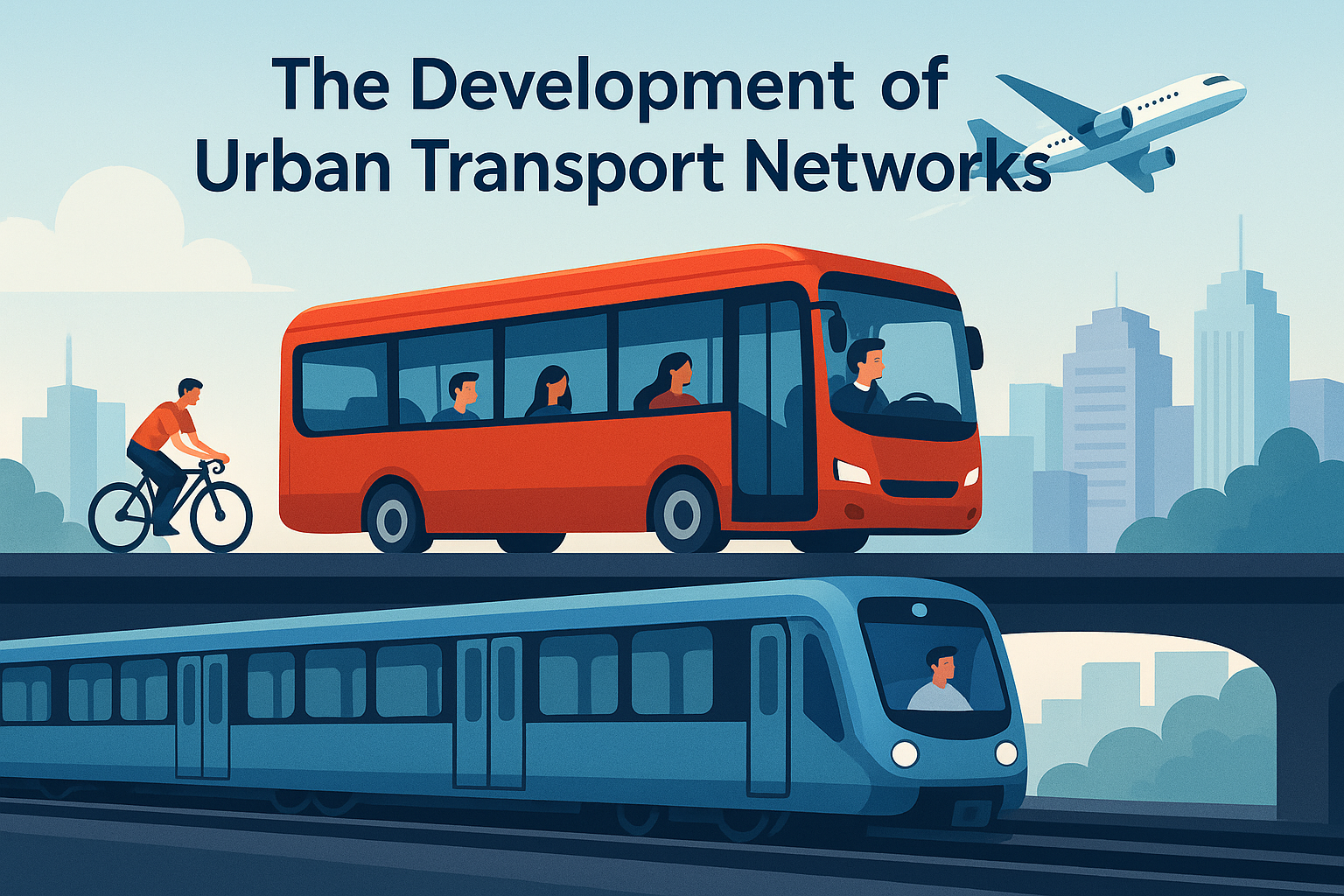
Introduction to Urban Transport Networks
Urban transport networks form the backbone of any city’s infrastructure, facilitating movement, trade, and connectivity among its residents. These networks encompass a wide array of systems, including roads, railways, subways, buses, and pedestrian pathways, that work in tandem to transport individuals and goods efficiently within an urban environment. The development and optimization of these networks are vital to addressing the mobility challenges posed by rapidly growing urban populations.
Transport networks play a pivotal role in defining the quality of life in cities. Efficient systems enable economic activity, reduce travel times, lower emissions, and improve access to essential services. However, dynamic urban landscapes present a host of challenges to transport planners, such as congestion, pollution, and the need for sustainable growth. As urban areas continue to expand, the evolution of transport networks becomes an ever more pressing issue. By delving into the development of urban transport networks, we can appreciate their complexity and recognize the multifaceted strategies required to enhance them. Understanding this evolution is crucial for policymakers, city planners, and residents aiming to foster environments that promote sustainable transit solutions.
Evolution of Road Networks
The development of road networks in urban areas represents one of the most significant transformations in city planning and infrastructure. Road networks provide the foundation for personal vehicle transportation, public buses, and commercial trucking, serving as the arteries that keep urban economies flowing.
Initially, urban road networks consisted of simple pathways and cart routes. As cities expanded during the Industrial Revolution, so too did the complexity of their road systems. The advent of the automobile in the early 20th century revolutionized road planning, leading to the construction of wide avenues and multi-lane highways designed to accommodate increasing traffic volumes.
A prime example of this evolution is the city of Los Angeles, which experienced explosive growth in the 20th century. Anticipating future mobility needs, Los Angeles invested heavily in an extensive freeway network, known for its intricate interchanges and sprawling reach. This network facilitated not only intra-city travel but also supported suburban expansion, shaping the region’s economic landscape.
- Initial road systems were designed for pedestrian and horse-drawn transport.
- Automobile proliferation led to the creation of wide avenues and highways.
- The introduction of zoning laws influenced the form and function of road networks.
- Los Angeles is a classical example, with the development of its iconic freeway system.
However, the benefits of expansive road networks have often come at a cost, with increased traffic congestion, air pollution, and urban sprawl posing substantial challenges. Modern solutions must balance these negative consequences with the need for efficient transportation.
Rail and Subway Systems
Railway systems are another crucial component of urban transport networks. They provide high-capacity, efficient transport solutions that are less susceptible to traffic congestion than road-based systems. Rail networks can be categorized into overground railways, such as commuter trains and high-speed rail, and underground systems, commonly referred to as subways or metros.
The development of rail and subway systems often coincides with periods of rapid urbanization. Historically, capital cities and major industrial hubs were among the first to recognize the advantages of these systems, prioritizing the construction of expansive rail networks to support burgeoning populations.
Take London, for instance, whose London Underground, opened in 1863, set a precedent for modern subway systems. As the world’s first underground railway, it demonstrated the feasibility and utility of subterranean travel. This iconic network has evolved over decades, expanding to cover over 400 kilometers, and it now serves as a critical transport mode for millions of Londoners daily.
Modern urban railways address sustainability concerns by offering eco-friendly alternatives to cars, reducing both emissions and overall energy consumption. Furthermore, developments in rail technology have led to more efficient systems capable of faster speeds, quieter operation, and greater passenger capacity.
| City | Subway Opening Year | Network Length (km) | Daily Ridership (millions) |
|---|---|---|---|
| London | 1863 | 400 | 5 |
| New York City | 1904 | 418 | 6 |
| Tokyo | 1927 | 304 | 7.6 |
Integration with Modern Technology
The rapid advancement of technology in recent years has enabled the integration of digital solutions into urban transport networks, enhancing efficiency and user experience. Key technological advancements include real-time data analytics, smart ticketing systems, and app-based ride-sharing services.
Singapore exemplifies how technology can transform urban transport. The country’s Land Transport Authority utilizes an intelligent transport system (ITS) employing real-time traffic data and surveillance technologies to optimize traffic flow and reduce congestion. This data-driven approach allows for predictive analyses and responsive management of roadways, enhancing overall efficiency in public and private transport modes.
Additionally, digital platforms such as mobile apps have revolutionized passenger interaction with transport networks. New York City’s MTA, for instance, utilizes apps that provide real-time service alerts, trip planning tools, and integrated payment systems. These tools not only enhance the commuter experience but also encourage the use of public transport by improving accessibility and reliability.
Future developments in technology are expected to continue enhancing urban transport, with innovations like autonomous vehicles and smart infrastructure poised to redefine how cities manage transit.
Challenges in Sustainable Development
As urban areas continue to expand, developing sustainable transport networks becomes an ever-pressing challenge. The focus on sustainability aims to meet current mobility needs without compromising the ability of future generations to live in thriving urban environments.
Among the key challenges facing sustainable development are environmental concerns, such as reducing carbon emissions and air pollution from transport-related activities. New York’s Clean Transit Plan is an initiative that targets a shift to an all-electric bus fleet by 2040, significantly reducing emissions and improving air quality.
Another challenge is the need to balance infrastructure development with urban land-use planning. Space constraints in densely populated areas demand innovative solutions like vertical infrastructure and shared transport systems. The Danish capital, Copenhagen, has been successful in implementing cycling as a viable mass transit alternative, addressing space limitations while promoting healthy and sustainable transport options.
Urban transport networks must also be inclusive, providing accessible options for all demographics, including disabled and lower-income populations. Equitable access to transit systems ensures that all individuals benefit from improved mobility and economic opportunities.
Conclusion
The development of urban transport networks is a complex and dynamic process that requires strategic planning and continuous adaptation to meet evolving urban challenges. These networks are essential for fostering economic growth, promoting sustainability, and enhancing the quality of life within cities.
Evolving road networks, innovative rail and subway systems, and advanced technologies have each played significant roles in shaping urban transit infrastructure. While these developments have produced numerous benefits, they also bring with them complex challenges that demand innovative and sustainable strategies.
Recognizing the importance of equitable and environmentally friendly transport, we must continue to support policies and initiatives that prioritize efficient, accessible, and sustainable solutions. As individuals, advocating for robust transit systems and responsibly utilizing the available infrastructure ultimately contributes to building resilient and thriving urban environments.
By understanding the intricate factors involved in the development of urban transport networks, stakeholders at all levels can work collaboratively to achieve the vision of seamless, efficient, and sustainable urban mobility for all.
Frequently Asked Questions
1. What are urban transport networks, and why are they important for cities?
Urban transport networks are essential systems within a city that include a variety of components such as roads, railways, subways, buses, and pedestrian pathways. These networks are crucial because they support the smooth movement of people and goods across different urban areas. The development of urban transport networks plays a vital role in ensuring that residents have accessible, reliable, and efficient means of transportation. For any city, having a robust urban transport network is synonymous with economic vitality and social well-being. It enables residents to commute conveniently from homes to workplaces, schools, shopping centers, and other crucial places. Moreover, robust transport networks enhance trade and commercial activities by allowing goods and services to be transported within the city rapidly. They also enhance connectivity by seamlessly connecting different parts of a city to each other and beyond. In addition to economic factors, urban transport networks contribute to social equity by providing diverse transport options that cater to all demographics within a city. Well-planned networks ensure that all residents, regardless of their social standing, have access to essential services and opportunities, thereby promoting inclusivity and reducing social divides.
2. What are the biggest challenges faced in developing urban transport networks?
The development of urban transport networks faces many challenges that can vary significantly from city to city. Some of the primary challenges include: – Urbanization and Population Growth: Rapid urbanization and increasing populations put pressure on existing transport networks, leading to congestion, delays, and inefficiencies. Cities need to continuously expand and upgrade their networks to accommodate growing numbers. – Financial Constraints: Building and maintaining transport infrastructure is expensive. Securing consistent funding for such projects often requires navigating complex political and economic landscapes. Budget limitations can delay or restrict essential upgrades and expansions. – Environmental Concerns: As awareness about climate change grows, cities must balance transport needs with environmental concerns. Developing eco-friendly, sustainable transport systems is integral but challenging due to the need to retrofit old systems and create new green initiatives. – Technological Integration: The fast-paced evolution of technology means urban transport systems must continuously adapt to new advancements like autonomous vehicles, smart traffic management systems, and real-time data analytics. Integrating such technology into existing infrastructure can be complex. – Societal Impacts: Transport projects can displace communities and disrupt neighborhoods. Planners must consider social justice and include community involvement to develop networks that meet the diverse needs of the population.
3. How do public transport systems contribute to the efficiency of urban transport networks?
Public transport systems are foundational to the efficiency and effectiveness of urban transport networks. Public transit, such as buses, subways, trams, and trains, provides a communal mode of transportation that can move large groups of people efficiently. This not only reduces the number of private vehicles on the road, thereby alleviating traffic congestion, but also makes urban areas more accessible. Public transport is usually more affordable for citizens compared to maintaining a personal vehicle, offering a cost-effective choice that is essential for inclusivity. A well-developed public transportation system can reduce travel times and improve convenience for everyday commutes and longer journeys across cities. Moreover, these systems are more environmentally friendly compared to the mass usage of private vehicles. By consolidating numerous travel paths into efficient, communal routes, public transport reduces fuel consumption per capita, leading to fewer greenhouse gas emissions and less pollution overall. Urban areas reliant on an efficient public transportation network tend to see economic benefits as these systems connect job centers with residential areas, shopping districts, and educational institutions, boosting commercial activity. Ultimately, public transport raises the quality of life in urban environments by providing reliable travel options that are essential for dynamic city living.
4. How is technology shaping the future of urban transport networks?
Technology is fast emerging as an indispensable driver in the transformation of urban transport networks. Several ways technology is influencing these networks include: – Smart Infrastructure: Technologies such as Internet of Things (IoT), sensor networks, and smart grids are revolutionizing urban transport by enabling real-time data collection and analysis. This promotes efficiency in traffic management, reduces congestion, and enhances system reliability. – Autonomous Vehicles: The rise of autonomous or self-driving vehicles promises to reshape urban mobility by improving safety, optimizing traffic flow, and potentially reducing the need for private vehicle ownership. Urban areas may see reduced parking needs and reallocation of spaces previously dedicated to vehicles. – Mobility-as-a-Service (MaaS): Integrating various transport services into a single on-demand platform is emerging as a major trend. These platforms offer a seamless user experience by allowing residents to plan, book, and pay for diverse transport services using one app. – Electric Vehicles (EVs): The widespread adoption of electric vehicles is crucial for reducing urban pollution and carbon emissions. Many cities are incorporating EV charging stations and incentivizing EV purchases to foster greener networks. – Advanced Data Analytics: Data-driven decision-making is improving route planning, scheduling, and even fare management. Predictive analytics help anticipate demand, optimize routes, and efficiently manage resources, improving overall network functionality.
5. How do pedestrian pathways integrate into urban transport networks?
Pedestrian pathways are a vital component of urban transport networks, playing a significant role in ensuring that cities are walkable and accessible. These pathways offer an alternative mode of transit that encourages health and well-being through walking while reducing reliance on motorized transport for short distances. Incorporating pedestrian pathways into urban design improves connectivity between different transport modes—such as bus stops, train stations, and bicycle paths—providing seamless transit options for commuters. Well-designed pedestrian networks connect residential areas with city centers, parks, schools, and local businesses, promoting a more active lifestyle and enhancing a city’s livability. Furthermore, pedestrian pathways contribute to safety in urban transport. By providing dedicated spaces for foot traffic, these pathways help reduce pedestrian-vehicle conflicts and increase flow within busy urban areas. Many cities increasingly focus on enhancing pedestrian pathways through features such as wider sidewalks, improved lighting, traffic signalization, and pedestrian bridges or tunnels. The emphasis on aesthetic and functional urban design has propelled the pedestrian experience into the forefront of city planning. Attractive landscapes, public art installations, and green spaces along pathways enhance the visual appeal, making walking both a practical and enjoyable activity. In this manner, pedestrian pathways are more than mere connectors; they foster community interaction and make urban transport systems truly comprehensive.