
Introduction
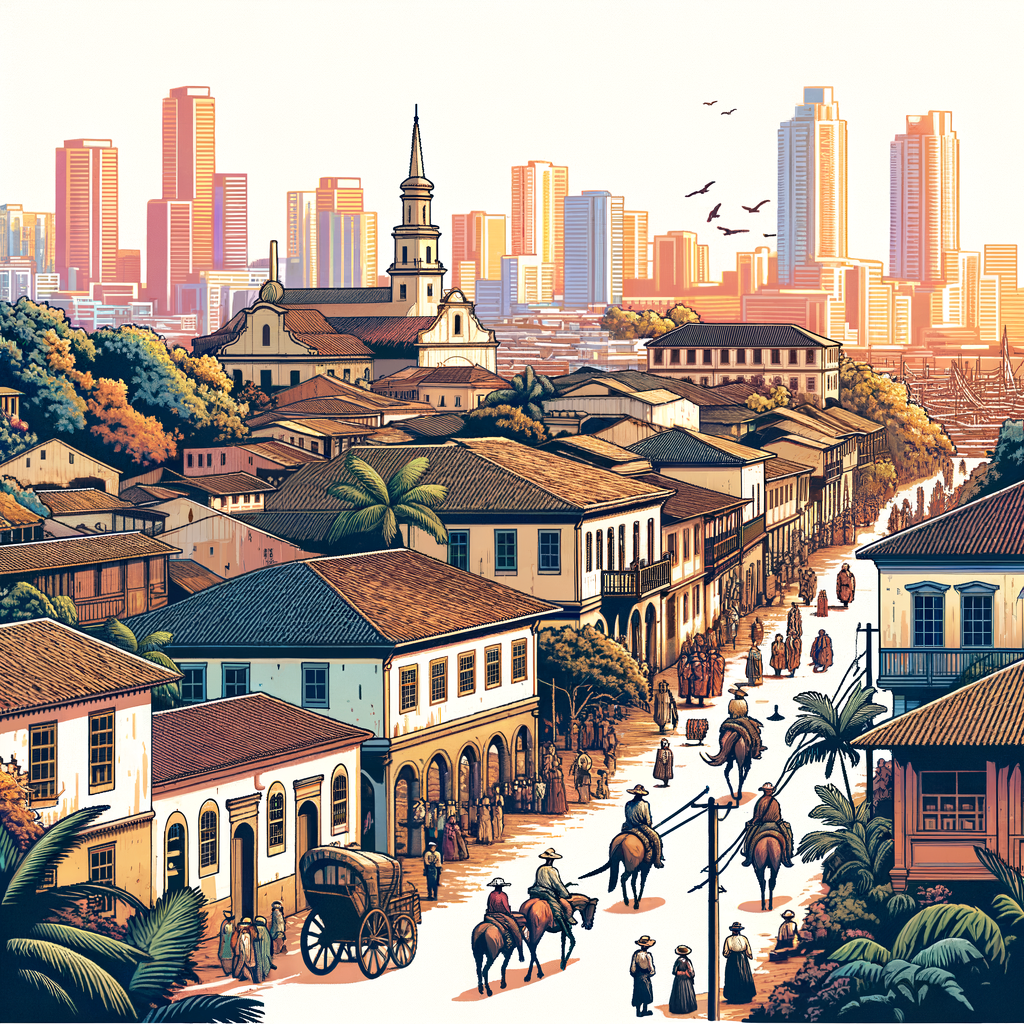
The era of colonial expansion fundamentally reshaped urban landscapes in the Americas, marking a period of profound transformation that influenced not only architectural designs but also social, political, and economic dimensions. As European powers established their dominion across the continent, colonial urban development emerged as a cornerstone of their influence. Cities became centers of administrative power, trade hubs, and cultural nuclei, reflecting the intertwining of European colonial ambitions with local practices and resources. The dynamic interplay between colonizers and the indigenous populations manifested a distinctive architectural and societal milieu. Understanding colonial urban development in the Americas offers a critical lens through which we can examine the legacy of colonialism, the adaptation of European city planning principles in new environments, and the enduring impact on contemporary urban forms. Through an exploration of the strategies employed by colonial powers, the cultural exchanges that ensued, and the physical developments that arose from these encounters, we delve into the myriad factors that characterized the urban growth of the era, setting a foundation for the present-day urban tapestry of the Americas.
Spanish Colonial Urbanism
Spanish colonial powers utilized the “Laws of the Indies” as a blueprint for establishing cities in the New World. These laws dictated the use of a central plaza, around which were organized important buildings such as the cathedral, government offices, and the homes of the elite. The grid-pattern layout facilitated efficient land use and served religious, military, and economic functions. This design was visible in cities like Mexico City and Lima, which became archetypes of Spanish colonial urbanism. The integration of existing indigenous structures with newly introduced European ones was an architectural expression of power, subjugation, and integration. Moreover, in these colonial environments, social stratification was highly visible in the spatial distribution of neighborhoods, with wealthier Spaniards residing closer to city centers and indigenous populations pushed to the peripheries. This clear demarcation of space reflected and reinforced socio-political hierarchies imposed by the colonizers.
Portuguese Influence in Urban Planning
In Brazil, the Portuguese adopted a somewhat different approach, acknowledging the need to adapt European urban models to tropical and diverse landscapes. Cities like Salvador, established in 1549, serve as prime examples of Portuguese urban strategies, characterized by a lack of the rigid grid pattern favored by the Spanish. The cities featured coastal fortifications and an arrangement that allowed for geographic and environmental challenges, such as steep hills and winding rivers. Churches and large public spaces played a central role in urban designs, reflecting the significance of religion. Furthermore, Portuguese urban centers became melting pots of cultures, incorporating African, indigenous, and European elements. The blending of these cultures was evident not only in the architecture but also in the formation of a unique social fabric that underpinned daily life.
British Colonial Cities
British colonial ventures in the Americas focused largely on the eastern seaboard of what is now the United States and Canada. Urban development often mirrored the commercial objectives and mercantile interests of the British Empire. As seen in cities like Boston and Philadelphia, the British emphasized practical considerations and commerce-driven growth within their urban frameworks. Rather than grand plazas, they favored a functional layout that promoted business activities, integrating wharves and markets into city designs. The organic growth of British colonial cities often resulted from deregulated development practices, leading to more eclectic architecture and urban forms. The influence of Puritan values also shaped New England towns, where religious and civic buildings occupied central positions, reflecting an ideological commitment to community structured around faith and governance.
French Colonial Urban Patterns
French colonial efforts in the Americas were characterized by a blend of military pragmatism and mercantile pursuits. New Orleans, founded in 1718, became the epitome of French colonial urban architecture. The French introduced their traditional European styles while adapting to the local climate and natural resources. French colonial cities often featured narrow streets and a rangé system, aimed at accommodating military and administrative needs efficiently. Squares were designed both for social meetings and to accommodate military parades, highlighting the dual ambitions of security and community cohesion. In the interior reaches of Canada, where the climate posed significant challenges, French settlements displayed resilience and adaptability, focusing on sustainable resource usage and community-oriented layouts that incorporated local knowledge and practices.
Dutch Urbanization Tactics
The Dutch thrust into the Americas, notably New Amsterdam—present-day New York City—demonstrated an emphasis on trade, tolerance, and a cosmopolitan outlook. Adopted from their experiences in Europe, Dutch urban designs prioritized maritime activities. Thus, harbors and docks were pivotal to their city layouts, embodying the trading spirit of the Dutch. Urban planning under the Dutch was flexible, accommodating different cultural influences and allowing broader autonomy to merchants. Additionally, the administrative authorities promoted religious and cultural diversity, which was unusual for the time. This led to vibrant, multicultural neighborhoods that prefigured the globalized cities of the future. The inclusive nature of Dutch urban planning in the New World laid the groundwork for multicultural, dynamic centers that evolved as pivotal economic and cultural hubs.
Indigenous Impact and Resilience
While European powers attempted to impose their urban blueprints across the Americas, indigenous urbanism retained a persistent influence. Pre-Columbian cities like Tenochtitlan showcased advanced planning and architectural sophistication, with canals and causeways supporting dense urban populations. Mayan and Incan cities demonstrated regional diversity, utilizing local materials and spiritual concepts in their construction. As colonial cities expanded, these ancient urban principles found new expressions, intermingling with European styles. The Spanish conquest of Tenochtitlan transformed it into Mexico City, but remnants of Aztec architecture and urban design intricacies remained embedded within the colonial fabric. Despite centuries of colonial dominance, indigenous communities’ contributions to urban development continued to shape societal and environmental resilience, highlighting the value of traditional ecological knowledge in sustaining urban centers.
Economic and Social Dynamics
Colonial urban centers were economic engines, driven by the extraction of resources and the cultivation of cash crops for European markets. Cities not only functioned as trading posts and storage depots but also reflected economic disparities inherent in colonial rule. Spanish elite benefited from encomienda systems and land allocations, generating wealth disparities that were reflected in the urban landscape. In Brazilian cities, sugar plantation wealth was concentrated among Portuguese landlords, concentrating capital and power in metropolitan centers. The urban economy heavily influenced social stratification, drawing sharp contrasts between the elite and marginalized classes. Simultaneously, cities became focal points for the fusion of cultures, cuisines, and traditions, highlighting the human ability to forge new identities amidst complex colonial legacies.
The Role of Religion and Education
Religion permeated colonial cities, guiding many aspects of life and society. Missions and churches often stood as the most prominent structures, signifying the colonial aspiration to disseminate Christianity among indigenous populations. Institutions like Harvard and Universidad de San Marcos emerged as intellectual centers, imparting European knowledge and values. These institutions played critical roles, not only in religious conversion but also in entrenching colonial ideologies and social hierarchies. Meanwhile, syncretism arose as indigenous beliefs merged with Christian traditions, influencing city festivities and public ceremonies. Churches also served as repositories of culture, preserving art, music, and architecture that bridged Old and New World elements. These religious and educational dynamics underscored the proselytizing mission and epistemological transfers that defined colonial life, shaping urban centers as sites of religious and cultural intersections.
Infrastructure and Technological Advancements
The colonial era witnessed technological innovations that altered urban infrastructures, including road networks, water resources, and fortifications. Aqueducts borrowed from Roman design were implemented to meet urban water needs, as seen in Mexico City. Cobblestoned streets and bridges facilitated commerce and communication, enhancing city connectivity. Fortified walls underscored the ever-present threat of rival colonial powers, with city defenses reflecting emergent military strategies such as bastion fortresses. Meanwhile, printing presses disseminated information, fostering ideological exploration and debate. These infrastructural advancements underscored colonial cities as epicenters of innovation, acting as test beds for technological experimentation under disparate environmental conditions. The successes and failures of such endeavors contributed significantly to the adaptability and modernization of urban centers.
Environment and Health Challenges
Urban development during the colonial period also brought about significant environmental and health challenges. Deforestation for timber and mining for precious metals often resulted in degraded landscapes around cities. Diseases via biological exchange, such as smallpox and yellow fever, devastated indigenous populations and posed continual health threats to urban dwellers. Colonizers introduced new crops and livestock, transforming agriculture but also straining local ecosystems. Efforts to address health dilemmas led to rudimentary public health systems, reflecting European medical practices and experimentation. Despite challenges, these experiences created opportunities to rethink resource sustainability and urban living conditions, influencing future urban planning ideologies and policies that stressed public health and environmental stewardship.
Conclusion
Colonial urban development in the Americas encapsulates a complex tapestry of interactions between European colonizers and indigenous inhabitants, showcasing an enduring legacy of cultural exchange, domination, adaptation, and resistance. Reflecting diverse architectural styles, planning philosophies, and social constructs, this era of urban expansion left an indelible mark on the American continents’ cityscapes. From the regimented grids of Spanish Empire’s cities to the resistant resilience of indigenous urban practices, each settlement therein holds lessons on adaptation to new environments and cohabitation amidst divergent cultural paradigms. The colonial legacy persists in modern urban forms across the Americas, reminding us of the historical processes that have shaped our cities. As current urban challenges confront escalating global issues of climate change, inequality, and cultural integration, the stories of colonial urban development offer invaluable insights into sustainable growth strategies, inclusive governance, and intercultural dialogue. Acknowledging this layered heritage empowers us to build cities that honor the complexities of our past while meeting the demands of a future that insists upon greater resilience, equity, and diversity.
Frequently Asked Questions
1. What were the key elements that characterized colonial urban development in the Americas?
Colonial urban development in the Americas was characterized by a blend of European architectural styles and native influences, reflecting the cultural amalgamation that occurred during this era. Key elements included the gridiron plan, which was a systematic layout of streets in a grid pattern, inspired by Renaissance ideals and designed for efficient organization and control of space. This was complemented by the construction of central plazas, which served as focal points for social and economic activities. The plazas were usually surrounded by important civic and religious buildings, such as cathedrals, government offices, and markets, which symbolized the authority of European powers.
Moreover, the colonial cities were often strategically located near waterways, facilitating trade and transportation. Their development was closely tied to the economic interests of the colonizers, focusing on the extraction and exportation of resources. This led to the establishment of trade hubs where goods such as sugar, silver, spices, and textiles were exchanged. Social stratification was also a hallmark, often driven by racial and class hierarchies imposed by the colonial authorities, influencing the spatial distribution of neighborhoods and how different communities were integrated into urban life.
2. How did colonial urban development impact the indigenous populations of the Americas?
The impact of colonial urban development on indigenous populations was profound and multifaceted. Initially, the establishment of new cities often led to the displacement of native communities. Colonizers frequently built their settlements on or near existing indigenous sites, either incorporating some of their structures into the new urban fabric or completely replacing them with European-style constructions.
As colonial cities grew, indigenous people were frequently marginalized, pushed to the peripheries, or confined to certain areas within the city. The introduction of European social, economic, and religious structures significantly altered indigenous ways of life. Many indigenous people were coerced into labor for urban projects, which included the construction of buildings and infrastructure. The demand for native labor was one of the driving forces behind the transformation of indigenous social structures and labor systems, permanently altering their cultures and economies.
In terms of cultural impact, colonial development introduced new architectural styles, religious practices, and languages, leading to a complex cultural synthesis. While this sometimes offered new opportunities for cultural exchange, it also often led to the erosion of indigenous traditions and identities. The colonial urban environment frequently served to assert and perpetuate the dominance of the colonizing powers over indigenous populations.
3. What role did colonial cities play in the economic development of the Americas?
Colonial cities played a pivotal role in the economic development of the Americas by acting as central nodes in the networks of trade and resource exploitation established by European colonizers. These urban centers facilitated the extraction, processing, and export of valuable resources such as precious metals, agricultural products, and textiles. Cities like Potosí, Lima, and Mexico City became critical points in global trade, linking the Americas with Europe, Africa, and Asia, and contributing significantly to the global economy of the time.
The economic activities in colonial cities were closely intertwined with mercantilist policies that favored the interests of the colonizing nations. The cities were designed to support and enhance these policies by providing infrastructure for storage, transportation, and the management of goods. Administrative centers housed colonial officials and bureaucrats who enforced regulations, collected taxes, and managed affairs to benefit the colonial powers.
Moreover, colonial urban centers were sites of labor markets and artisanal activities, with diverse groups engaging in skilled crafts, services, and trade. The cities attracted settlers, merchants, and laborers, thereby fostering a complex economic ecosystem that was both vibrant and essential to the colonial economy. The bustling economic activity and urban demand also led to the development of local markets and internal trade, contributing to the overall economic landscape of the Americas.
4. How did colonial urban development influence social hierarchies and cultural exchanges in the Americas?
Colonial urban development had a pronounced effect on social hierarchies, embedding European notions of race, class, and power within the urban landscape. The cities were often structured to reflect and enforce these hierarchies, with the ruling and elite classes typically living in the center or in prestigious areas near the central plazas where the most important civic and religious buildings were situated. Conversely, the neighborhoods for the lower classes and marginalized groups, such as indigenous peoples and enslaved Africans, were often located on the outskirts or in less desirable areas of the city.
This spatial organization of the cities contributed to the segregation and stratification of communities based on race, class, and occupation. The availability of economic opportunities was often restricted by these arbitrary social divisions, and this significantly impacted livelihoods and upward mobility within the colonial society.
Despite these rigid hierarchies, colonial urban environments were also sites of considerable cultural exchange. The interaction between different cultural groups fostered a blend of traditions, leading to the emergence of unique, hybrid cultural expressions. This included the merging of architectural styles, culinary innovations, and the syncretism of religious practices. Over time, these exchanges contributed to the development of distinct colonial cultures that represented a mixture of European, African, and indigenous influences.
5. In what ways did colonial urban development lay the groundwork for modern urbanization in the Americas?
The legacy of colonial urban development in the Americas is still evident in modern urbanization patterns. Many contemporary cities in the region retain the original gridiron pattern introduced during the colonial period, which laid the basic framework for urban expansion and development. The strategic locations of these cities, chosen for their proximity to resources and trade routes, continue to influence economic activities and growth trajectories in the present day.
The establishment of colonial urban centers as administrative and economic hubs set the foundation for the growth of modern metropolises. The infrastructure, institutional frameworks, and social norms developed during colonial times evolved to meet the needs of contemporary urban societies. Colonial cities also established patterns of social inequality and spatial segregation that persist in various forms today, continuing to affect the urban socio-economic landscape.
Colonial cities’ role in bringing together diverse populations and facilitating cultural exchanges has led to rich, multicultural urban identities that remain a prominent feature of cities across the Americas. The dynamic economic activities that once centered on colonial trade and governance have transformed, but they laid important groundwork for the diversified economies that characterize modern cities. Understanding these colonial roots helps to appreciate the complexity of urban development and its socio-political implications in the Americas today.