
Introduction
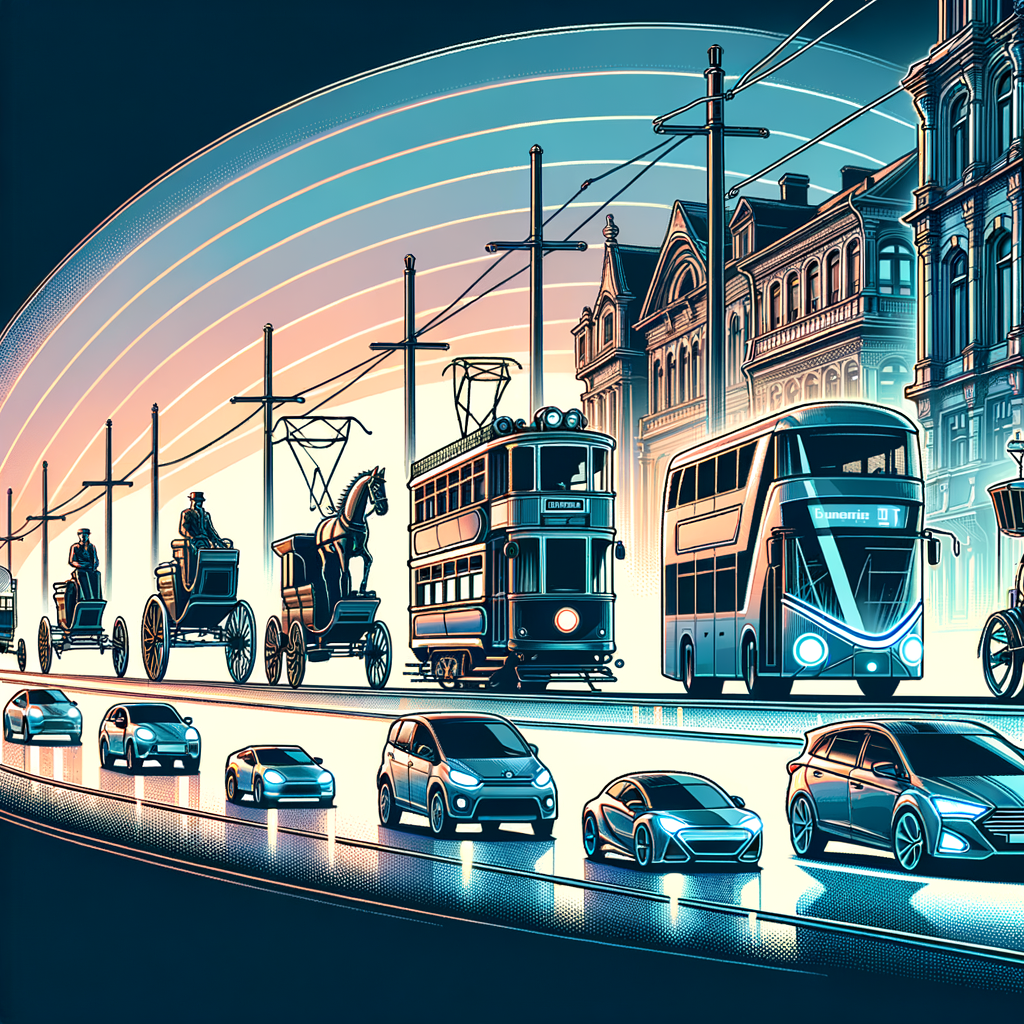
The evolution of public transportation in cities is a fascinating journey that narrates the story of human innovation, urban development, and the relentless quest for convenient mobility. Over centuries, cities around the globe have witnessed transformations in their public transportation systems, each phase marked by groundbreaking developments that brought cities closer, improved economies, and shaped societies. These transformations have not occurred in a vacuum; they have been influenced by technological advancements, population growth, and environmental concerns. From the early days of horse-drawn carriages to the modern era of electric buses and high-speed trains, public transportation in urban environments has continually adapted to meet the changing needs of society. Understanding this evolution not only provides insights into how transportation has influenced city planning and development but also offers clues to what the future of urban mobility might hold.
This article explores the significant stages of public transportation’s evolution in cities. The aim is to highlight key historical milestones, the underlying reasons for transitions from one form of transport to another, and the impact these changes have had on urban life. We will journey through the early systems of transportation, the introduction of mechanized transport, the expansion of rail and subway systems, the advent of buses and streetcars, and the modern trends towards sustainable transportation solutions. Each section will delve into how these changes have influenced urban environments, the challenges cities have faced in implementing these systems, and the innovative solutions that have emerged to keep urban dwellers moving efficiently.
Finally, this article will examine current trends and predictions for the future of public transportation in cities. With the twin challenges of climate change and growing urban populations, cities must adapt their transportation systems to be more sustainable and efficient. Autonomous vehicles, smart transportation systems, and the increased use of data analytics are paving the way for the next stage of public transportation evolution. Understanding the historical context will help us appreciate these developments’ complexities and foresee their potential impacts on future urban living. So, let us explore the intricate tapestry of public transportation developments in urban settings, an evolution that has reshaped how we think about and experience city life.
The Beginnings of Urban Transport
The origins of public transportation in cities can be traced back to the days when urbanization began to take shape. During ancient times and well into the medieval period, cities relied heavily on human and animal power for transportation. Walking was the predominant mode of transit for most people, but horses and carriages were available for the wealthier city dwellers. It wasn’t until the 17th and 18th centuries that organized forms of public transportation began to emerge.
Horse-drawn carriages became a staple in European cities, gradually evolving into systems akin to what we now recognize as public transit. For example, in the 1660s Paris, the world’s first “fiacre” was introduced. This form of carriage was available to the general public and marked one of the earliest instances of publicly accessible transportation in urban areas. Similarly, in 1829, the city of London saw the introduction of the horse-drawn omnibus. These omnibuses could accommodate several passengers and followed predetermined routes, serving as a precursor to the modern bus system.
The establishment of these early public transportation systems was driven by increasing urban populations, which necessitated more organized forms of commuting to support city functions and commerce. Even this initial stage of evolution underscored the critical role that transportation began to play in urban growth. It facilitated the expansion of cities outward and allowed for the diversification of urban neighborhoods, connecting residential areas with markets and workplaces.
The Industrial Revolution and Mechanized Transport
The advent of the Industrial Revolution in the late 18th to early 19th century was a turning point in the evolution of public transportation. Mechanization resulted in the development of steam-powered systems, which dramatically transformed the way people moved within cities. The steam engine, particularly in the form of the locomotive, was a game changer for urban public transit. Railways began cropping up across Europe and America, enabling faster and more reliable travel over longer distances.
In 1825, the Stockton and Darlington Railway was opened in England, considered among the world’s first modern railways. By 1863, London’s Metropolitan Railway line marked the beginning of the world’s first underground railway, setting the stage for expansive metro systems worldwide. The introduction of these efficient and time-saving transportation modes paved the way for metropolitan expansion and a greater interconnectedness between cities.
Rail systems allowed people to reside further from their workplaces, initiating the trend of suburbanization. This shift not only altered the demographics and physical layout of cities but also impacted socioeconomic relations by making urban resources accessible to broader populations.
The Rise of Buses and Trolleys
While railways continued to expand, the early 20th century witnessed the rise of buses and streetcars as essential components of urban public transportation. The transition from horse-drawn to motorized buses provided an even greater degree of flexibility and coverage, as buses could reach areas not served by rail. Moreover, the proliferation of the internal combustion engine made bus travel more practical and efficient.
By the 1910s and 1920s, many cities incorporated motor buses into their transit networks. The implementation of streetcars or trolleys, particularly prevalent in North America and several European cities, further diversified urban transit options. Typically powered by electricity, trolleys ran on tracks embedded in city streets, offering frequent service and connecting city centers with residential areas. Trolley systems facilitated the expansion of urban areas beyond the reach of traditional rail services, accommodating growing populations.
This period signaled a democratization of urban transit, as public transportation became increasingly accessible to all socioeconomic classes. Buses and trolleys were integral in supporting urban lifestyles by improving connectivity, thus enabling cities to expand vertically with skyscrapers and horizontally into suburbs.
Post-War Transformations and Modernization
Following World War II, cities worldwide experienced rapid growth and industrialization, necessitating renewed focus and investment in public transportation infrastructure. The economic boom and resultant increase in automobile ownership led to widespread road and highway development. However, the resultant traffic congestion in cities highlighted the need for efficient public transit systems as a necessity rather than a luxury.
Governments and city planners began to rehabilitate and innovate transit networks to accommodate burgeoning populations. The expansion and electrification of subways and the introduction of rapid transit systems in major cities broke new ground, making urban transport faster, more efficient, and capable of handling large volumes of commuters. Cities such as New York, Tokyo, and Paris became iconic for their extensive subway networks, forming the backbone of their public transit systems.
This era also saw the birth of innovations like dedicated bus lanes and transit-oriented development policies, which prioritized accessibility and efficiency in city planning. The focus shifted towards creating multimodal transportation networks where buses, trains, trolleys, and later, cycling lanes, worked in concert to enhance urban mobility.
Sustainability and the Future of Urban Transportation
In recent decades, the conversation about public transportation has increasingly centered around sustainability and technological advancements. Climate change has propelled the transportation sector to prioritize reductions in greenhouse gas emissions. Consequently, electric and hybrid buses have become prominent in city transportation fleets, alongside the growing popularity of light rail systems powered by renewable energy sources.
Modern cities are investing in infrastructure that supports sustainable options like cycling and walking while integrating smart technology into transit systems. The emergence of mobile apps for real-time tracking of public transport, electronic ticketing, and smart traffic management systems exemplifies how digital innovations are enhancing the pleasantness and efficacy of urban transportation.
Moreover, the future of urban transportation is poised for revolutions with the development of autonomous vehicles and the concept of Mobility as a Service (MaaS). This paradigm shift entails interconnected transport services, offering commuters seamless choices of mobility through shared platforms like ride-hailing services, while decreasing the carbon footprint typically associated with traditional transportation methods.
Conclusion
The evolution of public transportation in cities underscores the dynamic interplay of technological progress, demographic shifts, and societal needs. Each stage of change in the history of urban transit systems has been driven by an instinctive need to achieve improved connectivity and efficiency. From the cobbled roads trod by horse-drawn carriages to the cutting-edge propulsion technology guiding driverless electric buses, public transportation reflects our constant aim to make city life more livable and sustainable.
Examining past transitions provides valuable lessons for the present and future. The move towards more sustainable transport solutions, in response to pressing environmental concerns, represents not only a challenge but also an opportunity to reimagine urban spaces. The innovations available today, guided by historical insights, provide a template for cities to tackle contemporary issues related to mobility, ensure equal access to resources, and construct resilient infrastructures capable of withstanding future challenges.
Ultimately, the story of public transportation’s evolution in urban environments is one of human ingenuity and adaptation. The commitment to enhancing urban life through transportation innovation continues to drive cities towards vibrant, interconnected, and sustainable futures. Public transportation not only shapes how we navigate our cities but also connects us to one another in the globally interconnected urban tapestry.
Frequently Asked Questions
1. How did public transportation in cities begin, and what were its earliest forms?
The journey of public transportation in cities began long before the conveniences we know today. The earliest forms of public transportation date back to the 17th century with the introduction of horse-drawn carriages, commonly referred to as ‘omnibuses’. In fact, one might say this was literally a “horse-powered” era of transit where animal labor was the main driving force behind public commuting. These omnibuses were frequently operated by private owners and were essentially large, horse-drawn carriages that followed a regular route to pick up and drop off passengers. The concept was simple yet revolutionary at the time: to offer the public a reliable way to travel within burgeoning cities. The basic design included seating arrangements that allowed multiple passengers, very much akin to the bus seating we know today. With the growth of urban centers, these horse-drawn omnibuses became quite popular, providing the masses accessibility to different city areas more effectively than going on foot.
2. When did electric streetcars and buses become prominent in city transportation systems?
Electric streetcars, sometimes called trams or trolleys, marked a significant shift in urban public transport towards the end of the 19th century and into the early 20th century. Their introduction can be seen as one of the most impactful phases in public transport history, drastically reducing reliance on the aforementioned horse-drawn carriages. The first practical electric streetcar was introduced by Frank J. Sprague in Richmond, Virginia, in 1888. This innovation quickly spread to cities worldwide, thanks to their efficiency and ability to handle more passengers. Electric buses emerged in the early 20th century, offering a flexible alternative where laying tracks was not feasible. By capitalizing on the advancements in electric motor technology, these modes of transit provided quieter, faster, and more reliable service, paving the way for modern city landscapes characterized by networks of overhead power lines and dedicated rail systems. The shift also signified the increasing importance cities placed on public infrastructure, as these systems required substantial urban planning and investment.
3. What role did subways play in the development of urban transportation, and how did they evolve over time?
Subways, or underground metros, heralded a new era of urban transit, driven by the need to overcome surface traffic congestion. The concept took a giant leap with the opening of the London Underground in 1863, the world’s first subterranean railway. Over time, subways have become integral to urban commuting due to their capacity for high-speed and high-frequency service, interconnecting sprawling cityscapes. Initially powered by steam, they quickly transitioned to electric propulsion, a more efficient and cleaner technology, thereby enhancing their appeal and functionality. As cities expanded both in population and in geography, the development of extensive subway networks became paramount. Today, subways are marvels of modern engineering, incorporating sophisticated train control systems, energy-efficient technologies, and even amenities like Wi-Fi connectivity. Their evolution continues as cities race to create smarter, more sustainable transit systems that can keep up with the burgeoning demand of contemporary urban life.
4. How has public transportation influenced urban planning and city layouts?
Public transportation has significantly shaped urban planning and city designs throughout history. Initially, cities developed organically with limited planning. However, the advent and expansion of public transportation systems necessitated more strategic and thoughtful urban planning. Transport infrastructure started dictating residential, commercial, and industrial development, giving rise to concepts like the “transit-oriented development” we often see today. Public transport hubs became focal points for new urbanization, aiding in de-congesting city centers by promoting suburban growth. Mobility became a catalyst for widespread urban redevelopment projects, from widening streets and adding transit lanes, to building entirely new districts around transport nodes. Moreover, public transportation plays a critical role in city sustainability efforts by encouraging the reduction of private vehicle reliance, thus relieving stress on road networks and decreasing carbon emissions. This interplay between transportation and urban planning continues to grow in complexity as cities plan for future demands with smart city models and advanced transportation networks.
5. What are the modern trends and technologies shaping the future of public transportation in cities?
In the face of rapid technological advancement and changing urban dynamics, the landscape of public transportation is continuously evolving. Chief among these modern trends is the integration of digital technologies to improve efficiency and user experience. Cities are increasingly adopting smart technologies that include real-time data monitoring and analytics to enhance system-wide operations. Automation, too, is at the forefront, with driverless buses and trains already being tested or implemented in several cities worldwide. Furthermore, the rise of app-based ride-sharing services has disrupted traditional transit models, offering more flexible and seamless commuting experiences. Electric and hybrid vehicles are steadily being integrated into transit fleets to promote environmental sustainability. Another exciting development is the exploration of hyperloop technology and urban aerial transport, which promise to redefine rapid transit by overcoming current limitations in speed and reach. With these trends shaping policy and infrastructure investment, the future promises an even more interconnected and efficient public transportation network that caters to the mobility needs of a burgeoning urban population.