
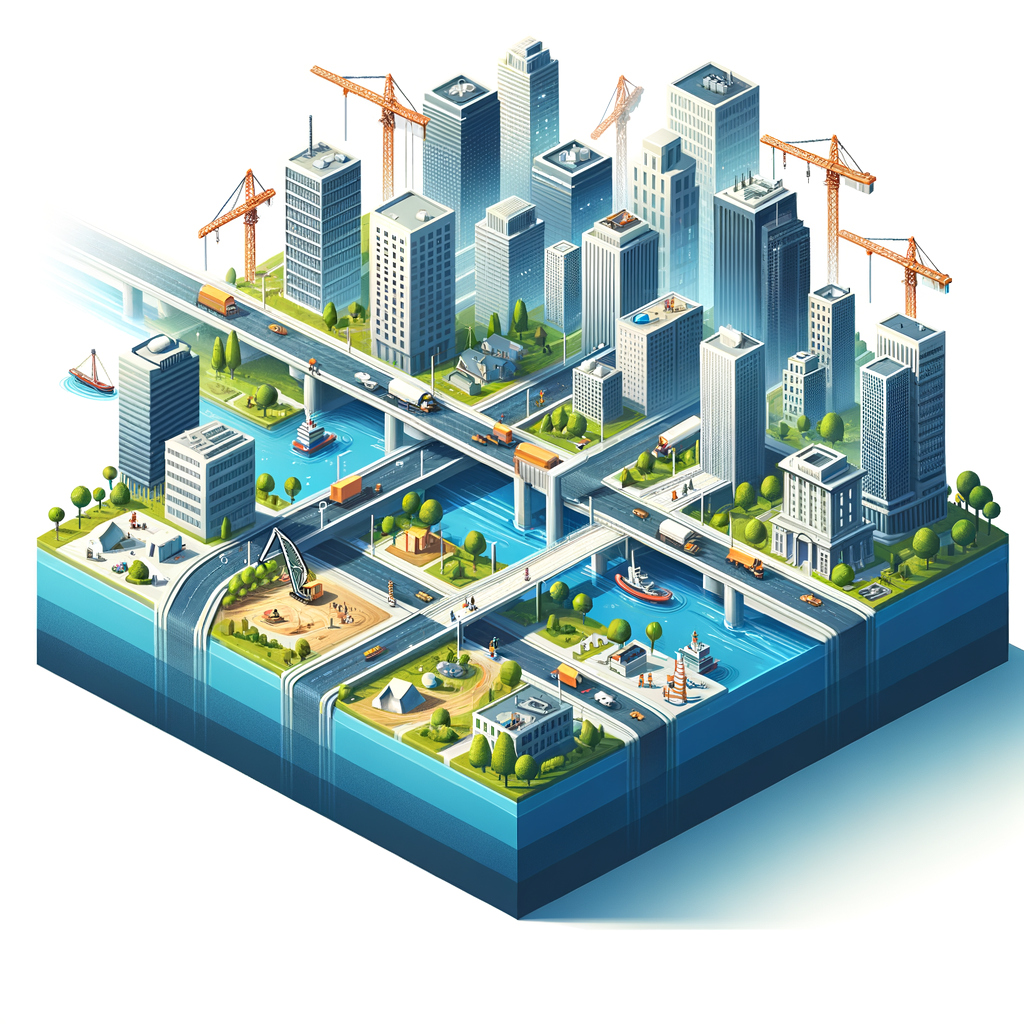
Urban infrastructure plays a critical role in disaster recovery, especially as the frequency and intensity of natural and man-made disasters increase globally. Whether facing hurricanes, earthquakes, floods, or technological disruptions, urban areas must be equipped with infrastructure systems that are not only resilient but also flexible enough to support recovery and rebuilding efforts. Urban infrastructure encompasses various components such as transportation networks, power grids, water supply systems, communication systems, and emergency services. The true measure of effective urban infrastructure is its ability to withstand calamities and facilitate swift recovery and redevelopment. The interplay between urban planning and disaster management becomes increasingly vital as cities worldwide continue to grow exponentially. This article delves into the indispensable role urban infrastructure plays in disaster recovery, examining the challenges faced and strategies employed to ensure quick and efficient recovery from disasters.
Transportation Networks in Times of Disaster
Transportation networks serve as the lifeline for urban areas, connecting people, goods, and services. In the wake of a disaster, the immediate accessibility of roads, bridges, railways, airports, and ports becomes crucial for emergency response and recovery operations. Blocked or damaged transportation lines can delay relief efforts, impede evacuations, and disrupt the distribution of critical supplies. Consequently, ensuring the resilience of transportation infrastructure is paramount. Retrofitting bridges with seismic reinforcement, elevating roads in flood-prone areas, and incorporating smart technology into traffic management are some measures cities can adopt.
Diverse cities have implemented innovative approaches to bolster their transportation infrastructure. For example, Tokyo’s extensive seismic upgrade of its railway system serves to minimize disruptions in case of an earthquake. Meanwhile, New Orleans invests heavily in drainage improvements and elevated roadways to enhance resiliency against hurricanes and flooding. During disaster recovery, efficient rehabilitation and reconstruction of damaged transportation infrastructure facilitate the resumption of economic activities and public services. The emphasis lies not only on restoring connections but also on leveraging lessons learned to improve infrastructure resilience.
Power Grids: A Pillar of Urban Resilience
The resilience of urban power grids directly impacts disaster recovery efforts. Electrical power is essential for lighting, heating, communication, medical services, and the operation of critical infrastructure. Power outages can exacerbate the consequences of disasters by hindering rescue operations and prolonging recovery timelines. Strengthening power infrastructure through diversified energy sources, such as renewable energy, and decentralizing grids with localized microgrids can enhance resilience.
In the aftermath of Hurricane Maria in 2017, Puerto Rico’s reliance on a centralized power grid revealed significant vulnerabilities. The disaster prompted a shift towards developing microgrids and incorporating solar power solutions to ensure continuous energy supply in future emergencies. Similarly, cities like San Francisco invest in undergrounding power lines to mitigate the risk of damage from high winds and seismic activity. Establishing resilient power supply chains provides the foundational support needed for recovery operations and community revitalization post-disaster.
Water Supply and Waste Management Systems
Access to clean water and efficient waste management are critical components of urban infrastructure, especially during disaster recovery. Water supply disruptions can lead to dire health crises, while failures in waste management can result in unsanitary conditions and environmental contamination. Ensuring the resilience of these systems involves implementing robust backup solutions and crisis management frameworks.
For instance, Cape Town’s severe drought in 2018 underscored the importance of sustainable water management practices. The city has since adopted alternative water sourcing, including desalination and wastewater reclamation, to enhance its water resilience. Similarly, cities susceptible to flooding, like Bangkok, can deploy modular water storage systems and promote green infrastructure solutions such as rain gardens and permeable pavements. These initiatives not only support disaster recovery but also contribute to long-term urban sustainability.
Communication Systems: Information and Coordination
Reliable communication systems are indispensable for effective disaster response and recovery. From informing the public to coordinating emergency services and disseminating recovery strategies, communication infrastructure ensures information flow across stakeholders. Disruptions in communication networks can create chaos and delay critical decision-making processes during recovery phases.
The deployment of fiber-optic networks, satellite communications, and resilient telecommunications infrastructure enables uninterrupted communication. During the 2011 Tōhoku earthquake and tsunami, Japan’s failure of communication lines highlighted the need for rapid restoration and robust emergency communication protocols. Consequently, enhancing public warning systems and community-based communication networks have become priorities for many cities. Emphasizing flexibility in communication infrastructures ensures they can adapt to varying disaster scenarios and maintain service continuity during recovery phases.
Emergency Services and Healthcare Facilities
Emergency services and healthcare facilities form the backbone of disaster recovery, particularly concerning the immediate aftermath of a catastrophe. Firefighters, paramedics, police, and hospital staff play pivotal roles in mitigating the impact of disasters on human life. The resilience of these institutions underpins the overall efficacy of recovery efforts, demanding that they remain operational and accessible during and after disasters.
Ensuring that hospitals are equipped with backup power sources, emergency supplies, and adaptable floor plans for surge capacity is essential. Strengthening hospital infrastructures through structural reinforcements and establishing secondary care centers can prevent system overloads. In coastal areas susceptible to hurricanes, facilities like Miami’s flood-resistant hospital designs set precedents for improving healthcare resilience. By designing cities with robust emergency services, urban planners not only enhance recovery capacity but also contribute to the overarching safety and well-being of the community.
Public-Private Partnerships in Infrastructure Recovery
Recovering from disasters often necessitates substantial investment and resource pooling, which underscores the role of public-private partnerships (PPPs) in facilitating urban infrastructure recovery. Engaging private entities in recovery efforts can introduce innovative technologies, expertise, and financial resources that bolster the capabilities of public institutions.
During the rebuilding of New York City’s waterfront post-Hurricane Sandy, collaboration between municipal agencies and private developers led to the construction of advanced stormwater management systems and elevated structures. Similarly, in the aftermath of the 2011 Christchurch earthquake, New Zealand, joint efforts between the government, local businesses, and community groups enabled innovative urban redesign projects. PPPs enable the blending of public accountability with private sector ingenuity, driving sustainable and resilient recovery outcomes.
Long-term Urban Planning and Infrastructure Investments
Disaster recovery prompts a reevaluation of long-term urban planning and infrastructure investment decisions. Cities that prioritize proactive planning and resilience-building are better positioned to bounce back after disasters. This includes integrating climate change considerations into urban development, as well as adopting policies that encourage resilient construction practices.
The city of Rotterdam exemplifies successful integration of resilience into urban planning, employing strategies like multi-functional flood defenses and adaptive building designs. Furthermore, Singapore’s concept of “sponge cities” aims to efficiently manage excess stormwater and improve resilience to flooding through a network of green spaces and natural water bodies. Such visionary planning not only aids recovery efforts but also cultivates vibrant, livable urban environments resilient to future hazards.
Conclusion
The role of urban infrastructure in disaster recovery is undeniable and multifaceted. Transportation networks, power grids, water supply systems, communication infrastructure, and emergency services weave a complex web of interdependencies essential for effective recovery operations. As cities grapple with evolving challenges posed by increasing urbanization and climate-related risks, prioritizing resilient infrastructure becomes imperative. Employing a holistic approach that incorporates innovative technologies, community engagement, and robust public-private collaborations enhances recovery potential.
Recovery efforts extend beyond rebuilding damaged structures; they entail fostering sustainable and resilient urban landscapes that can withstand future shocks. Adequate investment in resilient infrastructure today results in enhanced community safety, minimized economic losses, and expedited recovery during crises. Urban resilience emerges not merely as a characteristic of post-disaster recovery but as an inherent aspect of the urban fabric. In embracing these strategies, cities remit the incense of adaptability, sustainability, and preparedness, ensuring the well-being and prosperity of future generations.
Frequently Asked Questions
1. Why is urban infrastructure crucial in disaster recovery?
Urban infrastructure is essentially the backbone of a city that supports everyday functions such as transportation, power supply, and communication. When disasters strike, these systems can be severely disrupted, affecting the city's ability to respond and recover. For instance, if the transportation network is down, it becomes a major challenge to deliver essential supplies like food, water, and medical aid to affected neighborhoods. Beyond immediate response, infrastructure plays a pivotal role in long-term recovery as well. Rebuilding efforts rely on functioning utilities and transportation for construction materials and workforce mobilization. Moreover, a resilient infrastructure can mitigate the impacts of future disasters, ensuring that cities are better prepared each time. This highlights the need to design infrastructure that’s not only resilient but adaptable to the ever-changing landscapes of natural and human-induced hazards.
2. What components of urban infrastructure are most impacted during a disaster?
The main components of urban infrastructure affected during a disaster include transportation networks, power grids, communication systems, and water supply systems. Transportation routes like roads, bridges, and public transit can face significant damage, hindering evacuation efforts and emergency response. Power grids might be disrupted, leading to blackouts that affect households, hospitals, and businesses. Communication systems can suffer, limiting critical information dissemination and coordination between emergency services and the public. Water supply systems are also at risk, as damage to pipes and facilities can cut off access to clean water, exacerbating public health risks. Understanding these vulnerabilities is crucial for enhancing infrastructure resilience and prioritizing restoration efforts in the wake of disasters.
3. How does investment in resilient urban infrastructure reduce recovery times?
Investing in resilient urban infrastructure significantly cuts down recovery times by enhancing the city's capacity to withstand and quickly bounce back from disasters. Resilient infrastructure, designed to endure and recover from extreme events, ensures vital services are maintained or rapidly restored, minimizing disruptions to human life and economic activities. For example, stormwater systems capable of handling heavy rainfall can prevent flooding and reduce repair time. Enhanced electrical grids with smart grid technology can isolate issues and reroute power, preventing widespread outages. By integrating advanced materials and technologies that resist damage and incorporating redundancy into critical systems, cities can ensure continuity of services and expedite recovery processes. Moreover, resilient infrastructure attracts investments, as potential investors and businesses tend to favor locations with lower disaster disruption risks, further boosting economic recovery.
4. How can urban planners integrate disaster resilience in city infrastructure?
Urban planners can integrate disaster resilience into infrastructure by adopting a comprehensive approach that includes risk assessments, strategic planning, and stakeholder collaboration. They should start by identifying the risks specific to their area—be it climate-related, geological, or technological—and incorporate these insights into infrastructure design and planning. For example, elevating bridges and roads in flood-prone areas or using seismic retrofitting techniques in regions with earthquake risks. Planners should also consider using robust materials and redundant systems to provide multiple layers of defense in critical infrastructure. Additionally, engaging with local communities and experts, as well as collaborating with regional and national authorities, can ensure that resilience measures meet the needs of all stakeholders and are used effectively. Incorporating green infrastructure, like parks and green roofs, can further assist in managing stormwater and moderating urban temperatures, providing ecological benefits alongside enhanced disaster resilience.
5. What role does technology play in enhancing urban infrastructure for disaster recovery?
Technology plays a transformative role in enhancing urban infrastructure for effective disaster recovery. Advanced technologies enable real-time monitoring, predictive analytics, and efficient coordination during and after disasters. For instance, sensors installed on bridges can provide live data on structural integrity, allowing for timely maintenance and repairs. Geographic Information Systems (GIS) can aid emergency response teams in swiftly identifying affected areas and deploying resources more effectively. Furthermore, smart grid technology facilitates rapid recovery of electrical services through real-time data analysis and automated rerouting of power. Utilizing digital communication platforms ensures disseminated timely information to residents and emergency personnel, increasing public safety and coordination. Technology not only aids in immediate disaster response but also informs future infrastructure planning and resilience strategies, making urban centers smarter and more robust against unforeseen challenges.